What is Shoulder Leather? The Artisan’s Guide to This Premium Hide Cut
Why do master artisans often bypass the belly and the butt to reach specifically for the shoulder? You've likely felt the frustration of spending hard-earned money on a premium hide only to have it stretch out of shape or age in ways you didn't expect. It's a common hurdle when you're trying to figure out what is shoulder leather and how it actually performs under a needle. I know that feeling of wanting every stitch to count and every piece to last a lifetime.
You deserve a material that respects your craft and your budget. This guide will help you discover why shoulder leather is the preferred choice for artisans seeking the perfect balance of durability, texture, and value. We'll clear up the confusion between single and double shoulders. You'll learn exactly how this cut ages and why its unique grain structure makes it the "character cut" for high-stress goods. Let's get into the details so you can stop guessing and start creating with confidence.
Key Takeaways
- Understand the anatomy of the hide and why the shoulder offers the perfect "sweet spot" of density and flexibility for your projects.
- Learn exactly what is shoulder leather by identifying the natural fat wrinkles and grain density that make it ideal for high-quality tooling and stamping.
- Discover the technical differences between single and double shoulders to minimize waste and maximize your workshop's yield.
- Identify the best projects for this cut, from structured tote bags to durable belts, ensuring your material matches your design's structural needs.
- See why choosing vegetable-tanned shoulders from trusted tanneries ensures your work ages beautifully and meets modern sustainability standards.
Defining Shoulder Leather: Anatomy and the "Sweet Spot" of the Hide
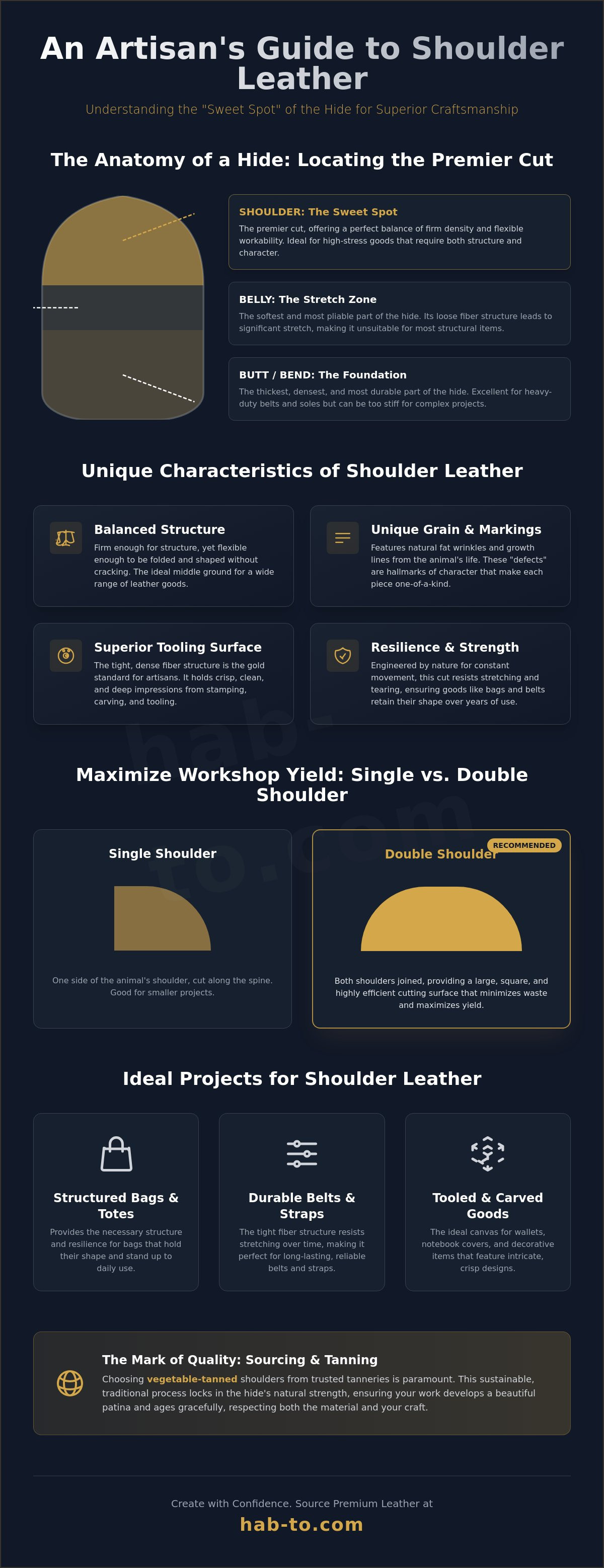
At Hab-To, we believe in honoring the source. For 160 years, our family has looked at an animal hide as a story of a life lived. Understanding what is shoulder leather begins at the very top of that story. It's the section harvested from the neck and upper spine of the cow. This area is often called the "sweet spot" because it avoids the excessive stretch of the belly while maintaining more pliability than the dense hindquarters. It's a premium middle-ground cut that offers incredible value for artisans who don't want to compromise on quality.
To better understand this concept, watch this helpful video:
Where the Shoulder Sits: A Lesson in Hide Anatomy
The shoulder cut begins at the base of the skull and extends down to the start of the back. It covers the neck and the area over the front legs. Because this part of the animal is constantly in motion, the fiber structure is fascinating. The fibers are tightly knit but possess a natural "give" that allows the leather to move without losing its shape. When you buy a double shoulder, you're getting both sides of this section joined at the spine. This provides a large, square cutting surface that's a dream for workshop efficiency. It's much easier to plan your patterns on a shoulder than on the irregular shapes of a belly or a side.
The Structural Integrity of the Shoulder Cut
Fiber density is everything in leathercraft. Shoulders are significantly firmer than bellies, which can often be too spongy for professional work. This firmness comes from the way the animal carries its weight and moves its head. Shoulder leather is the resilient section between the neck and the back. It strikes a perfect balance. It's thick enough to provide structure for bags, yet flexible enough to be turned or folded without cracking.
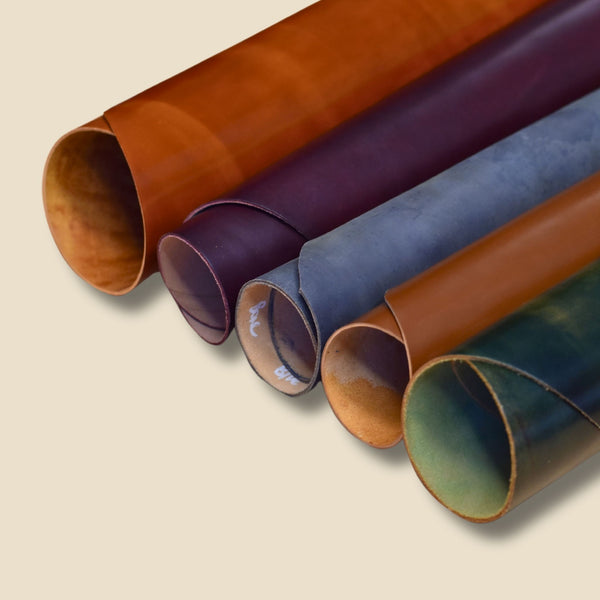
We've found that vegetable tanning is the only way to truly respect these fibers. Traditional tannins from oak or chestnut bark penetrate deep into the shoulder, locking in that natural strength. This is why our Badalassi Pueblo and Maryam Vacchetta shoulders are so popular. They aren't just pieces of material. They are the result of a tanning process that works with the hide's natural origin rather than against it. When you hold a well-tanned shoulder, you can feel the history and the durability in your hands. It's a cut that rewards the artisan's touch with every project.
The Unique Characteristics of Shoulder Leather: Grain and Texture
If you have ever run your hands over a hide and noticed deep, undulating lines, you have already had your first lesson in what is shoulder leather. These markings aren't mistakes. They are fat wrinkles, or neck growth marks, and they serve as the definitive hallmark of this cut. They tell a story of the animal's life and movement. While industrial manufacturers often view these as defects to be cut around, we see them as the very essence of artisanal character. The shoulder offers a tactile experience that belly leather simply cannot match. It's firm, smooth, and possesses a grain density that feels substantial in your hands.
Embracing Natural Markings and Growth Lines
Growth lines add a rustic, organic feel to your projects that uniform hides lack. You need to distinguish between these character marks and actual structural defects. A growth line is a natural variation in the grain. A defect, like a deep scar or a hole, compromises the leather's strength. When you're laying out your patterns, use these lines to your advantage. Aligning them with the curves of a bag or the length of a strap creates a visual flow that looks intentional. It screams "handmade" in the best way possible.
Tooling and Carving Performance
For many artisans, the shoulder is the gold standard for carving and stamping. The secret lies in its tight fiber structure. Because the fibers are so closely packed, they hold a crisp impression far better than the looser fibers found in the belly. When you case the leather properly, it absorbs moisture evenly. This allows your leather stamping tools to bite deep into the surface. The firm temper ensures the leather doesn't "mush" or deform under the pressure of a mallet. You get shadows and highlights that stay sharp for decades.
As your piece ages, the textured grain of the shoulder develops a patina that is truly unique. Natural oils settle into the growth marks, deepening the color in the "valleys" while the "peaks" take on a brilliant sheen. This contrast creates a depth of color that you won't find on flatter, more uniform cuts. If you're looking to start a project that showcases this incredible texture, our Badalassi Pueblo leather is a fantastic choice. It is a material that truly rewards the patient artisan with a finish that only gets better with time.
Single vs. Double Shoulders: Choosing the Right Cut for Your Workshop
Once you understand what is shoulder leather, the next step is deciding how much of it you actually need on your bench. The choice between a single and a double shoulder isn't just about the total surface area. It's about workshop efficiency and the specific scale of your designs. At Hab-To, we personally select our Italian shoulders from tanneries like Virgilio and Maryam. This ensures that the thickness you expect is consistent across the entire hide, whether you're working with a 1.4mm Virgilio Pueblo or a heavier Maryam Vacchetta. We don't just ship boxes; we select the material we would want to use ourselves.
The Single Shoulder: Ideal for Small Goods
A single shoulder is exactly what it sounds like. It's one half of the upper hide, split cleanly down the spine. These typically range from 6 to 8 square feet. If you're focused on small leather goods like wallets, card holders, or watch straps, this is your best starting point. They are easier to handle in smaller hobbyist workshops and don't require a massive cutting table. You get the premium quality of a shoulder without the higher total cost of a full double hide. It's an approachable way to work with world-class leather without overextending your budget.
The Double Shoulder: The Professional’s Choice
For medium-sized projects, the double shoulder is the "king of yield." Because you have the full width of the animal, the spine acts as a natural center line. This is crucial for symmetrical cutting. If you're making a tote bag or a messenger bag, you can lay your patterns across the spine to ensure the grain and growth marks match perfectly on both sides. You also face less waste. By optimizing your layout, you can tuck smaller components into the slightly thinner edges near the neck, leaving the prime centers for your main panels.
While the price per square foot remains similar between the two, the double shoulder often proves more economical in the long run. You spend less time fighting irregular edges and more time cutting usable parts. In leather manufacturing, approximately 20-30% of a hide is wasted during the cutting process due to its irregular shape. A double shoulder's more rectangular profile helps you stay on the lower end of that statistic. It's the professional choice for the artisan who needs to make every square inch of their investment count.
Best Uses for Shoulder Leather: Matching Projects to the Cut
Shoulder leather is the structural backbone of a professional workshop. If you've been wondering what is shoulder leather good for, the answer lies in its resilience. Understanding what is shoulder leather means recognizing it as the material that provides the stiffness required for items that need to hold their shape under pressure. While the belly is too stretchy and the butt is often too rigid for complex curves, the shoulder sits in that perfect middle ground. It's the workhorse that bridges the gap between flexibility and strength.
Crafting Structured Bags and Briefcases
This cut is the premier choice for totes, briefcases, and backpacks. Its firm temper ensures your bag doesn't collapse into a puddle of leather when you set it down. For unlined bags, we recommend a thickness of 2.2mm to 2.5mm. If you're lining the project, a 1.4mm thickness provides plenty of strength without adding excessive bulk. To truly elevate the final look, pair your hide with solid brass hardware. The weight of the brass complements the density of the shoulder; it creates a piece that feels substantial and premium in the hand.
Belts and Straps: Is Shoulder Long Enough?
The belt debate is a common topic in our Amsterdam shop. Can you make a belt from a shoulder? Yes, but you must use a double shoulder. A single shoulder is rarely long enough for a standard adult belt. Even with a double shoulder, you need to consider the "stretch direction." Shoulders have slightly more give than the butt of the hide. If you're making a heavy-duty work belt, the butt is superior. For a refined dress belt or a durable bag strap, the shoulder is excellent. You just need to plan your layout carefully. Check out our guide on how to measure leather to ensure your strap will actually fit before you make that first cut.
Beyond bags and belts, this cut excels in small leather goods (SLGs). A wallet made from shoulder leather has a "snap" to it that feels professional and high-end. It doesn't get floppy after three months in a pocket. It's also rugged enough for heavy-duty shop aprons or even the structural components of footwear like heel counters. If you want to experience this versatility firsthand, explore our range of Badalassi Pueblo shoulders. This leather is ready to become the foundation of your next masterpiece.
Sourcing Premium Shoulders: The Hab-To Leather House Standard
Understanding what is shoulder leather is only half the battle. The true secret to a masterpiece lies in the sourcing. At Hab-To, we don't just sell leather. We share a legacy. Our family has spent 160 years refining the standards for what enters our workshop. We believe that every project, whether it's a single watch strap or a full collection of bags, deserves a material that hasn't been compromised by industrial shortcuts. This is why we focus exclusively on 100% vegetable-tanned, sustainable shoulders. We select hides that respect the environment and the hands of the artisan who will work them.
Our "Amsterdam connection" is the heart of our process. It isn't just about a warehouse location; it's about a personal commitment. We travel to the finest tanneries to personally select the hides that make the cut. When you buy from us, you aren't just getting a piece of an animal. You are getting a material that has been vetted for grain consistency, fiber density, and aesthetic character. We treat every customer as a fellow artisan. This is why we offer no minimum orders. Whether you're a seasoned professional or a hobbyist making your first wallet, you get the same premium quality and expert advice.
Premium Italian Shoulders: From Maryam to Badalassi
The Italian tradition of tanning is unmatched. We are proud to bring the best of Tuscany to your bench. The Badalassi Pueblo shoulders are a favorite for a reason. Their unique, slightly scuffed surface develops a patina that is legendary in the leathercraft community. If you are looking for something with a more traditional, rich feel, Maryam Vacchetta is the ultimate choice for heritage goods. It carries a depth of oil and a firm temper that feels substantial from the first cut. Our philosophy is simple. No compromises. Only quality. Pure tradition.
Personalized Service for Your Next Project
Choosing the right hide can be daunting when you're staring at a screen. We are here to help. If you aren't sure which thickness or temper is right for your design, get in touch for a personal consultation. We love talking shop and helping you find the "sweet spot" for your specific project. If you find yourself in the neighborhood, you can visit our Amsterdam location to feel the leather before you buy. There is no substitute for the smell and touch of a premium shoulder in person. We want you to be as passionate about the material as we are.
Ready to start your next build with the best materials available? Browse our curated collection of premium leather shoulders and find the perfect match for your craft. Your tools deserve a material that works as hard as you do.
Elevate Your Craft with the Artisan's Character Cut
Choosing the right material is the foundation of any great piece. You've seen how the shoulder provides that elusive balance of strength and pliability, making it the "sweet spot" for everything from structured totes to crisp wallets. Understanding what is shoulder leather gives you the power to choose a material that truly serves your design, complete with natural growth marks that tell a story of authenticity. It's a cut that rewards your skill with sharp tooling and a patina that only improves with age.
At Hab-To, we back your passion with 160 years of family expertise and tradition. We personally select our hides directly from world-class Italian tanneries, ensuring every fiber meets our uncompromising standards. Since we have no minimum order requirements, you can access professional-grade material for any project, large or small. You don't have to settle for industrial compromises when heritage quality is within reach. You deserve a partner who respects the craft as much as you do.
Explore our premium vegetable-tanned shoulder collection and find the perfect hide for your next masterpiece. We can't wait to see what you create. Your workshop is ready for its best work yet.
Frequently Asked Questions
Is shoulder leather good for making belts?
Yes, double shoulders are excellent for making belts and straps because they offer the necessary length and a firm temper. While the butt is the most rigid part of the hide, the shoulder provides a great balance of strength and flexibility. Just ensure you cut along the spine to minimize stretch over time. It's a professional choice for refined dress belts or durable bag straps that need to hold their shape.
What is the difference between shoulder leather and belly leather?
The main difference lies in fiber density and stretch. Shoulder leather is harvested from the upper part of the animal where the fibers are tightly knit and firm. In contrast, belly leather is the softest and stretchiest part of the hide, often used for linings or small, non-structural parts. When asking what is shoulder leather compared to belly, think of it as the difference between a structural beam and a flexible cushion.
Does shoulder leather have a lot of scars?
Shoulders often feature natural growth marks and fat wrinkles rather than an abundance of scars. These "neck wrinkles" are a hallmark of the cut and are highly prized by artisans for their rustic character. While you might find occasional insect bites or scratches, these are part of the hide's natural origin. We personally select hides that balance this beautiful texture with structural integrity so your finished goods look intentional and high-end.
How thick is shoulder leather typically?
You'll typically find shoulder leather in thicknesses ranging from 1.4mm to 4.0mm, which is roughly 3.5 oz to 10 oz. This wide range is why it's so popular in workshops. A 1.4mm cut is perfect for lined wallets or bag pockets, while a heavier 3.5mm shoulder provides the substance needed for unlined totes or tool rolls. Its consistent thickness across the hide makes planning your projects much simpler and reduces waste.
Can you tool and stamp shoulder leather?
Absolutely, vegetable-tanned shoulder is considered the gold standard for tooling and stamping. The dense fiber structure allows it to hold deep, crisp impressions that won't fade or deform over time. When you understand what is shoulder leather and how it reacts to moisture, you'll find it takes stamps with incredible clarity. It's the preferred choice for artisans who want their carving work to stand out with sharp lines and deep shadows.
What is a double shoulder in leathercraft?
A double shoulder consists of both the left and right shoulder sections still joined at the spine. This provides a large, roughly rectangular cutting surface that's much easier to work with than a single shoulder. It allows you to cut long straps or large bag panels while maintaining symmetry across the natural grain of the spine. It's the most efficient way to buy this premium cut for professional projects that require larger, uniform pieces.
How do you care for shoulder leather products?
Care for shoulder leather by using a high-quality, natural leather balm or conditioner every few months. Since most premium shoulders are vegetable-tanned, they breathe and develop a patina naturally. Avoid harsh chemicals or excessive water. A light coat of conditioner keeps the fibers supple and prevents the natural growth marks from becoming brittle. With proper care, these products will last for generations and only look better as the years pass.