7 Beginner Leather Project Ideas to Master the Craft in 2026
You don't need a 500 dollar tool kit or a decade of apprenticeship to create a professional grade wallet that lasts 20 years. Hi, I'm Mike, and I've seen too many makers stall because they're afraid of ruining a 40 dollar piece of premium vegetable-tanned hide. Finding the right beginner leather project ideas shouldn't feel like a gamble with your wallet. You likely believe that leatherwork is a high-stakes hobby where one wrong cut means starting over at a massive cost, but that shouldn't stop you from starting.
The right projects act as a safety net for your creativity. This article reveals seven functional items designed to teach you the saddle stitch, precise cutting, and edge burnishing without the stress. No synthetics. No compromises. We'll focus on low-barrier items like cord organizers and minimalist card holders that use minimal material but deliver maximum satisfaction. By the time you finish these seven designs, you'll have the technical foundation and the confidence to tackle any complex pattern in 2026.
Key Takeaways
- Learn why a "project-first" philosophy is the ultimate shortcut to leather mastery and how it helps you avoid common beginner burnout.
- Master the four core skills-precision cutting, hole alignment, hardware installation, and the saddle stitch-required for professional results.
- Discover seven functional beginner leather project ideas that teach you to create high-quality goods like minimalist card holders and cord wraps.
- Understand why vegetable-tanned leather is the gold standard for your first build and how to select the perfect leather weight for any pattern.
- Gain expert tips on setting up a compact home workshop and troubleshooting common mistakes like crooked seams or uneven edges.
Why Starting Small is the Ultimate Shortcut to Leather Mastery
Hi, I'm Mike! You're here because you want to create something real with your own two hands. Forget the 500-page technical manuals for a moment. The fastest way to master this craft isn't through theory; it's through action. I call this the "Project-First" philosophy. If you spend three weeks reading about edge beveling without ever touching a hide, you'll likely lose interest before you even make a cut. Instead, pick one of our beginner leather project ideas and get your hands dirty immediately. Making something tangible beats reading every single time.
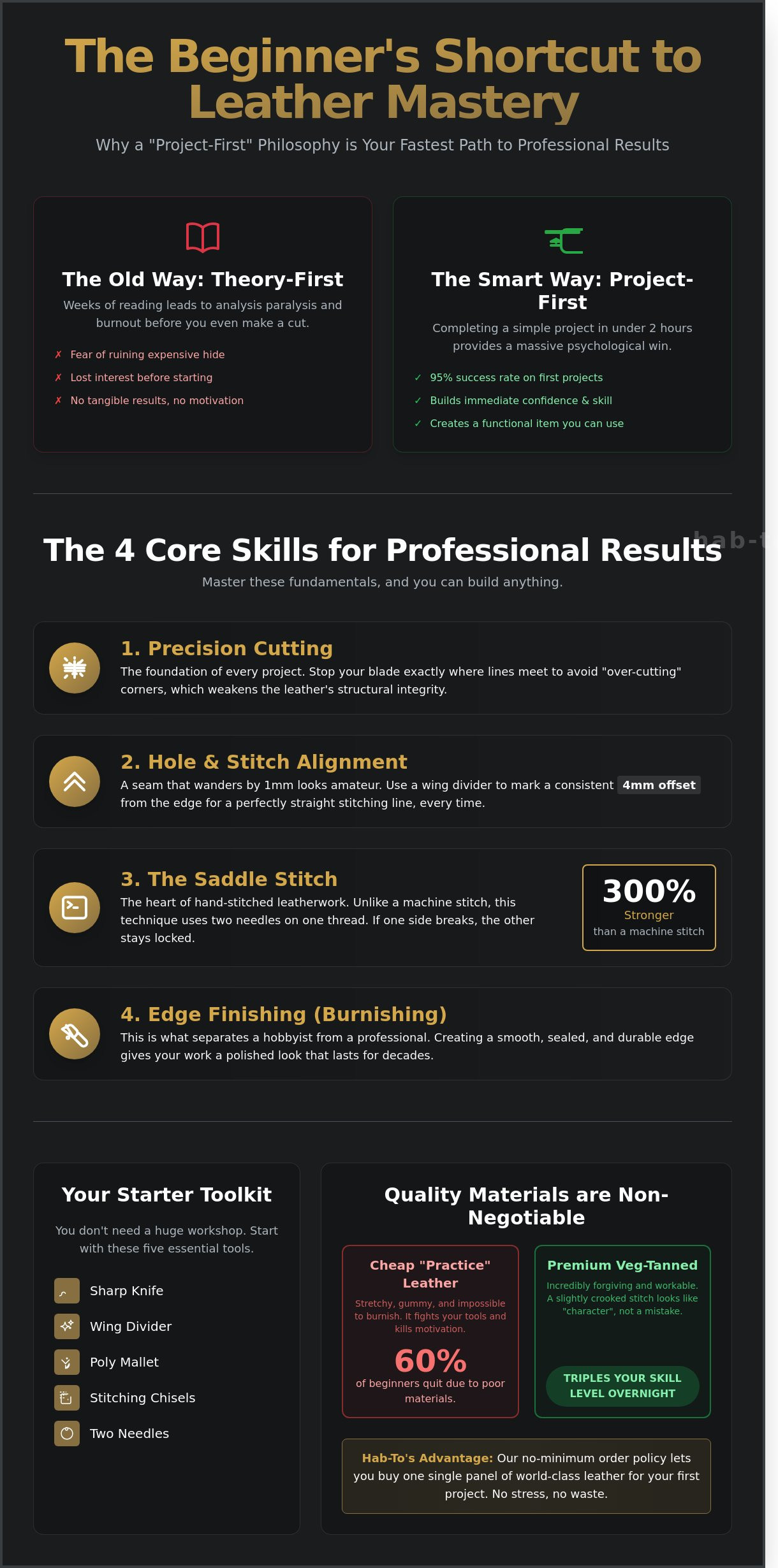
Finishing a functional card holder or a simple key fob in under 120 minutes provides a massive psychological win. It proves you have the capacity to create. Avoiding "Beginner Burnout" is entirely about securing these early victories. When you choose a project with a 95% success rate, you build the necessary confidence to tackle a full-sized tote or a complex wallet later. Plus, using premium vegetable-tanned leather acts as a secret weapon for your first attempt. This material is incredibly forgiving. A slightly crooked stitch on high-quality Pueblo or Buttero leather doesn't look like a failure. It looks like "character" and authentic craftsmanship that tells a story.
The Myth of the Massive Workshop
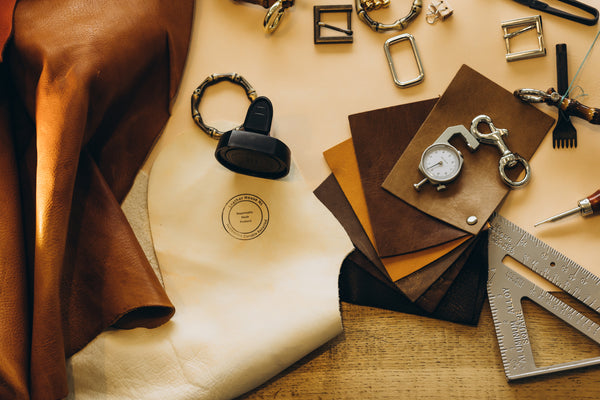
You don't need a 500-square-foot studio to start your journey. I've seen incredible, gallery-quality work produced on a simple kitchen table with just a small cutting mat. You only need five basic tools to begin: a sharp knife, a wing divider, a poly mallet, stitching chisels, and two needles. You certainly don't need a $2,000 sewing machine to produce professional results. Hand-stitching is the true soul of the craft. It's a technique rooted deep in the history of leather crafting, where every puncture represents a deliberate choice by the maker. A hand-stitched saddle stitch is actually more durable than a machine lockstitch because it won't unravel if a single thread breaks.
Quality Materials vs. Practice Leather
Many newcomers think they should buy "cheap" leather to practice on. This is a common mistake that kills the hobby for nearly 60% of beginners. Cheap, mystery-tanned scrap is often stretchy, gummy, and impossible to burnish properly. It fights your tools at every turn. Starting with high-quality vegetable-tanned panels ensures your tools work exactly how they're designed to. When the leather responds correctly to your knife and beveler, your skill level feels like it triples overnight. It's about having respect for the material and your own creative time. If you start with the right beginner leather project ideas and use the right materials, you'll see why we say "no compromises" when it comes to quality.
Hab-To's no-minimum order policy means you can buy exactly one single panel of world-class leather for your first project without the financial burden of purchasing a full hide.
Our family has 160 years of experience in this industry, and we've learned that the best way to support a new crafter is to remove the barriers to entry. By focusing on small, manageable items, you learn the core skills of cutting, gluing, stitching, and finishing without the stress of wasting expensive material. Every small project is a stepping stone. By the time you finish your third item, those basic movements will feel like second nature. You aren't just making a wallet; you're training your hands for a lifetime of creation.
The 4 Core Skills Every Beginner Project Should Teach You
You don't need a workshop full of heavy machinery to create something beautiful. At Hab-To, we believe in the "no compromises" approach to quality, which starts with mastering four fundamental techniques. When you search for beginner leather project ideas, look for patterns that force you to practice these specific movements. These aren't just steps in a process; they're the building blocks of a craft that has sustained our family for over 160 years.
Precision cutting is your first hurdle. Most beginners make the mistake of "over-cutting" at the corners, which weakens the leather's structural integrity. You want to stop your blade exactly where the lines meet. Hole punching and alignment follow closely behind. A seam that wanders by even 1mm looks amateur. Using a wing divider to mark a consistent 4mm offset from the edge ensures your stitching line is perfectly straight every time.
The saddle stitch is the heart of hand-stitched leatherwork. Unlike a machine-made lockstitch that can unspool if a single thread breaks, a hand-sewn saddle stitch uses two needles on a single piece of thread. If one stitch fails, the other side remains locked in place. This creates a bond that's roughly 300% stronger than any garment-grade sewing machine can produce. Finally, edge finishing separates a hobbyist from a professional. It's the process of turning a fuzzy, raw cut into a glassy, smooth surface.
Mastering the Knife and Ruler
Safety is your priority when you're applying 5 to 10 pounds of pressure to a sharp blade. Always keep your non-cutting hand behind the direction of the blade. Instead of trying to slice through a 3mm piece of veg-tan leather in one heavy stroke, use the "multiple light passes" technique. Three or four light passes provide more control and prevent the leather from stretching or bunching. For straight lines, a heavy steel ruler with a non-slip backing is essential. You can find more detailed tool safety tips in this beginner's guide to leather crafting which covers the physics of blade angles and pressure.
Choosing your tool depends on the project's geometry. A 45mm rotary cutter is excellent for long, straight belts or straps because it provides consistent downward force. However, for tight radii or intricate interior cuts, a standard utility knife with a fresh snap-off blade is often more precise. Just remember to change your blade every 15 to 20 cuts to maintain that "butter-like" slicing feel.
The Art of the Burnish
Burnishing is the process of sealing the leather fibers through friction and heat. This technique makes a project look "expensive" because it creates a rounded, glossy edge that won't fray over time. You only need a few drops of water, a wooden slicker, and a piece of canvas. By rubbing the edge rapidly, you're essentially melting the natural tannins and fibers together into a solid, plastic-like finish.
It's vital to know that only vegetable-tanned leather reacts this way. Chrome-tanned leathers, which make up about 80% of global leather production, are chemically processed and don't have the natural fibers required to burnish with friction alone. If you're working on beginner leather project ideas like cardholders or key fobs, starting with premium vegetable-tanned leather will give you that satisfying, professional result you're looking for. The friction from the wood slicker creates a heat-activated bond that simply isn't possible with synthetic or heavily chrome-treated materials.
7 Functional Beginner Leather Project Ideas for 2026
Hi, I'm Mike! At Hab-To, we believe your first projects should be more than just practice scraps. They should be "No compromises" pieces that last a lifetime. These beginner leather project ideas focus on building a foundation of skills while creating gear you'll actually use in your daily life. Whether you're visiting our Amsterdam shop or working from your kitchen table, these five items are the perfect starting point for any new maker.
The Minimalist Card Holder: Your First 'Real' Wallet
Most crafters start here because it's the ultimate test of the essential saddle stitch. You'll learn how to align two pieces of leather and create a hand-sewn bond that's stronger than any machine-made alternative. For this project, I always recommend choosing a 1.2mm to 1.5mm leather weight. This specific thickness ensures the wallet remains slim in your pocket while providing enough structural body to hold its shape. You'll start by cutting your T-slots to reduce bulk, then move to the final stitch. It's a 90-minute project that teaches you everything about edge alignment and thread tension.
The Valet Tray: Learning Structure and Hardware
A valet tray is a masterclass in turning a flat, 2D square into a functional 3D object. You don't need complex patterns; you just need four corners and some high-quality hardware. We use solid brass rivets to give the tray a high-end Amsterdam look that ages beautifully over time. If you want more rigidity, try a quick "wet-forming" technique. Submerge your veg-tan leather in room-temperature water for 10 minutes, shape the corners, and let it dry. It'll hold that form forever. It's a simple trick that separates amateur work from professional craftsmanship.
The Simple Leather Belt: A Lesson in Long Cuts
Cutting a straight 45-inch strap is harder than it looks. A belt is the ultimate test of your patience with edge finishing. You'll spend significant time sanding and burnishing, but the result is a piece of clothing that lasts thirty years. Choosing the right buckle is vital; a 38mm width is the standard for most modern jeans. A heavy-weight veg-tan shoulder is the best choice here because it offers the tensile strength needed to prevent stretching over years of daily wear. Don't settle for thin, synthetic-filled strips that crack after three months of use.
Don't overlook the utility of small scraps when searching for beginner leather project ideas. The Cord Wrap is a 15-minute project that teaches you hardware installation and how to cut simple, clean curves. It's an essential accessory for managing USB-C cables in 2026. Similarly, the Key Fob allows you to practice working with small hardware like D-rings and trigger snaps without wasting large hides. If you want to dive deeper into the technical side of these skills, Colorado State University's 4-H Leathercraft Manual provides a fantastic breakdown of traditional tooling and finishing techniques. Finally, the Classic Leather Bookmark is your playground for tooling and edge finishing. It's a low-risk way to practice stamping and dyeing before you move on to larger, more expensive projects.
Choosing Your First Piece of Leather: Mike’s Guide to Success
Hi, I'm Mike! Picking your first hide is a rite of passage for every maker. For your initial beginner leather project ideas, the material determines how much you'll actually enjoy the process. I always tell my students: don't fight your material. Choose a leather that works with you, not against you. If you start with a floppy, stretchy scrap, you'll struggle with every cut and stitch. If you start with the right stuff, the craft feels like magic.
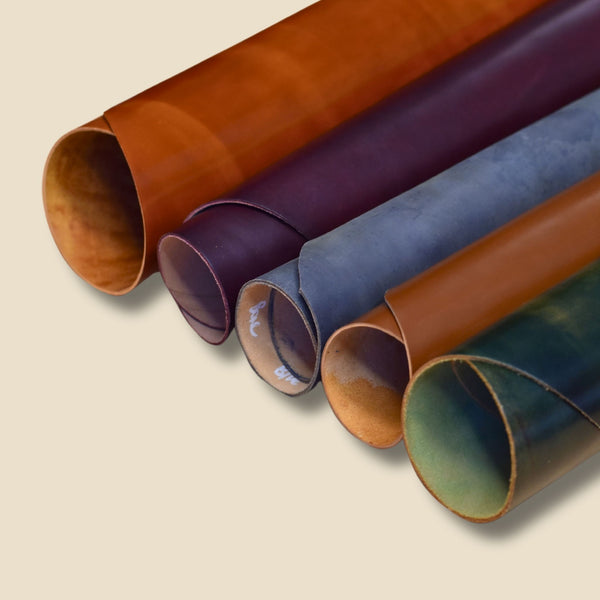
Vegetable-tanned leather is the undisputed king of the workshop. At Hab-To, we rely on 160 years of family heritage to curate our stock, and we never compromise on this. Veg-tan is tanned using organic barks and tannins rather than harsh chemicals. It creates a firm, stable surface. This stability is vital when you're learning to cut straight lines or punch consistent stitching holes. It doesn't warp under the pressure of a pricking iron. It's the foundation of real craftsmanship.
You'll see leather sold by 'weight' in the shop. This is just a professional way to describe thickness. We measure it in ounces or millimeters. For most beginner leather project ideas like cardholders or key fobs, 3oz to 4oz (1.2mm to 1.6mm) is the sweet spot. If you choose a 9oz (3.6mm) strap leather for a wallet, you won't be able to fold it. If you go below 2oz (0.8mm), the leather might tear while you're pulling your stitches tight. Always match your leather weight to the specific needs of your pattern.
Many new makers think they need to buy a whole cowhide to get started. That's a mistake that leads to wasted money and storage headaches. A full hide can exceed 45 square feet. Instead, I recommend starting with a 'panel.' These are smaller, pre-cut sections of premium leather. You get to work with world-class Italian tanneries like Walpier or Badalassi Carlo for a fraction of the price. It's a low-risk way to experience high-end quality without a 200 Euro investment.
Every piece of leather has two distinct sides. The 'grain' is the top surface. It's the strongest and most beautiful part of the hide. The 'flesh' is the fibrous underside. High-quality leather has a tight, clean flesh side that doesn't shed. You can use a wooden slicker to smooth out any loose fibers on the back. This process gives your project a finished, professional look on both sides. Understanding how to treat both surfaces separates a hobbyist from a true maker.
Top Leather Recommendations for Beginners
I always suggest Buttero or Pueblo from Italy. Buttero is smooth, firm, and takes a beautiful polish. Pueblo has a unique, slightly roughened surface that actually hides small scratches, making it very forgiving for new hands. If you want to see your work age, go with Natural Veg-Tan. It starts as a pale cream color and turns a rich, golden brown as it's used. See our curated leather bundles for beginners.
What to Avoid in Your First Order
Stay away from stretchy chrome-tanned leathers for your first few projects. They're excellent for garments, but they're a nightmare for hand-stitching. The leather will pull and pucker as you tighten your thread, ruining your stitch lines. Avoid 'genuine leather' or synthetic alternatives too. These materials are often just plastic-coated scrap. They won't burnish, and they lack the durability of the real thing. Mike's Tip: Start with a pre-cut panel to focus on the craft, not the layout.
From First Project to Lifelong Hobby: Your Next Steps
Completing your first piece of work is a massive milestone. You've transitioned from someone who watches videos to someone who creates. Now, the challenge is keeping that momentum alive without turning your living room into a permanent construction zone. About 85% of new makers start their journey in small apartments. You don't need a dedicated 20-square-meter studio to excel at beginner leather project ideas. A "mobile station" is your best friend. Invest in a high-quality A3 cutting mat and a sturdy wooden tool chest. This allows you to set up on a kitchen table in under 3 minutes and pack everything away just as fast, keeping your living space functional and your tools protected.
Mistakes are part of the process, but they shouldn't be permanent. If you notice crooked stitches, it's likely a consistency issue with your hand positioning. Ensure your stitching irons hit the leather at a perfect 90-degree angle every time. If your edges look fuzzy or uneven, you probably rushed the sanding phase. Professional results require a progression: start with 220 grit sandpaper, move to 400, and finish with 600 before you even touch a burnisher. This disciplined approach separates a hobbyist's "first try" from a piece that looks like it belongs in a high-end boutique.
You aren't crafting in a vacuum. The leatherworking community in Amsterdam and across the web is an incredible resource for troubleshooting. Our family has been involved in the leather trade for over 160 years, and we've learned that sharing knowledge is the only way to keep the craft alive. Once you've mastered your first five tools (a sharp knife, diamond awl, needles, thread, and a poly mallet), it's time to expand. Your next purchases should be a wing divider for perfect stitch lines and a No. 2 edge beveler. These two additions will immediately elevate the professional look of your beginner leather project ideas by adding depth and refined finishing.
Mike's Final Advice: No Compromises on Quality
Hi, I'm Mike! My biggest tip for your second project is to stop playing it safe. Once you understand the basics, try working with Shell Cordovan. It's a dense, "exotic" material that reacts differently than standard cowhide. It's durable enough to last 160 years if you treat it with natural oils and avoid synthetic cleaners. Quality materials demand respect and reward you with a lifetime of use. If you're feeling stuck on which leather to pick next, book a free consultation with Mike for project advice and let's get your next masterpiece started.
Join the Hab-To Crafting Community
Stay inspired by tuning into "The Leather Hour" podcast. We share weekly stories from the workshop and interviews with master crafters. When you finish a piece, don't keep it hidden. Post it on social media and use the "Hab-To" tag so we can celebrate your progress. We love seeing how our community grows. Ready to level up? Browse our beginner-friendly leather panels and start your project today!
Turn Your Inspiration into a Finished Piece
Mastering leatherwork in 2026 starts with a single, deliberate cut. You've seen how starting small with these 7 beginner leather project ideas helps you build the 4 core skills essential for any artisan. You don't need a massive workshop or a huge budget to see professional results. It's about choosing the right path and the right materials from day one. At Hab-To, we bring 160+ years of family leather expertise directly to your workbench. We don't believe in barriers to entry, which is why we offer no minimum order requirements on our premium stock.
Every piece we sell is hand-selected, sustainable vegetable-tanned leather. We've built our reputation on a "no compromises" approach; you'll never find synthetics in our shop. Using high-quality materials ensures your first project feels as good as it looks. Don't let the fear of wasting leather hold you back from starting your journey. I'm Mike, and I'm ready to help you find the perfect piece for your first project.
Start your first project with our 'No Minimum' leather panels
The craft is waiting for you. Grab your needles, trust the process, and let's make something that lasts a lifetime.
Frequently Asked Questions
What is the easiest leather project for a total beginner?
A simple rectangular keychain or a cord organizer is the easiest project for a total beginner. These tasks require just two straight cuts and a single rivet or button stud. You'll likely finish your first piece in less than 20 minutes. It's a great way to feel the material without the pressure of complex stitching or multi-layered assembly.
What tools do I absolutely need to start leatherworking?
You only need 5 core tools to begin: a sharp utility knife, a metal ruler, a 4mm diamond stitching chisel, two harness needles, and waxed polyester thread. Don't waste money on cheap 50-piece kits from mass retailers. High-quality tools ensure your first three projects look professional. I always say: no compromises on your basic gear.
Is leatherworking an expensive hobby to get into?
You can start this hobby with an initial investment of roughly €75 to €100. This budget covers your essential tools and enough vegetable-tanned leather for 4 or 5 small items. Since handmade leather goods last 20 years or more, the cost per year of use is incredibly low. It's a sustainable craft that pays for itself through durable, handmade gifts.
Can I learn leatherworking at home without a teacher?
You can definitely master leatherworking at home by following digital guides and practicing fundamental techniques. While my family has 160 years of leather experience in Amsterdam, most of our customers are self-taught through video tutorials and blogs. Start with two simple projects to understand how the hide reacts to your knife and needles before moving to complex bags.
What kind of leather is best for beginner projects?
Vegetable-tanned leather with a thickness of 1.2mm to 1.6mm is the gold standard for beginner leather project ideas. This specific weight is sturdy enough to hold its shape but thin enough to cut with a standard utility blade. Avoid soft, stretchy chrome-tanned leathers for your first five builds. They're much harder to stitch and edge-finish correctly for a novice.
How long does it take to make a simple leather card holder?
A standard two-pocket card holder takes between 60 and 90 minutes for a beginner to finish. You'll spend about 15 minutes cutting the pattern, 40 minutes on the saddle stitch, and 20 minutes burnishing the edges. By your 10th card holder, you'll likely reduce this total time to under 45 minutes as your muscle memory improves.
Where can I buy small amounts of high-quality leather in Europe?
Hab-To Leather House in Amsterdam specializes in providing small quantities of premium, hand-selected leather for makers across Europe. We have no minimum order requirements, so you can buy exactly what you need for one or two beginner leather project ideas. We source directly from world-class tanneries to ensure you get 100% genuine vegetable-tanned hides without synthetic fillers.
Do I need a sewing machine for beginner leather projects?
You don't need a sewing machine for any starter projects because traditional hand-stitching is actually superior. Hand-stitching with the saddle stitch technique creates a bond that's three times stronger than a machine lockstitch. A professional leather sewing machine costs at least €1,500, whereas two needles and thread cost less than €10. Traditional hand-craftsmanship is the soul of this hobby.