

Artisan Guide: Watchstrap Leather, Tools & Sourcing
Why does a simple 20mm strip of leather often feel like the most difficult project in your workshop? It's because watchmaking is the jewelry of the leather world. You're working with tolerances of half a millimeter. Standard hides are usually too thick, and generic mallets often feel like blunt instruments. Finding the right watchstrap leather and tools is typically a cycle of expensive trial and error. At Hab-To Leather House, we've noticed this struggle often leaves artisans with a closet full of massive hides they will never finish.
I understand the frustration of trying to source high-end Italian panels without being forced into a massive minimum order. You want that professional, tapered look without the unnecessary bulk. This guide is your roadmap to mastering the art. I'll show you exactly which leather weights provide the necessary tensile strength for a slim profile. We'll also identify which precision tools are truly designed for small-scale excellence. We'll cover everything from sourcing Maryam and Badalassi leathers in the EU to building a kit that guarantees a luxury finish every time.
Key Takeaways
- Understand why 0.5mm precision and high-tensile strength are non-negotiable for crafting durable, professional-grade straps.
- Discover the specific properties of Maryam and Badalassi leathers and how to match these Italian tannery selections to different watch styles.
- Identify the essential watchstrap leather and tools needed to achieve a luxury finish without the frustration of using bulky, generic equipment.
- Learn technical secrets like using reinforcement tapes and specialized edge work to prevent stretching and ensure your straps stand the test of time.
- Find out how to source premium leather panels in the EU with no minimum order quantity, allowing you to buy exactly what you need for small-scale projects.
The Precision of Watchstrap Leather and Tools: Why Scale Matters
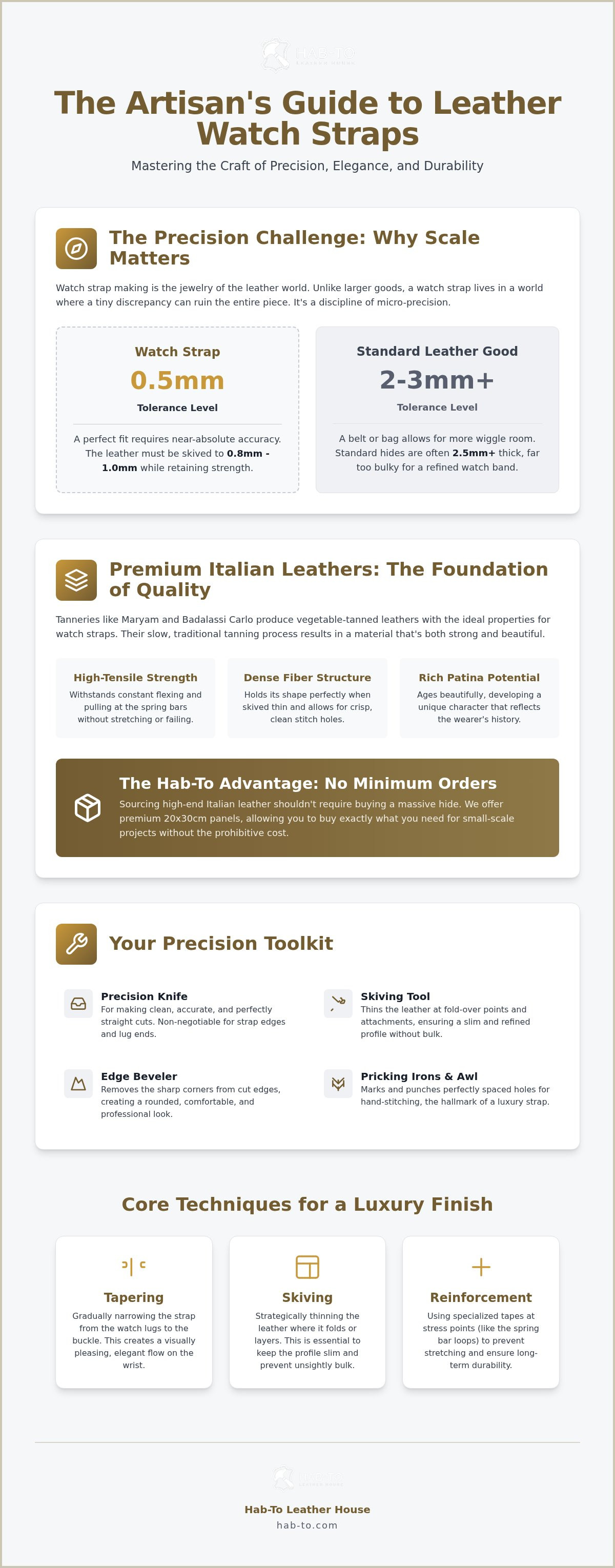
Think of watch strap making as the horological equivalent of bespoke tailoring. While a messenger bag allows for a few millimeters of wiggle room, a watch strap lives in a world where a 0.5mm discrepancy is the difference between a perfect fit and a piece that won't even slide into the lugs. This is truly the miniature discipline of leathercraft. To succeed, you need a specific combination of watchstrap leather and tools that respect this level of micro-precision. You aren't just cutting a strip of leather; you're engineering a component that must be both elegant and incredibly strong.
A strap isn't just a decorative band. It carries the weight of a timepiece, often worth thousands, and survives constant flexing and pulling every time you buckle it. High-tensile strength is non-negotiable. For a 20mm spring bar attachment, tensile strength is the measure of how much pulling force that tiny loop of leather can endure before it stretches or snaps. Without this structural integrity, the strap will fail at its most vulnerable point. Mastery involves choosing materials that offer this strength without unnecessary bulk.
Why do we use vegetable-tanned leather? It's the patina factor. Watch enthusiasts aren't looking for a plastic-coated finish that looks the same on day 1,000 as it did on day one. They want a material that records their history and develops a unique character over time. Leather crafting techniques have evolved over centuries, but the core appeal of a natural, aging material remains the gold standard in high-end watchmaking. If you want that professional look, you must also master tapering and skiving. Tapering ensures the strap flows elegantly from the lugs to the buckle, while skiving allows you to thin the leather at fold-overs to keep the profile slim and refined.
The Scale Challenge: From Hides to Millimeters
Standard belt leather, usually around 2.5mm thick, is far too bulky for a refined watch band. If you try to use it, the strap will feel like a stiff cardboard cuff on the wrist. A master artisan chooses leathers that can be skived down to 0.8mm or 1.0mm while maintaining their structural integrity. You need a hide with a tight grain that doesn't turn into "mush" when thinned. In the context of a 20mm spring bar attachment, tensile strength is the maximum pulling stress the leather loop can withstand before the material yields or the fibers fail.
Durability vs. Comfort: The Watch Maker's Balance
Comfort is just as vital as durability. This is where lining leather comes in. It sits directly against your skin, managing moisture and preventing irritation throughout the day. Vegetable-tanned leather is the ethical, skin-safe choice here because it lacks the harsh chemicals found in many chrome-tanned alternatives. Learn why vegetable tanned leather is the superior choice for artisans and how our family heritage informs every hide we select for this delicate balance.
Selecting the Best Leather for Watch Straps: Maryam to Badalassi
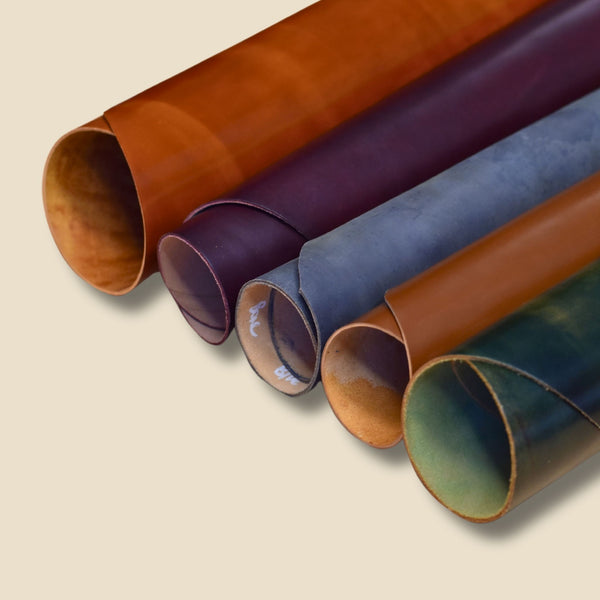
Italian tanneries like Maryam and Badalassi Carlo are members of the Genuine Italian Vegetable-Tanned Leather Consortium. This isn't just a prestigious label. It's a guarantee that the leather was produced using traditional, slow-tanning methods that respect both the environment and the craft. When you look at the FTC leather guides, you'll see how specific terminology defines quality and origin. For a watch strap, you need a material that meets these high standards while offering a high-density grain that won't distort when you work on a miniature scale.
One of the biggest hurdles for independent artisans is sourcing. Most wholesalers require you to buy a full double shoulder, which is far more material than you need for a single 20mm project. We solve this with a "No MOQ" policy on premium panels. You can order a 20x30cm piece, which is the perfect size for several straps, without the financial burden of a full hide. This approach makes experimenting with high-end watchstrap leather and tools accessible for everyone, whether you're a weekend hobbyist or a professional maker.
When you're working at this scale, the density of the leather fibers is your best friend. Imagine punching a line of 1.0mm holes along a narrow strap. If the leather is loose or spongy, the pressure of the punch will deform the surrounding area. Italian vegetable-tanned leathers are pit-tanned for months. This slow process results in a tight, compact fiber structure that holds its shape even after you've skived it down to a slim profile. It's this structural integrity that separates a luxury strap from a generic one.
The King of Straps: Maryam Shell Cordovan
Shell Cordovan is unique. It's not actually skin; it's a dense membrane from the hindquarters of a horse. Its primary advantage for watchmakers is that it doesn't crease; it ripples. This property makes it the ultimate luxury material for dress watches. Shop premium Maryam Shell Cordovan panels to see the incredible depth of color for yourself. If you want to understand why this material is so coveted, read the ultimate guide to Shell Cordovan.
Textured Excellence: Badalassi Pueblo & Virgilio Vaccheta
Pueblo has a signature scuffed look that develops a stunning patina over time, turning into a smooth, deep gloss. It's the perfect choice for tool watches or rugged field watches. Check out Badalassi Pueblo Leather for your next high-character project. If you want something more classic, Maryam Vaccheta is a versatile choice with a durable 1.3-1.5mm thickness. For those building their first kit of watchstrap leather and tools, these leathers offer a forgiving surface that hides minor beginner mistakes while still providing a professional result.
If you're just starting out, picking individual items can be overwhelming. You might find it easier to start with one of our curated crafting bundles to get everything you need in one go.
Essential Watch Strap Tools: What You Will Need
If you've selected your Maryam or Badalassi panels, the next step is ensuring your toolkit is up to the task. Standard utility knives and heavy-duty punches are the enemies of fine watchmaking. They lack the rigidity and precision required for 1.0mm tolerances. To transition from hobbyist to artisan, you need tools that respect the scale of the work. At Hab-To Leather House, we've curated a selection of watchstrap leather and tools that eliminate the "clunky" look of beginner projects.
What you will need
- Precision Skiving Knife: Necessary for perfectly vertical cuts and thinning fold-overs. Browse specialized tools.
- Small-Diameter Punches: Individual 1.0mm and 1.5mm punches for buckle tongues.
- High SPI Pricking Irons: 3.85mm or 4.0mm spacing for a refined, jewelry-like stitch. Explore stitching bundles.
- Leathercraft Master Bundle: A comprehensive starting point for small-scale excellence. Get the master bundle.
- Wing Dividers: To mark consistent 2.0mm stitch lines from the edge.
The small details make the difference. For instance, a standard rotary punch usually starts at 2.0mm. This is often too large for a refined dress strap. You need individual punches that allow the buckle tongue to sit flush without excess movement. Symmetrically shaped ends are another common hurdle. Instead of eyeing it, use acrylic or steel templates to ensure both sides are identical. This fundamental technique is discussed in Colorado State University's Leathercraft Manual, which provides a great foundation for tool selection and miniature work.
Stitching and Assembly Tools
Thread weight is just as critical as your iron spacing. A 0.4mm or 0.5mm thread is the sweet spot for a 3.85mm stitch line. Before you sew, use your wing divider to mark a consistent distance from the edge. This creates a balanced aesthetic that doesn't overpower the narrow width of the strap. Once your lines are marked, our curated crafting bundles provide the specific needle and thread combinations needed to finish your watchstrap leather and tools setup with professional flair.
The Finishing Touches: Hardware and Edge Work
Professionalism is found in the final 5% of the build. The strap isn't done just because it's sewn together. A luxury watch strap requires a sealed, smooth finish that feels comfortable against the wrist and looks refined under a cuff. This is where your choice of watchstrap leather and tools truly pays off. If you've used the tight-grained Italian panels we discussed earlier, the edges will respond beautifully to burnishing. The goal is to transform the fibrous side of the leather into a surface that looks and feels like polished stone.
Before you reach for the burnisher, you must address structural longevity. Even the best vegetable-tanned leather can stretch under the constant tension of a buckle. To prevent this, we recommend using internal reinforcements. Placing non-stretch materials around the spring bar holes and the buckle area prevents the "lug gap" that occurs when leather pulls and thins over time. It's a hidden detail that separates a bespoke strap from a generic one. At Hab-To Leather House, we emphasize these invisible reinforcements because they ensure your work maintains its shape for years.
Hardware selection is your final design hurdle. A common mistake is choosing a buckle that is too heavy for the leather weight. If you've skived your strap down to a refined 1.2mm profile, a chunky, oversized buckle will look unbalanced. Pay close attention to the watch case finishes. A brushed stainless steel case demands a brushed buckle, while a polished gold vintage piece requires a slim, polished gold-tone buckle. Ignoring these design cues breaks the visual flow between the timepiece and the strap.
What you will need
- Fine-grit Sandpaper: Progressing from 400 to 1000 grit for a glass-smooth edge.
- Tokonole: The industry standard for a natural, high-gloss finish. Shop Tokonole Bundles.
- Edge Beveler: Essential for rounding off sharp corners before burnishing. Browse Hab-To Tools.
- Wood or Glass Slicker: To create the friction needed to seal the leather fibers.
- Reinforcement Tape: To prevent stretching at the buckle and lugs. Get Texon Reinforcement.
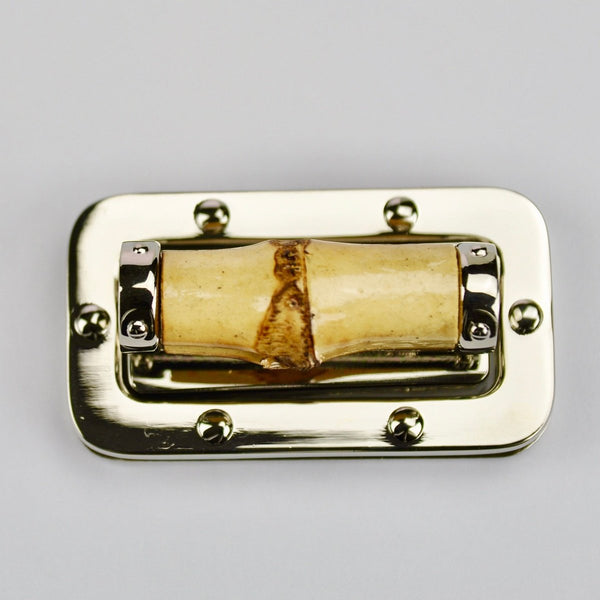
Solid brass or high-grade stainless steel buckles are non-negotiable for luxury straps. Cheap, plated hardware will eventually flake, exposing base metals that can irritate the skin. For more on selecting the right pieces for your project, see A Crafter's Guide to Essential Leather Hardware. You can also Browse our Hardware Collection to find the perfect match for your specific watch case.
Ready to start your next project with a complete kit?
Sourcing Strategically: The Hab-To Advantage for Artisans
Sourcing high-end materials shouldn't feel like an uphill battle against massive minimum orders. We believe that the best watchstrap leather and tools should be accessible to everyone, from the hobbyist making their first strap to the established professional. Our 160-year family history in the leather trade gives us a unique perspective. We don't just see hides; we see the potential for heritage-quality craft. This deep-rooted expertise informs every piece of leather we stock. We ensure it meets the rigorous standards required for horological work, where every fiber must hold its own under tension.
Why buy a full hide when you only need enough for a few 20mm projects? Our "No MOQ" policy is designed specifically for the maker mindset. It allows you to invest in the world's finest leathers, like Maryam Shell Cordovan or Badalassi Pueblo, without the financial risk of overstock. As a European-based wholesaler, we act as the primary partner for the European atelier. This means you avoid the high shipping costs and unpredictable wait times often associated with US-based suppliers. You also sidestep the complex customs duties that can arise from importing from outside the EU. We bring the best of the Tuscan Consortium directly to your workbench, ensuring your supply chain is as refined as your stitching.
Personalized Support for Your Craft
Do you have questions about which leather weight is right for your specific watch case? You don't have to guess. You can book a free 1-on-1 video consultation with Mike. With over 25 years of hands-on experience, he can help you troubleshoot specific hurdles and select the perfect materials for your project. We understand the specific challenges of finding the right watchstrap leather and tools for a custom build. If you're in the area, we also encourage you to visit our showroom by appointment. There's no substitute for the "touch and feel" experience when choosing the right grain density and temper for a luxury strap.
Mastering the Craft: Education and Community
We are more than just a supplier; we are a source of knowledge and a mentor for your journey. For those looking to refine their technique, Hab-To Masterclasses offer deep dives into advanced skills like hand-stitching and precision assembly. You can also find ongoing inspiration and artisan stories on our podcast, "The Leather Hour." We are here to support your growth from the first cut to the final burnished edge. Join a community that values tradition, quality, and the pursuit of small-scale excellence.
Shop our Watchstrap Leather and Tools Collection
Craft Your Legacy in Every Stitch
Mastering watch strap making requires more than just patience. It demands a commitment to the micro-precision that defines luxury horology. You've learned that 0.5mm can be the difference between a masterpiece and a mistake. By choosing high-density Italian leathers like Maryam and Badalassi, you ensure your work has the structural integrity to last for decades. Selecting specialized watchstrap leather and tools is the only way to achieve that refined, tapered look seen in world-class ateliers.
At Hab-To, we bring 160 years of family leather expertise to your workbench. We believe you shouldn't have to buy a full hide for a small project; that's why our premium panels come with no minimum order quantity. You get access to the world's best vegetable-tanned leathers exactly when you need them. Whether you're burnishing your first edge with Tokonole or skiving down a Shell Cordovan panel, our goal is to provide the materials that match your ambition. Precision is a choice, and it begins with your selection of materials.
Your journey into the jewelry of leathercraft starts with the first cut. We can't wait to see the incredible pieces you create.
Frequently Asked Questions
What is the best leather thickness for a watch strap?
The ideal thickness for a watch strap is between 1.3mm and 1.5mm for the top layer. This allows enough substance for durability while remaining thin enough to fold over spring bars after skiving. Our Maryam Vaccheta stock is specifically selected at this weight to provide the perfect balance of strength and flexibility. If you're building a padded strap, you might use a thinner 0.8mm lining leather to keep the total profile refined.
Do I need a special tool to cut the notch for the watch buckle?
You'll achieve the cleanest results using a 2mm or 3mm oblong punch to create the buckle tongue notch. While you can use a precision skiving knife to cut this by hand, a dedicated punch ensures perfect symmetry every time. This is a vital part of your watchstrap leather and tools kit if you want to avoid jagged edges where the hardware sits. A clean notch prevents the buckle from sitting crooked on the wrist.
Why should I use vegetable-tanned leather instead of chrome-tanned for straps?
Vegetable-tanned leather is the superior choice because it's hypoallergenic and develops a unique patina that chrome-tanned leather can't replicate. Since a strap sits directly against your skin for hours, using natural tannins instead of harsh chemicals prevents irritation. It also possesses the high-tensile strength needed to hold a heavy watch case securely. Our Italian leathers from the Tuscan Consortium are the gold standard for these wearable items.
How do I prevent my leather watch strap from stretching over time?
Integrate a non-stretch reinforcement tape like Texon between your leather layers to stop the strap from elongating. Stretching usually happens at the buckle holes and the spring bar loops where the tension is highest. By gluing a thin layer of Texon inside, you maintain the strap's original dimensions for years. This simple step separates amateur work from professional-grade accessories that don't develop unsightly gaps at the lugs.
What size pricking iron is best for watch strap stitching?
A pricking iron with a spacing of 3.85mm or 4.0mm is the best fit for watch strap scale. This higher stitch count creates a refined, jewelry-like appearance that complements the small surface area of a 20mm band. Using a larger 5mm iron often looks too chunky and overpowers the delicate leather. Pairing this spacing with a fine 0.4mm or 0.5mm thread like Vinymo results in a perfectly balanced aesthetic.
Can I make a watch strap with basic leathercraft tools?
You can start with basic tools, but achieving a luxury finish requires a few specialized items like a precision skiving knife and 1.0mm punches. Basic utility knives often flex, making it hard to get the perfectly vertical edges needed for a 20mm strap. If you're ready to upgrade, our curated watchstrap leather and tools bundles provide the micro-precision equipment necessary to move beyond simple hobbyist projects and into high-end artisan work.
Is Shell Cordovan worth the extra cost for a watch strap?
Shell Cordovan is absolutely worth the investment because it ripples rather than creasing, maintaining its glass-like finish for decades. It's an incredibly dense membrane that offers unmatched durability for its thickness. Since you only need a small amount for a strap, our "No MOQ" panels make this luxury material accessible without buying a full hide. It's the ultimate choice for dress watches where a flawless look is required.
How do I achieve a professional burnished edge on a thin strap?
Achieving a professional edge on a thin strap requires careful sanding up to 1000 grit followed by an application of Tokonole. The sanding levels the layers into a single, seamless surface. Once smooth, apply a thin layer of Tokonole and use a wood or glass slicker to create friction. This heat seals the fibers, resulting in a natural, durable shine that won't crack or peel like cheap edge paints.
Disclaimer
All our blog articles are made for information purposes only we dont take responsability for any content from third parties.