

Beaver Tail Meat: A Trapper's Delicacy and the Leather It Came With
Mention eating beaver tail, and you're likely met with a mix of curiosity and confusion. Is it actually meat, or just a slab of fat? What could it possibly taste like, and why on earth would anyone choose to eat it? These are fair questions about a food that sounds more like a frontier legend than a modern meal. But behind the curiosity lies a rich history tied directly to the craft we love: working with exceptional, natural materials and understanding their origins.
Here, we believe every material has a story. The beaver's tale is one of survival, exploration, and resourcefulness. We're going to dive into the surprising world of beaver tail meat, exploring its unique taste, texture, and historical significance as a trapper's delicacy. You'll not only satisfy your curiosity about this unusual dish but also gain a deeper appreciation for the animal that provided one of the most durable and prized leathers in history-the true prize of the fur trade.
Key Takeaways
- Understand what historical trappers meant by "beaver tail meat"-a unique, high-energy source of fat that's entirely different from traditional muscle.
- Discover why the beaver's dense, water-resistant pelt was the true prize that fueled the North American fur trade, far surpassing the value of its meat.
- Learn the essential preparation and cooking methods required to properly render and enjoy this historical trapper's delicacy.
- Connect the spirit of historical resourcefulness to your own leathercraft by exploring the unique properties and stories behind unconventional hides like beaver.
What is Beaver Tail Meat? Unpacking the Historical Reality
When we talk about the world of traditional leathercraft, we often think of the rugged individuals who lived off the land-the trappers and mountain men. For them, an animal like the beaver provided more than just a premium hide for trade; it provided sustenance. This brings us to a fascinating and often misunderstood piece of wilderness lore: beaver tail meat. Let's be clear from the start: it’s not muscle. The tail is a unique, dense source of fat that was once considered a life-saving delicacy in the wild.
To see how this unique food is prepared in a modern context, this video offers a great visual guide:
The Anatomy of a Beaver's Tail
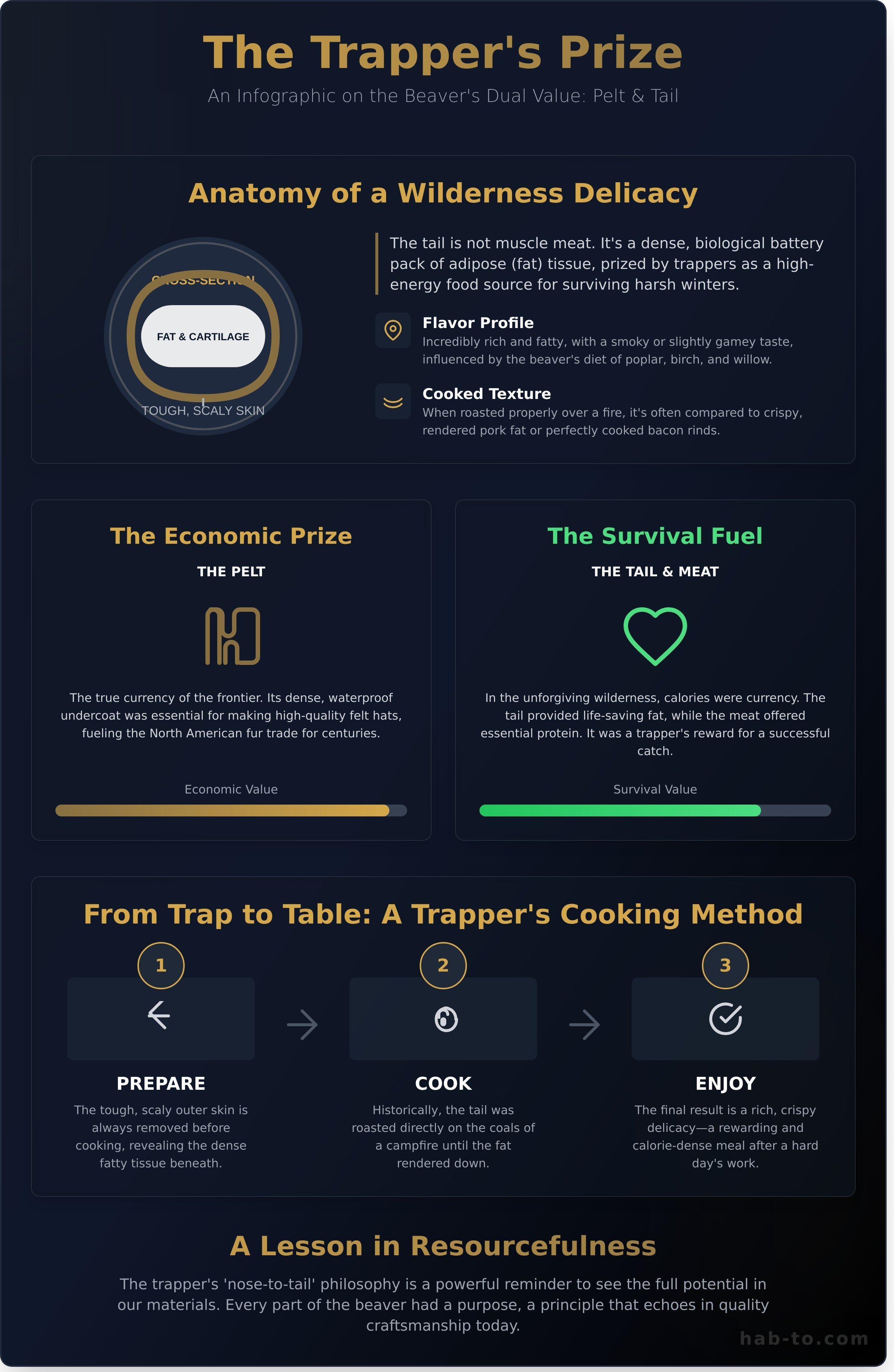
The tail of the beaver is a masterpiece of natural engineering. This flat, paddle-like appendage acts as a rudder in the water, a prop for support on land, and a powerful alarm when slapped against the water's surface. Beneath its tough, scaly skin-which is always removed before cooking-lies not muscle, but a dense network of adipose (fat) tissue interlaced with cartilage and connective tissue. Think of it as a biological battery pack, storing critical energy for the animal to survive harsh winters.
Why Trappers Considered It a Delicacy
In the unforgiving wilderness, calories were currency. Surviving brutal winters and grueling trapping expeditions required a massive energy intake, and fat was the most efficient source available. While lean game meat from deer or elk was common, pure fat was a rare and valuable prize. The beaver's tail was a compact, high-energy reward for a successful trap. It was often cooked simply: roasted directly on the coals of a campfire until the fat rendered and crisped. It was pure, simple fuel for a life of hard work.
Flavor and Texture: What to Expect
So, what does beaver tail actually taste like? Most historical accounts and modern-day adventurers describe it as incredibly rich and fatty. The flavor profile is often described as slightly gamey or smoky, especially when cooked over an open fire. When roasted properly, the resulting texture is frequently compared to crispy pork fat or perfectly cooked bacon rinds. The specific taste can also be influenced by the beaver's diet, with subtle notes reflecting a life spent chewing on woods like poplar, birch, and willow.
From Trap Line to Trade Post: The Beaver's Central Role in History
Before we press a single rivet into a piece of fine leather, it’s worth understanding the history of the materials we work with. Long before tanneries, the North American beaver was the cornerstone of an entire economy. For frontiersmen and Indigenous peoples, the beaver was a source of immense value, not just for its pelt, but for its role as a vital source of sustenance. The connection between the fur that drove an empire and the beaver tail meat that fueled the trappers is a powerful lesson in resourcefulness.
This wasn't just about survival; it was about a 'nose-to-tail' philosophy that modern craftspeople can learn a great deal from. Nothing was wasted. The beaver was revered as a complete resource, a principle that echoes in our own commitment to quality and sustainability today.
The Fur Trade: An Industry Built on Beaver Pelts
From the 17th to the 19th century, the demand for beaver pelts fueled a massive global industry. Companies like the Hudson's Bay Company established vast networks of trade routes and forts, effectively mapping much of North America in the process. Why the obsession? Beaver fur, with its dense, waterproof undercoat, was perfect for making high-quality felt hats-a non-negotiable status symbol for any European gentleman of the era. These pelts became a de facto currency, a standard of wealth that drove exploration and conflict for centuries.
A Lesson in Sustainability: Using the Whole Animal
For the trappers on the ground, the pelt was only part of the story. True craftsmanship is about seeing the full potential in your materials, and they embodied this ethos completely. Every part of the beaver had a purpose:
- The Pelt: The primary economic driver, traded for goods and supplies.
- The Meat & Tail: A rich source of protein and fat essential for survival in the wilderness. In fact, many historical accounts and modern wildlife resources, like those from the Maine Department of Inland Fisheries & Wildlife, document the importance of beaver meat and tail in the diets of early settlers and Indigenous communities. The fatty beaver tail meat was a particular delicacy.
- The Castoreum Glands: Used in perfumes and traditional medicines.
- The Teeth: Often sharpened and used as cutting or scraping tools.
This zero-waste approach is a powerful reminder of the connection between a craftsman and their resources. It’s a tradition of honoring the material that we strive to uphold. Interested in working with materials that reflect this commitment to sustainability? See our veg-tan leather collection.
Beyond the Meat: The Qualities of Beaver Leather and Fur
While trappers and frontiersmen historically valued the beaver for many reasons, including the unique fat of beaver tail meat, for us leather crafters, the real treasure lies in the hide. The beaver provides two distinct and remarkable materials that have been prized for centuries. Understanding their properties is key to appreciating their role in both historical and modern craftsmanship. It’s a material that demands respect and rewards the artisan with unparalleled durability and character.
Beaver Hide: A Durable and Warm Material
A tanned beaver hide is a masterpiece of natural engineering. Its legendary warmth and water resistance come from a unique dual-layer fur structure. The long, glossy outer guard hairs shed water effortlessly, while the incredibly dense, soft underfur provides insulation that is second to none. This combination made it the gold standard for the historic fur trade, primarily for creating beaver felt hats. Today, its exceptional qualities make it perfect for premium collars, cuffs, and warm linings in high-end garments.
The Unique Challenge of Beaver Tail Leather
Separate from the main hide, the tail is where things get truly interesting. While some may know of beaver tail meat, artisans see a completely different resource. The skin, once tanned, becomes a durable leather with a distinct, scaly pattern reminiscent of a reptile. Tanning this piece requires a specialized process to preserve its unique texture. Because of its small size and rigid structure, it's used for decorative and high-wear applications like wallet inlays, knife sheaths, and distinctive watch straps.
Working with Beaver Leather in Modern Craft
For the modern artisan, beaver leather presents an exciting opportunity. The main hide is pliable yet incredibly tough, making it suitable for projects demanding weather resistance, such as moccasins or durable bags. It works differently than cowhide, often being softer and requiring sharp tools to cut cleanly through the dense fur. While not a common material in most workshops, it’s a sustainable and premium choice for experienced crafters looking to create a truly unique, heirloom-quality piece. It’s a nod to tradition, built with uncompromising quality.
How to Cook Beaver Tail: A Guide for the Adventurous
In the spirit of true craftsmanship, we believe in respecting the source of our materials. For generations, trappers and outdoorsmen have practiced a "waste-not" philosophy, utilizing every part of an animal. While we focus on premium leather, it’s worth exploring the traditions that surround the animals themselves. The beaver tail, often discarded, is a historical delicacy rich in fat and flavour-a true taste of the wild.
Disclaimer: Always check your local and state hunting, trapping, and foraging regulations. Ensure any wild game is sourced legally and handled according to proper food safety guidelines to prevent illness.
Step 1: Preparation and Skinning
Proper preparation is everything when it comes to cooking beaver tail. The goal is to remove the tough, scaly outer hide to get to the prized fatty tissue beneath. It’s a simple process that requires a bit of patience.
- Scald the Tail: Submerge the tail in a pot of very hot (not boiling) water for a few minutes. This loosens the scaly outer layer, much like scalding a tomato to peel its skin.
- Peel the Hide: Remove the tail from the water. The tough, black, scaly hide should now peel off relatively easily with the help of a knife, revealing a thick layer of white fat.
- Clean and Score: Rinse the peeled tail under cold water. Using a sharp knife, score the fat in a diamond pattern, cutting down to the muscle but not through it. This helps the fat render evenly during cooking.
The Classic Campfire Recipe: Roasted Beaver Tail
The most traditional way to cook a beaver tail is the simplest: roasted over an open fire. This method crisps the outside perfectly while melting the fat into a rich, savoury meal. The resulting beaver tail meat and rendered fat is a high-energy food that has sustained frontiersmen for centuries.
Simply impale the prepared tail on a sturdy green stick or place it on a grill grate over hot coals-not open flames. Season it generously with salt and pepper; a little garlic powder also works well. Roast it slowly, turning it often. It's done when the exterior is golden brown and crispy, and the fat has become soft and translucent. Enjoy it right off the stick for an authentic experience that connects you to a long history of outdoor tradition.
Respect for the material is at the heart of all true craftsmanship. For more on the quality materials that fuel our passion, feel free to browse our collection at hab-to.com.
Embracing Unique Materials in Your Leathercraft Journey
Perfectly setting a rivet is a mark of skill, but the soul of any project lies in the material you choose. While we've discussed the techniques, your journey as a crafter truly expands when you explore the vast world of leather beyond the standard. It’s about finding a hide that doesn’t just do the job, but tells a story.
The Allure of Exotic and Uncommon Leathers
Crafters are drawn to unique materials like beaver tail, kangaroo, or even fish leather because they offer textures, patterns, and durability that cowhide simply can't replicate. Each piece carries a distinct narrative. This mirrors the spirit of historical resourcefulness, where nothing was wasted. For a frontier trapper, the beaver provided more than just a pelt; its castoreum was valuable, and the beaver tail meat was a source of sustenance. This complete, sustainable use of a resource is a philosophy that modern artisans can connect with-choosing materials with intention and appreciating their unique origins.
Your First Step into Quality Craftsmanship
While exploring exotic leathers is an exciting part of the craft, the principles of quality are universal. The foundation of any great leather project, whether it uses a rare hide or a classic one, is starting with premium material. This is where the timeless quality of vegetable-tanned leather shines. It provides the perfect canvas to practice your skills, offering reliability, beauty, and the ability to develop a rich patina over time. It’s the best way to ensure your hard work results in a product that lasts a lifetime. No compromises, just real craftsmanship.
Ready to start your next project with materials you can trust? Find all your leathercraft supplies here.
From Frontier Sustenance to Modern Craftsmanship
The beaver’s story is deeply woven into the fabric of history, a tale of survival, trade, and profound resourcefulness. We've explored how this remarkable animal provided not just a unique frontier delicacy in the form of beaver tail meat, but also a pelt that fueled economies and a distinctive leather that continues to inspire artisans today. This journey from the trap line to the workshop is a powerful reminder of using natural materials with respect, intention, and a commitment to leaving no part to waste.
At Hab-To Leather House, we share that same passion for materials with a story. It’s a passion built on over 160 years of family experience in sourcing only the finest, most sustainable leathers for real craftsmanship. We believe every creator, from beginner to expert, deserves access to premium materials without barriers, which is why we proudly have no minimum order requirements.
If the legacy of the beaver has inspired your own creative journey, we invite you to Explore our hand-selected collection of premium, sustainable leathers.
Embrace the tradition, honor the material, and let your next project tell a story of its own. Happy crafting!
Frequently Asked Questions About Beavers and Their Uses
Is it legal to trap and eat beaver in most places?
In many parts of North America, trapping beaver is legal, but it is a highly regulated activity. You almost always need a specific trapping license and must adhere to strict seasonal dates and bag limits set by your state or provincial wildlife agency. Before you consider trapping for pelts or harvesting beaver tail meat, it is crucial to consult your local regulations. These laws are in place to ensure sustainable wildlife management and ethical practices.
What is the nutritional value of beaver tail meat?
Beaver tail is not muscle but a unique appendage composed almost entirely of fat and connective tissue. As a result, the nutritional value of beaver tail meat is primarily caloric, offering a very rich source of energy and fats. Historically, it was a prized food source for trappers and Indigenous peoples for its high-energy content, especially in cold climates. When rendered, the fat can also be used for cooking or waterproofing leather goods.
Is beaver leather waterproof and how is it used today?
Beaver hide leather, like most animal leathers, is not naturally waterproof but is highly water-resistant and durable. The dense hair follicles give it a unique and robust grain structure. Historically, it was famously used to make felt for top hats. Today, this premium leather is used for durable gloves, moccasins, and rugged outerwear. Its strength and supple feel make it an excellent choice for heirloom-quality crafts that need to withstand the elements with proper care.
How does beaver fur compare to other animal furs for warmth?
Beaver fur is renowned for being one of the warmest and most durable furs available. Its incredible insulating power comes from a dense, soft underfur, which can have over 10,000 hairs per square centimeter. This makes it significantly warmer than many other furs, such as rabbit or fox. Its natural water repellency also made it the standard for the fur trade for centuries, particularly for garments worn in harsh, wet, and cold conditions.
What other parts of a beaver were traditionally used?
Beyond the hide and meat, nearly every part of the beaver was traditionally used, reflecting a deep respect for the animal. The castoreum from its scent glands was a valuable ingredient in perfumes and traditional medicines. The sharp, strong incisor teeth were often fashioned into cutting tools, dice, or ornaments. Even the bones could be used to create tools like awls and needles. This nose-to-tail approach embodies true, sustainable craftsmanship.
Can you make leather from a beaver's tail?
Yes, you can absolutely make a unique and beautiful leather from a beaver's tail. The tail skin does not have fur; instead, it has a distinct, scaly, and textured pattern, often compared to a reptile hide. Once tanned, it becomes a durable and flexible material. Due to its small size and unique appearance, beaver tail leather is perfect for specialty projects like wallet inlays, watch straps, knife sheaths, and other decorative accents in fine leatherwork.