Buying Leather Scraps for Small Projects: A Crafter’s Guide to Quality Remnants
Hi, I'm Mike! Why should a craftsman pay for a full hide when the world's most prestigious tanneries produce "waste" that is actually perfect for a premium watch strap or card holder? It's a question I hear often in our Amsterdam showroom. You likely feel the sting of high material costs, especially when you only need a few square feet of top-tier vegetable-tanned leather. The fear is real; nobody wants to spend money on a bag of "floor sweepings" that turn out to be unusable junk. Buying leather scraps for small projects should be an entry into luxury, not a gamble on quality.
I agree that every square inch of a premium hide deserves respect. Since our family started in this trade over 160 years ago, we've learned that the right offcut can produce a professional-grade result at a fraction of the cost. In this guide, I'll show you exactly how to source hand-selected remnants and match specific leather weights to your creative vision. You will learn to identify high-quality offcuts from tanneries like Buttero or Pueblo and discover how to maximize every piece for your next project.
Key Takeaways
- Learn how to access world-class leathers like Shell Cordovan at a fraction of the cost while supporting sustainable, waste-reducing craft practices.
- Identify the essential differences between vegetable-tanned and chrome-tanned remnants to ensure your material perfectly matches your project's structure and finish.
- Discover the secret to buying leather scraps for small projects by evaluating tannery sources and distinguishing genuine leather character from structural damage.
- Master the art of material matching to turn odd-shaped offcuts into professional-grade minimalist wallets, key fobs, and cord organizers.
- Find out how hand-selected, premium remnants allow you to maintain a "no compromises" standard of quality without the need for large minimum orders.
Why Buying Leather Scraps is the Smartest Move for Small Projects
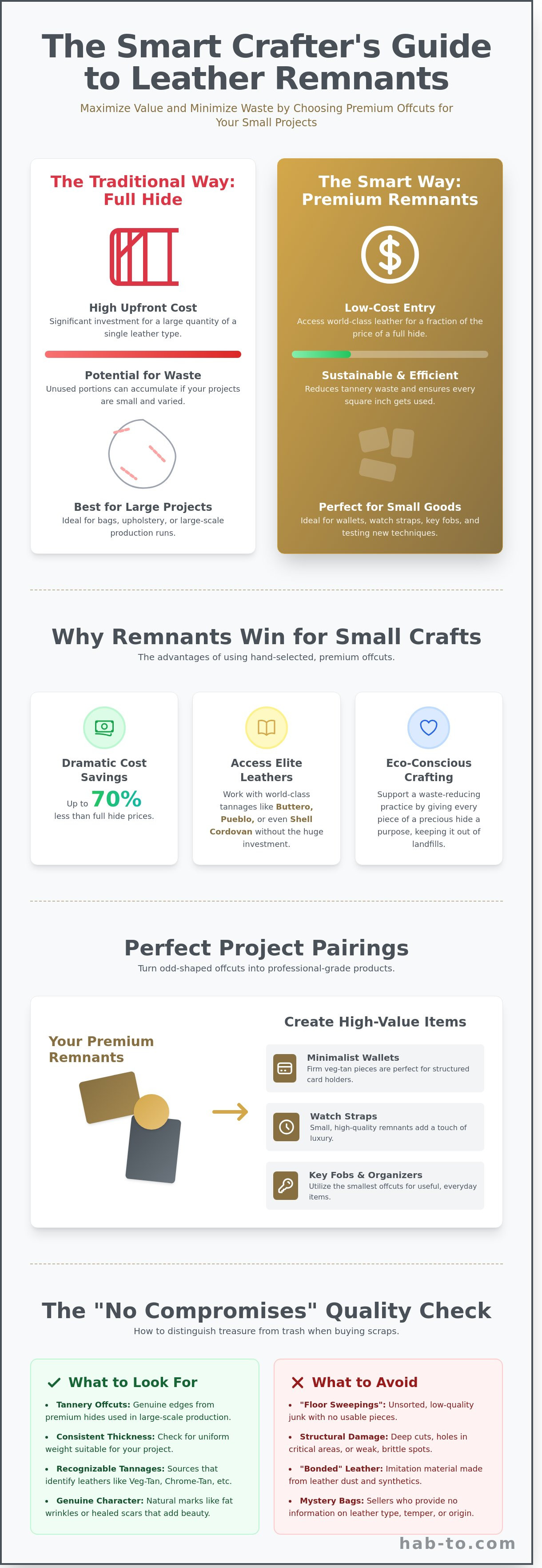
Hi, I'm Mike! At Hab-To Leather House, we live by a simple rule: no synthetics and no compromises. When you're diving into this craft, buying leather scraps for small projects is the most strategic way to access world-class materials. You don't need a 20-square-foot hide to make a cardholder. Scraps allow you to work with premium tannages like Shell Cordovan or Buttero at a tiny fraction of the cost of a full side. It's about getting the best leather in your hands without a massive upfront investment.
Sustainability is at the heart of what we do. Utilizing offcuts from larger industrial productions ensures that high-quality material doesn't end up in a landfill. These pieces provide a low-stakes environment for growth. They're the perfect canvas for practicing your leather crafting techniques, from saddle stitching to edge burnishing. If you make a mistake on a small remnant, it's a cheap lesson. If you ruin a full hide, it's a costly setback. Most essential gear like wallets, watch straps, and key fobs only require a few square inches, making remnants the ideal choice for the small project niche.
To better understand the value of these materials, watch this helpful video:
Breaking the 'Scrap vs. Trash' Misconception
Scraps aren't floor sweepings. High-quality remnants are typically tannery offcuts, meaning they're the edges of premium hides that didn't fit a specific factory pattern. We focus on vegetable-tanned leather because it ages beautifully and holds its shape. As an Amsterdam wholesaler with 160 years of family experience, we've seen how no-minimum-order options change the game for hobbyists. You get professional-grade material without the industrial-scale commitment.
Maximizing Your Crafting Budget
A cost-per-square-inch analysis shows that scraps often cost 50% to 70% less than buying a full hide. This pricing structure lets you build a diverse leather library with various colors and weights for very little money. You can stock up on different textures and temperaments to see what suits your style best. Scraps give you the freedom to test exotic textures and high-end finishes without the financial risk of a major purchase.
- Access premium leathers like Shell Cordovan for small accents.
- Reduce waste by using 100% of the animal's hide.
- Practice complex stitching patterns on affordable offcuts.
- Create high-value items like watch straps from tiny remnants.
Understanding Leather Remnants: What is Actually in the Bag?
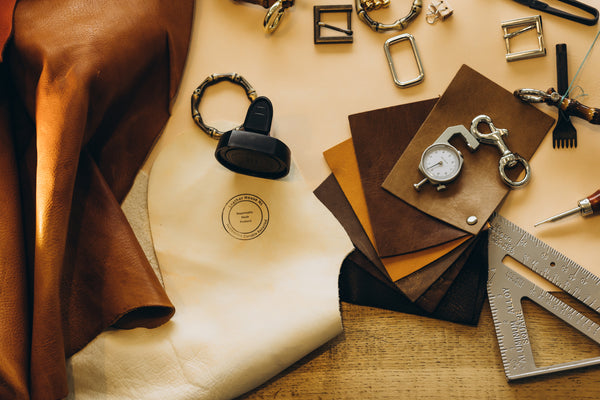
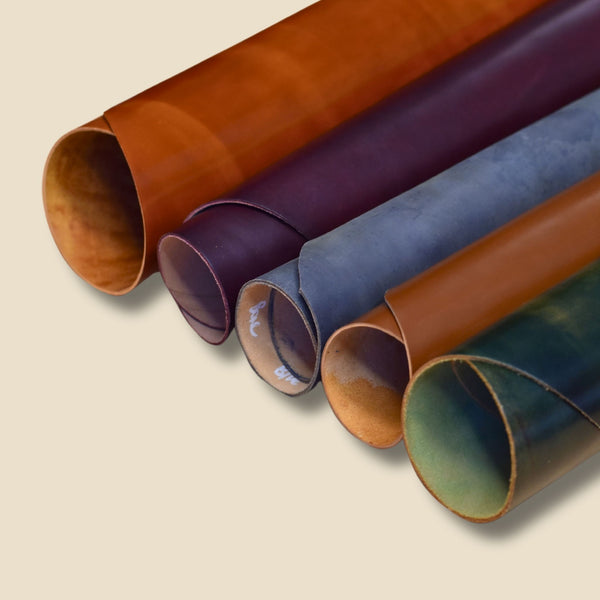
When you're buying leather scraps for small projects, opening a new package feels like a treasure hunt. You'll find a variety of textures and tannages, each suited for different tasks. Vegetable-tanned (Veg-Tan) scraps are the gold standard for many crafters. These pieces are firm and respond beautifully to carving, stamping, and wet-molding. Over time, they develop a deep, natural patina that tells a story of use. They're the go-to choice for traditional leatherwork.
Chrome-tanned remnants offer a different experience. They're soft, pliable, and come in a massive array of vibrant colors. These are best for wallet linings, small pouches, or projects where you want a soft hand-feel immediately. If you need something for the outdoors, look for oil-tanned offcuts. These pieces are saturated with oils and waxes, making them water-resistant and incredibly durable. They're ideal for rugged gear or tool rolls. For high-end accents, keep an eye out for premium scraps like Shell Cordovan or Pueblo. These small pieces add a touch of luxury to a simple keychain or cardholder.
It's vital to know what you're actually getting in your order. The U.S. Government Publishing Office provides the Guides for Select Leather and Imitation Leather Products to help consumers distinguish between genuine top-grain leather and lesser imitations. Understanding these standards ensures you aren't paying for "bonded" materials when you want the real deal.
Weights and Thicknesses to Look For
Leather is measured in ounces or millimeters. In the workshop, 1 ounce equals roughly 0.4mm. For most, the 3-4oz (1.2-1.6mm) range is the sweet spot. It's thick enough to hold its shape but thin enough for most hobbyist sewing machines. When buying leather scraps for small projects, you'll often get mixed weights. Use a skiving knife to thin down the edges of thicker pieces. This helps you maintain a professional look even when using varying thicknesses in a single project.
The Difference Between 'Bags' and 'Bundles'
A random assortment bag is usually sold by weight and offers high volume at a lower price. The predictability is low; you might get colors or textures that don't fit your style. Curated bundles are different. At Hab-To, we select pieces for color or weight consistency. This approach reduces waste because every piece in the bundle is usable for your specific aesthetic. Weight-based pricing remains the industry standard, ensuring you pay a fair price for the raw material you receive.
Ready to find the perfect piece for your next creation? You can browse our hand-selected leather to see our latest curated collections.
How to Evaluate Scrap Quality Before You Buy
When buying leather scraps for small projects, don't let the low price point blind you to the material's integrity. Professional crafters look for a specific pedigree. An "Italian Veg-Tan" scrap from a renowned tannery like Walpier or Badalassi Carlo offers a dense grain structure that generic "genuine leather" remnants can't match. While "genuine leather" sounds like a quality term, it often refers to the lowest grade of leather made from bonded scraps or heavily corrected hides. These generic pieces lack the fiber density needed for burnishing edges or achieving a professional finish.
You must distinguish between "character" and "damage" before completing your purchase. Natural range marks like insect bites or healed scars add a unique story to a wallet or key fob. However, dry rot is a dealbreaker. You'll identify dry rot if the surface cracks when you bend it or if the leather feels brittle and dusty. Before you pay, perform a quick "Usable Area" test. If you're crafting card holders, you need pieces at least 10cm by 7cm. A 2kg bag of long, thin strips might seem like a bargain, but if those shapes don't fit your templates, they're just expensive trash. Ensure the tannage is consistent across the bag; you don't want pieces that are too "mushy" to hold a stitch or so stiff they break your needles.
The Smell and Feel Test
Real vegetable-tanned leather has a distinct aroma. It smells like bark, earth, and old-world tradition. If a scrap bag smells like a chemical factory or synthetic glue, it's a sign of cheap chrome tanning or heavy pigment coating. Check the "flesh side" (the back of the leather). High-quality remnants have a tight, smooth finish on the back. If the scrap has excessive fuzz or loose fibers, your finished project will look unrefined. My golden rule for every crafter is simple: if it feels like plastic, it’s not for real craftsmanship.
Sourcing Sustainably in Europe
Choosing an Amsterdam leather wholesaler gives you more than just proximity; it ensures the leather meets the highest environmental standards. All scraps sold within the EU should be REACH compliant. This regulation, established in June 2007, strictly limits harmful chemicals like Chromium VI in leather goods. Using safe, sustainable materials is essential when following a guide to learning leather crafting, as you'll be handling these hides for hours. For a deeper look at how these premium hides are processed, read our Vegetable Tanned Leather: The Complete Guide for Crafters. Buying from a transparent source means your small projects support ethical tanneries rather than industrial waste streams.
Best Small Projects for Leather Scraps and How to Match Materials
Hi, I'm Mike. I've seen thousands of crafters turn what others call "waste" into heirloom-quality goods. Buying leather scraps for small projects isn't just about being thrifty; it's a strategic way to access world-class materials like Shell Cordovan or Buttero without the investment of a full hide. At Hab-To, we believe in "No compromises," and that applies to your small projects too.
The secret lies in matching the specific scrap to the right utility. Here are the best ways to utilize your remnants:
- Minimalist Wallets: You need structure here. Reach for firm vegetable-tanned scraps. These maintain their shape and develop a beautiful patina. A 1.5mm thickness is ideal for card slots that won't over-stretch.
- Key Fobs and Cord Organizers: These are the perfect destination for those odd, triangular offcuts. Since these items face constant handling, the natural oils in veg-tan leather help them age gracefully.
- Watch Straps: This is the ultimate high-value use for premium remnants. A tiny piece of Shell Cordovan, perhaps only 5cm wide, can be transformed into a luxury strap. It's the most efficient way to use the most expensive leathers in the world.
- Jewelry and Earring Sets: Weight matters for your ears. Use thin, colorful chrome-tanned or suede scraps. These offer a pop of color and flexibility that heavier leathers lack.
- Leather Patches: Use small, stamped remnants to brand your textile work. A simple veg-tan patch sewn onto a canvas bag adds an immediate sense of "hand-made" quality.
Matching Leather Type to Project
Temper is the most critical factor when you're buying leather scraps for small projects. If you're building card slots, you need a firm temper so the leather holds the card tight. If you're making a small drawstring pouch, you need a soft, supple temper that folds easily. Don't be afraid to mix textures. A pebbled grain pocket on a smooth leather wallet creates a bespoke, high-end look. Just ensure you choose the right leather hardware to complement the weight and style of your scrap project.
Tools Needed for Working with Scraps
Precision is everything when working with limited surface area. I always recommend a sharp rotary cutter. It allows you to glide along the very edge of a scrap, maximizing every millimeter. Use clear acrylic templates to "nest" your cuts. This technique lets you see exactly where the grain or scars are before you commit to the blade. For small-scale work, keep your stitch pitch tight; a 3.0mm or 3.38mm spacing looks much more professional on tiny items than wide industrial stitching.
Ready to start your next creation? Shop our hand-selected leather remnants and get to work.
Beyond the Scrap Bin: Why Hab-To’s Premium Offcuts Make the Difference
Hi, I'm Mike! At Hab-To, we don't believe in the "waste" bin. Most suppliers treat offcuts like floor sweepings, but we see them as the foundation for your next masterpiece. Our philosophy is simple: we only sell remnants we'd be proud to use in our own workshop. This means when you're buying leather scraps for small projects, you aren't digging through dusty leftovers. You're accessing the same premium, vegetable-tanned hides used by high-end luxury brands across Europe.
We've built our reputation on supporting the "one-wallet-at-a-time" crafter. You don't need to purchase a 20-square-foot hide just to make a cardholder or a watch strap. With no minimum order requirements, you can experiment with legendary leathers like Buttero from Conceria Walpier or the rustic, pebbled texture of Pueblo from Badalassi Carlo. It's the most cost-effective way to get world-class quality without the full-hide price tag. We've spent 160 years building relationships with these world-class tanneries so you can benefit from our family's deep-rooted history.
I'm not just here to ship a box; I'm here to act as your mentor. If you're stuck on which weight to choose or how to edge-finish a specific tannage, just ask. We offer advice because your success is our reputation. No synthetics. No compromises. Just quality materials for real craftsmanship.
Curated Crafting Bundles vs. Generic Scraps
Generic scrap bags often contain synthetic fillers or chrome-tanned mystery leather that's hard to burnish. Our bundles are different. We sort every pack by weight and project suitability, ensuring you get usable shapes rather than useless slivers. Every piece is 100% real, sustainable, vegetable-tanned leather. If you're near the Netherlands, you can even book an appointment to visit our Amsterdam showroom. Getting a hands-on look at the grain and temper helps you make the right choice when buying leather scraps for small projects.
Start Your Next Project with Hab-To
Ready to begin? Ordering your first bundle online is a straightforward process designed for busy makers. Beyond the materials, you can join "The Leather Hour" community to hear stories from the craft, listen to our podcast, and pick up technical tips that keep your skills sharp. We're more than a wholesaler; we're your partner in the creative process. Browse our curated leather crafting bundles today!
Start Your Next Masterpiece Today
Great things come in small packages. Finding the perfect remnant is about spotting the potential in every hand-selected piece. Buying leather scraps for small projects allows you to work with world-class materials without the overhead of full hides. It's a sustainable way to build; it's how we've operated for over 160 years. Our family expertise ensures that every scrap we offer meets the highest standards of durability and texture. We don't do synthetics. We don't do compromises. You get access to premium, vegetable-tanned leathers with no minimum order requirements. This means you can focus on the craft instead of the logistics. Whether it's a sleek wallet, a custom watch strap, or a unique key fob, the right material makes the difference between a hobby and a legacy. Grab a bundle and see how quality leather transforms your workbench. We're here to help you create something that lasts. Let's make something incredible together.
Explore Hab-To's Premium Leather Scrap Bundles
Frequently Asked Questions
Is buying leather scraps worth it for beginners?
Buying leather scraps for small projects is absolutely worth it because it provides a low-risk environment to master your fundamental skills. You can practice saddle stitching on 5 or 6 different leather weights without the fear of ruining an expensive full hide. It's the most practical way for beginners to understand how various tannages react to tools. No compromises on learning; just pure, hands-on experience with quality materials.
What can I actually make with a 1kg bag of leather scraps?
A 1kg bag of scraps provides enough material to craft 10 to 15 small items like key fobs, cord wraps, or bookmarks. If the pieces are larger, you can easily produce 3 or 4 minimalist wallets or card holders. We hand-select these remnants to ensure you receive usable surface area rather than tiny trimmings. It's a fantastic way to build a diverse collection of handmade goods for gifts or local craft markets.
How do I know if the leather scraps are vegetable-tanned or chrome-tanned?
You can distinguish vegetable-tanned leather by its organic, woody scent and its ability to absorb water. Apply a single drop of water; if it soaks in and darkens the surface within 30 seconds, it's likely vegetable-tanned. Chrome-tanned leather usually has a chemical odor and resists water due to the mineral salts used in the 24-hour tanning process. Vegetable-tanned pieces also burnish beautifully, while chrome-tanned edges require edge paint.
Can I use leather scraps for making full-sized belts?
You cannot make full-sized belts from scraps because remnants rarely exceed 30cm or 40cm in length. A standard adult belt requires a continuous strip between 110cm and 130cm depending on the waist size. While these pieces won't work for the strap, they're excellent for crafting the keepers and decorative end tabs. Use these smaller pieces to add unique, contrasting details to your larger projects.
Do I need special tools to work with leather remnants?
You only need a few basic tools like a sharp knife, a metal ruler, and two needles to start crafting. For most small projects, a 4mm stitching chisel and a simple mallet are enough to create professional-looking seams. You don't need a massive workshop or industrial machines to produce beautiful work. Start small, focus on your technique, and let the quality of the leather speak for itself.
How should I store my leather scraps to prevent them from drying out?
Keep your leather in a temperature-controlled environment with a humidity level between 45% and 55% to maintain its suppleness. Avoid plastic containers that trap moisture; use breathable cotton bags or cardboard boxes instead. If a piece of Pueblo or Buttero leather feels dry after 12 months, a light application of natural conditioner will revive it. Proper care ensures your premium remnants stay ready for your next creative spark.