Vegetable Tanned Leather: The Complete Guide for Crafters
Ever found yourself staring at a beautiful, natural hide, wondering if it's the right choice for your project? The world of leather can be full of confusing terms like 'temper,' 'weight,' and 'tannins,' especially when it comes to the unique character of vegetable tanned leather. It’s a material that commands respect, but it can also feel intimidating. You want to invest in quality, but you need the confidence that you're choosing correctly and know how to make your work last.
That’s exactly why I've put together this complete guide. We’re going to cut through the jargon and explore everything that makes this sustainable material the heart of true craftsmanship. From understanding its ancient, natural tanning process to confidently selecting the perfect hide and learning the essentials of care, this guide will give you the knowledge to turn your creative vision into a lasting masterpiece. No compromises, just the clarity you need to work with one of the most authentic materials available to crafters today.
What is Vegetable Tanned Leather? An Artisan's Introduction
When you hold a piece of vegetable tanned leather, you’re connecting with a tradition that stretches back thousands of years. This isn’t just material; it’s the result of a slow, deliberate, and entirely natural method of preserving animal hides. Unlike modern, mass-produced alternatives, this process uses organic matter-the bark, leaves, and wood of trees-to create a leather that is firm, durable, and full of character. It’s a commitment to quality and sustainability, a choice that honors the craft. The first thing you'll notice is its distinct, earthy scent-a rich, pleasant aroma that is the hallmark of its natural origin.
The Natural Tanning Process: A Journey from Hide to Leather
The magic of this ancient method lies in tannins, which are natural polyphenols found in plant matter. At its core, the process of what is leather tanning? is about using these tannins to stabilize the proteins in the hide, preventing decay and turning it into a lasting material. Tanners create powerful "liquors" by soaking materials rich in these compounds. Common sources include:
- Oak and Chestnut Bark: Classic European sources known for creating firm, solid leather.
- Quebracho Wood: A dense wood from South America that imparts a reddish hue.
- Mimosa (Wattle) Bark: An African and Asian source that tans relatively quickly.
Hides are submerged in a series of these tanning vats, moving from weaker to stronger solutions over weeks or even months. This patient soaking allows the tannins to penetrate deep into the fibers, building the signature body, firmness, and strength that artisans prize.
Veg-Tan vs. Chrome-Tan: Understanding the Key Differences
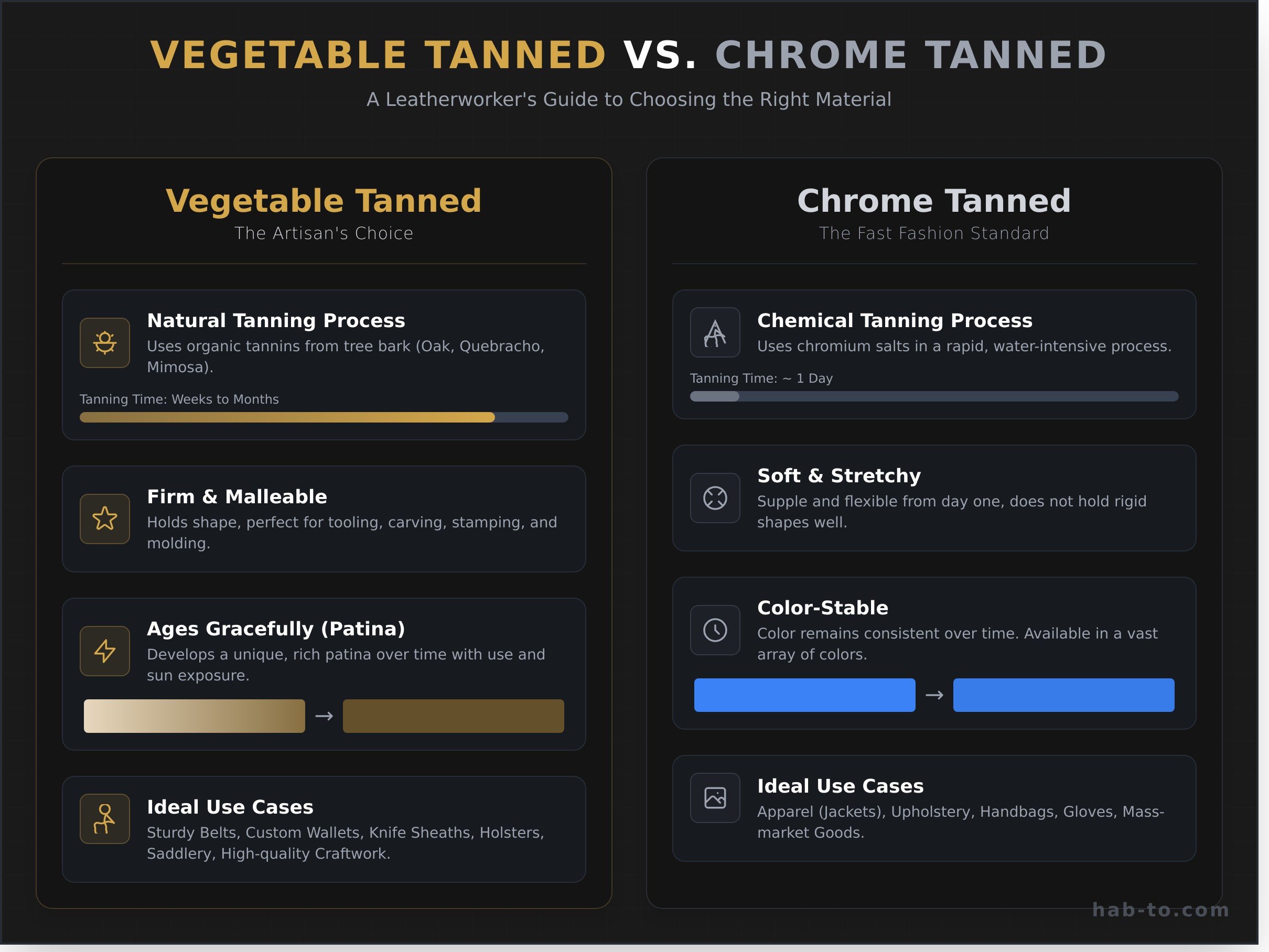
For a crafter, choosing the right type of leather is the foundation of any project. While most leather today is tanned with chromium salts (chrome-tan) in a process that takes about a day, vegetable tanned leather offers properties that are essential for traditional craftsmanship.
Vegetable-Tanned Leather is for the Artisan:
- Firm and Malleable: It holds its shape beautifully, making it perfect for tooling, carving, stamping, and wet-molding.
- Ages Gracefully: It develops a unique and beautiful patina over time, darkening with exposure to sun and oils from your hands. Each piece tells a story.
- Natural & Sustainable: Made with organic, biodegradable materials, it's a more environmentally conscious choice.
Chrome-Tanned Leather is for Fast Fashion:
- Soft and Stretchy: Its supple nature makes it ideal for apparel, upholstery, and slouchy bags.
- Color-Stable: It comes in a vast array of vibrant, consistent colors that do not change significantly over time.
- Fast & Inexpensive: The rapid production process makes it the dominant choice for mass-market goods.
While chrome-tan serves its purpose, true heirloom-quality work-from sturdy belts to custom wallets-begins with the unmatched character and workability of veg-tan.
The Unique Characteristics: Why Crafters Choose Veg-Tan
So, you've seen the price tag and you're asking the right question: why choose vegetable tanned leather? The answer is simple: it’s not just a material; it's a partnership. Unlike its chemically-tanned counterparts, this leather is a dynamic canvas that responds to your tools, your touch, and your lifestyle. It’s the choice for crafters who believe in creating items with soul and longevity. No compromises, just pure potential.
A Canvas for Creativity: Tooling, Stamping, and Dyeing
The magic of veg-tan lies in its firm, responsive structure. When cased (dampened with water), the leather’s fibers swell and soften, ready to accept the finest details from a swivel knife or stamp. Once it dries, that impression becomes a permanent part of the hide. This is something you simply can't achieve with soft, stretchy chrome-tanned leathers. This unique quality extends to:
- Wet-Molding: You can form it around a mold to create rigid, three-dimensional shapes like knife sheaths or custom cases that hold their form indefinitely.
- Custom Dyeing: Its natural, undyed state is the perfect base for applying your own dyes and finishes, giving you complete creative control over the final look.
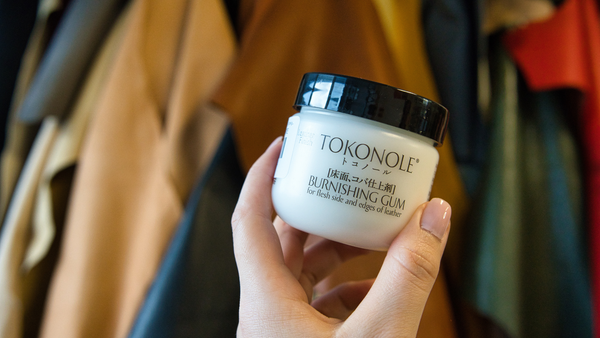
- Burnishing: The dense fibers allow you to burnish the edges to a smooth, glossy, and durable seal with just a bit of water and friction-a true mark of quality craftsmanship.
The Art of the Patina: Leather That Tells a Story
If tooling is the craft, patina is the poetry. Patina is the beautiful aging process where the leather darkens and develops a rich sheen from exposure to sunlight, the oils from your hands, and daily use. Think of it like a well-worn pair of jeans or antique wooden furniture-it doesn't wear out, it wears in. This commitment to a material that ages gracefully is a hallmark of traditional leatherwork, a value deeply cherished by artisans producing world-renowned Italian Vegetable-Tanned Leather, where the patina is celebrated as the soul of the product. Every scratch and sunbeam adds to a unique story, making the piece truly and completely yours.
Choosing the Right Veg-Tan Leather for Your Project
Stepping into the world of leathercraft is exciting, but selecting the right material can feel daunting. The success of your project hinges on choosing the perfect piece of vegetable tanned leather. It’s not just about color; it's about understanding the core characteristics that define how the leather will behave. Let’s break down the three most important factors: weight, temper, and the cut of the hide.
Decoding Leather Weight and Thickness
Leather weight is simply a measurement of its thickness, typically expressed in ounces (oz) or millimeters (mm). One ounce is equal to 1/64th of an inch (0.4mm). A thicker, heavier leather provides more structure and durability, while a thinner piece is more flexible. For a quick reference:
- 1-3 oz (0.4-1.2mm): Ideal for linings, small leather goods, or delicate work.
- 4-6 oz (1.6-2.4mm): A versatile mid-weight perfect for wallets, journal covers, and small bags. If you're a beginner, starting with a 4-5 oz leather is a fantastic choice.
- 8-10 oz (3.2-4.0mm): A heavy, rigid weight best suited for sturdy belts, tool sheaths, and durable straps.
Understanding Temper and Hide Cuts
Temper refers to the pliability or firmness of the leather. It can range from soft and buttery to stiff and rigid. A firm temper is essential for items that need to hold their shape, like holsters, while a medium temper works beautifully for bags that require both structure and flexibility. The cut of the hide also plays a huge role. The unique characteristics of each cut are a direct result of the animal's anatomy and the specifics of the tanning process, which has evolved from historical vegetable tanning methods. The prime section is the bend or butt, offering the firmest leather with the tightest, cleanest grain. The shoulder is a versatile and economical choice, while the belly is softer and stretchier, making it suitable for non-structural parts.
Exploring Popular Tannages
Not all vegetable tanned leather is created equal. World-renowned tanneries, particularly those in Italy, have perfected their craft over generations. Leathers like Buttero are famous for their smooth, tight grain and vibrant colors, making them a top choice for luxury wallets and accessories. In contrast, Pueblo offers a unique, slightly roughened texture that patinas beautifully over time. These premium leathers bring an unparalleled level of quality and character to your work. Explore our hand-selected Italian leathers to find the perfect foundation for your next premium project.
Essential Care: How to Condition and Protect Your Veg-Tan Leather
One of the most common questions I hear from new crafters is, "How do I take care of my finished piece?" It's a great question. Proper care isn't a chore; it's the final step in your craftsmanship. Taking a few simple steps to condition and protect your work ensures it not only lasts for generations but also develops that rich, beautiful patina unique to high-quality vegetable tanned leather.
This isn't about complex, time-consuming routines. It’s about understanding what your leather needs to thrive. With the right approach, you'll preserve its strength and enhance its character for years to come.
Conditioning 101: What to Use and How Often
Think of conditioning as moisturizing. It replenishes the natural oils within the leather's fibers, keeping it flexible and preventing it from drying out and cracking. For the best results, stick with natural products. We recommend:
- Pure Neatsfoot Oil: A classic choice for deeply nourishing the leather.
- Mink Oil: Offers excellent conditioning and a degree of water resistance.
- Beeswax-Based Creams: Provide a great balance of conditioning and light surface protection.
To apply, use a clean, soft cloth and work a small amount of conditioner into the leather using gentle, circular motions. Always apply thin layers and test on a scrap or hidden area first, as conditioners can darken the leather. A good rule of thumb is to condition your piece upon completion and then every 6 to 12 months thereafter.
Protecting Your Work from the Elements
Untreated veg-tan leather is famously susceptible to water, which can leave permanent dark spots. To guard against this, you'll want to apply a top finish. A product like Fiebing's Resolene creates a durable, acrylic seal that offers excellent water resistance. For a more traditional approach, a high-quality beeswax polish can provide a good barrier while allowing the leather to breathe.
Sunlight is another factor. While a bit of sun helps develop a beautiful tan, prolonged exposure to direct sunlight can dry out and fade the leather. Treat your leather goods like your own skin-protect them from harsh, direct sun to maintain their health and color.
Proper care is an ongoing dialogue with your leather goods. It’s a simple practice that pays huge dividends in beauty and longevity. For a more detailed look at the pros and cons of different finishes, explore our in-depth guide to leather conditioning. If you ever need advice on the right products for your specific project, you know where to find us at hab-to.com.
Getting Started: Your First Vegetable Tanned Leather Project
You’ve learned the what and the why; now it’s time for the how. Taking that first step into leathercraft can feel intimidating, but remember that every master craftsman started with a single cut, one stitch, and a desire to create. Working with vegetable tanned leather is not just a hobby; it’s a connection to a timeless, traditional skill. The journey is incredibly rewarding, and starting with a simple, manageable project is the key to building your confidence and skills.
The goal of your first project isn't perfection, but practice. Focus on learning the feel of the tools in your hand and understanding how the leather responds to your actions. It’s about the joy of making something tangible and durable from a beautiful, natural material.
Simple Project Ideas for Beginners
These projects are perfect for learning the fundamental skills of leatherworking without being overwhelming. We recommend using smaller panels or even high-quality scraps to practice on, allowing you to experiment without the pressure of a large investment.
- Cardholder: A classic for a reason. This project teaches you the core essentials: making straight cuts, marking your stitch lines, the rhythm of hand-stitching, and the satisfying process of finishing the edges.
- Keychain Fob: This is your perfect small canvas. A simple fob is an excellent way to practice stamping a design, applying dye evenly, and burnishing edges to a smooth, glassy finish.
- Coaster Set: Ideal for getting comfortable with tooling and carving. The flat, simple shape lets you focus entirely on your decorative technique without worrying about complex construction.
Your Partner in Craft: Why Choose Hab-To
At Hab-To, we believe that real craftsmanship deserves premium materials from day one. With over 160 years of family experience, we're more than just an Amsterdam leather wholesaler-we're your partner in this craft. Our entire collection of vegetable tanned leather is hand-selected for its quality and sustainability. No synthetics. No compromises.
For crafters just starting out, our no minimum order policy is a game-changer. It means you can buy exactly what you need for your first project, whether it’s a small panel of Buttero or a single tool. The world of leather can be complex, but you don’t have to navigate it alone. Have questions? Book a free consultation with Mike! We're here to help you get started right.
Embrace the Art of Vegetable Tanned Leather
You are now equipped with the essential knowledge to master your craft. From understanding the unique, living character of veg-tan to selecting the perfect hide and caring for it properly, you're ready to create pieces that not only look beautiful but tell a story for generations. This guide has laid the groundwork for your success, turning raw material into personal art.
Choosing the right material is the first step in any great project. Working with premium vegetable tanned leather is a commitment to quality without compromise. At Hab-To, we honor that commitment. With over 160 years of family experience, we hand-select only the finest, sustainably sourced hides. We believe craftsmanship should be accessible to all, which is why we have no minimum order requirements, supporting your passion at any scale.
Ready to feel the difference that true quality makes? Browse our hand-selected vegetable tanned leathers to start your next project.
Your next masterpiece is waiting. Happy crafting!
Frequently Asked Questions About Vegetable Tanned Leather
Why is vegetable tanned leather more expensive than other types?
The higher price comes down to time, skill, and materials. The vegetable tanning process is an artisanal method that can take up to two months, using natural tannins from tree bark and plants. This contrasts sharply with chrome tanning, which uses chemicals and is completed in about a day. The cost reflects the incredible amount of craftsmanship, time, and premium organic materials required to produce such a durable and high-quality leather.
Is vegetable tanned leather waterproof?
No, in its natural state, it is not waterproof. Due to its porous nature, it will absorb water, which can lead to staining and stiffening. However, you can make it highly water-resistant. Applying a quality finish like a beeswax-based cream or a specialized leather balm will help repel moisture effectively. This protects your work while still allowing the beautiful material to breathe and develop its unique patina over time.
Can I dye vegetable tanned leather myself?
Absolutely! This is one of the best features for any crafter. Natural, undyed vegetable tanned leather is like a blank canvas, renowned for its ability to absorb dyes evenly and deeply. You can use water-based or alcohol-based dyes to create rich, custom colours that are unique to your project. This versatility makes it the top choice for artisans who want full creative control over tooling, carving, and colouring their work.
How can I tell if leather is vegetable tanned?
There are a few tell-tale signs. First, smell it. Veg-tan has a distinctively earthy, sweet, and woody scent, unlike the chemical smell of chrome-tanned leather. It often feels firmer and will darken when a drop of water is applied to an unfinished spot. Visually, it usually starts as a pale, natural beige colour and, most importantly, it develops a rich patina-a beautiful darkening and sheen-with age and use.
Is vegetable tanned leather better for the environment?
Yes, it is widely considered a more sustainable and eco-friendly option. The entire process relies on organic tannins derived from natural plant sources like bark and leaves, avoiding the heavy metals (like chromium) used in other methods. This means the wastewater is easier to treat, and the final product is biodegradable. It’s a traditional craft that honours natural materials and minimises environmental impact. No synthetics. No compromises.
What's the best way to soften stiff veg-tan leather?
Softening stiff veg-tan involves conditioning and physical manipulation. First, apply a generous amount of a quality leather conditioner or neatsfoot oil, working it into the grain with a soft cloth. Let it sit and fully absorb. Afterwards, you need to "break" the leather by repeatedly rolling, bending, and flexing it in all directions. This process loosens the dense fibres, resulting in a much more pliable and workable piece for your project.
