Cordova Leather or Cordovan? The True Story of a Legendary Material
Is it Cordova leather or Cordovan? If you've ever found yourself asking this question while admiring a piece of this legendary material-and perhaps wincing at its price tag-you're not alone. For any serious crafter, investing in Shell Cordovan is a major decision, and the confusion around its name is just the beginning. The fear of choosing the wrong material or not truly understanding what justifies the cost can be intimidating. It’s a material that represents the pinnacle of quality, and with that comes a need for absolute confidence in your choice.
Consider this your definitive guide. We're about to embark on a journey from the sun-drenched streets of Córdoba, Spain, to the world-renowned tanneries of today. We’ll settle the "Cordova vs. Cordovan" debate once and for all, uncover the unique properties that make this non-porous equine leather so incredibly durable and beautiful, and give you the knowledge to justify the investment. By the end, you'll not only appreciate its rich history but also feel empowered to identify and use genuine Shell Cordovan to elevate your craftsmanship to a whole new level. No compromises.
Key Takeaways
- Understand the true origin of the name 'Cordovan' and how its history connects to the Spanish city of Córdoba, ending the common confusion.
- Learn what makes Shell Cordovan structurally unique and why its incredible durability makes it a premier long-term investment for heirloom-quality goods.
- Gain the confidence to identify genuine Shell Cordovan by recognizing its key characteristics and discovering the world's most reputable tanneries.
- Master the essential techniques for cutting, stitching, and finishing cordova leather to ensure your crafting projects are a success from the start.
From Córdoba to Cordovan: Unraveling the Name and History
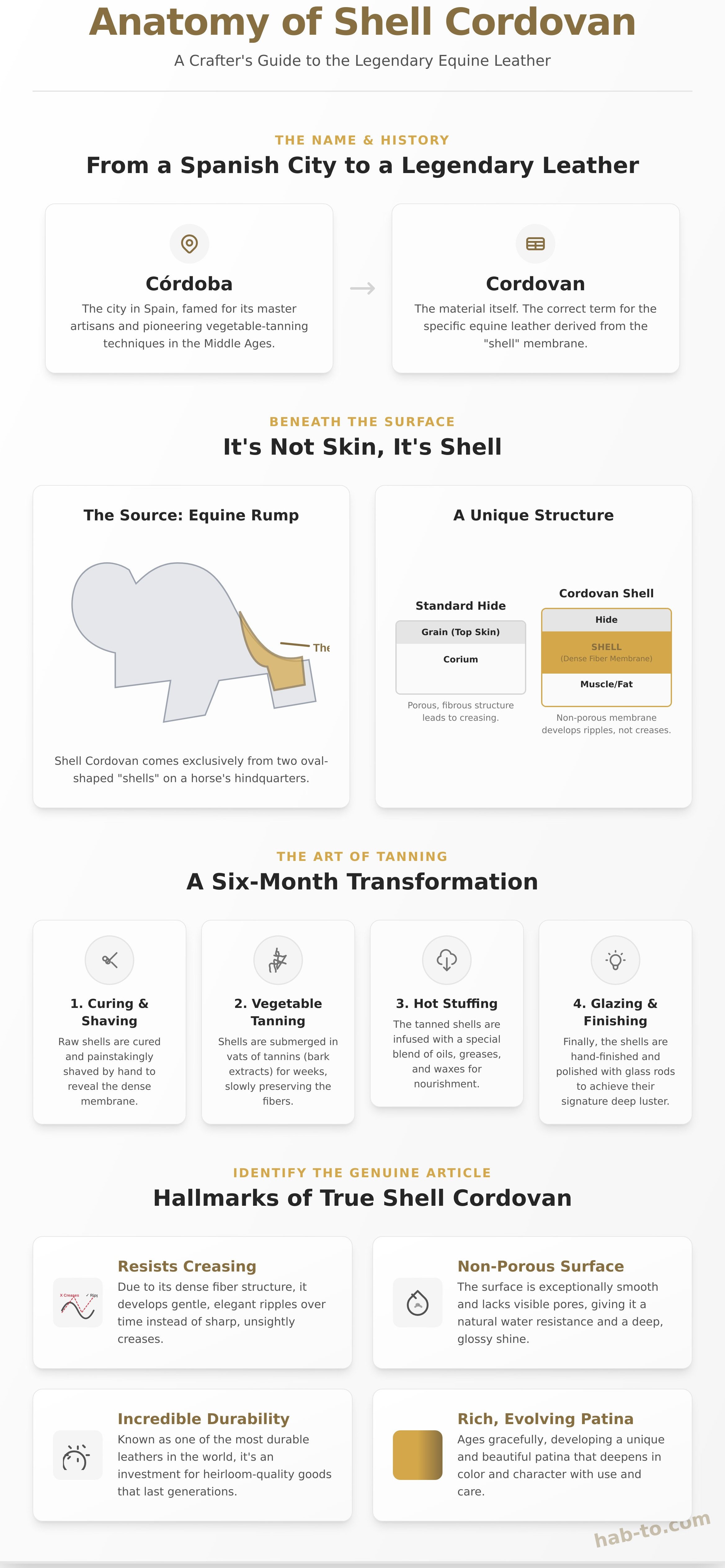
Before we dive into how to care for this incredible material, let’s clear up a common point of confusion: Is it ‘Cordova’ or ‘Cordovan’? While you might see the term cordova leather used, the correct name for the material itself is Cordovan. The name’s journey is a fascinating story that begins centuries ago in the sun-drenched city of Córdoba, Spain, a place synonymous with unparalleled craftsmanship.
To get a better sense of what makes this material so unique, this video offers a fantastic visual introduction:
The Spanish Origins: Leather Craft in Córdoba
During the Middle Ages, Córdoba was a global center for culture, science, and artisanal skill. Under the influence of Moorish artisans, the city became famous for its exceptional leatherwork. These craftsmen perfected vegetable-tanning techniques that produced a material renowned for its suppleness and durability. The city’s reputation was so immense that the leather it produced simply became known by its origin: Cordovan.
How the Name Evolved: From 'Cordwainer' to 'Cordovan'
As this prized leather was exported across Europe, its name evolved. In England, shoemakers who worked with this high-quality material were distinguished from common cobblers and were known as "cordwainers." Over time, the name became permanently attached to the material rather than the location. Today, the term "Cordovan" refers specifically to a non-porous equine leather taken from a fibrous flat muscle, or "shell," beneath the hide on a horse's rump. For a deep dive into the technical specifics, this article explaining what Shell Cordovan is provides a comprehensive overview.
The Modern Legacy: From Spanish Artisans to Global Icon
While the craft began in Spain, the meticulous, months-long tanning process was refined and popularized in the 20th century, particularly by legendary tanneries in the United States. They perfected the slow, deliberate vegetable-tanning method that gives modern Shell Cordovan its signature rich patina, incredible durability, and resistance to creasing. This legacy of quality is why, for craftsmen and connoisseurs alike, it remains the undisputed 'king of leathers'-a material truly worth caring for.
What Exactly is Shell Cordovan? A Look Beneath the Surface
When we talk about premium materials in the world of craftsmanship, Shell Cordovan is in a class of its own. It’s more than just leather; it’s a testament to patience, tradition, and the unique biology of the horse. The name itself hints at a rich heritage, with the history of Cordova leather tracing back to the master artisans of Córdoba, Spain. But what makes this material so revered is not just its history, but its very structure.
It's Not Just Horsehide: The Anatomy of the 'Shell'
Unlike traditional leather, which is the outer grain skin, Shell Cordovan is a specific membrane found beneath the hide on a horse's rump. This is not skin at all, but a layer of flat, fibrous muscle tissue. Its incredibly dense, non-porous structure is the secret to its signature characteristic: it doesn’t crease. Think of it like a tightly woven fabric versus a piece of paper. The paper holds a sharp fold, but the fabric’s interwoven fibers allow it to roll and bend. This is why true Shell Cordovan develops gentle ripples over time, never the harsh creases you see in other leathers.
The Six-Month Journey: The Art of Tanning Cordovan
Transforming this raw shell into the finished product is an art form that takes no shortcuts. The process is a slow, traditional vegetable tanning method that can span over six months. Each shell is painstakingly cured, shaved, and then submerged in vats of vegetable tannins for weeks at a time. A crucial step is "hot stuffing," where the shells are infused with a proprietary blend of oils, greases, and waxes. This intensive process is what imbues the cordova leather with its legendary durability, deep color, and resistance to water.
The Hallmarks of True Cordovan: Look, Feel, and Smell
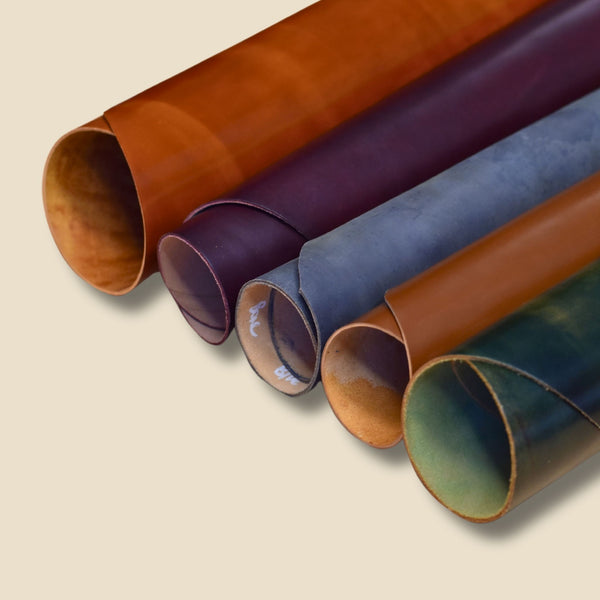
You know you're holding genuine Shell Cordovan by its unmistakable characteristics. The surface is exceptionally smooth with a glossy, non-porous finish that seems to glow from within. It has a substantial, dense feel, yet remains pliable. Over years of use, it won’t crack but will instead develop a rich, deep patina that is unique to each piece. And finally, there's the smell-a rich, pleasant aroma from the blend of conditioning oils, a true sign of quality craftsmanship.
Is Cordovan Leather Worth the Investment for Your Project?
Let's address the main question head-on: the price. Yes, Cordovan is one of the most premium leathers you can work with. But to view it as just a cost is to miss the point entirely. This is an investment in unparalleled quality and longevity. When you choose genuine cordova leather, you're selecting a material that doesn't just last-it evolves, telling a story for decades. It’s for the crafter who believes in making something once and making it right. No compromises.
Unmatched Durability: A Leather That Outlasts Its Owner
What makes Cordovan so incredibly tough? It all comes down to its unique structure. Unlike traditional cowhide, Shell cordovan is a specific membrane with an exceptionally dense, non-porous fiber structure. This gives it remarkable tensile strength and a natural resistance to scuffs and scratches. More importantly, it prevents the stretching and deformation common in other leathers, allowing your creations to hold their intended shape for generations. With basic care, a Cordovan product can be restored to a brilliant finish, even after years of hard use.
The Signature Patina: How Cordovan Ages Gracefully
The way Cordovan ages is legendary among leather connoisseurs, and for good reason. Instead of developing sharp, deep creases that can weaken the material, it forms beautiful, subtle ‘rolls’ at flex points. This graceful aging process is paired with a patina that is second to none. The rich oils and waxes within the leather slowly rise to the surface with handling and polishing, developing a deep, glossy luster that only improves with time. This isn't wear and tear; it's character in its purest form.
Best Uses: Where Cordovan Shines Brightest
Cordovan's unique combination of rigidity and elegance makes it the undisputed champion for certain heirloom-quality items. It truly excels in projects where structure and durability are paramount:
- Luxury Footwear: The ultimate material for dress shoes and boots that hold their shape and shine for a lifetime.
- Watch Straps: Its resistance to stretching and moisture makes it perfect for an item worn daily against the skin.
- Minimalist Wallets: It endures the constant friction of pocket wear without losing its crisp form.
While its structure is a huge asset, it’s not for every project. For a soft bag that needs to drape, a more pliable leather might be a better fit. Choosing the right material is the first step in true craftsmanship. Ready to start your project? Browse our Cordovan collection.
Identifying and Sourcing Authentic Cordovan Leather
Shell Cordovan is an investment in your craft. Its unique properties and incredible longevity are unmatched, but only if you are working with the genuine article. Before you can care for it, you must be confident in what you're buying. Equipping yourself with the right knowledge is the first step to honouring this exceptional material.
Telltale Signs of Genuine Shell Cordovan
Unlike leathers defined by their grain, authentic Shell Cordovan is identified by its distinct smoothness and density. It’s a material that feels different from the moment you touch it. Here are the key characteristics to look for:
- A Glass-Like Surface: True Cordovan is famously non-porous. Run your hand over it; it should feel incredibly smooth and dense, with absolutely no visible grain or pores. This is because it's made from a fibrous flat muscle, not skin.
- The Water Test: A simple but telling sign. A small drop of water will bead up and sit on the surface of genuine Cordovan, rather than immediately soaking in as it would with more porous leathers.
- The Tannery Stamp: Most producers, like Horween, ink-stamp their name and shell information on the reverse (flesh) side. This is a mark of authenticity and a signature of quality from the world's best tanneries.
Key Tanneries to Know: Horween, Rocado, and Shinki
While the term "Cordovan" is sometimes used loosely, true Shell Cordovan comes from only a handful of elite tanneries worldwide. Horween Leather Company in the USA is the most renowned producer, with a vegetable tanning process that takes over six months. Other world-class tanneries include Rocado S.R.L. in Italy and Shinki Hikaku in Japan. Each has its own proprietary methods, resulting in slight variations in temper, finish, and colour palette, but all produce material of exceptional quality.
Why Sourcing from a Trusted Wholesaler Matters
Knowing the signs is one thing; finding a reliable source is another. A passionate and experienced supplier is more than just a seller-they are a partner in your craft. At a specialized wholesaler, every piece of cordova leather has been hand-selected for its quality. We vet the tanneries and inspect the shells, so you can focus on your work, confident you're starting with the best.
For independent crafters, a key benefit is access to these premium materials without restrictive minimum orders. It’s about building your projects on a foundation of uncompromising quality. When you source from an expert you trust, you're not just buying leather; you're investing in confidence. If you need advice on selecting the right shell for your next project, we're always here to help.
Working with Cordovan: Essential Tips for Crafters
Working with Shell Cordovan is a unique and deeply rewarding experience for any leather artisan. However, its dense, non-porous fiber structure demands a different approach than standard cowhide. It’s less forgiving but offers an unparalleled finish. Think of it not as difficult, but as precise. Embracing its unique properties is the first step toward creating a true heirloom piece.
Cutting and Skiving: Handling a Dense Material
A sharp blade isn’t a suggestion; it’s a requirement. The tight grain of Cordovan will resist a dull edge, leading to ragged cuts and frustration. Use a freshly stropped knife for every major cut. Skiving is also more challenging due to this density. It requires a steady hand and a very sharp, low-angle blade. We always recommend practicing on a small scrap piece first to get a feel for how the material responds. Patience here will pay off immensely.
Stitching and Finishing Cordovan Edges
The refined nature of cordova leather calls for elegant finishing touches. For stitching, a finer thread (such as 0.45mm or 0.55mm) paired with a stitch spacing of around 3.0mm to 3.38mm creates a classic, sophisticated look. One of the true joys of this material is its ability to burnish. The edges can be polished to a glass-like shine with minimal effort. Often, all you need is a drop of water and vigorous rubbing with a canvas cloth or slicker to achieve a perfect, sealed edge. For an even higher gloss, a small amount of Tokonole can be used.
Common Mistakes to Avoid
This premium material deserves premium technique. Avoiding these common pitfalls will help you honor the leather and your craft:
- Using Excessive Force or Dull Tools: Cordovan doesn’t yield to brute force. Let a razor-sharp tool do the work. Forcing a dull blade can tear the shell membrane or compress the fibers, causing permanent damage.
- Applying Harsh Chemicals: Never use alcohol-based cleaners or aggressive solvents. These will strip the rich, fat-liquored oils from the leather, leaving it dry and brittle. Stick to natural conditioning methods.
- Imprecise Measurements: The old rule of "measure twice, cut once" is critical here. Mistakes are costly and nearly impossible to hide on Cordovan's flawless surface.
Every project is a learning opportunity, and working with top-tier materials from suppliers like Hab-To Leather House is part of that journey. Need advice for your project? Book a free consult with Mike!
Embrace the Legacy of Cordovan Leather
We've journeyed from the historic workshops of Córdoba to the heart of what makes Shell Cordovan a true legend. You now understand that this isn't just any hide, but a unique equine membrane celebrated for its incredible durability and rich, developing patina. Choosing authentic cordova leather is an investment in unparalleled quality-a commitment to craftsmanship that can last for generations.
Now that you're equipped with this knowledge, the next step is to bring your vision to life. At Hab-To, we share your passion for exceptional materials. Drawing on over 160 years of family experience, we expertly source our Cordovan from the world's most prestigious tanneries. To support every crafter's journey, we proudly offer no minimum order requirements. Ready to work with the best?
Explore Our Hand-Selected Cordovan Leather Collection and discover the perfect material for your next masterpiece. We can't wait to see what you create.
Frequently Asked Questions About Shell Cordovan
Why is Shell Cordovan so much more expensive than other leathers?
The high price of Shell Cordovan comes down to three key factors: scarcity, time, and craftsmanship. This premium leather comes from a very specific, small membrane on a horse's rump, making the raw material rare. The traditional vegetable-tanning process is incredibly slow, often taking six months or more to complete. This meticulous, labor-intensive method, performed by highly skilled artisans, ensures the unique density and durability that makes Shell Cordovan a true luxury material.
Is Cordovan leather waterproof?
While not fully waterproof, Shell Cordovan is exceptionally water-resistant. Its incredibly dense fiber structure and the rich concentration of oils from the tanning process cause water to bead up and roll off the surface. However, it's not invincible. If your Cordovan goods get wet, it's best to gently wipe them with a soft cloth and let them air dry away from direct heat. This simple step will help prevent water spots and maintain the leather's integrity.
What is the main difference between Shell Cordovan and regular horsehide?
The key difference lies in the specific part of the animal and the material's structure. Regular horsehide refers to the entire skin, which has a grain and pores like most leathers. Shell Cordovan, however, is a dense, fibrous membrane that sits beneath the hide on the horse's rump. This unique material is non-porous and has an exceptionally tight fiber structure, giving it its signature smooth finish and incredible durability, setting it apart from standard horsehide.
How do I care for my finished Cordovan leather goods?
Caring for Shell Cordovan is simpler than you might think; the principle is "less is more." The most important step is regular, vigorous brushing with a horsehair brush. This removes surface dirt and redistributes the leather's natural oils, restoring its deep luster. Only when the leather looks dull or dry should you apply a tiny amount of a conditioner specifically formulated for Shell Cordovan, let it sit, and then brush and buff it back to a high shine.
Can you dye Shell Cordovan leather?
While it is technically possible, dyeing Shell Cordovan is a challenging process best left to professionals. Because of its dense, non-porous structure, the material doesn't absorb dye easily, which can lead to a blotchy finish. We generally recommend embracing the rich, original color imparted by the tannery. The unique patina that this premium cordova leather develops over time is a significant part of its celebrated character and beauty, telling a story of its use.
How big is a typical shell of Cordovan, and what can I make from it?
Shell Cordovan comes in relatively small, irregularly shaped pieces. A typical shell ranges from just 1.5 to 2.5 square feet (approximately 0.14 to 0.23 square meters). Due to their size and value, they are perfect for crafting small, premium goods where durability and elegance are paramount. Think of luxury items like watch straps, minimalist wallets, key fobs, and the vamps or heel counters on high-end footwear, where every inch of this exquisite material is showcased.