

Eel Skin Leather: A Crafter's Guide to This Unique & Durable Material
Ever admired the sleek, almost liquid sheen of eel skin but hesitated to use it in a project? You’re not alone. Many leatherworkers see its delicate, paper-thin appearance and wonder: Is it strong enough for my wallet design? Is it a sustainable choice? And how on earth do you work with something so fine without ruining it? These questions can stop a great project in its tracks before it even begins, keeping a truly unique material on the shelf instead of in your hands.
It's time to set the record straight. In this complete crafter's guide, we're pulling back the curtain on this incredible material, often called the 'silk of the ocean.' We'll show you why it’s not only beautiful but surprisingly tough-stronger, in fact, than cowhide of the same thickness. You'll get practical, step-by-step advice on cutting, stitching, and finishing, plus project ideas perfectly suited to its unique character. Let's build your confidence and add this premium, high-quality leather to your craftsmanship repertoire.
Key Takeaways
- Discover the surprising durability of eel skin, a material that is significantly stronger than its delicate, silk-like appearance suggests.
- Learn the essential techniques for cutting, stitching, and finishing this thin leather to achieve a professional and lasting result.
- Find the perfect projects, like wallets and watch straps, that best showcase the unique texture and luxurious feel of this exotic material.
- Master the simple care routine required to protect your creations and ensure they maintain their vibrant beauty for years to come.
What is Eel Skin Leather? Unveiling the Ocean's Silk
When you first handle eel skin leather, you immediately understand its nickname: the 'silk of the ocean'. This exotic material is celebrated for its incredibly smooth, supple, and lightweight feel, combined with a surprising durability. Its unique, fine-grained texture and subtle sheen have made it a rising star in high-fashion, often used for premium small leather goods like wallets, cardholders, and elegant accents on larger pieces. Yet, for all its beauty, it remains one of the most misunderstood materials in the world of craftsmanship. It's time to separate fact from fiction.
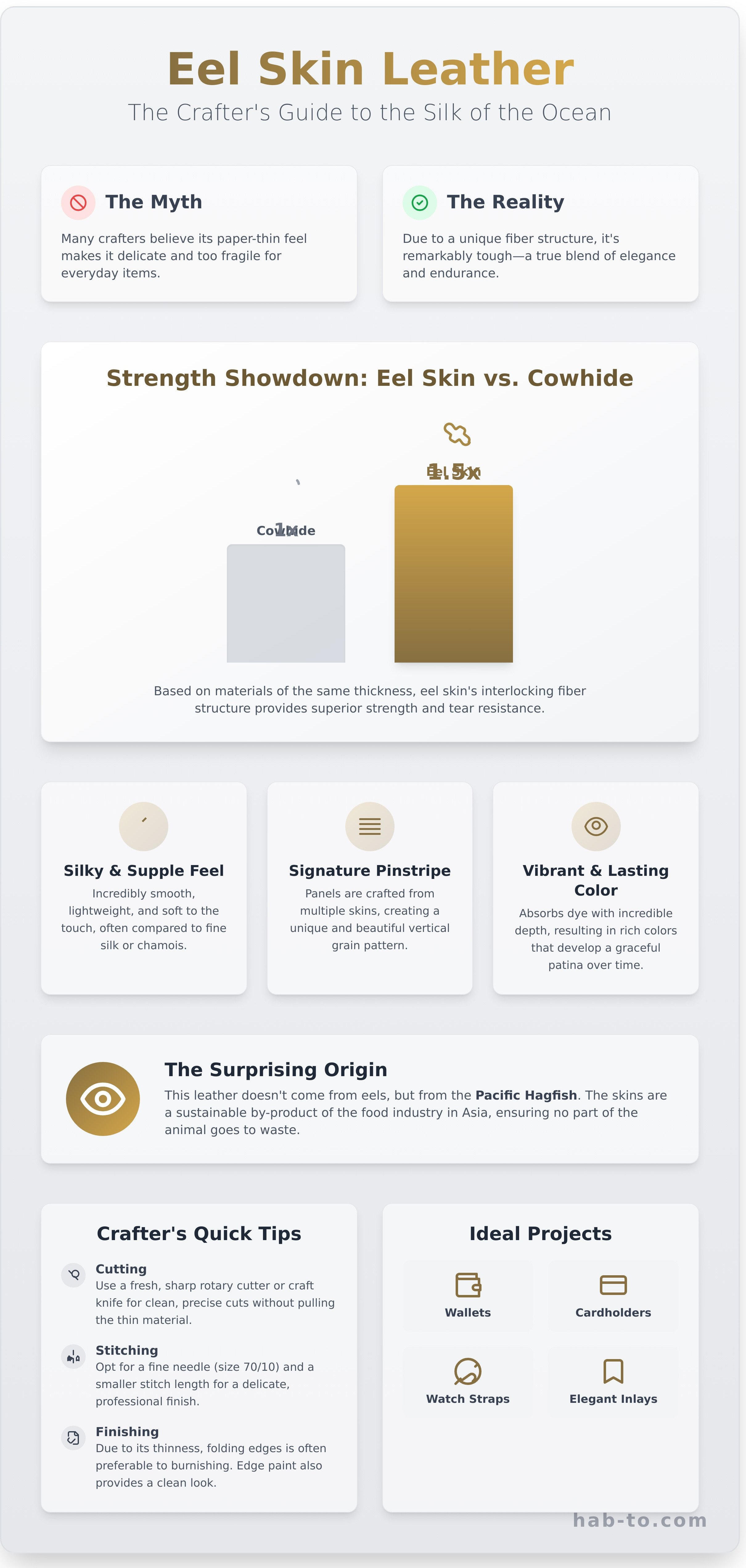
To see this unique material up close and understand its appeal, take a look at this overview:
The Surprising Origin: It's Not from an Electric Eel
Let's clear up the biggest misconception right away. The surprising answer to What is Eel Skin Leather is that it doesn't come from an eel at all, but from the Pacific Hagfish. These marine fish are not an endangered species, which is a critical point for any conscientious crafter. Even better, the skins are a sustainable by-product of the food industry in Asia, where hagfish is a common delicacy. This approach honors the animal by ensuring no part goes to waste-a principle we deeply value in traditional craftsmanship.
From Skin to Panel: The Art of Preparation
Unlike a large cowhide, an eel skin panel is a testament to meticulous artistry. Because individual hagfish skins are long and narrow, they must be expertly cut and sewn together to create a larger, usable piece of leather, often called a 'plate' or panel. This process is what gives the material its signature characteristic: a beautiful, subtle vertical pinstripe pattern where the skins are joined. These panels are available in various sizes and a stunning array of vibrant colors and finishes, from a high-gloss sheen to a sophisticated modern matte.
The Unique Characteristics of Eel Leather
When you first handle eel leather, you’ll notice an immediate paradox. It feels impossibly lightweight and supple, with a texture often compared to fine silk or soft chamois. Its remarkable thinness invites the creation of sleek, elegant designs that would be bulky with traditional leathers. Yet, beneath this delicate exterior lies a strength that consistently surprises even seasoned crafters. It’s this unique blend of grace and power that makes it such a compelling material for premium leatherwork.
Strength in Slimness: Is Eel Skin Truly Durable?
Don't let its thin profile fool you; this material is built to last. The most common misconception about eel leather is that its slimness equates to fragility. In reality, it is remarkably tough. Due to a unique, interlocking fiber structure, it is estimated to be 1.5 times stronger than cowhide of the same thickness. This inherent resilience means it resists tears and scuffs exceptionally well, making it a durable choice for everyday items like wallets and watch straps that demand both elegance and endurance.
A Look and Feel Unlike Any Other Material
Visually, eel leather is immediately recognizable by its signature pinstripe-like linear grain. While commonly called eel skin, the material actually comes from the hagfish, an animal whose unique biology creates this distinctive pattern. This surface is incredibly smooth and pleasant to the touch, offering a luxurious tactile experience unlike any other leather.
This unique hide also absorbs dye with incredible depth, resulting in rich, vibrant, and consistent colors that truly pop. Over time and with handling, it doesn’t wear out-it wears in. The leather develops a subtle, graceful patina that enhances its character, ensuring that every piece crafted from it tells its own story and only grows more beautiful with age.
A Crafter's Guide: How to Work with Eel Skin
Venturing into exotic leathers can feel like a big step, but I'm here to tell you that working with eel skin is far more approachable than you might think. Its delicate appearance is deceptive; this material is surprisingly resilient. While it requires a slightly different touch than sturdy cowhide, it's not overly difficult and serves as a perfect gateway to expanding your crafting skills.
My advice? Start small. A simple cardholder or a small wallet inlay is an excellent first project. This allows you to get a feel for its unique texture and handling without committing to a large, complex piece. Let's walk through the key steps to get you started on the right foot.
Cutting, Backing, and Gluing
The secret to working with any thin leather is precision, and that starts with your cut. Always use a fresh, razor-sharp blade-a new scalpel blade or a rotary cutter is ideal. This ensures a clean edge without any pulling or tearing. Because the material is so thin, it's almost always backed with another leather to give it structure and durability. Understanding the properties of genuine eel skin-specifically that it's constructed from smaller hides sewn into panels-helps explain why this structural support is so essential for a quality finished product. For backing, I recommend:
- Goat Skin: A thin layer (around 0.6mm) adds strength while maintaining flexibility.
- Veg-Tan Splits: A 0.8mm split is perfect for items needing more rigidity, like a wallet exterior.
When it comes to adhesive, less is more. A light mist of spray adhesive or a very thin, evenly spread layer of water-based contact cement will bond the eel skin to your backing without creating stiff spots.
Sewing and Finishing Eel Skin
Once your piece is backed, the process becomes much more familiar. However, you'll want to adjust your tools to match the material's delicate nature. For hand-stitching, opt for a smaller needle (a size 4 harness needle works well) and a finer thread, such as a 0.45mm or 0.5mm polyester thread. I suggest a stitch spacing of at least 3.85mm to avoid over-perforating the leather, which could create a weak point. If you're using a sewing machine, use a sharp leather needle and a slightly longer stitch length, and always test your tension on a scrap piece first.
Finishing the edges is surprisingly straightforward. Your edge treatment is determined entirely by the backing leather you chose. The eel skin itself is simply trimmed flush. If you backed with vegetable-tanned leather, you can burnish the edges to a beautiful, glossy finish. If you used a chrome-tanned backing like goat, you'll want to apply a quality edge paint for a clean, professional look.
Ideal Projects for Eel Skin Leather
The true joy of craftsmanship lies in pairing the right material with the right project. Eel skin, with its unique combination of thinness, strength, and lustrous finish, opens up a world of possibilities for fine leather goods. Its characteristics make it less suited for heavy-duty items like belts or structured totes, but it truly excels where elegance and a slim profile are paramount.
Think of it as a material for detail and refinement. Whether you use it as the star of the show or as a striking accent, its texture and vibrant color will elevate your work. Let's explore some projects where this remarkable material can shine.
Small Leather Goods: Wallets, Cardholders, and Cases
This is where eel skin truly comes into its own. Its incredible thinness allows you to create minimalist wallets and cardholders that are exceptionally slim and comfortable to carry, eliminating unnecessary bulk. Despite its delicate appearance, it is surprisingly strong, offering excellent resilience for everyday items that see frequent handling and pocket wear. The smooth, glossy surface isn't just for looks-it allows cards to slide in and out with satisfying ease.
Decorative Inlays and Accents
You don't need to use a lot of it to make a powerful statement. Consider using eel skin leather as a decorative inlay on a larger piece, such as a journal cover or a vegetable-tanned leather portfolio. A small panel adds a luxurious pop of color and an unexpected textural contrast that immediately draws the eye. It's also a perfect choice for smaller, high-touch accents where its beauty can be appreciated up close:
- Watch straps that are both comfortable and distinguished
- Elegant key fobs
- Unique zipper pulls that add a final touch of class
Elegant Clutches, Pouches, and Linings
The feather-light weight of this leather makes it ideal for small, handheld evening bags, clutches, and soft pouches. It has a wonderful drape and flexibility, allowing you to create soft-form items that don't require rigid internal structuring. For a touch of hidden luxury, consider using it as a lining. Its soft, smooth feel provides a beautiful and protective interior for a high-end handbag or valet tray, making the experience of using the item special every single time.
Ready to start your project? Browse our hand-selected leathers with no minimum order.
How to Care for Eel Skin: Simple Maintenance for Lasting Beauty
One of the biggest myths about eel skin is that it’s a fragile, high-maintenance material. I’m here to tell you that’s simply not true. With a little common sense and a gentle touch, your eel skin creations will retain their unique lustre and supple feel for years to come. The best part? You don’t need any special tools or complicated routines. This is about simple care for lasting craftsmanship.
Routine Cleaning and Conditioning
Keeping your projects looking pristine is straightforward. The goal is to preserve the leather’s natural oils, not strip them away. For day-to-day care, a quick, gentle wipe-down is all it takes.
- Dust and Oils: Use a soft, clean, and dry cloth to gently wipe the surface. This removes any accumulated dust and surface oils from handling.
- Occasional Conditioning: Every six months to a year, you can apply a very light coat of a silicone-based conditioner made for exotic leathers. This helps maintain flexibility.
- Test First, Always: Before applying any product, test it on a small, hidden spot (like an interior seam) to ensure it doesn’t cause discoloration. Apply sparingly with a soft cloth.
Handling Spills, Stains, and Storage
Accidents happen, but a quick response can prevent lasting damage. Likewise, how you store your items plays a huge role in their longevity. The natural oils in the leather offer a degree of resistance, but it's always best to act fast.
- Water Spills: If you get water on the leather, don't panic. Gently blot the moisture with a dry, absorbent cloth. Don’t rub. Let it air dry completely, away from direct heat or sunlight. Never use a hairdryer or radiator, as this can cause the leather to become brittle and crack.
- Proper Storage: When not in use, store your eel skin goods in a breathable fabric dust bag. This protects them from dust while allowing air to circulate. Avoid plastic bags, which can trap moisture. Keep them in a cool, dry place away from direct sunlight, which can cause the color to fade over time.
By following these simple guidelines, you can confidently assure your customers-and yourself-that their beautiful leather pieces are built to last. It’s all part of our "no compromises" approach to quality materials. If you ever have specific questions about caring for your leather, feel free to reach out to us. We're always happy to share our expertise.
Your Journey with Eel Skin Starts Here
As we've explored, eel skin is far more than just a beautiful material; it's a testament to nature's ingenuity. Its unique combination of a silky, luxurious texture and remarkable durability makes it a rewarding choice for crafters of all levels. From elegant wallets to distinctive accessories, working with this 'silk of the sea' opens up a world of creative possibilities, and with the right care, your creations will last for years to come.
Ready to bring your vision to life? Hi, I'm Mike. With over 160 years of family experience in leather, I'm passionate about helping crafters succeed. We provide only hand-selected, sustainable materials-with no minimum order requirements-because we believe in quality craftsmanship above all else. Need advice on your next project? Book a free consultation today!
Happy crafting, and we look forward to being a part of your creative journey.
Your Eel Skin Leather Questions, Answered
What is eel skin leather actually made from?
This is a fantastic question and a common misconception! Despite the name, this unique material does not come from eels. It's actually made from the hide of the Pacific Hagfish, an ocean dweller known for its long, eel-like body. The term "eel skin" became a popular trade name that stuck. So, while it has the sleek look you'd associate with an eel, its origin story is a bit different and a great piece of trivia for any leather enthusiast.
Is eel skin leather durable enough for a wallet?
Absolutely. Don't let its thin, delicate appearance fool you. Eel skin is remarkably strong and resilient, often cited as being up to 1.5 times stronger than cowhide of the same thickness. Its natural fibers are inter-woven, creating a very durable material that resists tearing. This makes it a premium choice for items that see daily use, like wallets and small accessories, as it combines a lightweight feel with impressive longevity when properly cared for.
Is using eel skin ethical and sustainable?
We believe in craftsmanship without compromise, and that extends to sourcing. The hagfish used for this leather is not an endangered species. More importantly, the hides are a byproduct of the food industry, primarily in Korea. By using these skins, we are making use of a material that would otherwise be discarded. This approach aligns with our commitment to sustainability, ensuring we honor the entire animal and reduce waste in the process.
How do you clean an eel skin wallet or bag?
Caring for your eel skin project is simple. For general cleaning, gently wipe the surface with a soft, dry, or slightly damp cloth, always moving in the direction of the grain. For minor spots, a dedicated leather cleaner is your best option. Avoid using harsh household chemicals, soaps, or excessive water, as these can strip the natural oils and damage the delicate finish. A little care goes a long way in preserving its unique luster.
What happens if eel skin leather gets wet?
Like most fine leathers, it's best to avoid getting it soaked. If your item does get wet, blot the excess water immediately with a soft, absorbent cloth. Do not use a hairdryer or place it near a radiator. Let it air dry naturally at room temperature, away from direct sunlight. The leather may feel slightly stiff once dry, but a light application of a quality leather conditioner will help restore its signature softness and suppleness.
Do I need special tools to work with eel skin?
You can use many of your standard leatherworking tools, but a few adjustments are key for the best results. Because the skin is thin, an extremely sharp cutting tool-like a fresh scalpel or a brand-new craft knife blade-is essential for clean, drag-free cuts. For stitching, we recommend using a finer needle and thread (such as a size 8 needle with a .45mm thread) to create neat seams without making unnecessarily large holes in the hide.