

Everything You Need to Know About Badalassi Leder: Premium Italian Leather Guide
Why would a master artisan choose a leather that arrives looking rough and matte over one with a pre-polished, glossy finish? It's a question I hear often from makers who are just beginning to appreciate the depth of traditional Italian tannages. You already know that the soul of a handmade wallet or bag isn't found on the first day, but in the deep, rich patina it develops through daily use. If you've been hunting for authentic badalassi leder but felt discouraged by massive minimum order quantities or the difficulty of finding small panels, you're finally in the right place.
We believe that every crafter deserves access to world-class materials without the traditional wholesale hurdles. You want the certainty that your leather will behave predictably under a beveler or a burnisher. This guide will help you discover why Conceria Carlo Badalassi produces the world’s most sought-after vegetable-tanned leather and how to choose the perfect hide for your next project. We'll break down the specific characteristics of finishes like Pueblo and Minerva, share professional techniques for finishing these hides, and show you how to source premium Italian leather in the exact quantities your craft requires.
Key Takeaways
- Understand the heritage behind badalassi leder and how the traditional Vacchetta process uses natural oils and barks to create a deeply nourished hide.
- Learn to distinguish between the rustic, scuffed surface of Pueblo and the soft, tumbled texture of Minerva Box to choose the perfect character for your craft.
- Discover the science of the world-famous Italian patina and why specific tallows and waxes create a faster, more dramatic evolution than standard leathers.
- Master professional techniques for handling dense Italian fibers, including tips for precise cutting and skiving with expert-grade tools.
- Find out how to source premium Conceria Carlo Badalassi hides in small panels or single shoulders without the burden of high minimum order quantities.
The Heritage of Conceria Carlo Badalassi Leder
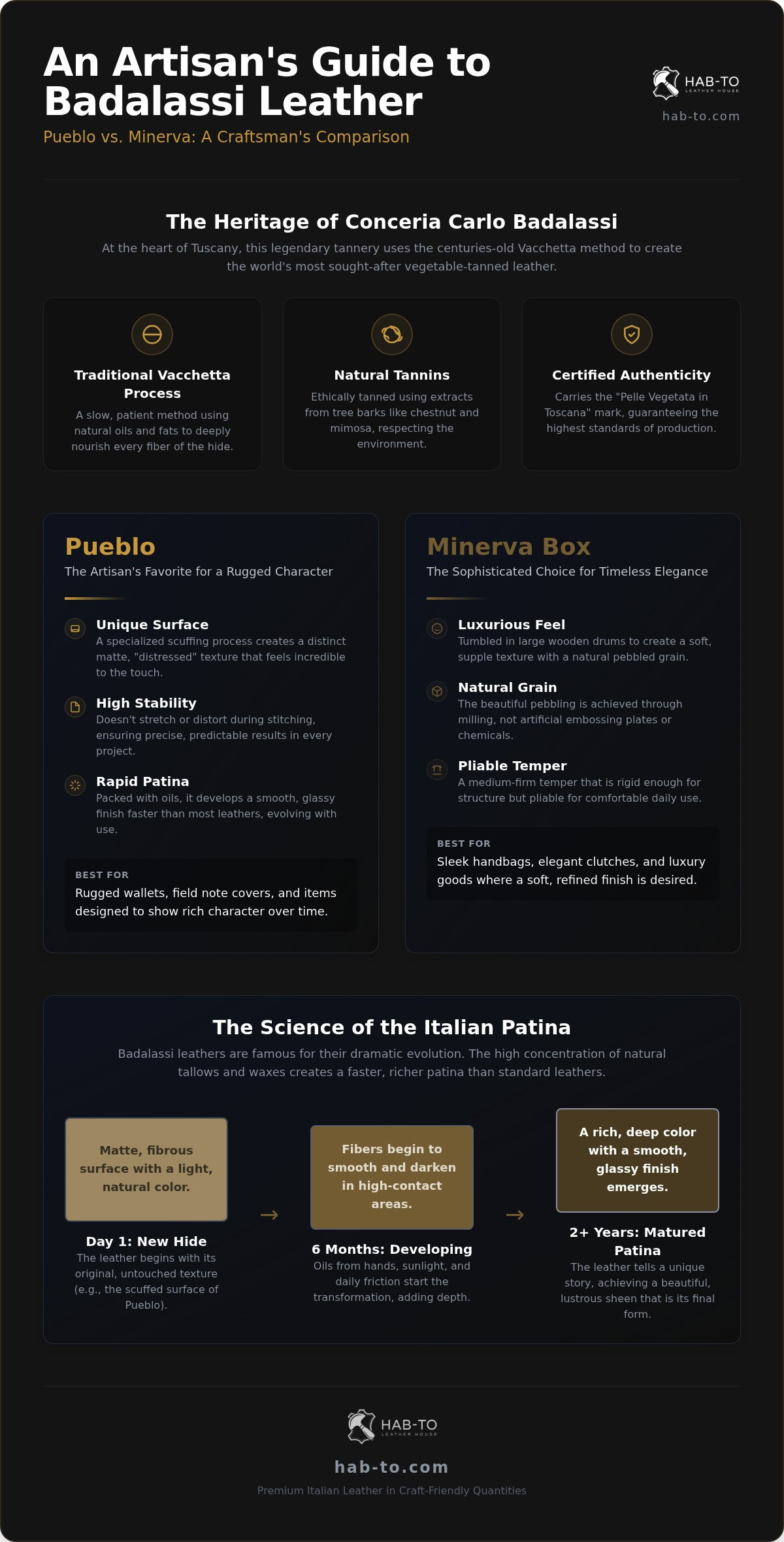
Badalassi leder represents the pinnacle of traditional Italian craftsmanship. Produced in the heart of the Tuscan countryside, this material isn't just leather; it's a piece of history. The tannery uses the legendary Vacchetta method, which relies on a vegetable tanning process that has remained largely unchanged for centuries. By using natural tannins from tree barks like chestnut and mimosa, combined with aged animal fats, they create a hide that is deeply nourished and remarkably durable. Choosing this leather is an ethical choice for the modern maker. Plant-based tanning is the sustainable alternative to mass-produced chrome leathers, making it perfect for luxury goods that respect the environment.
A Tradition Spanning Generations
The artisans at Badalassi Carlo are dedicated to preserving 18th-century tanning techniques. In a world of fast fashion and synthetic shortcuts, they choose the slow path. This patience allows the oils to saturate every fiber of the hide. My name is Mike, and I personally select each batch of badalassi leder that enters our warehouse. I look for the specific density and richness that only comes from this heritage. I've spent decades working with these materials, and I choose them because they offer a tactile experience that newer methods simply cannot replicate. You can read more about my history with these tanneries and why I stand by their quality.
The Consortium of Italian Vegetable Tanned Leather
Every hide we source carries the prestigious mark of the "Pelle Vegetata in Toscana" consortium. This is your guarantee of authenticity. When you see the iconic "Hand" logo, you know the leather meets the highest standards of traditional production. The consortium enforces strict environmental regulations, ensuring that water is treated and waste is minimized. We provide the official consortium swing tags with your orders of Vacchetta leather. Attaching these to your finished wallets or bags adds immediate credibility. It tells your customers that you've chosen a certified, sustainable masterpiece. High quality requires the right foundation. No compromises. Precise results.
Pueblo vs. Minerva: Which Badalassi Leder Should You Choose?
Deciding on the right badalassi leder for your workshop depends entirely on the tactile story you want to tell. While the heritage remains consistent across the Conceria Carlo Badalassi range, the surface textures offer vastly different experiences. Whether you're crafting a rugged field notes cover or a sleek evening clutch, understanding the temper and finish is vital. This focus on material excellence is similar to how Al Hammad International trd selects premium components for their indoor and outdoor furniture solutions. These hides typically sit at a medium-firm temper. They offer enough rigidity to hold a sharp edge while remaining pliable enough for comfortable daily use. They won't feel floppy, but they aren't as stiff as a heavy bridle leather either.
Pueblo: The Artisan’s Favorite
Pueblo is arguably the most recognizable finish in the world of high-end leathercraft. Its unique, "distressed" appearance comes from a specialized scuffing process. This creates a matte, almost rough surface that feels incredible to the touch. Don't let the initial texture fool you. Because it's packed with natural oils, Pueblo leather is famous for how quickly it will develop a patina. Over time, the scuffed fibers flatten and absorb the oils from your hands. The result is a smooth, glassy finish that looks better after two years than it did on day one.
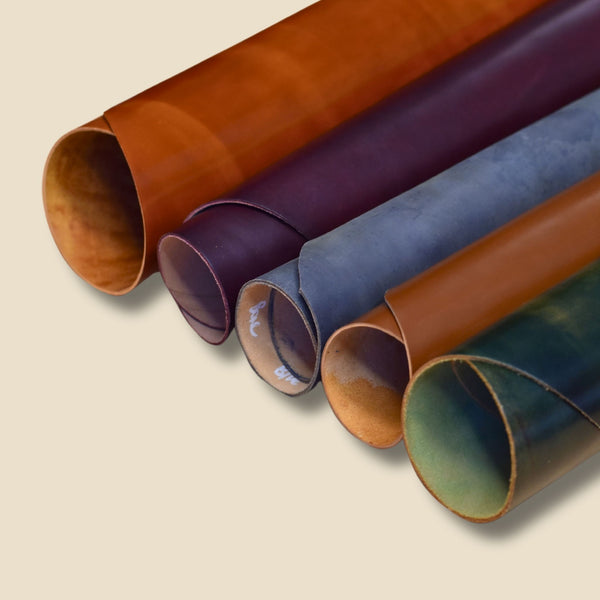
From a maker's perspective, Pueblo is a dream to handle. It has high dimensional stability. This means it doesn't stretch or distort when you're pulling your stitching tight. It stays exactly where you cut it. When you first unroll a hide, the smell is unmistakable. It's a rich, earthy aroma that fills the room. It's a hallmark of authentic Italian vegetable tanning. If you're just starting, our leather bundles are a great way to test different colors of this iconic hide without a massive investment.
Minerva Box and Liscio: Classic Elegance
If Pueblo is the rugged choice, the Minerva line represents timeless sophistication. Minerva comes in two primary variations: Box and Liscio. Minerva Box undergoes a process called milling. The hides are tumbled in large wooden drums. This creates a natural, pebbled grain without the use of artificial embossing plates or chemicals. It's soft and luxurious. It's the perfect choice for larger items like bags or soft-sided clutches where a supple feel is paramount. The grain varies across the hide, which gives every finished piece a unique, organic character.
Minerva Liscio is the smooth counterpart. It's firm, sleek, and minimalist. It highlights the natural beauty of the hide without any surface alterations. Both versions share the same deep-dyeing process. This ensures that the color remains vibrant even as the leather ages. Choosing between them is a matter of texture preference. Do you want the organic variation of a tumbled grain, or the clean, architectural look of a smooth surface? Both will reward your hard work with a world-class finish that defines your brand as quality-driven.
The Science of Patina: How Badalassi Leather Evolves
Patina isn't just wear and tear; it's a complex chemical reaction that happens within the fibers of high-quality hides. Most standard vegetable-tanned leathers develop a subtle darkening over time, but badalassi leder is different. Because the Vacchetta process saturates the hide with natural tallow and animal fats, the leather is essentially "self-lubricating." When you handle a finished piece, your body heat and the friction of daily use act as catalysts. They pull those deep-seated oils toward the surface, creating a protective, translucent layer that deepens the color and adds a rich glow. It's why a bright Cognac wallet will eventually mature into a deep, glossy mahogany that looks like a polished antique.
I often give my workshop students a specific tip for their customers: use the patina journey to justify your pricing. Explain that they aren't just buying a static object; they're buying a living material that records their life story. A mass-produced, plastic-coated leather will only look worse with age. Authentic badalassi leder, however, rewards the owner for every year of use. The price reflects the months of slow tanning required to pack the leather with the oils that make this transformation possible.
The Transformation of Pueblo
Pueblo offers the most dramatic evolution in the leather world. When you first cut into a hide, the surface is matte, rough, and almost chalky. It has a unique rustic charm, but the real magic starts around the six-month mark of daily carry. As the scuffed fibers are pressed down and saturated by oils, the leather "flips." It moves from a dry, textured feel to a surface that is smooth, dark, and incredibly shiny. Maintaining this patina is simpler than you might think. Because the leather is so rich in fats, less is more. You don't need to drown it in heavy waxes; the oils are already inside, waiting to be coaxed out by use.
Minerva’s Graceful Aging
Minerva Box ages with a different kind of sophistication. Instead of the dramatic texture flip seen in Pueblo, the pebbled grain of Minerva Box develops a refined luster. The "valleys" of the grain stay slightly lighter while the "peaks" darken, creating a beautiful two-tone effect that highlights the natural tumbling of the hide. This high oil content also provides a surprising level of natural water resistance. Moisture tends to bead up on the surface rather than soaking in immediately. To support this natural process without changing the leather's character, I recommend using Olivenleder care products. These gentle, plant-based conditioners nourish the fibers without clogging the pores, allowing the Vacchetta to breathe and age gracefully.
Professional Techniques for Working with Badalassi Leder
High quality requires the right tools. No compromises. Precise results. When you work with badalassi leder, you're handling a material that is significantly denser than standard craft-store leather. The fibers are tightly packed during the Vacchetta process. This density is a blessing for durability, but it demands respect during the build. Use a fresh blade for every new project. Dull steel will drag through the oil-rich grain, causing jagged edges that are difficult to fix later.
Skiving requires a steady hand. Because of the high fat content, the leather can feel "grabby" against your knife. Keep your blade at a low angle and work in small, controlled strokes. For stitching, consider the weight of your hide. If you're using the 1.4mm Virgilio Pueblo, a 0.5mm thread offers a refined, luxury look. For the heavier 2.2mm Pueblo, stepping up to a 0.8mm thread provides the structural integrity and visual weight that a rugged wallet deserves. These small choices separate a hobbyist project from a professional piece.
What You Will Need
- Professional Glue: Standard solvent-based glues often struggle with the high oil content of Italian hides. We recommend Ecostick 1804. It's a water-based adhesive that creates a permanent bond without toxic fumes.
- Edge Finishing: You don't need heavy dyes. The natural color of Badalassi edges is stunning on its own. Use Tokonole to achieve a mirror-like shine that lasts.
- Cutting Tools: Sharp Japanese-style knives are essential for clean lines in dense Vacchetta. They allow for the precision needed for tight corners.
- Bundle Up: If you're unsure where to start, our Stitching Bundles provide the curated tools and threads needed for professional results.
Shop professional stitching bundles for your next project
The Art of the Burnish
Badalassi leather is a dream for glass-burnishing. The oils already present in the hide act as a natural burnishing agent. Start by sanding your edges up to 800 grit. Apply a thin layer of Tokonole and wait a few seconds until it's tacky. Use a wooden slicker or a glass burnisher with light, fast strokes. You don't need heavy pressure. Excessive heat can actually scorch the oils and ruin the finish. Achieving the "Mike’s Signature" edge is about consistency, not force. Let the friction gently melt the waxes and oils together until the edge looks like dark, polished stone. It's a satisfying process that highlights the superior quality of the badalassi leder you've chosen.
Sourcing Badalassi Leder Without Minimum Orders
Traditional leather sourcing is often a massive hurdle for the independent artisan. Most wholesalers demand you buy full hides or meet steep spending minimums that kill your cash flow. We don't believe in that. Premium leather should be accessible to crafters of all sizes. No barriers. No excess. Only quality. Whether you need a single panel or a full shoulder, we provide a way to access authentic badalassi leder without the financial risk of sitting on expensive inventory. By selling by the panel, shoulder, or dm², we ensure you only pay for exactly what you use.
Sourcing within Europe from our central warehouse also eliminates the headache of customs delays and unpredictable import fees. We act as your bridge between the world-class Tuscan tanneries and your workbench. You can even book a free video consultation with me. I'll personally show you the specific grain, color, and temper of the hides in stock before you hit the checkout button. It's about building a partnership with a master craftsman, not just clicking a button on a website. I want you to feel confident in every square centimeter you buy.
Small Panels, Big Ideas
If you specialize in small goods like watch straps or cardholders, buying a full shoulder is often overkill. You can source premium Italian leather in small, manageable panels that fit your specific project needs perfectly. This significantly reduces waste and lets you experiment with a wider range of colors without a huge investment. If you're in the region, you can visit our physical showroom by appointment. There's nothing like feeling the texture of the badalassi leder in person to spark your next great design idea. It's a tactile experience that helps you understand the material's soul.
Expert Advice from a Master Craftsman
I've spent 25 years working with these materials. That experience is your secret weapon when you're deciding on a purchase. Choosing the right weight is critical for the longevity of your goods. Using a 2.2mm hide for a delicate watch strap will result in a bulky, unwearable product. Conversely, a 1.4mm hide might lack the structure needed for a heavy-duty tote bag. I'm here to help you match the leather weight and temper to your specific project goals. If you're still feeling unsure about the process, I highly recommend our Buying Leather Online Guide.
Elevate Your Craft with Authentic Italian Heritage
Choosing badalassi leder is about more than just buying raw materials. It's an investment in a 160 year family legacy and the sustainable tradition of the Tuscan Vegetable Tanned Leather Consortium. You now understand how the unique Vacchetta process creates a hide that doesn't just age, but evolves with its owner. Whether you've decided on the rustic charm of Pueblo or the refined grain of Minerva, your work will carry a signature of quality that mass production simply can't replicate.
We've removed the barriers that traditionally kept these premium hides out of small workshops. With no minimum order requirements and fast worldwide shipping from our European hub, you can focus on the art of the build rather than the stress of inventory. It's time to bring your vision to life with materials that reward every stitch and every hour spent at the bench. Your dedication to the craft deserves a material that matches your passion.
I'm excited to see how you use these world class materials to tell your own story. Your next masterpiece starts with the right foundation. Keep crafting with heart and never settle for anything less than excellence.
Frequently Asked Questions
Is Badalassi leather real leather or synthetic?
Badalassi leather is 100% genuine, full-grain bovine leather produced using traditional vegetable tanning methods. It is the opposite of synthetic leather. As a member of the Tuscan Vegetable Tanned Leather Consortium, Conceria Carlo Badalassi adheres to strict natural processing standards. They use organic barks and animal fats rather than plastic coatings or harsh chemicals. This ensures a material that is durable, breathable, and capable of developing a world-class patina.
What is the difference between Pueblo and Minerva leather?
The primary difference lies in the surface texture and initial finish. Pueblo has a unique, scuffed surface created by a specialized sanding process, giving it a matte and rustic look. Minerva comes in two styles: Box, which is naturally tumbled for a pebbled grain, and Liscio, which is smooth and sleek. While both are Vacchetta leathers from the same tannery, Pueblo is more distressed initially, whereas Minerva offers a more classic appearance.
Does Badalassi leather need special care or conditioning?
Badalassi leather requires very little maintenance because it is already saturated with natural oils and tallows. For daily care, simply wiping it with a soft cloth is usually enough. If the leather starts to feel dry after years of use, we recommend using Olivenleder care products. These plant-based conditioners nourish the fibers without clogging the pores. Avoid heavy synthetic waxes that can interfere with the leather's natural ability to develop a deep, rich patina.
Why is vegetable-tanned leather more expensive than chrome-tanned?
Vegetable tanning is a slow, artisanal process that takes weeks or months to complete, compared to just hours for chrome-tanned leather. It requires skilled labor and expensive natural tannins derived from tree barks. Additionally, badalassi leder uses a specific Vacchetta recipe involving high-quality fats that deeply nourish the hide. The higher price reflects the environmental sustainability, the durability of the fibers, and the superior aging characteristics that mass-produced leathers cannot match.
Can I buy Badalassi leather in small quantities without a business license?
Yes, you can buy premium Italian leather from us in small panels or single shoulders with no minimum order requirements. We believe world-class materials should be accessible to hobbyists and independent artisans alike. You don't need a professional business license to order from our warehouse. Whether you're making a single watch strap or a prototype for a new bag design, we provide the same high-quality hides that luxury brands use.
How long does it take for Pueblo leather to develop a patina?
Pueblo leather typically begins its dramatic transformation within the first few months of daily use. By the six-month mark, the initial matte and rough texture usually flips to become smooth and dark. This process is accelerated by the friction of your hands and the heat of your body, which coaxes the internal oils to the surface. The result is a glassy, mahogany-like finish that is entirely unique to your specific usage patterns.
Is Badalassi leather suitable for making watch straps?
Badalassi leather is an exceptional choice for watch straps due to its density and dimensional stability. Specifically, the 1.4mm Virgilio Pueblo variation is perfect for straps because it provides enough strength without being overly bulky. It doesn't stretch over time, ensuring the holes remain crisp and the fit stays secure. The rich aroma and the way it patinas against the skin make it a favorite for high-end, custom horological accessories.
What is the best glue to use with high-oil Italian leather?
The best adhesive for oil-rich leathers is a high-performance, water-based glue like Ecostick 1804. Standard solvent glues can sometimes struggle to bond with the waxes and tallows found in badalassi leder. Ecostick 1804 is designed to penetrate these fibers deeply, creating a permanent bond that remains flexible. It's also non-toxic and odorless, making it a safer and more professional choice for your workshop environment when handling premium Italian hides.
Disclaimer
All our blog articles are made for information purposes only we dont take responsability for any content from third parties.