

Feeling Connected to a Traditional Craft: Why Making Matters
What if the simplest way to feel more connected was to make something with your hands? In a world of screen-based routines, creative work can feel distant and impersonal. Feeling connected to a traditional craft offers a different experience: you handle real materials, focus on each step, and learn skills shaped by generations of makers.
You don’t need years of experience or a perfect first project to begin. It’s natural to wonder where to start when traditional techniques seem unfamiliar. Leathercraft makes the connection tangible: the leather responds as you cut, shape, and stitch it, and each decision teaches you something about the material. Your first attempt can be small. What matters is being curious enough to begin.
In this article, we’ll explore how craft connects you with materials, makers, and shared knowledge. You’ll see how hands-on practice can make tradition feel welcoming rather than out of reach, and how learning and passing on a skill helps keep it alive. No grand gesture required. Just time, attention, and a willingness to make.
Key Takeaways
- Recognise craft connection in the relationship between material, process, inherited knowledge, and the people who share their skills.
- Use leathercraft to deepen your understanding through choosing, handling, and working with material.
- Let traditional techniques evolve: value what makers have learned while adapting the work to modern life.
- Start with an interest, a manageable project, essential materials, and time to reflect on what each attempt teaches you.
- Keep feeling connected to a traditional craft by making again, learning from others, and passing useful skills along.
What Does Feeling Connected to a Traditional Craft Mean?
Picture the first cut into a piece of leather. The material offers some resistance, the tool leaves a visible line, and your hands tell you whether the pressure is steady. Even a small task makes effort tangible. You’re no longer only looking at an object; you’re noticing what it takes to shape one.
Feeling connected to a traditional craft means engaging with its materials, process, inherited knowledge, and community of makers through appreciation, practice, or both. You don’t have to make something yourself to value the skill behind it. Watching a maker work, learning the story of a technique, or using a carefully made object can all build appreciation. Practising adds another layer: you experience the decisions and challenges firsthand.
A short look at reed weaving offers one example of a craft carried through skilled hands:
What Makes a Craft Traditional?
A craft becomes traditional as people pass knowledge and skills between generations. That knowledge might cover how to choose and prepare materials, use tools, follow a sequence of steps, or judge when a piece is well made. The Handicraft overview offers broader context on hand production and its history, though traditions don’t all share the same origins or methods.
Leathercraft, for instance, includes practical knowledge about cutting, stitching, and finishing leather. A maker can learn established methods without treating them as untouchable rules. Tools, designs, and purposes may change. Respect comes from understanding why a technique works, then making thoughtful choices about what to adapt, rather than copying without context or assuming every old method must remain unchanged.
Why Does Making by Hand Feel Meaningful?
Handwork gives immediate, physical feedback. A cut can run true or drift; stitches can sit evenly or need adjustment; a finish can change the surface’s look and feel. Each step asks you to notice the material and respond to it. With vegetable-tanned leather, careful handling and practice help you pay closer attention to how the material behaves during a project.
That attention differs from simply acquiring a finished object. Buying something can connect you to its maker, design, or history, but making lets you encounter the decisions along the way: how to measure, where to place a stitch, and what to do when a result isn’t quite right. The process makes effort and learning visible.
For some people, focused time feels satisfying or grounding; for others, the pleasure comes from curiosity, problem-solving, or sharing a skill. There’s no single emotional response a craft must produce. Connection can begin with appreciation, grow through practice, and deepen as you understand the choices behind the work.
How Material, Repetition, and Learning Build a Connection to Craft
A material teaches through touch. Each time you work with it, you notice details that are easy to miss from a distance: how its surface feels, where it gives, and how it responds to a tool. Add repetition and guidance from other makers, and a craft becomes less like a set of instructions and more like a conversation between your hands, the material, and knowledge shared over time.
Craft knowledge develops through close observation, repeated practice, and learning how materials respond to each decision. That process takes time. A new attempt may raise questions rather than settle them, and that’s part of learning.
Getting to Know a Material Through Your Hands
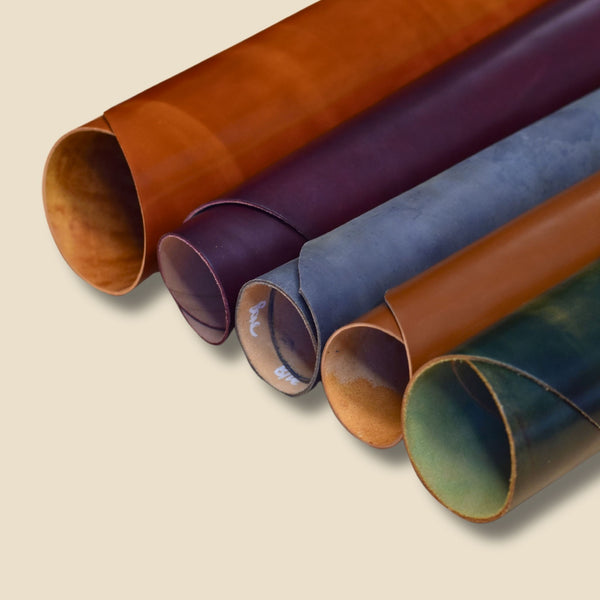
Start by noticing before you act. With a piece of leather, pay attention to its texture, firmness, and visible grain. As you handle and position it, observe how it responds to pressure and how a tool moves across it. These details aren’t a universal recipe; they help you make choices based on the material in front of you.
Different materials call for different decisions, so a technique learned with one won’t necessarily transfer unchanged to another. Hab-To Leather House focuses on vegetable-tanned leather, giving leathercraft learners the chance to build familiarity with it through handling and practice. Over time, you can learn what to look for before cutting, stitching, or finishing.
Learning Techniques Through Practice and Guidance
A demonstration makes a technique visible. Practice lets you test it yourself, and feedback helps you notice what to adjust, such as how you hold a tool or position your work. Instead of trying to perfect an entire project at once, focus on one step. Repeat it, compare the results, and pay attention to what changed.
Experienced makers can explain choices that are hard to infer from a finished object: why they begin in a certain place, how they keep a line consistent, or what they watch for as they work. Learning this way connects your own attempts with knowledge passed between makers. Hab-To Leather House’s leathercraft masterclasses offer a structured way to learn through demonstrations and explore techniques.
Keep the practice manageable. Choose a single action, such as making a few stitches on a small piece, and give it your full attention. Notice where the result differs from your intention, then decide what to try next. Familiarity grows through observation, not through a promise of instant mastery or a particular feeling.
If you’d find it helpful to begin with materials and tools gathered for a first project, explore the leathercraft starter bundles. A bundle can make the first steps more straightforward, while the learning still comes from handling, practising, and asking questions.
Traditional Craft in Modern Life: Connection Without Nostalgia
A traditional craft doesn’t have to be frozen in time to remain meaningful. Traditions stay alive when people keep learning, practising, and sharing the knowledge behind them. That can mean keeping a core technique while changing the design, purpose, or tools to suit a maker’s life now.
Respecting inherited knowledge isn’t the same as copying every historical method unchanged. Understanding why a process is done a certain way gives you a stronger basis for deciding what to preserve and what to adapt. The goal isn’t to treat the past as a rulebook. It’s to learn from it with care.
Is Traditional Craft Only About Preserving the Past?
No. Preservation can document materials, methods, and finished work, while living practice puts skills to use. Both have value, but practice gives the next maker a chance to understand the choices involved. In leathercraft, a familiar sequence such as measuring, cutting, and stitching can be applied to a project that meets a present-day need. The technique continues even as the object or design changes.
Adaptation works best when it grows from understanding. A beginner might first follow an established method, observe how each step affects the work, and then make considered changes. That’s different from assuming a technique is outdated because it’s unfamiliar, or insisting that every maker must reproduce one historical version.
Can Modern Makers Find Their Own Place in a Tradition?
Yes. Start by learning a process as it’s taught, then use it for a project that makes sense in your own life. For example, a leathercraft learner could practise careful cutting and stitching while making a small, useful item. The point is not to claim a technique is unchanged over time, but to carry forward skills through attentive use.
Digital tools can support that learning. An online demonstration lets you revisit a step, while maker communities provide a place to exchange questions, observations, and ideas. A screen can show a sequence or connect learners, but it can’t replace handling the material and practising the movements yourself. Use digital resources as a guide, then put the lesson into your hands.
Think of the difference this way:
| Rigid nostalgia | Respectful, evolving practice |
|---|---|
| Copies one version without asking why | Learns the reasoning behind a method |
| Treats change as a loss of authenticity | Adapts thoughtfully while valuing inherited knowledge |
| Sees tradition as something finished | Keeps skills in use through new projects and teaching |
Feeling connected to a traditional craft doesn’t require you to recreate the past. It can mean learning a technique with care, making something useful today, and sharing what you discover so another maker can build on it. If a guided starting point would help, explore leathercraft bundles for getting started and choose a project that gives you room to learn.
How to Begin a Traditional Craft Practice That Feels Meaningful
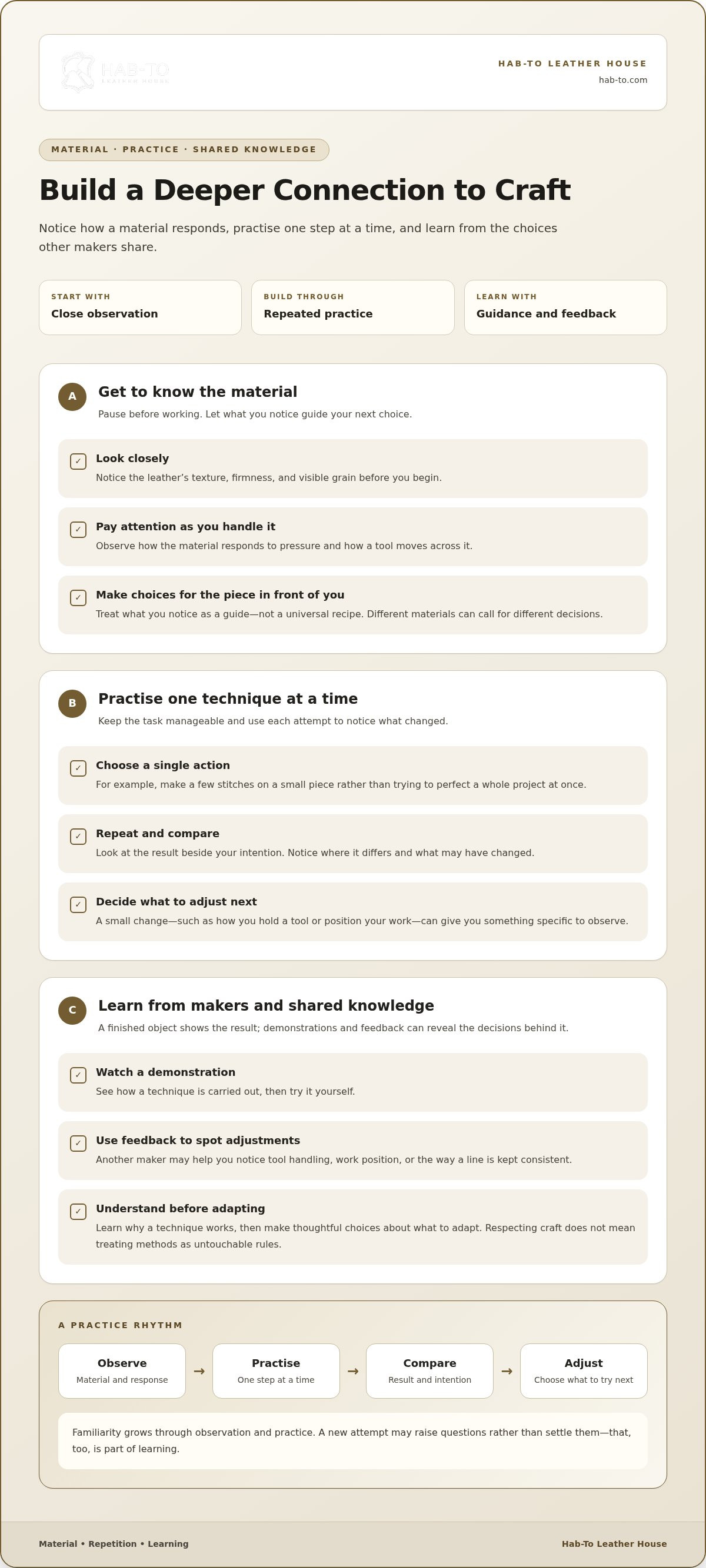
You don’t need a complete workshop or a complicated project to begin. Choose a craft that holds your interest, then narrow your attention to one material and one technique. The aim isn’t to prove your skill. It’s to make space for learning, one deliberate decision at a time.
Try this simple sequence:
- Choose an interest. Pick a craft or object you’re genuinely curious about, such as leather stitching or simple hand-sewn work.
- Explore the material. Handle it, look closely, and consider what you’d like to learn about how it responds.
- Gather the essentials. Start with what suits your small project rather than collecting every tool you might eventually use.
- Practise one technique. Work on a manageable task and pay attention to how each attempt differs.
- Reflect. Note what you learned, what you’d change, and what you’d like to try next.
This approach can make feeling connected to a traditional craft more accessible. Your first piece doesn’t need to be flawless or even finished for the practice to teach you something. Let curiosity, not pressure, set the pace.
What You Will Need
For a simple leathercraft start, gather only the basics that fit your intended project and experience. Depending on what you plan to make, that may include:
- A suitable piece of vegetable-tanned leather
- Leather needles and thread, with stitching supplies suited to hand stitching
- Basic cutting tools appropriate to the task
- Leathercraft tools suited to the technique you want to practise
Project needs differ, so choose tools and materials for the work you have in mind. If you’re new to leatherwork, leathercraft starter bundles are an optional way to bring together relevant materials and tools. You can also begin with individual essentials; a bundle isn’t a requirement for learning by hand.
A Simple First-Practice Sequence
Before starting, handle the leather and notice its surface and feel. Then choose a single technique, such as making a straight cut or practising a line of stitches. Work slowly enough to observe what your hands and tools are doing. Change one thing at a time so you can see how it affects the result.
After each attempt, write down a question or observation: Did the tool follow the line you marked? Did your stitches stay consistent? What might you adjust next time? A note turns a passing impression into something you can learn from when you return to the work.
Keep the project modest. A small piece gives you room to focus on the process without needing to solve every challenge at once. If something goes differently than expected, treat it as information, not failure. The next attempt can build on what you noticed.
Keep the Connection Alive by Sharing Skills and Making Again
A craft connection grows through returning to the work. Each time you make, you bring new questions and observations. Sharing those discoveries, even informally, helps knowledge move between makers. A conversation about how you held a tool or approached a stitch can give another learner a useful place to begin.
Tradition isn’t sustained by objects alone. It continues when people demonstrate techniques, practise them, explain their choices, and learn from one another. You don’t need to be an expert to take part. Showing someone what you’ve learned, or asking a thoughtful question, can make the exchange richer for both of you.
How Shared Knowledge Keeps Craft Traditions Moving
Some lessons are easiest to understand when you see them in action. A demonstration makes a sequence visible; a conversation can explain why a maker chose that approach; practice gives you the chance to test it yourself. In leathercraft, watching someone prepare a piece or work through a stitching step can make the process clearer than instructions alone.
At Hab-To, Mike brings over 25 years of personal leather expertise, supported by more than 160 years of leather experience across his family. That knowledge is part of a living exchange: skills are learned, used, and passed on, while each maker develops their own understanding through practice.
Choose a First Step That Fits Your Curiosity
There’s no single right route into a craft. You might learn through a class, explore materials and tools, or try a modest hands-on project. Choose the path that suits what you want to understand. If you’re curious about leatherwork, Hab-To’s leathercraft masterclasses offer a way to learn through guided instruction. Beginner resources can also help you approach a first project at your own pace.
Then keep the connection active. Return to a technique, notice what has become more familiar, and share a question or lesson with another maker. Feeling connected to a traditional craft can deepen over time, not because every attempt is perfect, but because you keep learning and making with care.
A Gentle Start in Leathercraft
A beginner crafting bundle can bring relevant materials and tools together for exploring a first project. It’s an optional starting point, not a requirement: choose what fits your curiosity, then let hands-on practice guide what you learn next.
Let Your Next Making Session Begin Small
Let your next step be modest: set aside time to try one technique, revisit a material that interests you, or make a small, useful object. You don’t need a perfect plan. Pay attention to what you enjoy learning, and let that curiosity guide what you make next.
Feeling connected to a traditional craft can grow through returning to the work. Choose a pace that feels sustainable, then come back when you’re ready.
At Hab-To, there’s no minimum order requirement, so you can choose supplies for your project rather than feeling you need to stock a full workshop. VAT is included for purchases within the Netherlands and excluded for purchases in other countries.
Your first project doesn’t have to be extraordinary. It only has to be yours. Begin where you are, and let the next lesson reveal itself as you make.
- Choosing vegetable-tanned leather for a project
- Learning basic hand-stitching techniques
- Selecting leathercraft tools for a first project
Frequently Asked Questions
What does it mean to feel connected to a traditional craft?
It means finding a point of involvement in the skills, materials, or people behind a craft. That connection might begin by learning how an object is made, speaking with a maker, or trying one part of the process yourself. Feeling connected to a traditional craft doesn’t require expertise or family ties to the practice. Curiosity and a willingness to pay attention are meaningful places to start.
Can I learn a traditional craft if I have no experience?
Yes. Beginners can start by learning one basic skill at a time, such as threading a needle or following a simple pattern. Look for clear demonstrations, beginner-friendly classes, or opportunities to learn from a more experienced maker. Keep early attempts small enough that you can focus on the technique rather than juggling several new skills. Questions are part of learning, not a sign you need prior experience.
Why can making something by hand feel different from buying it?
Making lets you take part in decisions that are already settled in a finished object. You choose details such as its shape, size, and finish, then see how those choices affect the result. For example, stitching a small pouch yourself gives you a record of the work in every seam. Buying an object can still connect you to its maker, but making offers a firsthand view of its construction.
Does traditional craft have to stay exactly the same?
No. A craft can retain valued skills while makers adjust designs or uses for present-day needs. A useful approach is to learn a technique as it’s taught, understand the purpose behind its steps, and then consider what changes make sense for your project. This helps distinguish thoughtful adaptation from change made without understanding. Respect for a tradition can include using its knowledge in new, considered ways.
What is a good first leathercraft project for a beginner?
A simple stitched card sleeve can be a manageable choice because it involves a small number of pieces and lets you focus on measuring, cutting, and straight stitching. Before starting, review the steps and gather the materials and tools they call for. If you’d rather practise first, make a few sample stitches in scrap leather. That gives you a chance to learn the movement before working on the project itself.
How can I learn a craft without buying a large quantity of materials?
Choose a project with modest material needs and plan what you’ll practise before selecting supplies. A small panel or suitable offcut can provide material for testing a cut or stitch before you begin the main piece. Check the project instructions for required tools, too, so you can focus on essentials rather than collecting extras. Hab-To has no minimum order requirement, so you can choose supplies around your project. Explore the leathercraft bundles to find a practical starting point.
Disclaimer
All our blog articles are made for information purposes only we dont take responsability for any content from third parties.