Horween Shell Cordovan: A Crafter's Guide to the Gold Standard
There’s a moment many leather crafters experience: staring at a piece of genuine Horween Shell Cordovan, a mix of awe and anxiety swirling inside. Its deep, glassy shine promises an heirloom-quality project, but that premium price tag whispers a single, persistent warning-don’t mess this up. If you’ve ever felt that hesitation, wondered what truly justifies the cost, or questioned if your skills are ready for the gold standard of leather, you’re in exactly the right place. That fear of wasting such a magnificent material is real, but it shouldn't stop you from creating something truly exceptional.
In this comprehensive guide, we’ll demystify the legend. We’ll explore the century-old, six-month tanning process that gives this leather its unparalleled durability and character, helping you understand why it’s a worthwhile investment for a premium project. More importantly, we’ll equip you with the practical, no-nonsense techniques for cutting, sewing, and finishing it with confidence. Consider this your roadmap to mastering the art of Shell Cordovan, ensuring your next creation is not just made, but masterfully crafted.
Key Takeaways
- Understand what makes Shell Cordovan a unique equine leather, setting it apart from all other materials in your workshop.
- Discover the intensive six-month tanning journey that justifies the premium quality and cost of this legendary material.
- Master the essential techniques for cutting and stitching horween shell cordovan, ensuring you get it right the first time.
- Learn how to spot authentic Horween by looking for one specific mark that guarantees you're buying the real deal.
What is Horween Shell Cordovan and Why is it Legendary?
In the world of fine leather goods, few materials command as much respect and admiration as shell cordovan. And when you speak of shell cordovan, one name is inseparable from its legacy: Horween of Chicago. This isn't just any leather; it's a specific, rare material derived from a fibrous flat muscle, or 'shell,' beneath the hide on a horse's hindquarters. This unique, non-porous structure is the secret to its legendary status, giving it an unparalleled combination of durability, a rich patina that develops over time, and a signature mirror-like shine.
To see what makes this material so distinct, the video below offers a great visual explanation:
The Horween Legacy: Over a Century of Excellence
The story of this incredible material is tied to the Horween Leather Company, a family-run tannery operating in Chicago since 1905. For over a century, they have perfected the slow, traditional vegetable tanning process required to produce genuine shell cordovan. In a world of mass production, Horween’s unwavering commitment to these time-honored methods has made their name the undisputed benchmark for quality in the industry.
Shell Cordovan vs. Other Leathers: The Key Differences
So, what truly sets Horween Shell Cordovan apart from premium calfskin or even Horween's own famous Chromexcel? It all comes down to the fiber structure and how the material behaves over its long life.
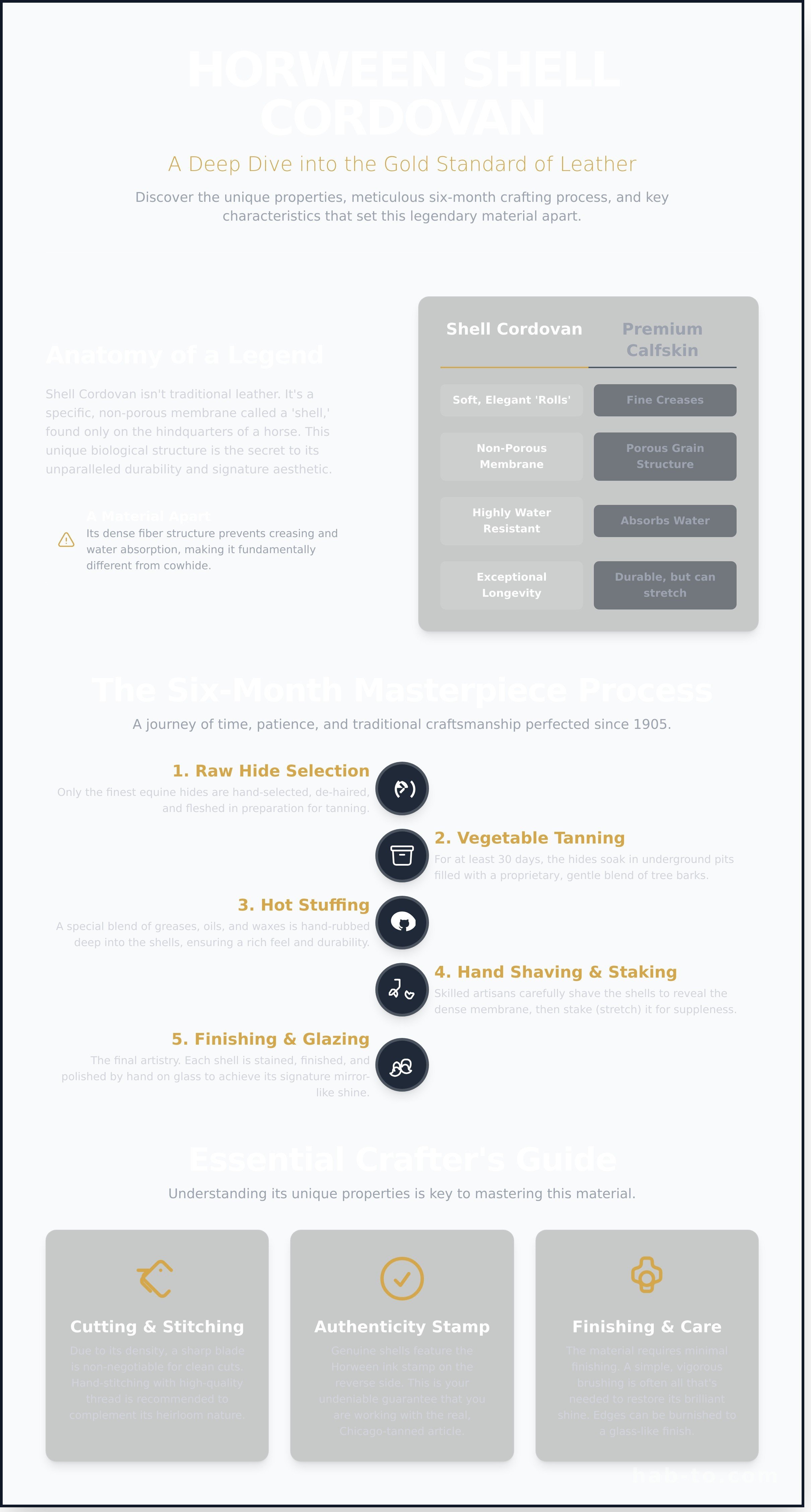
- Fiber Structure: Unlike the grain structure of cowhide, shell cordovan is non-porous. It's an incredibly dense membrane, which makes it highly resistant to stretching and water absorption compared to other vegetable-tanned leathers.
- Creasing vs. Rippling: This is the most iconic difference. Where calfskin develops fine creases at flex points (like on a shoe), shell cordovan creates soft, elegant 'rolls' or 'ripples.' This unique aging characteristic is highly sought after by connoisseurs.
- Finish and Durability: The intense, six-month tanning process packs the shell with special oils and greases, resulting in a material that is not only beautiful but exceptionally durable. It can be restored to a brilliant shine with simple brushing, outlasting many other leathers.
These fundamental differences are why shell cordovan is considered the gold standard for luxury footwear and heirloom-quality leather goods.
The Six-Month Process: How Horween Creates Its Masterpiece
Why does Horween Shell Cordovan command such respect-and a premium price? The answer lies not in a shortcut, but in a slow, deliberate journey of transformation that takes a minimum of six months. This isn't a modern, rushed process; it's a legacy of craftsmanship perfected over a century by the Horween Leather Company, using pure vegetable tanning methods passed down through generations. Each step is an investment of time and skill, building character into the very fibers of the leather. No compromises. Just a commitment to creating the best.
From Raw Hide to Tanning Pits
The journey begins with hand-selected equine hides, chosen for their quality and integrity. Only the finest raw materials make the cut. These hides are meticulously prepared-de-haired and fleshed-before being submerged in vast, underground pits. For at least 30 days, they bathe in a proprietary, gentle blend of tree barks and natural tannins. This slow, patient vegetable tanning process is crucial; it preserves the tight grain of the shell and imbues it with a foundational strength that chrome tanning simply cannot replicate.
Hot Stuffing, Shaving, and Staking
After tanning, the real magic begins. The shells undergo 'hot stuffing,' a process where a special blend of greases, oils, and waxes is hand-rubbed deep into the leather. This step is responsible for the material's famous rich feel, durability, and ability to develop a beautiful patina. Next, skilled artisans carefully hand-shave the shells to reveal the dense, non-porous membrane that is unique to cordovan. Finally, the leather is staked-a process of stretching and softening-to give it the perfect balance of suppleness and structure.
Finishing Touches: Glazing and Polishing
The final stage is all about artistry. To achieve its signature glossy sheen, each shell is glazed by hand with a smooth glass rod, a friction-based process that burnishes the surface to a brilliant luster without any artificial lacquers. The deep, rich colors are then hand-applied, resulting in a beautiful depth and variation that machine finishing can't match. Every single piece of horween shell cordovan is then rigorously inspected, ensuring that only a perfect, flawless product leaves the tannery floor.
A Crafter's Perspective: The Unique Characteristics of Horween Shell Cordovan
Beyond the lore and the six-month tanning process, what truly matters in the workshop is how a leather feels, cuts, and ages. For an artisan, working with horween shell cordovan is an experience unlike any other. Its incredible density is immediately apparent. Your knife must be exceptionally sharp to achieve a clean cut, as the material resists compression and yields a perfectly crisp edge. This same density makes it a dream to burnish, polishing to a glassy, seamless finish with minimal effort.
This isn't a material that simply "wears out"; it evolves. It tells a story through its use, making it a prime choice for heirloom-quality goods.
Unmatched Durability and Patina
The secret to its longevity lies in its non-porous, tightly packed fiber structure. Unlike conventional leathers, Shell Cordovan doesn't stretch or lose its shape easily. Over years of use, it develops a stunningly rich and deep patina, with colors warming and gaining incredible depth. Infused with a proprietary blend of oils and waxes during tanning, the leather has a remarkable ability to 'self-heal'. Minor scuffs and scratches often disappear with a vigorous brushing or a bit of friction, as the oils are brought back to the surface.
The Signature Shine and 'Roll'
One of the most defining features of Shell Cordovan is its deep, glossy luster. This isn't a superficial topcoat; it’s an integral part of the leather that can be revived time and again with a simple horsehair brush. When flexed, the material doesn't crease into sharp, damaging folds. Instead, it creates soft, elegant ripples or 'rolls'. This unique characteristic makes it the undisputed champion for high-wear, high-flex items like luxury footwear, watch straps, and wallets that must endure daily life while looking exceptional.
Ready to feel the difference for yourself? Browse our Horween Shell Cordovan selection.
Identifying Genuine Horween: The Stamp and Color Palette
When you invest in a material as prestigious as Horween Shell Cordovan, you want absolute certainty that you're getting the genuine article. Its reputation has unfortunately led to imitations, but thankfully, Horween provides a few distinct hallmarks. For any craftsman or connoisseur, learning to spot these is key. The two most reliable indicators are the tannery's official ink stamp and its iconic, time-honoured color palette.
The Horween Ink Stamp: Your Mark of Authenticity
The most definitive proof of origin is the ink stamp found on the reverse (flesh) side of the shell. This stamp, which reads "HORWEEN SHELL CORDOVAN," is the tannery's direct seal of approval, confirming the leather has passed their rigorous, six-month tanning process.
However, it's crucial to know that each oval-shaped shell only has one or two stamps. This means that not every cut piece will feature it. If displaying this mark of authenticity is important for your project, it’s always a good idea to ask your supplier if they can provide a cutting that includes the stamp.
Exploring the Classic Colors
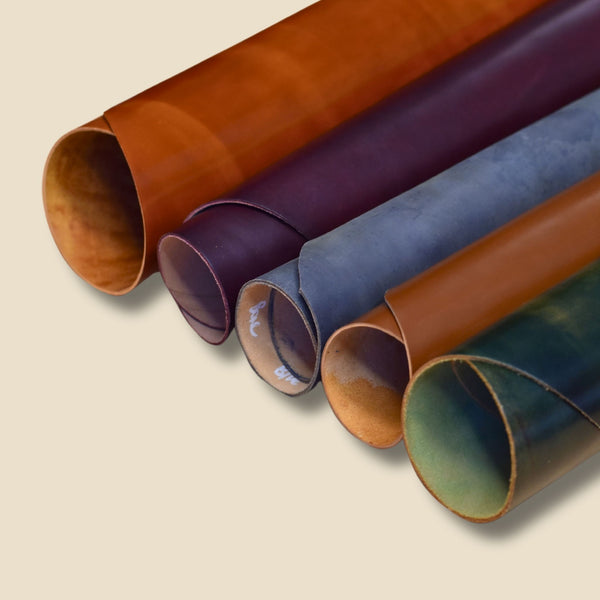
Beyond the stamp, the color palette of genuine horween shell cordovan is legendary in its own right. The unique vegetable tanning and hand-finishing processes create a depth and complexity of color that is difficult to replicate. While many shades exist, a few have become true icons:
- Color #8: This is the undisputed king of cordovan colors. It’s a deep, rich burgundy that can look almost black in low light and reveals stunning reddish-purple undertones in the sun. It's the color most people picture when they think of shell cordovan.
- Black: A timeless classic. Horween’s black is deep, uniform, and develops a signature glossy patina over time.
- Whiskey: A beautiful light tan or golden-brown. It’s prized for its ability to develop a dramatic and personal patina, darkening significantly with use and sun exposure.
- Dark Cognac: A versatile and rich medium brown with warm, inviting undertones.
- Ravello: A highly coveted, lighter medium-brown with distinct reddish hues, sitting somewhere between Whiskey and Color #8.
Because each shell is hand-dyed and finished, you may notice slight variations between batches. This isn’t a defect-it’s a hallmark of true craftsmanship. If you have any questions about identifying leather, feel free to explore the premium selection at Hab-To Leather House, where quality and authenticity are our promise.
Essential Tips for Working with Horween Shell Cordovan
Let's be honest: making that first cut into a piece of Horween Shell Cordovan can be nerve-wracking. It's a premium material with a price to match, and the fear of making a costly mistake is real. But don't let that stop you. With the right approach and a respect for the material, you'll find it's one of the most rewarding leathers to work with. Its unique density requires precision, not complexity. Here are my essential tips to guide your craftsmanship.
Cutting and Skiving
The non-negotiable rule here is sharpness. A freshly stropped blade is your best friend. Due to its incredibly dense fiber structure, a dull knife will drag and compress the leather rather than slicing it. You'll find that a perfectly honed knife glides through, leaving a satisfyingly clean edge. When it comes to skiving, less is more. The shell is naturally thin and uniform, so deep skives are rarely necessary and can compromise its integrity.
Stitching and Gluing
That same principle of sharpness applies to your stitching tools. High-quality, sharp pricking irons or chisels will create clean holes without distorting the leather. For thread, choose a premium option like linen or a strong polyester to match the leather's legendary durability. A critical tip for gluing: the glazed surface of cordovan resists adhesives. You must prepare the surface by lightly sanding the area with fine-grit sandpaper to create a tooth for the glue to properly bond.
Finishing the Edges
This is where the magic happens. Achieving a glass-like, burnished edge is simpler than with many other leathers and is a true hallmark of working with Horween Shell Cordovan. While edge paint is an option for a different aesthetic, the natural burnish is classic.
- Sand: Start with a medium-grit sandpaper (around 400) and progress to a finer grit (800-1000) to create a perfectly smooth and even surface.
- Burnish: Lightly dampen the edge with water. Use a canvas cloth or a wood slicker to burnish it with firm, quick strokes. The friction and heat will compress the dense fibers, creating a natural, dark shine.
- Wax & Seal: Apply a light coat of beeswax to the burnished edge and polish it vigorously with the canvas cloth. This seals the edge and adds a final, durable layer of gloss.
Master these fundamentals, and you'll transform an intimidating material into the foundation of your finest work. If you have questions or need the right tools for the job, we're always here to help.
Elevate Your Craft with the Gold Standard
Working with Horween Shell Cordovan is an investment in legacy. We've explored its legendary six-month tanning process and its unique, non-creasing character that rewards a crafter's skill with a lifetime of durability and rich patina. It’s not just leather; it’s a statement of quality and a commitment to true craftsmanship that sets your work apart.
Starting your first project with this material can feel momentous, but you’re not alone. Here at Hab-To, we believe in making the world's best materials accessible to every artisan. That’s why we have no minimum order requirements. Backed by over 160 years of family experience in leather, I'm personally here to offer advice to ensure your project is a success. No compromises, just support for your passion.
Ready to create something truly exceptional? Explore our hand-selected Horween Shell Cordovan for your next masterpiece.
Your legacy piece is waiting to be made. Happy crafting!
Frequently Asked Questions about Horween Shell Cordovan
Why is Horween Shell Cordovan so much more expensive than other leathers?
The high price of Horween Shell Cordovan stems from its rarity and the intensive, traditional process required to create it. Each piece comes from a small, specific membrane on a horse's hindquarters. The vegetable tanning process alone takes at least six months, involving numerous hand-worked stages. This combination of scarce material and meticulous, time-consuming craftsmanship makes it one of the most premium leathers available, justifying its cost for those who value unparalleled quality and durability.
What is the difference between Horween Shell Cordovan and their Chromexcel leather?
The primary difference lies in the animal and the tanning process. Shell Cordovan is an equine leather from a specific membrane, vegetable-tanned for over six months to achieve a dense, non-porous structure with a high-gloss finish. In contrast, Chromexcel is a bovine leather that undergoes a combination tanning process. It's known for its rich pull-up effect, where oils and waxes shift to create lighter tones when the leather is creased, giving it a more rugged character.
Can I buy just a small piece of Horween Shell Cordovan for a watch strap or wallet?
Absolutely. While Shell Cordovan is sold by the shell, we understand that many projects don't require a full piece. At Hab-To, we offer precisely cut panels and smaller sections specifically for items like watch straps, small wallets, or key fobs. This allows crafters to access this premium material without the commitment of purchasing a full shell. It’s the perfect way to incorporate the luxury of Shell Cordovan into smaller, high-end leather goods without excessive waste.
What are the best first projects for a crafter new to Shell Cordovan?
For your first project, we recommend starting with items that showcase the leather's smooth surface and require minimal complex folding. A simple cardholder, a classic watch strap, or a minimalist bifold wallet are excellent choices. These projects allow you to get a feel for cutting and stitching this dense material without risking a large, expensive piece. They build confidence and result in a beautiful, functional item that highlights the unique character of the Cordovan.
How do I care for a finished product made from Horween Shell Cordovan?
Caring for Shell Cordovan is simpler than you might think. The key is regular brushing with a horsehair brush to remove surface dirt and restore its natural, glossy luster. This action redistributes the rich oils and waxes already present in the leather. For deeper conditioning, which is only needed infrequently, a very small amount of a specialized cream like Saphir Cordovan Cream can be applied, buffed, and then brushed to a high shine. Less is definitely more.
Is Shell Cordovan waterproof?
Shell Cordovan is not waterproof, but it is highly water-resistant due to its incredibly dense, non-porous fiber structure. It can withstand light rain or splashes, which will often bead up on the surface and can be wiped away. However, prolonged exposure or complete submersion will cause water to penetrate, potentially leading to spotting or welts. If it does get wet, let it dry naturally away from direct heat and then brush it vigorously to restore the finish.