

How to Choose a Zipper: The Artisan's Guide to Leathercraft Hardware
Your choice of hardware can either elevate a handcrafted bag to an heirloom or make it look like a cheap mass-market mistake. In premium leathercraft, the zipper is a structural element that must match the soul of your hide. Quality matters. Precision matters. Understanding how to choose a zipper isn't just about finding something that opens and closes. It's about technical harmony. You've likely felt that sting of disappointment when sharp metal teeth scratch a beautiful grain or a flimsy #3 slider looks lost on a heavy tote.
We know the frustration of staring at technical specs and wondering if a brass finish will age as gracefully as your vegetable-tanned leather. You want a finished product that operates with a satisfying, buttery smoothness. This guide will teach you how to select the perfect zipper for your specific project. We'll look at matching metal finishes to your leather's patina, selecting the right weight between #3 and #5, and ensuring your hardware meets modern standards like ASTM D2061 for strength. By the end, you'll have the confidence to order exactly what your craft deserves.
Key Takeaways
- Master the technical sizing system to ensure your hardware withstands the natural tension of thick hides without failing.
- Discover why metal zippers are the essential choice for premium vegetable-tanned projects while nylon coils serve best for flexible interior linings.
- Learn how to choose a zipper based on your specific project, matching tape materials like heritage cotton or durable polyester to your leather's lifespan.
- Identify the critical differences between locking and non-locking sliders to prevent unwanted openings in garments and boots.
- Gain a professional framework for selecting the right weight and finish to ensure your hardware matches your leather’s natural patina over time.
Understanding Zipper Anatomy and Sizing for Leather
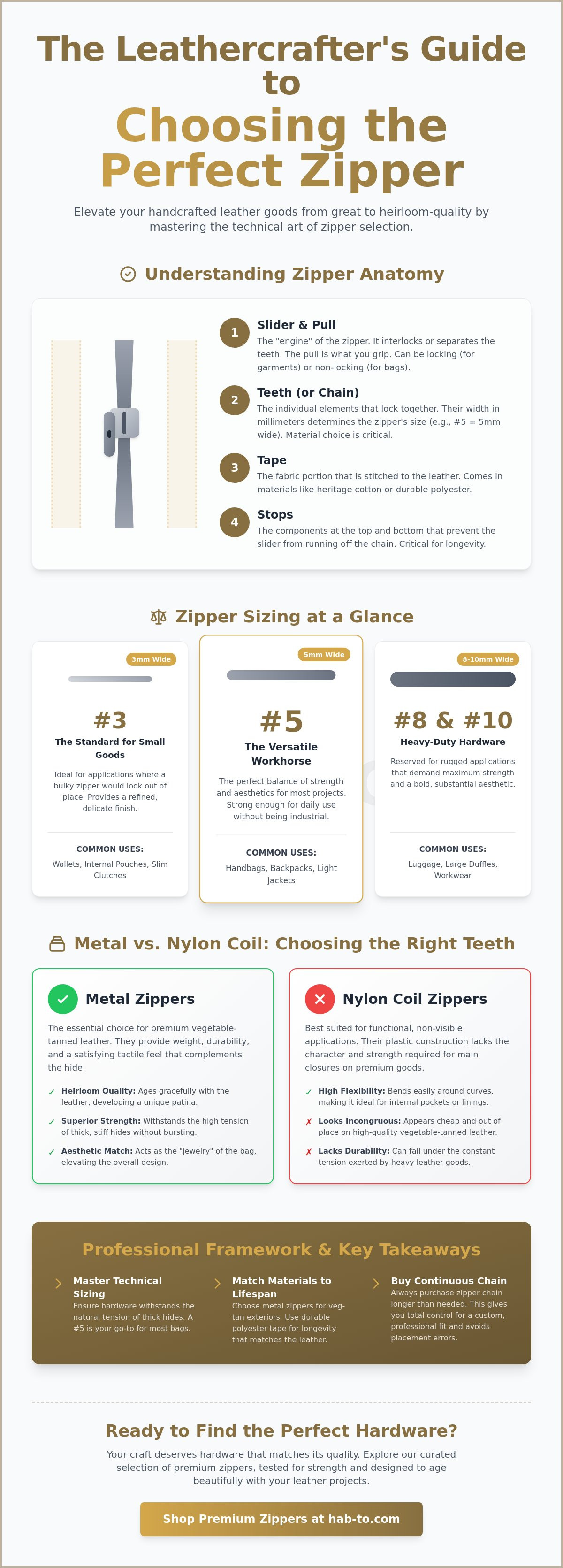
Choosing the right hardware is a technical skill that separates the hobbyist from the professional. A zipper isn't just a fastener; it's a complex mechanical assembly. To truly master the craft, you should understand the Zipper anatomy and history. Every component must work in unison to handle the unique stresses of leather. If one part is weak, the whole project fails. The tape, the teeth, the slider, and the stops all play distinct roles in the longevity of your work.
When you're learning how to choose a zipper, the first thing you'll notice is a number designation like #3 or #5. This number isn't arbitrary. It refers to the width of the zipper teeth in millimeters when they're interlocked. A #5 zipper has teeth approximately 5mm wide. This measurement is the foundation of your hardware choice because it dictates the overall strength and visual weight of the fastener. Precision is everything in leathercraft.
To better understand this concept, watch this helpful video:
Components are simple but critical. The tape is the fabric strip that you'll stitch into your leather. The teeth are the individual elements that lock together. The slider is the engine that makes it all happen; it's the part you'll interact with most. Finally, the stops prevent that engine from flying off the tracks. For premium projects using heavy hides like Badalassi Pueblo, you need hardware that can withstand significant lateral tension. A zipper that's too small will eventually pull apart or "burst" under the pressure of the leather's natural stiffness.
Common Zipper Sizes in Leatherworking
- #3 Zippers: These are the gold standard for small goods. Use them for wallets, internal coin pouches, and slim clutches where a bulky zipper would look out of place.
- #5 Zippers: This is the most versatile size in the shop. It's the perfect balance for handbags, backpacks, and light leather jackets. It offers enough strength for daily use without being overly industrial.
- #8 and #10 Zippers: These are heavy-duty choices reserved for luggage, large duffle bags, and workwear. They provide a bold, rugged aesthetic and can handle the weight of thick, oily hides.
Measuring Your Project for the Right Fit
Calculating length requires more than just a ruler. For closed-end zippers, measure the actual opening where the teeth will show. For separating zippers, like those on a jacket, you'll need the full length from the top stop to the bottom box. Always account for your seam allowance. Thick leather also introduces the "turn-of-the-cloth" effect. The leather takes up space as it folds, which can shorten your effective zipper length. It's a common trap for beginners.
Avoid "slider-on-the-edge" frustration. Always buy continuous zipper chain slightly longer than you need. It's much easier to trim excess tape than it is to struggle with a slider that's already hitting your stitch line. Finished zippers are convenient for repairs, but continuous chain is the only way to get a truly custom, professional fit in your leatherwork. It gives you total control over the placement of your stops and the length of your pull.
Metal vs. Coil: Choosing the Right Teeth for Your Hide
Teeth are the visual heartbeat of your leather project. They provide the mechanical grip, but they also serve as the "jewelry" of your bag or wallet. Mastering how to choose a zipper means matching the hardware to the leather's character. When you use premium vegetable-tanned leather like Badalassi Pueblo, metal is the only acceptable choice. A plastic zipper on a heritage bag looks like an afterthought. It lacks the weight and the tactile satisfaction that a quality hide demands.
Nylon coil zippers have their place in the shop. They're best for hidden pockets or lightweight lining where flexibility is the priority. Because they're made of a continuous plastic spiral, they bend easily around corners. Referencing educational guides on zipper types and applications can help you decide when utility should outweigh luxury. However, stay away from molded plastic zippers for high-end work. They often look "cheap" and don't offer the longevity required for artisan goods. For a professional finish, look for luxury zippers with individually polished teeth. These won't snag or scratch your leather, ensuring the slider moves with buttery smoothness from the first pull.
Metal Finishes and Patina
Matching the finish to the leather's tone is an art form. Solid Brass is the classic choice for Virgilio Vacchetta. It develops a rich, dark patina that mirrors the aging process of the leather itself. If you're working with black or cool-toned hides, Nickel and Antique Silver provide a crisp, modern aesthetic. For a "vintage" or heritage-style bag, Antique Brass offers a pre-aged look that feels authentic right off the bench. Your hardware should age alongside your leather, not stay shiny while the hide matures.
Tooth Shape and Function
Shape dictates the feel of the pull. Standard teeth are functional, but symmetric teeth allow the slider to move equally well in both directions. This is a hallmark of high-end design. If you're building a large travel bag, double-sided teeth are necessary for two-way zippers. Always perform a "scratch test" before final assembly. Run the zipper teeth across a scrap piece of your Shell Cordovan. If it leaves a mark, the teeth aren't polished enough for such a sensitive grain. You can find high-quality options in our collection of leather hardware to ensure your project stays pristine. Choosing the right teeth isn't just about looks; it's about protecting your material.
Selecting the Right Zipper Slider and Pull
The slider is the most handled part of your project. It must feel right. It must work right. One of the biggest mistakes in knowing how to choose a zipper is ignoring the locking mechanism. Locking sliders, often called "auto-lock," have a small internal pin. This pin engages when the pull tab is flat, preventing the zipper from sliding down under tension. They're essential for boots, jackets, and fitted skirts. Without them, your garment will slowly open as you move. It's a technical detail that prevents a functional disaster.
For bags and wallets, non-locking sliders are the superior choice. They offer a smoother "drift." This means you can pull the bag open by simply tugging on the leather sides rather than having to grab the pull tab directly. It feels more fluid. It feels more expensive. Knowing how to choose a zipper means understanding the mechanical soul of the fastener. If you're designing luxury luggage, consider a double-pull setup. This allows the bag to open from the center, which is both a functional necessity for large openings and a hallmark of high-end travel gear.
Hardware Compatibility
Consistency is the mark of a master artisan. Your slider finish should perfectly match your solid brass hardware to create a unified aesthetic. Even a slight variation in the gold or silver tone can make the piece look assembled from random spare parts. It breaks the visual flow of the craft.
Never mix brands. This is a hard rule in the workshop. A YKK slider is engineered specifically for YKK teeth. A Riri slider is meant for Riri chain. While they might look similar, the internal tolerances and "throat" dimensions are different. Forcing a slider onto the wrong chain will result in a jerky movement or, worse, damaged teeth that eventually fail. Stick to one ecosystem for every project to ensure a lifetime of smooth operation.
DIY Leather Pulls vs. Metal Pulls
A custom leather pull is your chance to leave a signature. It connects the hardware back to the hide. If you're using a textured leather like Pueblo, a matching leather pull creates a beautiful continuity. You can secure these pulls to the slider eyelet using a small solid brass rivet or a few tight saddle stitches. This adds a handmade touch that a standard metal pull simply can't match. It shows you care about the details.
Metal pulls have their own place in high-fashion designs. They provide a crisp, industrial contrast to the organic nature of the leather. When choosing a metal pull, ensure the "body" of the slider is sturdy enough to handle the weight. A heavy pull on a flimsy slider will cause premature wear. Balance the weight of your hardware with the weight of your leather for a product that lasts for decades. Your choice should always reflect the intended use of the piece.
Matching Zipper Tape to Leather Type and Color
The tape is the anchor of your zipper. While the teeth provide the visual flash, the tape does the heavy lifting behind the scenes. Polyester tape is the industry standard. It's incredibly durable. It resists UV rays and won't fade over time. For most modern projects, it's the right choice. However, if you're working on an authentic heritage restoration or want a specific "vintage" aesthetic, cotton tape is the way to go. It has a softer, matte finish that feels more organic against the grain. It's a small detail that shows a deep respect for tradition.
Color matching is where your design comes to life. You have to decide: should the zipper blend in or pop? A tone-on-tone look is sophisticated and timeless. A contrasting color can make a bold statement. Learning how to choose a zipper also means understanding the "bleed" factor. High-quality dyes are essential. If you use a cheap, poorly dyed tape against a light-colored hide like Maryam Vacchetta, the color can transfer. This ruins the leather. Always test your tape for colorfastness before you commit to the final stitch.
Tape Width and Installation
Width matters. Standard tape works for most items, but wide tape is a lifesaver for thick leather gussets. It gives you more room to stitch without the needle getting too close to the teeth. For a perfect installation, use double-sided basting tape. It holds the zipper in place so it won't shift while you work. This ensures your stitch lines stay straight and professional. The material of the tape also affects your tools. Polyester is tougher on needles than cotton, so keep a few spares handy during long production runs.
Contrast Stitching and Zippers
You can create a powerful design statement by matching your zipper tape to your thread color instead of the leather. This creates a unified accent that draws the eye. To avoid "wavy" zippers, you must master the tension. If the tape is too loose, it will bunch. If it's too tight, the leather will pucker. Zipper tape tension is the balance between the leather's rigidity and the tape's flexibility. Achieving this balance is what makes a bag look like it was made by a master. If you're ready to start your next project, explore our selection of premium zipper hardware to find the perfect match.
The Ultimate Selection Framework: Project-Based Guide
Knowing how to choose a zipper comes down to the intended use of your piece. A wallet has different mechanical needs than a duffle bag. One requires finesse. The other requires brute strength. When you map your hardware choice to the specific project, you ensure the finished product functions as beautifully as it looks. Use the following framework to align your technical specifications with your design goals.
| Project Type | Zipper Size | Slider Type | Tape Recommendation |
|---|---|---|---|
| Wallet / Cardholder | #3 Metal | Non-locking | Thin Polyester |
| Tote Bag | #5 Metal | Non-locking | Wide Polyester |
| Travel Duffle | #8 or #10 Metal | Locking (Auto-lock) | Heavy Polyester |
For small goods like wallets, a #3 metal zipper provides a slim profile that won't bulk up a pocket. A non-locking slider is preferred here. It allows the user to flick the wallet open with a single finger. When you move up to a tote bag, the #5 metal zipper becomes the workhorse. Wide tape is essential for these projects. It gives you the necessary clearance to stitch through thick gussets without hitting the teeth. For a heavy travel duffle, you need the visual and physical presence of a #8 or #10. A double-pull setup with locking sliders ensures the bag stays closed even when stuffed to capacity. It's about security and scale.
The 'Hab-To' Philosophy on Hardware
We believe in building things that last. Our philosophy is rooted in over 160 years of tradition and family experience. We often suggest over-specifying your hardware. If a project feels like it's between a #3 and a #5, choose the #5. It's better to have a zipper that is slightly too strong than one that fails after a year of use. Quality is non-negotiable. We also prioritize sustainable sourcing. This means choosing zippers that can be repaired or sliders that can be replaced without tearing the whole bag apart. True luxury is longevity. If you're ready to elevate your craft, explore our curated selection of leathercraft hardware and tools to find components that match the quality of your hide.
Final Checklist Before You Buy
Precision prevents waste. Before you click "order," run through these three final checks to ensure your hardware is a perfect match for your vision. Don't rush this stage. A mistake here leads to a frustrated afternoon at the workbench.
- Check 1: Does the metal finish match my leather hardware? Ensure your rivets, buckles, and D-rings share the same color tone for a professional look.
- Check 2: Is the size appropriate for the leather weight? A #3 zipper will look lost on 4mm harness leather, while a #10 will overwhelm a delicate goat leather clutch.
- Check 3: Do I have the correct stops for this length? If you're using continuous chain, ensure you have enough top and bottom stops to finish the ends securely.
Mastering how to choose a zipper is a journey of technical understanding and aesthetic intuition. You're now equipped with the knowledge to make choices that honor your material and your craft. Trust your hands. Trust the tradition. Your next project deserves nothing less than perfection.
Master Your Next Leather Project
Your choice of hardware is the final signature on your work. It defines how a piece feels in the hand and how it stands up to years of use. By understanding the balance between zipper sizing, tooth material, and slider mechanics, you've moved beyond simple assembly. You now have the technical foundation for how to choose a zipper that honors the heritage of your craft. Whether it is a slim #3 for a cardholder or a heavy-duty #10 for a travel duffle, the right choice ensures your leatherwork remains functional for decades.
We believe that every crafter should have access to the same professional-grade components used by luxury houses. Our collection at Hab-To is built on 160 years of family leather expertise. We offer a curated selection of sustainable Italian leathers alongside the highest quality hardware, all with no minimum order requirements. It is our way of supporting the artisan community. Shop Premium Leathercraft Zippers and Hardware at Hab-To and give your projects the finish they deserve. Your journey toward perfection starts with the right tools. Keep crafting with passion.
Frequently Asked Questions
What is the difference between a #3 and a #5 zipper?
The number refers to the width of the zipper teeth in millimeters when they're closed. A #3 zipper has teeth that are 3mm wide, making it perfect for delicate items like wallets or internal pockets. A #5 zipper is 5mm wide and offers the strength needed for handbags and light jackets. Choosing the wrong size can make a project look unbalanced or lead to mechanical failure under tension.
Can I shorten a metal zipper myself?
You can absolutely shorten a metal zipper at your own workbench. Simply measure the desired length, pull the excess teeth away with a pair of pliers, and cut the tape. You'll need to install new top stops to prevent the slider from coming off the track. It's a fundamental skill for any artisan who wants a perfect, custom fit for their leather goods.
Which zipper is best for a leather wallet?
A #3 metal zipper is the ideal choice for most leather wallets. When you're learning how to choose a zipper, you'll find that #3 offers the slim profile needed for small goods. It keeps the interior of the wallet refined and prevents unnecessary bulk. Pairing this size with a non-locking slider ensures the user can open the coin pouch with a single, fluid motion.
Should I use a locking or non-locking slider for a leather bag?
Non-locking sliders are the preferred choice for leather bags and totes. They allow the bag to be pulled open easily by the leather itself, which feels more natural and luxurious. Locking sliders are generally reserved for garments or boots. Those sliders have a tiny pin that stops the zipper from moving, which is essential to prevent a jacket from accidentally opening while you're wearing it.
Why is my metal zipper stiff or hard to pull?
Metal zippers often feel stiff because the teeth require lubrication or are poorly polished. You can fix this by rubbing a bit of natural beeswax or a dedicated zipper lubricant along the teeth. This smooths the transition and protects the hardware from wear. If the zipper remains difficult to pull, the slider might be slightly misaligned or the teeth may have been damaged during installation.
What does 'continuous zipper chain' mean for leathercraft?
Continuous zipper chain refers to zipper tape sold by the meter or yard without sliders attached. This is a critical component in understanding how to choose a zipper for custom projects. It gives you the freedom to cut exactly what you need for a specific bag or case. You'll need to buy sliders and stops separately, but the flexibility it offers for bespoke work is unmatched.
How do I match zipper color to vegetable-tanned leather?
Match the tape color to the leather's base tone or your stitching thread for a unified look. For the teeth, solid brass is the most popular choice for vegetable-tanned hides because it develops a rich patina that mirrors the leather's aging process. Avoid using cheap dyes that might bleed into lighter leathers. A well-matched zipper should feel like a natural extension of the hide itself.
Are YKK zippers the best choice for leatherwork?
YKK zippers are widely considered the benchmark for leatherwork due to their consistent engineering and durability. While other luxury brands like Riri offer beautiful finishes, YKK provides a reliable balance of quality and availability that most artisans trust. They're built to withstand the heavy use that quality leather goods often see. Using a trusted brand ensures your hardware lasts as long as your leather.