

How to Properly Care For Shell Cordovan Leather Shoes: The Definitive Guide
That moment you unbox a new pair of shell cordovan leather shoes is pure magic. But that magic can quickly turn to anxiety. You've heard you shouldn't use regular polish, that water spots are a disaster, and the internet is filled with conflicting advice. One wrong move, and you fear ruining a significant investment. It’s a feeling that can make you want to leave them in the box forever, safe from scuffs and the wrong conditioner.
But these shoes are meant to be worn, to gather stories, and to develop that legendary, deep patina. As passionate believers in craftsmanship that lasts a lifetime, we want to empower you with the right knowledge. Forget the confusion. In this definitive guide, we’ll cut through the noise and give you a simple, effective care routine. You'll learn exactly how to clean, condition, and protect your investment, turning fear into the confidence to build a beautiful legacy, one step at a time.
Understanding Shell Cordovan: Why It Requires Unique Care
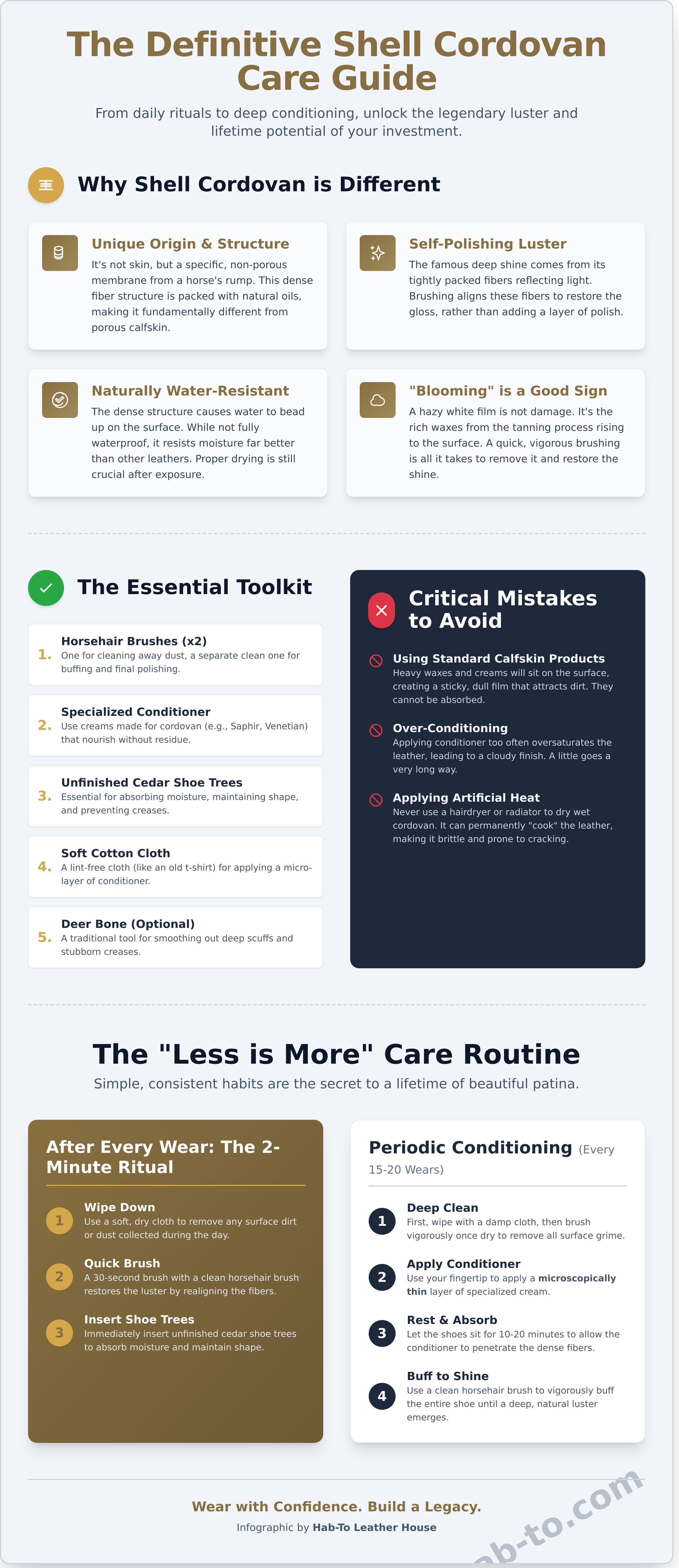
Before we dive into the specifics of care, it's essential to understand what makes Shell Cordovan so unique. Unlike traditional hides, it isn’t skin from the outer part of an animal. Instead, it’s a specific membrane found beneath the hide on a horse's rump. This material, often explored in resources asking What is Shell Cordovan?, has an incredibly dense, non-porous fiber structure packed with natural oils and waxes. This is the complete opposite of calfskin, which is porous and absorbs conditioners readily. This fundamental difference is why your prized shell cordovan leather shoes demand a completely different approach to maintenance.
To see some of these unique properties discussed, this video offers some fantastic insights:
The Science Behind the Shine
That famous, deep luster of Shell Cordovan isn't from a heavy-handed polish; it's a result of its unique structure. The tightly packed fibers reflect light uniformly, creating a natural, glossy finish. When you brush or polish cordovan, you aren't filling in pores like with calfskin. Instead, you are smoothing and aligning these microscopic fibers. This dense structure also makes the material highly water-resistant, causing water to bead on the surface. However, it is not fully waterproof, so proper care after exposure to rain is still critical.
What is 'Blooming' and Why It's a Good Sign
If you ever notice a hazy, white film on the surface of your cordovan goods, don't panic. This is called 'blooming,' and it's actually a hallmark of high-quality, well-conditioned Shell Cordovan. The bloom is simply the rich blend of waxes and fats from the tanning process rising to the surface over time. Think of it as the leather's natural conditioning system at work. The best part? It’s easily removed with a few seconds of vigorous brushing with a horsehair brush, instantly restoring the deep shine.
Common Mistakes to Avoid with Shell Cordovan
Because Shell Cordovan is so different, common leather care practices can do more harm than good. Its non-porous nature means it absorbs products very slowly. To protect the integrity and finish of your shell cordovan leather shoes and goods, avoid these critical errors:
- Using Standard Calfskin Products: Heavy creams and wax polishes designed for porous leather will simply sit on the surface of cordovan, creating a sticky, dull residue that attracts dirt.
- Over-conditioning: A little goes a long way. Applying conditioner too frequently or too heavily can oversaturate the fibers, leading to a cloudy finish and preventing the leather from breathing.
- Applying Artificial Heat: Never use a hairdryer, radiator, or any direct heat source to dry wet cordovan. This can cook the leather, permanently damaging the fiber structure and causing it to become brittle and cracked.
The Essential Toolkit: Gathering Your Shell Cordovan Care Supplies
Investing in a pair of shell cordovan leather shoes is a commitment to quality and craftsmanship. Protecting that investment doesn't require an arsenal of products, but it does demand the right tools. A small, one-time purchase of proper care supplies is the single best thing you can do to ensure your cordovan goods last a lifetime. Think of it as the support system for your finest leather pieces.
Here are the non-negotiable items that form the foundation of a complete cordovan care routine:
- Brushes and Cloths: Your first line of defense for cleaning and polishing. A high-quality horsehair brush is your most frequently used tool. Its bristles are stiff enough to whisk away surface dust and buff cream to a high shine, yet gentle enough not to scratch cordovan’s unique, glassy surface. We recommend having two: one for initial cleaning and a separate, clean one for final polishing. For applying conditioner, a simple, soft, lint-free cotton cloth (an old t-shirt works perfectly) is all you need.
- Specialized Conditioner: Cordovan is not like other leathers. Its dense, non-porous structure, rich with oils and waxes from the tanning process, requires a conditioner with a specific formulation. Products like Venetian Shoe Cream or Saphir Cordovan Cream are industry standards because they have the right balance of solvents and nutrients to penetrate and nourish without leaving a greasy residue. In fact, the masters at Horween Leather Co. are firm believers that less is more; their guide to proper care for shell cordovan emphasizes a minimal approach, which starts with the right cream.
- Structural Care Items: What you do between wears is just as important as cleaning. Unfinished cedar shoe trees are essential. They absorb moisture, prevent odors, and, most importantly, maintain the shoe's shape, smoothing out creases and preventing the toe from curling. For deeper scuffs and stubborn creases, a deer bone is a traditional and highly effective tool. Its smooth, dense surface allows you to gently rub and press the leather fibers back into place, restoring a smooth finish to your prized shell cordovan leather shoes.
Your Step-by-Step Care Routine: From Daily Wipes to Deep Conditioning
The secret to keeping your shell cordovan leather shoes looking their best isn't about complicated products or hours of work. It’s about simple, consistent habits. This unique material is already packed with natural oils and waxes from the tanning process, so our guiding principle is always "less is more." Follow these routines, and your cordovan will develop a rich, rolling patina that only gets better with time and wear.
After Every Wear: The 2-Minute Ritual
This is the most important habit you can build. Just two minutes after you take off your shoes will prevent dirt buildup and help maintain the leather’s structure and signature shine. It’s a small investment for a lifetime of quality.
- Wipe Down: Use a soft, slightly damp cloth to gently wipe away any surface dust, pollen, or light dirt from the day.
- Brush Vigorously: Grab your horsehair brush and give the shoes a quick, energetic brushing. This action creates friction and warmth, reactivating the waxes within the leather and buffing them to a high shine.
- Insert Shoe Trees: Immediately slide in a pair of unfinished cedar shoe trees. They are essential for absorbing moisture, neutralizing odor, and helping the shoes retain their proper shape as they rest.
Monthly Maintenance: Cleaning and Conditioning
Once a month, or whenever you notice the luster looking a little flat, it’s time for a light conditioning. The key here is absolute restraint; you want to nourish the leather, not clog its pores. Over-conditioning is the most common mistake with shell cordovan.
Start with a thorough brushing to remove any lingering dust or waxy "bloom." Then, apply a tiny, pea-sized amount of a cordovan-specific cream per shoe. Use your finger to gently work the cream into the leather in small, circular motions. Let it sit for 10-15 minutes, then brush vigorously with your horsehair brush until a deep, rich luster emerges.
Annual or As-Needed: The Deep Revitalization
This is a rescue mission, not a routine. If your shell cordovan leather shoes have faced harsh conditions and look exceptionally dull or dry, a deeper treatment can bring them back. If there's heavy buildup, start with a gentle cleaner formulated for delicate leathers. Once clean and dry, follow the monthly conditioning process. If the leather is still very dry, you can apply a second, extremely light coat of cream. Feeling inspired by the unique properties of this material? Explore our Shell Cordovan leather and start your next craftsmanship project.
Troubleshooting Common Shell Cordovan Issues
One of the greatest qualities of Shell Cordovan is its incredible resilience. While it may seem daunting to care for at first, most common issues are surprisingly simple to resolve. Before reaching for aggressive products, remember that this leather has a dense fiber structure packed with natural oils and waxes. Often, a little patience and the right technique are all you need. Let's address the most common concerns.
How to Treat Water Spots
Caught in the rain? Don't panic. Those small, raised bumps are not permanent stains. They are simply areas where water has caused the dense leather fibers to swell and stand up. The fix is straightforward:
- Insert cedar shoe trees immediately to maintain the shoe's shape.
- Let the shoes dry naturally and completely, away from direct heat.
- Once fully dry, use a horsehair brush to vigorously brush the spotted areas. In most cases, this is enough to lay the fibers back down and restore the smooth finish.
Fixing Scuffs and Scratches
Even the most well-cared-for shell cordovan leather shoes will get scuffed. For minor surface scuffs, a thorough brushing is often all it takes to blend them away. For deeper scratches, you can use a classic technique involving pressure and friction to redistribute the leather's natural oils. Gently but firmly rub the back of a spoon or a deer bone over the scuff. The heat and pressure will smooth the fibers and move the oils over the mark, often making it disappear. Follow up with a tiny dab of conditioner if needed.
Managing the 'Rolls' and Ripples
Unlike calfskin which develops fine creases, Shell Cordovan develops broad, elegant 'rolls' or ripples over time. This is not a flaw; it is the signature characteristic of this unique material and a sign of authentic quality. These beautiful, wave-like patterns are highly desirable. To manage their appearance and keep them looking refined, always use shoe trees after wear and occasionally use a deer bone to smooth them out, which helps maintain their clean, rolling shape.
Understanding these simple fixes builds a deeper appreciation for the material. With the right knowledge, you can keep your cordovan goods looking their best for decades. Need the right tools for the job? Find premium horsehair brushes and conditioners at hab-to.com.
Advanced Care and Long-Term Preservation
You've mastered the essentials, and your cordovan is looking better than ever. For the true enthusiast, going the extra mile isn't a chore; it's a passion. These advanced techniques are about elevating your care routine from simple maintenance to an art form, ensuring your prized shell cordovan leather shoes and goods become a legacy.
Achieving a High Shine (Optional)
While cordovan's natural luster is beautiful on its own, you can achieve a deeper, glass-like shine with a simple technique. After your usual brushing, apply a tiny drop of water to the shoe's surface. Brush this area vigorously with a horsehair brush. The friction and heat will work the leather's inherent oils and waxes to the surface, creating an incredible gleam. Crucially, avoid hard wax polishes, as they can crack and flake on cordovan's unique surface.
Proper Long-Term Storage
If you're storing your shoes for a season or longer, preparation is key to preventing damage and preserving their shape. Proper storage isn't just about putting them away; it's about putting them to rest correctly.
- Clean and Condition First: Never store dirty shoes. Clean and lightly condition them to keep the leather supple.
- Use Cedar Shoe Trees: Insert high-quality cedar shoe trees to maintain the shoe's shape, absorb moisture, and repel pests.
- Choose Breathable Bags: Store them in cloth shoe bags. Never use plastic boxes or bags, which can trap moisture and lead to mold.
- Find a Cool, Dry Place: Keep them in a closet away from direct sunlight and extreme temperature changes.
When to See a Professional Cobbler
Your diligent care will significantly extend the life of your shell cordovan leather shoes, but some jobs are best left to a professional. For resoling, heel replacements, or major structural repairs, seek out a trusted cobbler. It's vital to find someone with specific experience working with shell cordovan, as it requires a different approach than calfskin. Remember, investing in routine care minimizes the need for these more costly repairs down the line.
Your leather journey is a personal one, and every piece has a story. Have questions about leather care or a specific project? Book a free consultation with Mike.
Preserving Excellence: Your Final Step in Cordovan Mastery
Mastering the care of your shell cordovan leather shoes is a rewarding journey into true craftsmanship. Remember the core principles: its unique, dense structure requires less product, not more, and a consistent routine of brushing and careful conditioning is the key to developing that signature, lustrous patina. This isn't just maintenance; it's a ritual that honors the material and ensures your footwear becomes a legacy piece, improving with every year.
The foundation of any masterpiece is the material itself. At Hab-To Leather House, we pour over 160 years of family experience into sourcing only hand-selected, premium quality leather. Our passionate craftsmen are here to offer expert advice for your creations. Ready to start your next project with the best? Explore our premium Shell Cordovan leather for your next project.
Embrace the process, trust in your skills, and wear your meticulously cared-for shoes with pride. Your journey in craftsmanship continues.
Frequently Asked Questions About Shell Cordovan Care
How often should I condition my shell cordovan shoes?
Shell cordovan is a unique, vegetable-tanned leather packed with oils. Unlike calfskin, your shell cordovan leather shoes require infrequent conditioning. For regular wear, a light application of a cordovan-specific cream once or twice a year is more than enough. Over-conditioning can create a gummy finish and attract dust. Trust the leather; its inherent richness is its best defense. Simply observe the leather's appearance-if it looks dry, it's time for a touch-up.
Can I use regular shoe polish or wax on shell cordovan?
We strongly advise against using standard wax-based polishes on shell cordovan. Because cordovan is a non-porous membrane, heavy waxes cannot penetrate it. Instead, they build up on the surface, creating a dull, cloudy film that obscures the leather's natural luster and rich color. Stick to creams and conditioners specifically formulated for shell cordovan. These products are designed to nourish the material without creating an artificial, plastic-like shine. No compromises on quality products.
What is the white, waxy film that sometimes appears on my shoes?
That white, waxy residue is known as "bloom," and it's actually a sign of high-quality, well-nourished cordovan. It’s simply the fats and oils from the tanning process migrating to the surface, especially in changing temperatures. Don't worry, it's completely harmless. A quick, vigorous brushing with a horsehair brush or a wipe with a soft cloth is all it takes to remove the bloom and restore the deep, glossy shine of your shoes.
Is it possible to completely remove a deep scratch from shell cordovan?
Completely removing a deep gouge is very difficult, as shell cordovan is a membrane, not a traditional grain leather. However, you can significantly improve its appearance. For minor scuffs and scratches, vigorous brushing often works wonders. For deeper marks, use the back of a spoon or a smooth deer bone to gently rub the area. This uses pressure and friction to move the leather's oils around, effectively "healing" the scratch and blending it into the surface.
How do I break in a new pair of stiff shell cordovan shoes?
Breaking in a new pair of stiff shell cordovan leather shoes requires patience, but the reward is a custom fit that lasts a lifetime. Start by wearing them for short periods, just an hour or two at a time, around the house. Wear thick socks to help gently stretch the leather. The key is to let your body heat and the pressure of your foot slowly mold the material. Avoid the temptation to wear them for a full day right away.
Why are cedar shoe trees so important for cordovan?
Cedar shoe trees are non-negotiable for any quality footwear, but they are especially critical for shell cordovan. Cordovan doesn’t crease like calfskin; it develops unique, deep "rolls." Shoe trees help manage these rolls and prevent them from becoming sharp, damaging creases. Furthermore, the unfinished cedar naturally absorbs moisture from the leather and your foot, preventing rot and preserving the shoe's structural integrity for decades of wear. It's the best investment after the shoes themselves.