

How to Store Leather Hides Properly: The Ultimate Artisan’s Guide
Imagine unrolling a $240 Shell Cordovan hide you've been saving for a special commission, only to find a permanent, jagged crease running right through the center. It's a frustrating reality for many artisans, as roughly 15% of premium leather stock is damaged simply because owners aren't sure how to store leather hides properly in a home workshop. You've invested in quality, and the last thing you want is to see those beautiful materials succumb to mould, sunlight, or improper rolling techniques.
I understand the pride you take in your craft and the respect you have for the material. At Hab-To, we believe in "no compromises" when it comes to quality, and that includes how your leather is treated before the first cut. This guide reveals the professional secrets to preserving your hides so your inventory stays in pristine, project-ready condition for years. We’ll walk through the essentials of climate control, vertical versus horizontal storage, and the specific needs of different tannages to give you total confidence in your workshop organization.
Key Takeaways
- Understand the organic nature of leather and how to protect the natural oils that prevent your premium hides from becoming brittle over time.
- Master the "Golden Trio" of environmental control to learn how to store leather hides properly without risking mold, sun damage, or poor airflow.
- Evaluate whether rolling, hanging, or laying flat is the best physical orientation for your specific workshop space to avoid permanent creases.
- Tailor your storage strategy to specific tannages, ensuring that high-oil leathers like Chromexcel receive the specialized care they deserve.
- Adopt professional inventory management techniques like the "First-In, First-Out" method to keep your leather stock fresh and project-ready.
The Science of Preservation: Why Proper Leather Storage Matters
Leather isn't a static product. It's a preserved organic material that continues to interact with its environment long after it leaves the tannery. At Hab-To Leather House, we rely on 160 years of family experience to understand that every hide "breathes" through its porous grain. When you learn how to store leather hides properly, you aren't just tidying up your workshop; you're managing a complex biological balance. The tanning process replaces the skin’s natural water with tannins and oils, but these elements remain volatile. If your storage area lacks climate control, the leather will either absorb excess moisture or become dangerously parched.
The internal fibers of a hide require constant lubrication from fats and oils to remain flexible. Without this, the collagen structures begin to grind against one another, leading to microscopic tears. This process, known as "fatigue," is irreversible. Once the fibers snap, the leather loses its structural integrity and "hand." This represents a significant financial risk. A single premium shoulder or side can cost upwards of €180. Protecting that investment requires more than just a shelf; it requires an understanding of the material's needs. We don't make compromises on quality, and neither should your storage setup.
The Biological Nature of Tanned Hides
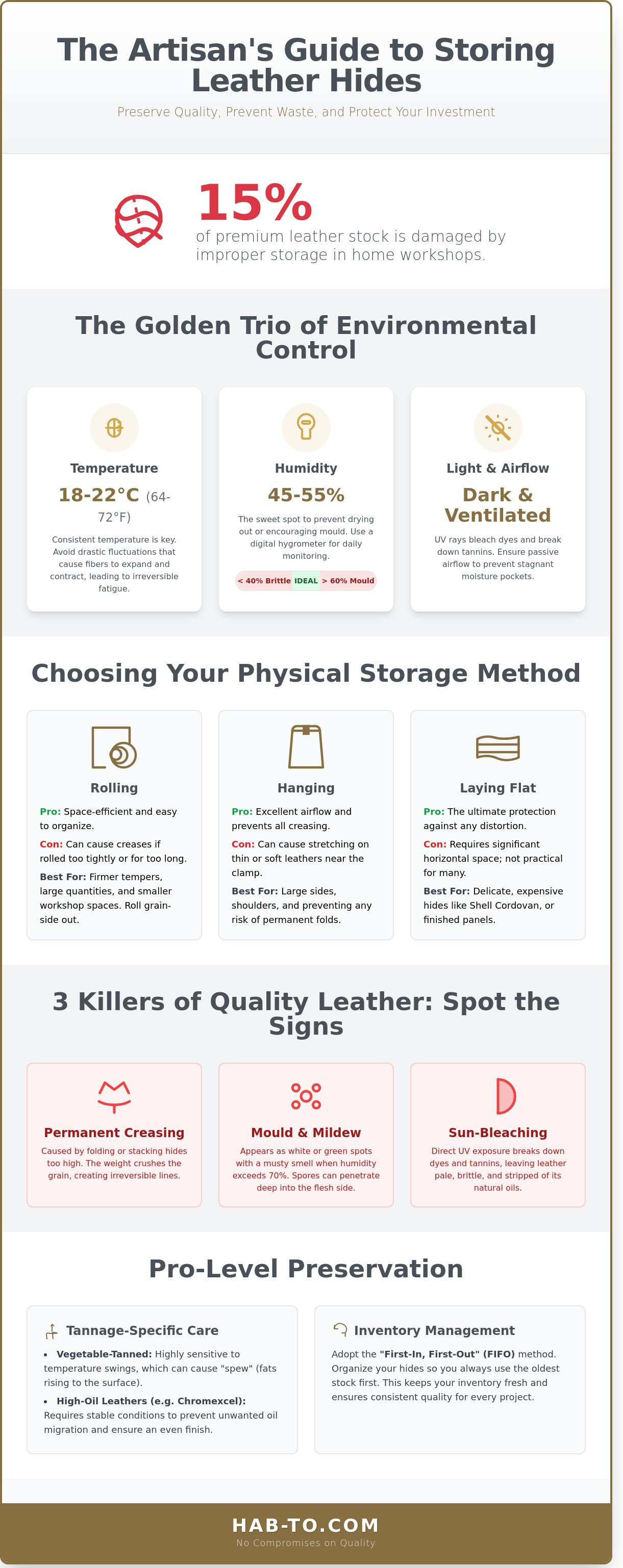
Tannins are hygroscopic, meaning they actively pull moisture from the air. In vegetable-tanned leather, these plant-based extracts are particularly sensitive to environmental shifts. If your workshop temperature fluctuates by more than 10 degrees Celsius in a 24-hour period, you risk "spew." This is a white, waxy film caused by fatty acids migrating to the surface. While you can often wipe spew away, it indicates that the internal chemistry of your hide is destabilizing. Chrome-tanned leathers are slightly more resilient due to mineral salts, but they still succumb to fiber breakdown if kept in conditions outside the ideal 45% to 55% relative humidity range.
Common Signs of Storage Damage
Understanding how to store leather hides properly helps you avoid three common killers of quality leather. If you spot these signs, your storage environment needs immediate adjustment:
- Permanent Grain Creasing: This occurs when hides are stacked too high or folded. The weight of a 20kg stack can crush the grain of the bottom hide, creating lines that no amount of conditioning will remove.
- Mould and Mildew: If humidity levels exceed 70%, fungal spores activate. You'll first notice a musty scent before seeing white or green spots. By then, the spores have often penetrated the flesh side.
- Sun-Bleaching: UV rays break down chemical bonds in dyes and tannins. This isn't the rich, golden patina artisans crave; it’s a destructive drying process that leaves the leather brittle and pale.
The Golden Trio: Light, Humidity, and Temperature
Leather is a biological material. It breathes, reacts, and eventually degrades if the environment turns hostile. Learning how to store leather hides properly requires mastering three environmental pillars: light, humidity, and temperature. The ideal "sweet spot" for leather longevity is a consistent temperature between 18 and 22 degrees Celsius. Fluctuations are your primary enemy. When a workshop swings from freezing nights to heated afternoons, the fibers expand and contract, leading to structural fatigue over time.
Airflow is the most underrated factor in any storage setup. Stagnant air allows microscopic moisture pockets to settle on the grain, creating a breeding ground for spores. You don't need a high-tech ventilation system; simple passive airflow works wonders. Leave a few centimeters of space between your rolls or hanging hides. Avoid shoving your stock into tight corners where air cannot circulate. If you can feel a slight breeze in the room, your leather is likely safe.
Managing Humidity and Airflow
The 45-55% humidity rule is non-negotiable for premium hides. If the air drops below 40% humidity, the natural oils evaporate, leaving the leather brittle and prone to cracking. If it climbs above 60%, you'll likely see white or green mold colonies within 14 days. Use a dehumidifier in damp climates, but don't point the exhaust directly at your racks. Forced dry air can "flash-dry" the leather surface, causing permanent grain damage. I recommend spending $15 on a basic digital hygrometer to monitor these levels daily.
Protecting Against UV and Heat
Direct sunlight is the fastest way to ruin vegetable tanned leather. UV rays act as a bleaching agent, stripping away rich dyes and "cooking" the natural tannins. This process is irreversible. Similarly, keep your stock at least two meters away from central heating radiators. Intense heat sources suck the moisture out of the hides, turning a supple piece of craft material into a stiff, useless sheet.
- Avoid Basements: Typical basement humidity levels often exceed 75%, making mold almost inevitable.
- Avoid Attics: Summer attic temperatures can peak at 50 degrees Celsius, which literally bakes the life out of the fibers.
- Use Breathable Covers: Never wrap hides in plastic film. Plastic traps moisture and gasses. Use old cotton bedsheets or brown kraft paper instead.
If you want to master how to store leather hides properly, start by investing in a digital hygrometer to get an honest reading of your space. If you're unsure if your current setup is up to par, you can always get in touch for a quick consultation on setting up your workshop correctly. No compromises on quality starts with how you treat your materials before the first cut.
Physical Methods: Rolling vs. Hanging vs. Laying Flat
Choosing the right physical setup is about more than just tidiness; it's about preserving the structural integrity of your materials. If you've invested in premium vegetable-tanned shoulders or high-end shells, you can't just toss them in a corner. Learning how to store leather hides properly ensures that a 450 Euro side of leather doesn't develop permanent creases or "fat wrinkles" before you even touch it with a knife. Your choice between rolling, hanging, or laying flat depends entirely on the leather's temper and your workshop's footprint.
Mastering the Roll
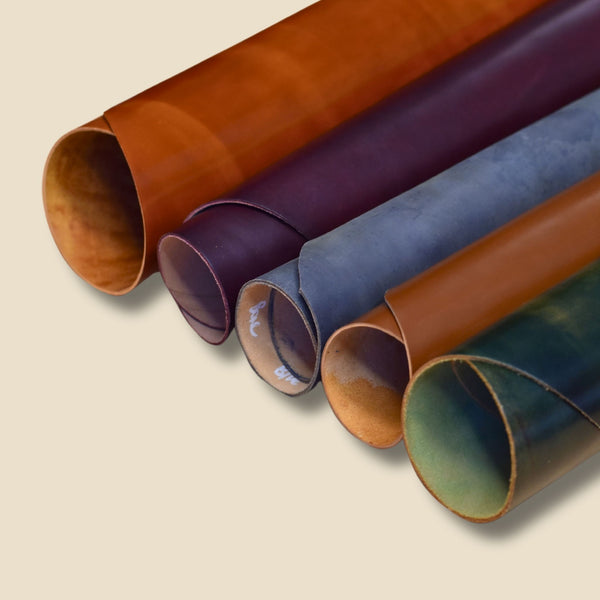
I always tell makers: "Grain out, always." When you roll leather with the finish facing inward, the grain layer compresses while the flesh side stretches. This often leads to "piping," where the grain permanently buckles. Use a heavy-duty cardboard tube with a minimum 75mm diameter as a core. This prevents the center from collapsing under its own weight. It's a simple rule: no compromises on the core size. Secure your rolls with 25mm wide cotton twill tape or scrap leather strips. Never use adhesive tape. Even "low-tack" tape can leave chemical residues that ruin the finish of a Pueblo or Buttero hide within 72 hours.
Hanging and Flat Storage Solutions
If you're working in a small workshop under 20 square meters, vertical storage is your best friend. A sturdy A-frame rack allows you to hang hides by the spine, which mimics their natural state. For smaller skins like goat or thin calfskin under 1.2mm, multi-tier trouser hangers work wonders. Just ensure the clips are padded with felt to prevent "bite marks" on the edges. This method keeps the leather breathable and easy to inspect.
The "Flat Stack" method is the gold standard for heavy saddle skirting or thick bridle leather. However, weight is your enemy here. Limit your stacks to 10 hides maximum. Exceeding this number creates over 40kg of constant pressure on the bottom hide. This leads to "shelf wear" and can even cause oils to migrate between different finishes. If you must stack hides, place a sheet of acid-free glassine paper between every layer. This acts as a barrier against oil transfer and friction marks.
- Rolling: Best for medium-temper sides (1.5mm to 2.5mm). Saves horizontal space.
- Hanging: Ideal for soft, chrome-tanned hides or small exotic skins. Prevents fold lines.
- Laying Flat: Essential for heavy, stiff leathers (3.0mm+). Prevents bowing and warping.
Every artisan has a different space, but the goal remains the same. You want your leather to be as beautiful when you unroll it as the day it left the tannery. Take the time to evaluate your inventory every 30 days. Rotate your stacks. Check your rolls. This level of care is what separates a hobbyist from a true professional who understands how to store leather hides properly.
Specialized Care for Different Leather Tannages
Storing a stiff bridle leather the same way you’d treat a buttery soft nappa is a recipe for ruined inventory. One-size-fits-all storage fails the serious crafter because every tannage has a unique chemical makeup and physical temper. Learning how to store leather hides properly means recognizing that every skin has its own personality. High-oil content leathers, such as Pull-up and Chromexcel, require extra vigilance. If you stack these hides without a barrier, the heavy oils and waxes can migrate between surfaces. This causes "ghosting" or permanent dark spots on the hides underneath. To prevent this, keep your storage area at a steady 18 to 22 degrees Celsius. Excess heat makes these oils more fluid and prone to leaking from the grain.
Temper also dictates your storage strategy. Firm tempered hides like Buttero or English Bridle can develop permanent "fat wrinkles" or even cracks if they're rolled too tight for long periods. I recommend a rolling diameter of at least 15 to 20 centimeters for firm hides. Conversely, soft tempered materials like milled pebble grains or garment leathers can lose their shape if hung over a thin rail. The weight of the hide pulls against the fibers, leading to unwanted stretching. For these, use wide, padded rollers or lay them flat on clean, acid-free surfaces.
Storing Shell Cordovan and Luxury Hides
Shell Cordovan is the king of leathers, but its extreme density makes it temperamental. Unlike standard cowhide, Cordovan is a membrane that doesn't breathe in the same way. It's highly susceptible to "bloom," which is a white, cloudy wax buildup on the surface. While this isn't mold, it indicates the fats are reacting to temperature shifts. Luxury hides like these should never be stored in direct contact with each other. The high oil content can cause the finishes to bond together over time, especially if the humidity climbs above 55%. Always place a sheet of pH-neutral glassine paper between each shell to preserve that iconic mirror finish.
Exotic and Suede Considerations
Suede and nubuck require a different tactical approach to protect the nap. If you stack more than 4 hides of suede, the weight of the top layers will crush the fibers of the bottom ones, creating shiny, flat patches that are nearly impossible to buff out. For exotic skins like alligator or python, the scale structure is your biggest concern. These scales can lift or snap if the hide is rolled. This is a critical step in how to store leather hides properly if you want to avoid permanent damage. Use acid-free tissue paper as a buffer between every layer. This prevents the delicate scales from snagging on the rough flesh side of the hide resting above it.
Inventory Management: The Hab-To Approach to Quality
Managing a leather inventory requires more than just finding a corner in your workshop. At our Amsterdam showroom, we rely on 160 years of family experience to maintain our stock. We treat every hide as a living investment. Proper management ensures that the premium vegetable-tanned leather you buy today remains in peak condition for years. If you don't have a system, you're likely to lose money on damaged goods or forgotten stock.
The First-In, First-Out (FIFO) principle is the gold standard for any serious artisan. Leather is a natural material. Over time, the internal oils can migrate or the temper might slightly change depending on the environment. By using the oldest hides first, you ensure your inventory stays fresh. We recommend a full stock rotation every 90 days. This 20-minute habit allows you to inspect your hides for any signs of mold, dust, or accidental creasing. Understanding how to store leather hides properly involves this constant cycle of inspection and movement.
Organizing Your Leather Shop
Efficiency in the workshop starts with clear labeling. Never rely on your memory to identify a tannery or a specific weight. Every hide should have a durable tag attached to the flank or a corner. This tag must include the tannery name, the leather type, the weight in both ounces and millimeters (for example, 4oz / 1.6mm), and the date it entered your shop. This system prevents you from unrolling five different hides just to find the right thickness for a belt or wallet.
- Tagging: Use archival-safe tags to avoid staining the leather.
- Scrap Management: Store offcuts in clear, labeled bins sorted by weight. Don't let small scraps clutter your large, premium hides.
- Climate Check: Use a digital hygrometer to ensure your storage area stays between 45% and 55% humidity.
Hi, I’m Mike: My Personal Storage Tips
Hi, I'm Mike! I've seen many beautiful hides ruined by simple storage mistakes. Quality materials deserve respect. At Hab-To, we have a "no compromises" policy, and that extends to how we handle our leather before it reaches you. When your hide first arrives from us, unroll it immediately. Let it breathe and rest flat for at least 24 hours. This allows the fibers to settle after being rolled for transit. It's a small step that makes a massive difference in how the leather performs under your knife.
Your craft is an extension of the materials you choose. When you know how to store leather hides properly, you're protecting your art and your wallet. If you're looking to add world-class materials to your workshop, we're here to help you choose the perfect piece. Ready to grow your collection? Browse our premium hand-selected leather hides and experience the quality of 160 years of tradition.
Protect Your Craft and Your Investment
Mastering the environment in your workshop is the first step toward professional results. You now know that keeping humidity near 50% and avoiding direct sunlight prevents the natural oils in your leather from evaporating. Whether you are rolling heavy vegetable tanned hides or hanging soft skins, physical care prevents permanent creasing. Learning how to store leather hides properly is what separates a hobbyist from a master artisan. It ensures your materials stay in peak condition for years.
We understand the value of premium materials because Hab-To is built on 160+ years of family experience in the leather trade. We offer sustainable, hand-selected vegetable tanned leathers with no minimum order requirements. It's our way of making professional-grade skins accessible to every crafter. Quality materials deserve quality care, and we're here to support your journey from the first cut to the final stitch.
Hi, I’m Mike! Need advice on your next hide? Book a free consultation or browse our collection.
Grab your tools and start creating; your leather is ready when you are.
Frequently Asked Questions
Can I store leather hides in plastic bags or bins?
You shouldn't store leather in plastic bags or airtight bins because the material needs to breathe. Plastic traps moisture, which leads to mould growth in as little as 48 hours. Instead, wrap your premium hides in 100% cotton sheets or acid-free paper. This keeps dust off while allowing air circulation. At Hab-To, we believe in no compromises when it comes to preserving the integrity of your materials.
How do I get creases out of a hide that was stored improperly?
You can remove creases by using a dry iron on its lowest heat setting, typically below 50 degrees Celsius. Place a piece of heavy brown paper or a clean cotton cloth between the iron and the leather as a protective barrier. Never use the steam setting, as moisture can permanently stain the grain. Move the iron in constant, circular motions for 30 seconds at a time until the surface flattens.
What is the ideal temperature for a leather storage room?
The ideal temperature for a leather storage room stays between 15 and 20 degrees Celsius. Maintaining a stable environment is key when learning how to store leather hides properly. You must also keep humidity levels between 50% and 55%. If the air gets too dry, the natural oils evaporate and the fibers become brittle; if it's too damp, you risk fungal growth within days.
How long can I store a leather hide before it starts to degrade?
You can store a high quality leather hide for 50 years or more if you control the climate effectively. Premium vegetable-tanned leathers actually develop a beautiful character over time when kept away from UV light. We recommend inspecting your stock every 6 months to check for dryness or pests. This proactive approach ensures your materials stay ready for the workbench whenever inspiration strikes.
Is it better to roll leather grain-in or grain-out?
It's better to roll leather grain-out to protect the finish from permanent wrinkles or "piping." Rolling with the grain-in causes the top layer to compress and buckle, which ruins the surface of premium leathers like Buttero or Pueblo. Use a cardboard tube with a 10 centimeter diameter as a core. This provides structural support and prevents the hide from collapsing under its own weight during long-term storage.
What should I do if I find mould on my leather hides?
If you find mould, wipe the affected area immediately with a mixture of 50% isopropyl alcohol and 50% water. This solution kills spores without saturating the fibers. After cleaning, move your hides to a space with active airflow and keep the humidity below 60%. If the mould has penetrated 1.0mm deep into the flesh side, you may need to trim that section away to save the rest.
Should I condition my leather before putting it into long-term storage?
You shouldn't condition leather right before storage unless the hide feels exceptionally parched or stiff. Excess oils can attract dust or even go rancid over a 12 month period if they aren't worked into the fibers through use. Instead, clean the surface with a soft, dry horsehair brush. This removes debris without introducing unnecessary moisture that might cause issues while the hide is tucked away.
How do I store small leather scraps compared to full hides?
Store small leather scraps in breathable canvas bins sorted by weight, such as 1.5mm versus 3.5mm, while full hides require flat racks or rolls. Mixing different thicknesses in one pile leads to uneven pressure marks on your softer skins. Using labeled bins helps you find the right piece for a small project quickly. This organized system is essential for any artisan who values their craftsmanship and wants to minimize waste.