

How to Talk to Customers About Leather Care with Clarity
Clear leather-care advice starts with the leather’s finish and how the item is used. When appropriate, recommend professional leather care every three months, and explain what the customer can do between appointments. Knowing how to talk to customers about leather care means offering practical guidance without treating every hide the same.
It’s natural to want to give customers a simple routine they can remember. But leather varies, so advice is more useful when it connects the material, its everyday use, and the care being suggested. Customers should leave understanding both the next step and why it suits their leather.
This guide will help you explain care in plain language, ask focused questions, and set realistic expectations. You’ll learn how to describe cleaning and conditioning, tailor recommendations to different leather types, and make your guidance helpful rather than overwhelming. The aim is straightforward: build trust with clear, thoughtful advice that respects both the material and its owner.
Key Takeaways
- Start by asking how the leather is used and what care it has already received; those details help shape a relevant recommendation.
- Explain cleaning in simple steps: use a leather cleaner, a soft-bristle brush, and a clean, nonabrasive cloth.
- Make care advice easier to follow by explaining what each step does and when to include it in a routine.
- Use clear, specific language to set expectations and help customers understand why leather-care needs can differ.
How to talk to customers about leather care
Start by understanding the item before recommending a routine. Ask what it is made from, how often it’s used, and what the customer has noticed. A daily-use bag, for example, is handled differently from a watch strap worn occasionally. Ask whether the concern is surface dirt, a visible mark, or general upkeep. Then restate the concern in plain language so the customer knows you’ve understood before you suggest a next step.
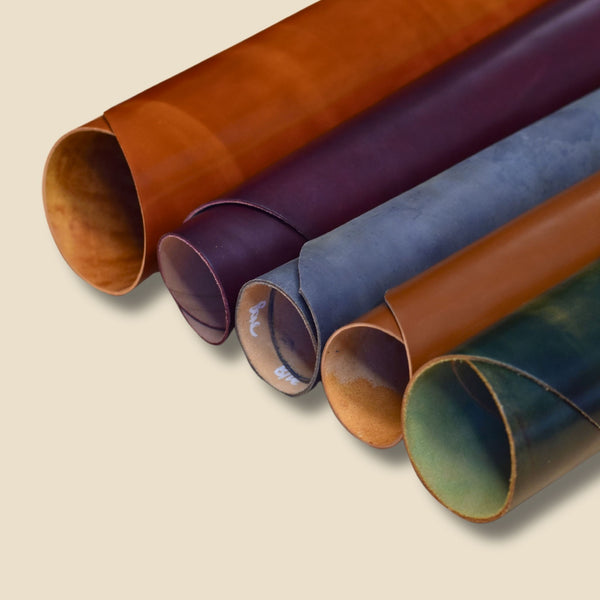
Material matters. Tanning chemically converts animal skins into leather, according to the U.S. Environmental Protection Agency, and finishing influences the leather’s surface. Avoid assuming that every hide responds to the same product or treatment. If a maker is discussing material choices for a new project, comparing a particular type of vegetable-tanned leather can help make the conversation more specific. Explain what you know about the material, and keep the recommendation tied to the customer’s actual item.
What you will need
For a useful conversation and a simple surface-cleaning demonstration, prepare:
- The customer’s item, or a clear description of its material, finish, and use.
- Leather cleaner, a soft-bristle brush, and a clean, nonabrasive rag for the cleaning steps discussed below.
- Questions about previous care and the specific concern the customer wants to address.
- For makers discussing leather selection, a material reference and leatherworking tools suited to their project.
These items can support a focused discussion, but they don’t mean every customer needs a cleaning demonstration or new tools.
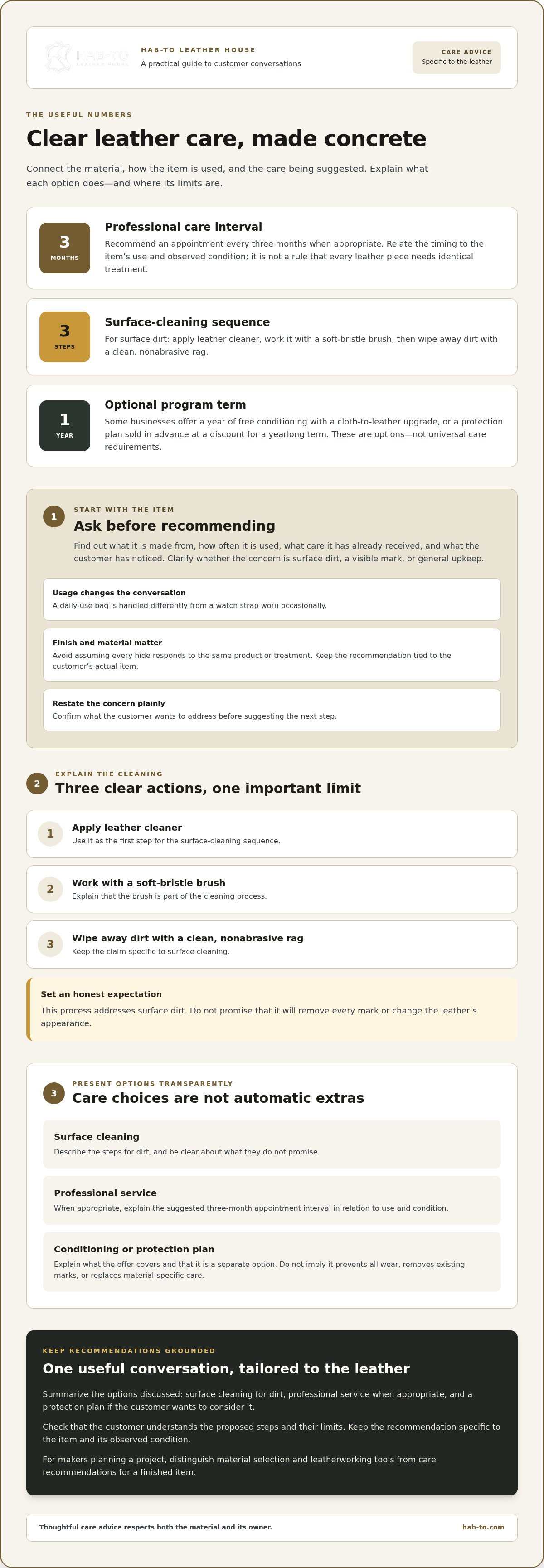
When surface dirt is the concern, describe the cleaning sequence in concrete terms: apply leather cleaner, work it with a soft-bristle brush, then wipe away dirt with a clean, nonabrasive rag. Explain the purpose of each step. Keep the claim limited to surface cleaning; don’t promise that this process will remove every mark or change the leather’s appearance. Customers can make better decisions when they understand both the action and its limits.
For professional leather-care service, recommend an appointment every three months. Explain the interval plainly, then relate it to the item’s use and observed condition. Don’t present a schedule as proof that every leather piece needs identical treatment. Customers should understand the suggested timing and service, rather than receive a calendar rule without context.
Some businesses may offer a year of free leather conditioning with a cloth-to-leather upgrade, or a leather-protection plan sold in advance at a discount for a yearlong term. Present these as specific program options, not universal care requirements. Explain what the conditioning or protection covers, and don’t imply that every customer needs either option. Clear terms help customers compare the offer with their needs.
Keep expectations honest. Instead of saying, “This will make the leather look new,” explain the action: “This step removes surface dirt; it won’t change the leather’s finish.” If a customer asks about craftsmanship or material choices, leather craftsmanship and material selection can provide useful context. That background helps make how to talk to customers about leather care a practical conversation, grounded in the item and the care being recommended.
Discuss a leather-protection plan by explaining what the customer is being offered before any commitment. The author suggests selling plans in advance at a discount for a yearlong term. Keep the conversation practical: describe the plan in plain language, clarify that it is a separate service option, and let the customer decide whether it suits their needs. Don’t imply that a plan will prevent all wear, remove existing marks, or replace care suited to a particular material. Ask what outcome the customer values, then explain the option without pressure. If they’re unsure, return to the item’s condition, how it’s used, and the concern they raised. This keeps the discussion focused on their needs rather than turning a care recommendation into an automatic extra sale.
A useful close is to summarize the options discussed: surface cleaning for dirt, professional service when appropriate, and a protection plan if the customer wants to consider it. Check that they understand the proposed steps and their limits. Invite questions before they choose, and keep recommendations specific to the item and its observed condition. A calm, transparent explanation helps customers compare care choices and leave with a clear next step, whether or not they choose additional service.
Hab-To Leather House: Vegetable Tanned Leather
Hab-To Leather House offers vegetable-tanned leather for makers choosing material for leathercraft projects. If a customer’s care questions lead to a conversation about the leather itself, discussing its type and intended use can help clarify material choices. Explore vegetable-tanned leather alongside leatherworking tools, leather hardware, and crafting bundles for project needs.
These materials and tools are relevant when someone is making or planning a leather project, rather than caring for a finished item. Keeping that distinction clear makes recommendations useful and grounded in the work at hand.
Visit hab-to.com to explore Hab-To Leather House’s leathercraft supplies, tools, and leather-care products.
Build Confidence Through Every Care Conversation
Each conversation can help customers become more attentive owners and confident makers. Invite them to notice how their leather is used and what changes over time. That makes how to talk to customers about leather care less about delivering a script and more about building a useful exchange.
For readers who want to keep learning, related topics to explore include:
- Choosing leather for a craft project
- Understanding the role of leatherworking tools
For your next project: Explore Hab-To Leather House’s leathercraft bundles, which bring project materials and tools together in one place.
Keep the conversation thoughtful, practical, and rooted in respect for the craft.
Disclaimer
All our blog articles are made for information purposes only we dont take responsability for any content from third parties.