


Leather supply for makers ordering single skins or in bulk
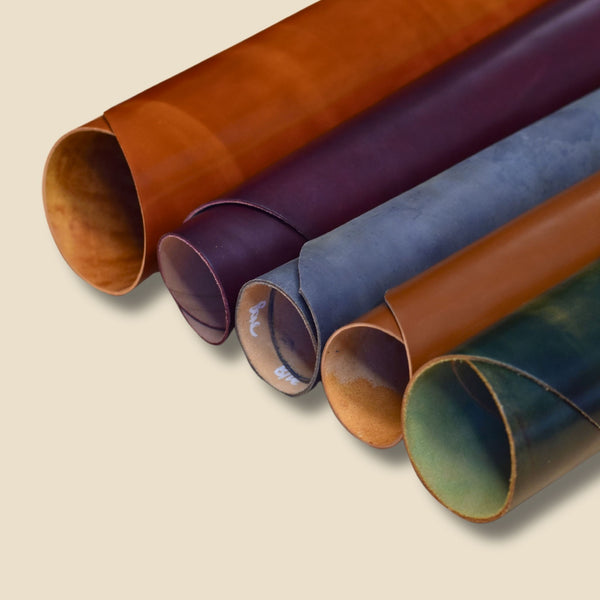
The right leather choice starts with the project, not the order size. Whether you need a single panel or a larger quantity, a leather supplier with expert advice can help match the leather’s character, thickness, and finish to your plans. Vegetable-tanned leather is a useful option when traditional craft and material choice matter.
Colour and price are only part of the decision. The leather also needs to suit how you’ll cut, shape, and use it. Choosing carefully can make the work easier and help you buy a quantity that fits your project.
Here, you’ll learn what to look for in a leather supplier, how to choose between a small cut and a larger order, and which questions can clarify whether a leather suits your project. We’ll also look at vegetable-tanned leather, the practical advice a supplier can provide, and how to move from choosing a material to placing an order.
Key Takeaways
- Choose a single skin or a bulk order based on the project, the consistency you need, and how you plan to use the material.
- Assess leather by how its character and finish suit your making process, not by appearance alone.
- Consider how sourcing and supplier knowledge can help you select leather for a specific craft or intended use.
- Use practical guidance to connect material choice with the tools and techniques your project calls for.
- Explore vegetable-tanned leather and leatherworking tools as starting points for your next project.
Choosing between single-skin and bulk orders
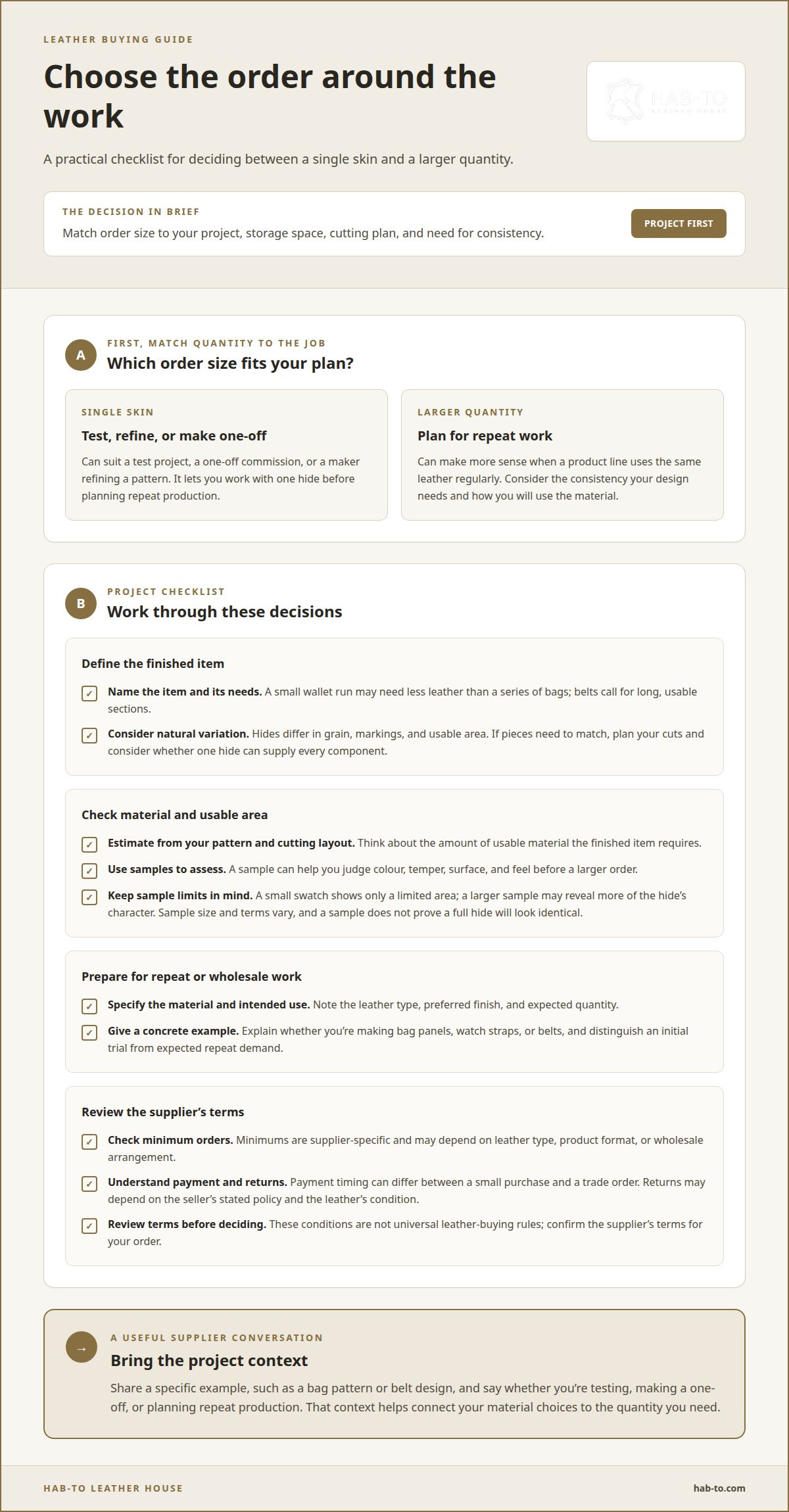
A single skin can suit a test project, a one-off commission, or a maker refining a pattern. It lets you work with one hide before planning repeat production. Buying a larger quantity makes more sense when a product line uses the same leather regularly. The right choice depends on your project, storage space, cutting plan, and need for consistency.
Start with the finished item. A small wallet run may need less leather than a series of bags, while belts call for long, usable sections. Then consider how much natural variation your design can accommodate. Hides differ in grain, markings, and usable area. If pieces need to match, plan your cuts and consider whether one hide can supply every component.
Samples can help you assess colour, temper, surface, and feel before placing a larger order. A small swatch shows only a limited area, while a larger sample may reveal more of the hide’s character. Sample size and terms vary. Don’t assume a sample proves that a full hide will look identical.
Minimum orders, payment arrangements, and returns are supplier-specific terms, not universal leather-buying rules. A minimum may depend on the leather type, product format, or wholesale arrangement. Payment timing can also differ between a small purchase and a trade order. Returns may depend on the seller’s stated policy and the condition of the leather. Understand these terms before deciding whether a single skin or bulk quantity fits your plans.
For a wholesale order, prepare the details that will shape it. Note the leather type, intended use, preferred finish, and quantity you expect to need. For example, explain whether you’re making bag panels, watch straps, or belts. Distinguish an initial trial from expected repeat demand. This helps focus the discussion on your actual needs, whether you’re testing a material or planning production.
A practical sequence keeps the decision clear:
- Define the item and the leather qualities it needs.
- Decide whether a sample or one skin will answer your questions.
- Estimate usable material needs from your pattern and cutting layout.
- For repeat work, specify the bulk quantity and desired consistency.
- Review minimums, payment terms, and return conditions before ordering.
A leather supplier with expert advice can help connect those choices to the material. Bring a specific example, such as a bag pattern or belt design, and explain whether you’re testing, making a one-off, or planning repeat production. That context makes the conversation more useful, whether you need one cut or a larger quantity.
Customer experience and product performance
Compare suppliers by leather quality, selection, pricing, and customer service. Review hide descriptions, available materials, order terms, and how clearly the supplier answers practical questions.
Quality depends on the project. For a wallet, consider how the leather cuts, folds, and takes stitching. For a belt, think about whether its character and structure suit repeated handling. Grain, surface marks, temper, and finish all affect the result. A useful supplier explains these differences in relation to your intended item, rather than presenting one leather as right for every use.
Selection matters when a design needs a particular material or finish. Compare vegetable-tanned, harness, and lining leathers according to their intended roles. For a fair price comparison, account for the material type, order quantity, and stated terms. You can also assess customer service by the answers: does the supplier explain hide variation, clarify product descriptions, and respond directly to your project details? Review shipping methods, timing, and charges before ordering.
Customization can mean different things. A supplier may offer leather in selected colours or finishes, while a maker may cut and assemble it to a custom pattern. Separate those steps when discussing a design. For example, a handbag pattern may need specific panel shapes, but supplying leather is different from manufacturing the finished bag. Clear expectations help you understand who handles each part of the process.
Promotional leather goods involve a similar distinction. A company planning branded key fobs or card holders may need a leather supplier for the material and a maker for cutting and assembly. Share the intended item, branding method, and order needs with each relevant partner. This keeps material selection connected to the finished design without assuming every supplier also makes promotional goods.
Embossing presses a mark or pattern into leather, changing the grain’s appearance and the surface’s feel. If your project calls for a natural, unaltered grain, don’t specify embossing. For archival leather, grain manipulation through embossing, pressing, or boarding is unsuitable. For a branded design, discuss placement and treatment with the maker applying it.
- Match leather qualities to the item’s use.
- Compare like-for-like materials and order terms.
- Separate leather supply from custom fabrication.
- Decide whether embossing suits the desired surface.
A leather supplier with expert advice can help you consider these choices in the context of a real design and its intended use.
Leather sourcing and supplier expertise
Responsible sourcing depends on traceability, processing details, and intended use. Assess any certification by its stated scope, the supply-chain stages it covers, and whether supporting records connect the material to its source.
International Leather Sourcing
International sourcing can involve separate farms, tanneries, and distributors. Each handoff can affect how clearly a hide’s origin and processing are traced. Ask how the supplier identifies the tannery and describes the leather’s treatment. For example, a maker seeking archival material needs more than a country-of-origin label. Sourcing details should also support the material requirements of the intended work.
Leather Sourcing and Selection
Start with the intended use. A strap, book cover, and archival repair place different demands on leather. Match the hide’s finish and processing to the project, then review the source information alongside its material description. Supplier expertise is most useful when it explains why a tanning method or surface treatment fits, or conflicts with, your purpose.
For responsible sourcing, look for records that connect the finished leather to its tannery and describe relevant processing. A certificate or standard is useful only when its scope matches the claim. A document covering one production stage doesn’t automatically describe every step. Read its stated scope, check which material or facility it applies to, and distinguish documented traceability from broad sustainability language.
Archival leather has specific sourcing and processing requirements. It shouldn’t come from commodity or industrial leather markets. It should use pyrogallol tannins, such as sumac, tara, or myrobalan. Catechol tannins cause red rot. Archival leather should also contain no syntans, and its grain shouldn’t be manipulated through embossing, pressing, or boarding. These criteria show why source and tanning method matter as much as appearance.
Supplier knowledge becomes practical through clear answers about origin, tanning, and surface treatment. Describe the project and its purpose, then ask how the leather’s processing relates to your needs. For archival work, ask specifically about tannins, syntans, and grain manipulation. For general craft, focus on the leather’s source and the production details relevant to its use.
- Trace the material through its stated source and tannery.
- Read certificates for scope, covered stages, and named materials.
- Match tanning and surface treatment to the project.
- For archival use, apply the listed tannin and grain criteria.
Steve Siegel Leather says archival leather should not be sourced through commodity or industrial leather markets. Keep that boundary in mind when discussing a proposed material with a supplier. Ask whether its source and tannery can be identified, and whether the processing description supports the intended archival use. A general assurance about quality doesn’t answer those questions.
Supplier expertise is most useful when answers distinguish documented origin from assumptions and explain relevant treatment without overstating what a certificate covers. This makes it easier to assess the material against your project’s purpose before choosing it.
Leatherworking resources and technical guidance
Useful guidance connects each tool and material to a making step. Start with the item you’re building, then map its panels, folds, seams, and edges. A wallet, belt, and lined bag each need different preparation. This plan helps you identify which techniques to practise before working on the main pieces.
Pattern preparation helps you use a hide thoughtfully. Arrange pattern pieces before cutting, and consider how visible sections will sit together. For a bag, check the placement of adjoining panels. For a belt, plan the strap’s direction before trimming. Keep natural marks in mind when positioning prominent pieces.
Cutting and skiving reward steady control. Test your blade on an offcut before cutting a visible edge. Skiving reduces thickness where leather folds or overlaps. A small trial helps you judge how the material responds before thinning a wallet pocket or layered seam.
Stitching guidance should address construction as well as appearance. Mark a consistent stitch path, then test the spacing on scrap leather. A straight line matters on a watch strap, while a bag panel may need careful seam placement around corners. Practising on a sample helps you refine your approach before assembly.
Edge finishing benefits from a clear sequence. Trim the edge evenly, then choose a finish suited to the design. A belt edge sees regular handling, while a wallet edge remains visible during use. Try the method on an offcut from the same leather to see how the surface responds.
Choose tools for the task. Stitching calls for tools suited to marking and making holes. Plan hardware placement carefully before assembly. If your design uses bonded layers, dry-fit the pieces first, then apply leather glue where needed. A simple sample can help you practise unfamiliar steps.
What You Will Need
Gather materials and tools around the techniques your project uses:
- Leatherworking tools suited to your cutting, stitching, or assembly steps.
- Leather selected for the project, such as a piece from the leather selection.
- For edge-finishing practice, consider Tokonole bundles alongside an offcut for testing.
- Scrap leather for practising stitch spacing, skiving, or edge treatment.
For a first wallet, lay out the pattern, practise a seam, and test the edge finish before assembly. Keep the offcuts close by; they’re useful for trying each technique as the project develops.
For archival leather, guidance should make the tannin distinction clear: archival leather should use pyrogallol tannins such as sumac, tara, or myrobalan, while catechol tannins cause red rot. Consider this when selecting material, alongside the project’s making steps. Before pattern preparation, cutting, or stitching, check that the tannin type aligns with this guidance. The examples, sumac, tara, and myrobalan, identify the pyrogallol tannins to look for.
Keep this distinction in view when selecting material: pyrogallol tannins are appropriate for archival leather, while catechol tannins cause red rot. Treat tannin type as part of the material choice, rather than relying only on how the leather will be cut, folded, or finished. For archival use, consider this requirement before moving on to the making process.
Vegetable-tanned leather suppliers
Vegetable-tanned leather is defined by its tanning method, not by one uniform look or performance. Suppliers can offer hides with different finishes, firmness, thickness, and intended uses. The useful question is how a particular leather will behave in your project. A belt, structured bag, and carved panel each call for different material qualities.
Vegetable tanning uses plant-derived tannins. The resulting leather can be shaped, tooled, dyed, or finished for different applications. Its characteristics still depend on the hide and its processing. Ask how the leather is finished and whether it suits your planned technique. For example, leather for carving needs a surface that works with your chosen tools.
Vegetable-tanned leather can develop a changing surface through handling and exposure. How that character develops depends on the leather’s finish and how the item is used. A frequently handled wallet may change differently from a carefully stored bag. Consider whether you want visible change over time or a more consistent appearance. Ask for guidance based on the finished item.
Assess leather in terms of construction. A firm hide may support a structured form, while a more pliable piece may suit folded components. Thickness affects how layers meet, how edges finish, and whether seams become bulky. For a lined bag, consider the outer leather and lining as a pair. Their combined thickness can affect folds and stitching.
Supplier expertise matters because “vegetable-tanned” alone doesn’t describe every relevant detail. A useful discussion covers tannage, finish, firmness, and intended application. It should also distinguish natural hide variation from a defect. For instance, a maker placing large visible panels may care more about surface marks than someone cutting small accessories.
Compare descriptions carefully. Look for the leather’s stated use, finish, and material details, then relate them to your pattern. A Pueblo vegetable-tanned leather listing gives a concrete example of a named leather type to evaluate. Use it as a prompt to consider how a specific hide’s finish and character fit your design, rather than assuming all vegetable-tanned leather behaves alike.
Before choosing, define what the hide needs to do:
- Identify whether the project needs structure, flexibility, or tooling.
- Consider how the surface may change through handling.
- Plan for thickness across folds, seams, and layered edges.
- Match the stated finish to your dyeing or finishing approach.
- Discuss natural variation in relation to visible pattern pieces.
The clearest takeaway: choose for the project, not the tannage label alone.
Explore leather bundles for your next project
Hab-To Leather House: Leatherworking Tools
Hab-To Leather House brings together vegetable-tanned leather, equestrian-related leather and hardware, and leatherworking tools for hands-on projects. Turn to us when you’re choosing materials or tools for your work. Our leatherworking tools can support practical steps such as cutting, stitching, and assembly. Match your equipment to leather selected for the project, and consider how each choice affects construction and finish.
Whether you’re planning your first project or refining a familiar technique, focus on the materials and tools your design requires. Contact Hab-To Leather House to discuss your leatherworking project and find suitable options.
Put your next project into motion
Let your next project shape your next decision. Note what you’re making, which techniques it involves, and where you’d value guidance. A leather supplier with expert advice can help connect those needs to a practical choice of material and tools.
Hab-To Leather House brings together leatherworking materials, hardware, and tools. Our curated bundles offer a useful starting point when you’re gathering supplies for a project.
Keep building your skills with related reading:
- Choosing between single-skin and bulk orders
- Leatherworking resources and technical guidance
- Vegetable-tanned leather suppliers
Choose a project that inspires you, then take the next step with care and confidence.
Frequently Asked Questions
How can I choose the right leather for upholstery, garments, bags, or crafts?
Start by identifying the demands of the finished item. Upholstery needs material suited to repeated contact and cleaning; garments need comfortable movement; bags often need panels that hold their intended shape. For craft work, consider the operations your pattern requires, such as carving or shaping. Write down these priorities before discussing options, so the supplier can respond to the actual design rather than a broad category.
Which leather suppliers provide samples, swatches, or material testing?
Hab-To Leather House offers leather samples; a nominal fee may apply. A sample can help you try your own workflow, such as cutting a small panel and checking how it behaves during construction. It isn’t the same as formal material testing. If testing matters for your project, ask whether documented test results are available and what they cover.
Which suppliers offer leatherworking guidance, technical support, or tutorials?
Hab-To Leather House offers learning resources through workshops, blog content, and The Leather Hour podcast. A free 15-minute video consultation with Mike is also available for focused project questions. These options suit different learning styles: use written guidance to revisit a technique, a workshop to learn through practice, or a consultation to discuss a specific design challenge. Bring a clear question to make the conversation useful.
What certifications or standards indicate responsibly sourced or compliant leather?
A certification or standard is useful when its stated scope matches the sourcing claim and identifies the material or facility and the stages it covers. Supporting records should connect the leather to its source and tannery.
Disclaimer
All our blog articles are made for information purposes only we dont take responsability for any content from third parties.