

Lining Leather for Bags: The Ultimate Guide to Professional Interiors (2026)
A luxury bag is only as good as its interior, yet the lining is often where even seasoned makers cut corners. You've likely felt the disappointment of opening a beautiful, hand-stitched tote only to find a thin fabric or synthetic material that's already starting to fray. Choosing the right lining leather for bags isn't just about aesthetics; it's about matching the longevity of your exterior hide. If you're working with high-quality vegetable-tanned leather, your interior should be able to age and develop a patina right alongside it.
We understand the struggle of sourcing small quantities of premium materials that won't add unnecessary bulk or peel over time. You want a bag that feels substantial and professional from the moment a customer unzips it. This guide will show you how to master the art of the professional interior. We'll cover everything from selecting supple goat or calfskin to using the right Ecostick Intercom glues for a bond that lasts a lifetime. By the end, you'll have the knowledge to create bags that truly represent the peak of artisanal craftsmanship and durability.
Key Takeaways
- Learn how to select high-tensile hides between 0.5mm and 1.0mm to protect your bag's interior while maintaining a slim, professional profile.
- Compare the buttery softness of Sheep Nappa against the scratch-resistant durability of Goatskin to find the perfect lining leather for bags.
- Discover when to embrace the "raw" aesthetic with Pueblo leather and how to prevent fiber transfer in unlined designs.
- Master the professional "oversize" gluing technique to ensure your lining and exterior edges are perfectly flush and ready for finishing.
- Find out how to source world-class materials from prestigious tanneries like Conceria Maryam without the need for bulk industrial orders.
What is Lining Leather and Why Does Your Bag Need It?
Think of the interior of your bag as the secret handshake of high-end craftsmanship. Lining leather for bags is a thin, high-tensile skin, usually between 0.5mm and 1.0mm, used to cover the rough flesh side of your project. It's the difference between a project that looks "handmade" and one that looks "bespoke." While mass-market brands often rely on synthetic fabrics that fray or peel, a professional maker knows that a leather interior provides a level of luxury and resilience that cloth simply cannot match. In my years at the workbench, I've found that while the exterior draws people in, the interior is what makes them fall in love with the piece.
Choosing a vegetable-tanned lining is particularly important for heirloom pieces. Because both the exterior and the interior are natural materials, they'll age and patina in harmony over the decades. This approach is central to traditional leather crafting techniques where the goal is a product that gets better with time. A lined bag isn't just about looks; it's about creating a functional workspace inside the bag where you can add specialized pockets and hide structural reinforcements that would otherwise be visible. It creates a cohesive story from the outside in.
To better understand this concept, watch this helpful video:
The Structural Benefits of a Lined Interior
Beyond the buttery feel, lining provides essential structural integrity. Leather is a natural fiber that can stretch over time, especially in high-stress areas like handle attachments or top edges. A bonded lining acts as a stabilizer, preventing the exterior from losing its shape after years of heavy use. You can also use the lining to sandwich reinforcements like Texon. This allows you to add immense strength to a bag without the support materials being visible to the user. It creates a "clean" interior that conceals the back of rivets and hardware, giving the piece a truly finished, professional appearance that lasts for decades.
Lining vs. Burnishing the Flesh Side
Sometimes, you might wonder if a full lining is necessary. For smaller clutches or rugged unlined totes, you can use Tokonole to finish the flesh side until it's smooth and flat. This reduces weight and keeps the bag flexible. However, for most professional-grade handbags, the extra weight of a leather lining is a trade-off that's well worth the investment. A lined bag feels more substantial in the hand and often commands a much higher retail price. It signals to your client that no detail was ignored. If you want your work to stand out in a crowded market, the interior must be just as impressive as the exterior.
Choosing the Right Lining Leather: Sheep, Goat, or Bovine?
Selecting the right lining leather for bags defines how your piece feels every time it's opened. While many industrial guides suggest chrome-tanned pig suede as the default, I've found that high-end vegetable-tanned options provide a far more authentic experience. Chrome-tanned linings often feel synthetic or "plastic-y" and they don't share the same chemical story as a premium veg-tan exterior. Instead, I recommend looking at Agneaux, Chevre, or thin Bovine hides to match the quality of your craft. These materials allow the interior to age and patina in harmony with the outside of the bag.
Agneaux Sheep Nappa: The Luxury Choice
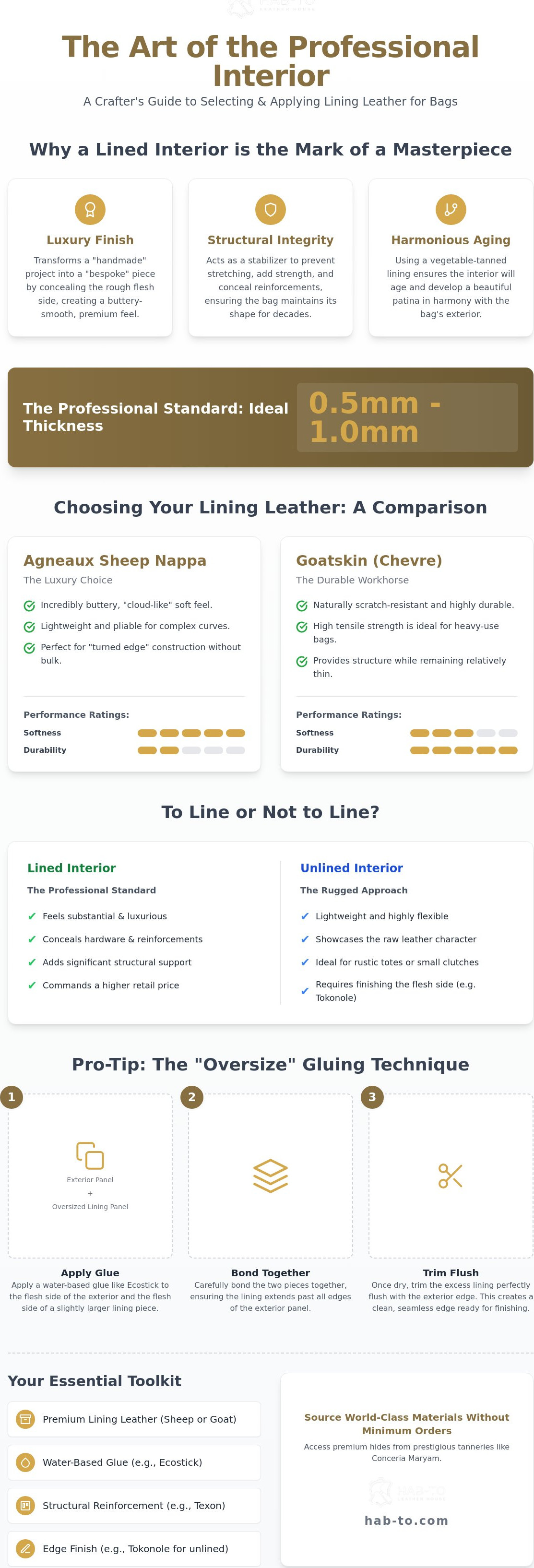
If you're aiming for that buttery, "cloud-like" feel inside a delicate handbag, Agneaux sheep nappa is the gold standard. It's incredibly lightweight and thin, making it the perfect candidate for "turned edge" constructions where you need to fold the leather over itself without creating a bulky, awkward seam. High-quality sheep nappa is pliable enough to handle complex curves and internal pockets with ease. You can source small panels of this exquisite material directly from Hab-To Leather House, which is great if you want to test luxury finishes without committing to a full hide.
Goatskin and Thin Vacchetta for Heavy Use
For bags that need to withstand daily friction or carry heavier items, Goatskin (Chevre) is a fantastic alternative. It has a natural pebbled grain that is remarkably scratch-resistant, making it ideal for wallets or the interiors of work bags. If you're building a tote that needs a bit more internal structure or a reinforced base, Maryam Vacchetta is an excellent choice. It provides the durability of bovine leather while maintaining the beautiful aging properties of a traditional Italian hide. I often use thin Vacchetta for high-wear areas where durability is non-negotiable.
Matching weights correctly is where many hobbyists struggle. If you pair a 1.0mm exterior with a 1.0mm lining leather for bags, a small clutch will feel like a stiff brick. For small goods, you usually want that lining down at 0.5mm. For larger totes, you might go up to 1.0mm to add necessary structure. If you're feeling overwhelmed by the options, you can book a free video consultation with Mike to find the perfect weight match for your project. Finding the right balance is much easier when you can see the drape of the leather on camera. To get started with a variety of textures and weights, exploring our curated leather bundles is a great way to find what works best for your specific style.
To Line or Not to Line? Handling the Structural Debate
In the world of bespoke leatherwork, there’s a constant debate between the "raw" minimalist look and the polished, fully finished interior. Some purists argue that an unlined bag is more authentic because it shows the true nature of the hide. While I appreciate that rugged aesthetic, we have to talk about the "flesh side fuzz." If you’ve ever carried a high-end laptop or a white wool sweater in an unlined bag, you know the frustration of finding tiny leather fibers stuck to everything. Choosing the right lining leather for bags solves this practical headache immediately.
Beyond cleanliness, there's the question of decades. Leather is a skin; it moves and stretches. An unlined bag, especially one made from softer temper hides, will eventually sag and lose its original silhouette. A lined bag maintains its structural integrity for years. It’s like the difference between a tailored suit and a soft cardigan. Both have their place, but only one keeps its sharp lines after a decade of wear. Don't let the fear of complexity stop you. Adding a lining is a skill that separates the hobbyist from the professional, and it's simpler than you think once you master the basic gluing steps.
When Unlined is the Right Choice
There are certainly times when skipping the lining is the better design move. For rugged tote bags or field gear made from heavy 2.0mm+ hides, a lining might add unnecessary bulk. If you're using a character-rich material like Pueblo leather, the raw, textured look is often part of the charm. In these cases, I recommend using Tokonole to burnish and flatten the flesh side. This gives you a semi-lined feel and prevents fiber transfer without the weight of a second layer. It's a cost-effective way to finish entry-level products while maintaining a high standard of quality.
The Hybrid Approach: Partial Lining
You don't always have to choose all or nothing. A hybrid approach allows you to enjoy the best of both worlds. By lining only the base and the internal pockets, you provide strength where the bag needs it most while keeping the overall weight down. You can reinforce high-stress handle attachments with thin leather strips hidden behind the pockets. This creates a modern artisan look that feels intentional and sophisticated. It shows your client that you've thought deeply about the balance between function, weight, and beauty. This method is a great middle ground for makers who want to offer a premium feel without the full labor of a completely lined interior.
How to Line a Leather Bag: The Professional Technique
How do you achieve an edge that looks like a single, solid piece of leather? The secret isn't just in the sanding; it's in how you apply the lining leather for bags before you ever pick up a beveler. Many hobbyist guides suggest using double-sided tape for the whole interior. While that might work for a small card holder, it's a recipe for disaster on a full-sized handbag. Tape fails in the heat, and it doesn't provide the structural bond needed for a long-lasting piece. Professionals use the "oversize" method for a reason. It ensures that every millimeter of the interior is perfectly bonded to the exterior hide without the risk of misalignment.
One of the most common mistakes I see is applying the lining under tension. If you pull or stretch the lining as you lay it down, the bag will eventually curl inward once the glue sets. You want a "zero-tension" bond. This means the lining should sit naturally on top of the exterior. When you're managing curves, you need to "walk" the leather around the corner. Gently press the lining into the curve with your fingers or a roller, ensuring it follows the shape without creating ripples or bunching up. It takes patience, but it's the only way to get a high-end finish that looks as good as it feels.
What You Will Need
- Premium lining skin (Sheep or Goat) from the Hab-To collection.
- Ecostick 1804 Leather Glue for a safe, permanent, and flexible bond.
- A smooth bone folder or specialized leather roller from our leatherworking tools range for removing air bubbles.
- A sharp knife for precision trimming of the excess lining.
Step-by-Step Installation
1. Apply a thin, even layer of Ecostick 1804 to both the lining and the exterior flesh sides. Don't rush this; a thick glob of glue can telegraph through thin lining leather.
2. Wait for the glue to become tacky. It will turn from a milky white to a translucent state. This usually takes about 10 to 20 minutes depending on your workshop's humidity.
3. Carefully lay the lining from the center outwards. Use your bone folder or roller to push out any air pockets as you go. If you're working on a curved panel, remember to "walk" the leather into the bend.
4. Once the bond is secure, trim the excess lining flush with the exterior using a very sharp knife. Because you clicked the lining slightly larger than the exterior, you'll now have a perfectly matched edge ready for burnishing.
Precision is everything here. If you want to ensure you have the right materials to practice these techniques, I highly recommend starting with one of our curated crafting bundles. They include the professional-grade adhesives and leather scraps you need to master the art of the perfect interior before you move on to your main project.
Sourcing Premium Lining Without Minimum Orders
One of the biggest hurdles for independent makers is the industry's obsession with scale. Most high-end tanneries won't even pick up the phone unless you're ordering hundreds of square feet. At Hab-To, we've spent decades breaking down those barriers. Finding the perfect lining leather for bags should be about the quality of your craft, not the size of your warehouse. We believe that an artisan making one bespoke bag a month deserves the same world-class materials as a luxury fashion house. That's why we offer small panels from legendary names like Conceria Maryam, allowing you to use the best without the burden of excess stock.
When you source from us, you're not just buying a material; you're accessing a legacy. I personally vet every hide to ensure it meets our strict standards for durability and ethical production. As we move through 2026, the focus on responsibly sourced leather has never been more vital. We prioritize vegetable-tanned linings that are byproducts of the food industry, ensuring your work remains as eco-friendly as it is beautiful. Whether you're a hobbyist or a growing micro-brand, I'm here to help you find the exact weight and temper you need to scale your passion into a professional business.
The Hab-To Heritage Advantage
Our approach is rooted in 160 years of family history in the leather trade. This deep connection to the source allows us to provide consistent access to premium Italian leathers that are usually reserved for industrial manufacturers. Professional artisans trust us because they know the panel they buy today will match the quality of the hide they order six months from now. This consistency is crucial for building a brand that customers can rely on. If you're curious about how we've maintained these relationships for generations, you can learn more about our 160-year history and our commitment to the craft.
Next Steps for Your Project
Mastering the interior is just one part of the journey. To truly elevate your work, you need a holistic understanding of how different hides behave under your tools. I've put together several resources to help you avoid common pitfalls and refine your technique. Explore our related guides to deepen your expertise:
- Vegetable Tanned Leather: The Complete Guide for Crafters
- Check out our Buying Leather Online guide to avoid sourcing mistakes.
Ready to transform your next project? Shop the Lining Leather Collection at Hab-To today and give your bags the professional interior they deserve.
Recommended for Professional Interiors:
Elevate Your Craft with a Professional Interior
Mastering the interior of your project is the final step in moving from a hobbyist to a professional artisan. By selecting the right lining leather for bags, you ensure that every piece you create maintains its structural integrity and develops a beautiful patina for decades. We've explored how matching weights and using the "oversize" gluing method can eliminate ripples and ensure a clean, flush edge. Remember that the quality of your lining should always mirror the excellence of your exterior hide to create a truly cohesive heirloom.
At Hab-To, we bring over 160 years of family leather expertise directly to your workbench. We exclusively offer sustainable, vegetable-tanned materials with no minimum order requirements; this means you can access the world's finest hides without the burden of buying in bulk. Your dedication to the craft deserves an interior that tells the same story of quality as the exterior. Ready to take the next step? Elevate your next project with premium vegetable-tanned lining leather and see the difference that professional materials make. Happy crafting!
Frequently Asked Questions
What is the best thickness for bag lining leather?
A thickness between 0.5mm and 0.8mm is ideal for the majority of handbag projects. This specific range provides a premium, luxury feel without making the bag excessively heavy or difficult to stitch through. Using skins in this weight category ensures your interior doesn't add unnecessary bulk, which is essential for maintaining a slim, professional profile in your more sophisticated leathercraft designs.
Can I use suede for bag lining?
Yes, pig or goat suede is a very popular choice for achieving a soft and plush interior feel. It adds an immediate sense of luxury and comfort to any bespoke project. However, you should keep in mind that suede is significantly more porous than smooth grain leather. It can absorb oils, dust, and stains more easily, making it slightly more challenging to clean and maintain over decades of use.
Is it better to glue the lining entirely or just at the edges?
For structured bags, a full-surface glue bond is the best approach to prevent the interior from sagging or shifting over time. This technique creates a single, rigid composite that helps the exterior hide hold its intended shape. If you're building a soft, slouchy bag, a "drop-in" lining attached only at the top rim is a common and effective alternative. Choosing the right lining leather for bags depends heavily on this structural goal.
What glue should I use for leather lining?
Professional crafters almost exclusively recommend water-based contact cements like Ecostick 1804 for this task. This adhesive is non-toxic and remains remarkably flexible once it's dry, which prevents the leather from becoming stiff. It provides a permanent, heat-resistant bond that won't peel away in the sun. This ensures your lining leather for bags stays perfectly in place for the entire life of the product.
How do I calculate how much lining leather I need?
You should plan to purchase at least 20% more square footage than your exterior patterns technically require. This extra margin allows for the necessary trimming during the assembly process and ensures you can cut around any natural marks or scars in the hide. Having this buffer prevents the frustration of running short on material during the critical final stages of your bag construction.
Should I line my bag with fabric or leather?
Leather is the superior choice if you want a bag that lasts for decades and commands a much higher retail price. While fabric is lighter and less expensive, it tends to fray, tear, and wear out much faster than a natural animal skin. A leather interior significantly elevates the entire piece, providing a level of durability and professional finish that fabric simply cannot match in high-end work.
Disclaimer
All our blog articles are made for information purposes only we dont take responsability for any content from third parties.