



Matte vs Glossy Leather: Choose the Finish for Your Style
The shiniest leather isn’t always the most polished choice. Choosing a matte vs glossy leather finish comes down to the look you want and how much you want surface marks to stand out. Matte reflects little light, while gloss catches it and can make scratches, dust, and texture differences more noticeable.
Both finishes have their place. Satin sits between them, offering a soft glow without a highly reflective surface. Gloss isn’t simply an inherent property of leather: polishing, buffing, or a surface coating can build its sheen. How a matte vs glossy leather finish is created also affects its final look and feel.
In this guide, you’ll learn how matte, satin, and glossy finishes differ in sheen, texture, care, and visible marks, so you can choose with confidence. We’ll explain how glossy finishes are achieved and why matching a finish to the leather’s intended use matters. A little attention to the surface can make a noticeable difference.
Key Takeaways
- Choose a finish that suits the leather’s original sheen and the way the item will be used.
- Consider satin for a soft sheen between a low-reflection matte look and a stronger gloss.
- Match cleaning and conditioning habits to the finish to help keep the leather looking its best.
- Expect reflective surfaces to draw more attention to scratches, dust, and texture differences.
- When creating a glossy finish, build it carefully and assess the result only after it has dried.
Matte vs Glossy Leather: Which Finish Is Right for Your Style?
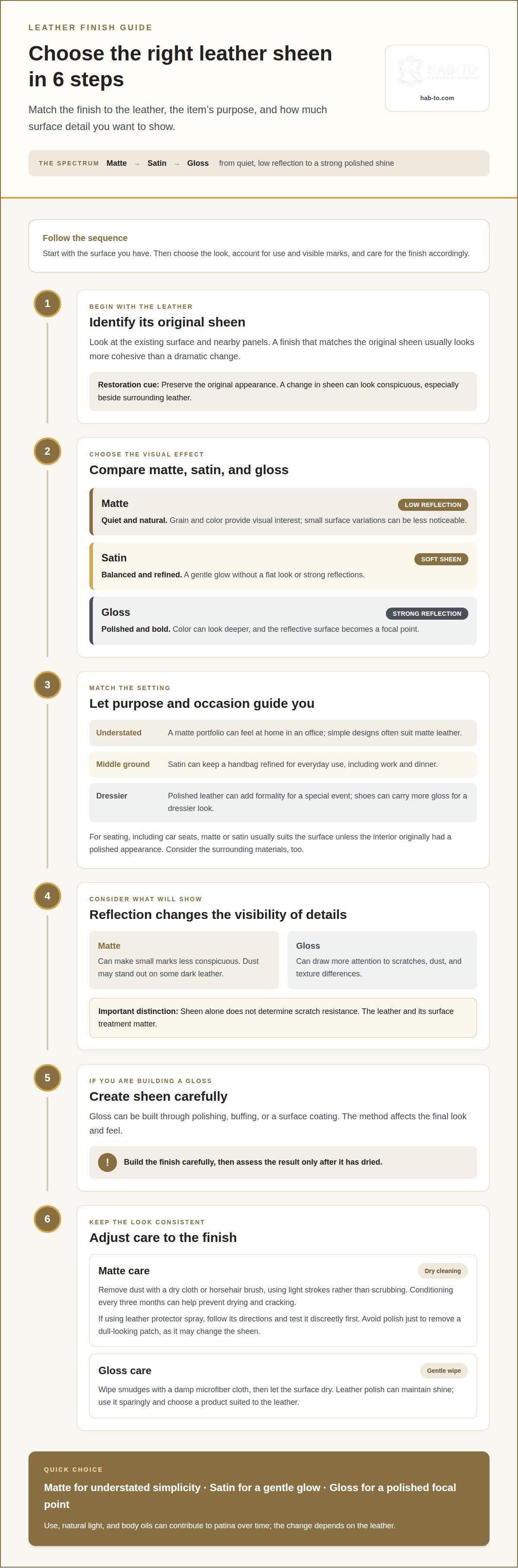
Matte, satin, and gloss each shape leather’s appearance by changing how its surface reflects light. The right choice depends on the look you want and how clearly you want surface details to show.
Matte Leather Finish
A matte finish reflects little light, giving leather a restrained, natural appearance. It suits simple designs where grain and color, rather than shine, provide visual interest. Compared with satin or gloss, matte can make small surface variations less noticeable, though dust may stand out on some dark leather. Matte leather can still develop a graceful patina with use.
Glossy Leather Finish
Glossy leather reflects light strongly, creating a polished, more formal appearance. Its sheen can make color look deeper, but it also draws attention to scratches, uneven texture, and dust. Compared with matte, gloss makes the surface itself a focal point. A high-gloss finish can look striking on a structured accessory, while a broad reflective surface may feel too bright for a quieter style.
Satin sits between the two: it offers a soft sheen without looking flat or highly reflective. For example, satin can bring gentle depth to a handbag while keeping its appearance refined for everyday use. Matte favors simplicity, satin balances subtle glow and restraint, and gloss makes the strongest visual statement.
| Finish | Light reflection | Appearance | Visible surface detail |
|---|---|---|---|
| Matte | Low | Quiet, natural | Less emphasized |
| Satin | Soft | Balanced, refined | Moderately visible |
| Gloss | Strong | Polished, bold | More emphasized |
Which finish resists scratches best? Sheen alone doesn’t determine scratch resistance; the leather and its surface treatment matter. Gloss can make scratches easier to see, while matte may make small marks less conspicuous.
How do these finishes age? Use, natural light, and body oils can contribute to patina over months or years, depending on the leather. Aniline and semi-aniline leather show especially noticeable changes, whether the starting finish is matte or glossy.
Choose matte for understated simplicity, satin for a gentle glow, or gloss for a polished focal point.
Choosing a Finish to Match Original Leather Sheen
Start with the leather’s existing sheen, then consider its purpose and surroundings. A finish that matches the original surface usually looks more cohesive than a dramatic change.
Choosing for Context and Occasion
Context helps set the mood. A matte leather portfolio can feel understated in an office, while polished leather adds formality to a special event. Satin offers a middle ground for a handbag used at work and at dinner. Match the finish to nearby materials, too: a glossy panel beside matte leather may look like a mismatch rather than a deliberate contrast.
For restoration, preserve the original appearance instead of following a trend. A surface with a soft glow may look dry or unfinished after an overly matte treatment. Conversely, applying gloss to leather that was originally subdued can make the change conspicuous. Consider the surrounding panels, not just the area receiving attention.
Choosing by Purpose and Style
Purpose should guide the finish as much as personal taste. A clean, simple design often suits matte leather, while a glossy finish makes a structured accessory more eye-catching. Satin works well when you want a polished appearance without strong reflections. Think about whether you want the leather itself to stand out or support the shape and color of the item.
Before selecting a finish, compare the piece with adjacent leather and note its original sheen. For example, a repaired bag panel should blend with the rest of the bag, not introduce an unrelated shine. Polish can deepen the look, but it may also make scratches and texture differences more visible.
Choosing for Lifestyle and Use
For shoes, bags, furniture, and car interiors, match sheen to contact and surroundings. Matte or satin usually suits seating surfaces, including car seats, where gloss can look too shiny unless the interior originally had a polished appearance. Satin often keeps a handbag refined for everyday use. Shoes can carry more gloss when you want a dressier look.
Daily friction matters. A frequently handled bag or seat experiences more contact than a display piece, so prioritize a finish that suits the original leather and the item’s use. Assess the surrounding surface before changing the sheen, especially across a large sofa cushion or car-seat panel.
For a leathercraft project, choosing materials and tools as a set can help keep the process cohesive. Explore leathercraft bundles as you plan your finish.
Cleaning and Maintenance Considerations
Care depends on the finish, the leather, and how the item is used. A matte handbag, glossy shoe, and frequently handled seat each need a different routine.
For matte leather, remove surface dust with a dry cloth or horsehair brush. Use light strokes rather than scrubbing, especially around seams and folds where dust collects. Conditioning every three months can help prevent drying and cracking. A leather protector spray may also help protect the surface, but follow its directions and test it discreetly first.
Matte leather’s understated appearance can make dust easier to spot on some dark surfaces. A quick dry brushing helps keep the finish even without adding shine. Avoid reaching for polish just to remove a dull-looking patch: it may change the sheen and make a matte surface more reflective.
For glossy leather, wipe smudges with a damp microfiber cloth, then let the surface dry. Leather polish can maintain shine, but use it sparingly and choose a product suited to the leather. A smooth, highly reflective finish can reveal streaks, so buff gently and evenly rather than concentrating product in one spot.
Take extra care with high-gloss wax on leather uppers. A heavy wax finish can limit breathability and may contribute to cracking over time. For shoes, keep a mirror-like shine focused on the toe box and nourish the surrounding leather. This preserves a clear contrast without coating the entire upper in thick wax.
Restored or recolored leather has another maintenance consideration: friction from handling, cleaning, and daily contact. A compatible top coat can help protect restored color, especially on high-touch areas such as a bag handle or seat bolster. Apply it in thin, even layers, then assess the surface only after it has dried fully.
Use the finish as your care guide: dry brushing for matte, careful wiping and measured polishing for gloss, and gentle upkeep for satin. Consistent, light maintenance helps each surface retain its intended appearance.
How Sheen Affects the Visibility of Marks and Texture
Sheen changes how light describes leather, affecting its perceived color and texture. Matte softens reflections; glossy surfaces draw attention to small variations.
Matte Finish and Visible Marks
A matte finish softens reflected light across the surface, so the grain often appears understated. On a pebbled wallet, this subdued look can let the leather’s natural character take focus. Matte does not remove marks; it can simply make shallow scratches and slight texture differences less prominent than they appear under a glossy finish.
Color can look softer without a bright surface reflection. That can suit pieces where understated texture matters more than visual drama.
Glossy Finish and Visible Texture
A glossy finish reflects light more directly, outlining surface details through bright highlights and darker areas. On a smooth clutch, that contrast can make color appear deeper and the shape more defined. The same reflections can reveal scratches, dust, uneven filler, or differences between adjacent panels, particularly when light travels across the leather.
Gloss brings polish and presence, but draws more attention to surface variations.
To judge a leather piece fairly, view it under more than one light source. Turn a bag near a window, then examine it under indoor lighting. A scratch that disappears when viewed head-on may become visible when light hits from the side. Changing the angle shows how much the finish, not just the mark, affects what you see.
Texture also changes with viewing distance. From across a room, a glossy sofa may look smooth and uniform; up close, reflected highlights can outline creases and grain. Matte leather tends to keep those details quieter at both distances, though strong side lighting can still reveal them. Consider the piece’s size and where people will see it.
When assessing color, compare the leather with its surroundings. A glossy panel may appear richer beside matte pieces, even if both started with similar color. For a repair or recoloring, test the intended top coat on a hidden area, let it dry fully, then inspect it from several angles. This shows whether the final sheen changes the color or emphasizes texture.
Choose matte when you want marks and grain to stay visually restrained. Select gloss when stronger highlights and a more defined surface suit the piece.
What You Will Need
Leather finishing calls for a suitable product, clean applicators, and a controlled test surface. Gather your materials before starting, and keep face finishing separate from edge work. A matte treatment and a glossy top coat serve different purposes, so choose supplies for the result you want.
Use this practical checklist:
- A leather test piece: Apply oils, waxes, creams, or a top coat to scrap from the same leather when possible. This lets you assess color and sheen before treating the finished project.
- A clean, soft cloth: Use it to remove dust and apply a small amount of product evenly. Keep a separate cloth for buffing, so leftover residue doesn’t transfer.
- An applicator: A suitable sponge or lint-free cloth helps spread a finish in controlled layers. Follow the product’s directions and avoid leaving thick edges or puddles.
- A compatible leather finish: Natural oils, waxes, or creams can support a low-sheen appearance. A suitable top coat can create more sheen. Match the material to the leather and intended result.
- An edge beveler: This tool trims sharp leather edges before edge finishing. It doesn’t change the sheen of the leather’s main face, so treat it as a separate step.
- Tokonole for edge work: Use Tokonole for edge finishing, not as a face finish. Tokonole bundles provide a way to explore related supplies for edge work.
Keep the workflow deliberate. First, clear the work surface and prepare a test piece. Apply a thin layer with the chosen applicator, then let it dry fully before judging the appearance under different light. If the sheen or color shifts more than intended, adjust the finish before treating the main piece.
For a glossy result, thin, even layers help limit streaks and heavy edges. For a quieter finish, don’t add polish simply to make the surface look smoother. Use separate tools for the leather face and edges, and clean them after each product. This separation helps keep the finish controlled and the project’s details crisp.
How Glossy Leather Finishes Are Achieved
Gloss comes from treating the leather’s surface, not simply from its color. Polishing and buffing can create sheen; a lacquer or polyurethane top coat can produce a smoother, more reflective finish. The method affects the final appearance and feel, so choose an approach that suits the leather and the result you want.
For a coated finish, apply thin, even layers of leather top coat. One method for a smooth, polished surface uses a minimum of two coats of lacquer or polyurethane. Spread each layer evenly to avoid puddles, streaks, and heavy edges. Let the surface dry fully before judging its sheen or deciding whether another layer is needed.
Test first in a hidden area. After the test coat dries, inspect it from several angles and compare its color and reflection with nearby leather. Gloss can make color appear deeper, so judge the dried result before coating the whole piece. As you plan the process alongside your other project materials, leathercraft bundles offer a relevant place to explore supplies.
Polishing and buffing offer another route. On leather suited to this approach, buffing can build a polished appearance without relying solely on a top coat. The result can suit a formal accessory or a casual piece, depending on the degree of shine and the leather’s original look.
Patent leather represents a more extreme glossy finish. Its strong reflection makes it a deliberate statement rather than a subtle everyday sheen. Choose it when that pronounced appearance fits the design, not when you want only a gentle polish.
Can you make glossy leather matte or restore shine to matte leather? Light buffing or sanding can create a matte appearance, while polishing and buffing can add shine. Test the method on a hidden area first, then assess the dried surface from different angles.
The practical takeaway is simple: build gloss gradually, keep coats thin, and judge the finish only after it dries. Careful application gives you more control over the final sheen and helps the leather’s surface suit the piece.
Hab-To Leather House: Leatherworking Tools
Hab-To Leather House connects your finish decision with the leather and tools for your next project. Once you’ve chosen matte, satin, or gloss, consider how the material’s grain, intended use, and finishing method work together. The right supplies support careful making; they don’t replace testing a finish on a separate piece first.
For a leathercraft project, start with the material. Vegetable-tanned leather offers a classic base for making items where the surface and its changing appearance matter. The leather type, its existing treatment, and your chosen top coat influence the final look. Keep those factors in mind before selecting any finishing approach.
Then choose tools to suit the work. Hab-To Leather House offers leatherworking tools for leathercraft projects. Think about the operations your project requires, such as cutting, shaping, joining, or preparing edges. Edge work is distinct from changing the sheen on the leather’s face, so select tools for the specific task rather than expecting one tool to control every finish.
A useful project plan connects three decisions:
- Material: Choose leather that suits the item and the appearance you want.
- Finish: Decide whether the surface should stay understated, gain a soft sheen, or become more reflective when evaluating the matte vs glossy leather finish for your design.
- Tools: Gather leatherworking tools for the construction and edge work your design requires.
This approach is especially useful when developing a new design or matching leather and hardware for a cohesive result. Hab-To Leather House also offers equestrian-related leathers and hardware for equestrian projects. The same principle applies: make choices around the project’s purpose, materials, and desired appearance, rather than choosing tools or supplies in isolation.
Bring your finish decision into the making process. Consider the leather, the item’s use, and the work each tool needs to do. For help with your project, contact Hab-To Leather House.
Make Your Next Leather Project Your Own
Let your finish choice shape the character of a project, then carry that decision through its materials and construction. A small sample can help you settle on a direction before committing to the full design.
Hab-To Leather House offers vegetable-tanned leather, leather hardware, and leatherworking tools. For a project that needs several supplies, explore leathercraft bundles as you plan the materials and tools around your design.
Keep exploring:
- How to select leather for a handmade bag
- Leather edge finishing techniques for makers
- Choosing tools for a leathercraft project
Each project offers a new chance to refine your eye and your hand. Choose a direction that feels like yours, and enjoy bringing it to life.
Frequently Asked Questions
Which leather finish is best for daily wear?
Matte or satin often suits daily-use items, but the best matte vs glossy leather finish depends on the leather and its use. For a frequently carried wallet, consider its surface treatment and how often it will be handled. Choose a finish that complements the leather’s original appearance and the marks it may collect in regular use.
What is the difference between matte and glossy leather finishes?
Matte leather has little visible shine, while glossy leather reflects more light and looks polished. This changes how color and grain appear: a dark leather cardholder may look understated in matte, but richer and more eye-catching with gloss. The finish also affects how clearly surface variations show, so choose based on whether you prefer a restrained look or stronger visual impact.
How are matte and glossy finishes applied to leather?
Matte effects can come from light buffing or sanding, or from applying oils, waxes, or creams. Gloss can be developed through polishing and buffing, or by applying a leather top coat. For a new project, work on a test piece first. Let any coating dry fully, then inspect the result under different lighting before treating the finished item.
Which leather finish is easier to clean and maintain?
Neither finish is universally easier to care for; the routine differs. For a dusty matte leather notebook cover, start with a dry cloth or horsehair brush. For glossy leather, a damp microfiber cloth can remove smudges, while suitable polish helps maintain shine. Use products intended for leather, and avoid aggressive rubbing that could alter the surface or leave uneven-looking patches.
What are the advantages and disadvantages of matte versus glossy leather?
A matte vs glossy leather finish comparison highlights different trade-offs. Matte offers a subdued appearance and keeps reflections low, but can look flat if the leather originally had a natural glow. Gloss adds polish and can make color appear deeper, yet highlights may expose scratches, dust, or uneven texture. Choose based on the item’s intended use and the look you want.
Disclaimer
All our blog articles are made for information purposes only we dont take responsability for any content from third parties.