

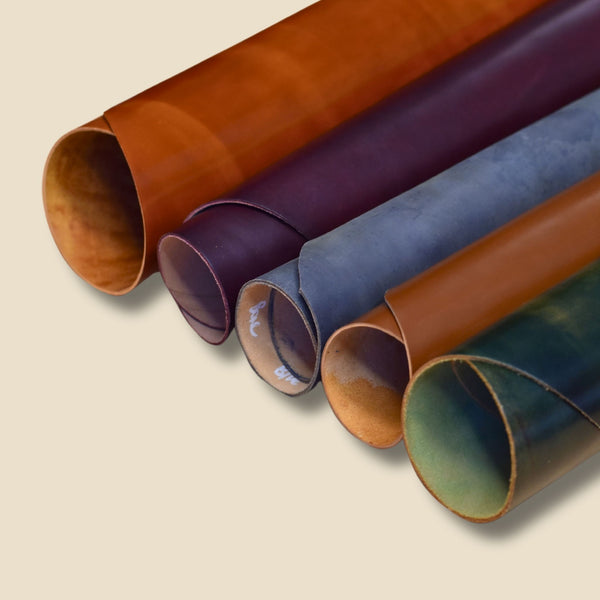


Have you ever run your hand across a piece of Pueblo leather and wondered how it gets that distinct, lightly rustic texture? It's a material that feels as good as it looks, but it often comes with questions. Will it be too soft for a durable wallet? How will that beautiful matte finish evolve over time? In the world of premium veg-tan, few leathers are as iconic or as misunderstood as Pueblo leather, a beautiful creation from the Carlo Badalassi Tannery in Tuscany. This exquisite leather is a true testament to Italian craftsmanship, but its unique properties require a little understanding to truly master.
In this complete guide, we’re covering it all. We'll dive deep into the story behind this remarkable leather, revealing the secrets that create its signature feel and vibrant colors. More importantly, we’ll give you the practical, hands-on advice you need to work with it confidently. From cutting and stitching to finishing and care, you'll learn everything required to choose Pueblo for the right project and coax out the rich, legendary patina that makes it so beloved by crafters worldwide.
Key Takeaways
- Discover the unique origins and signature rustic texture of genuine pueblo leather by Carlo Badalassi Tannery Tuscanny, setting your projects apart.
- Learn how to cultivate the legendary patina of Pueblo leather, transforming your work into a unique piece that tells a story over time.
- Master working with Pueblo's versatile medium temper, which offers the perfect balance of structure and pliability for a wide range of projects.
- Find out why Pueblo's rich, infused oils mean less maintenance for you, allowing the leather's natural character to shine with minimal effort.
What is Pueblo Leather? The Story Behind an Iconic Italian Veg-Tan
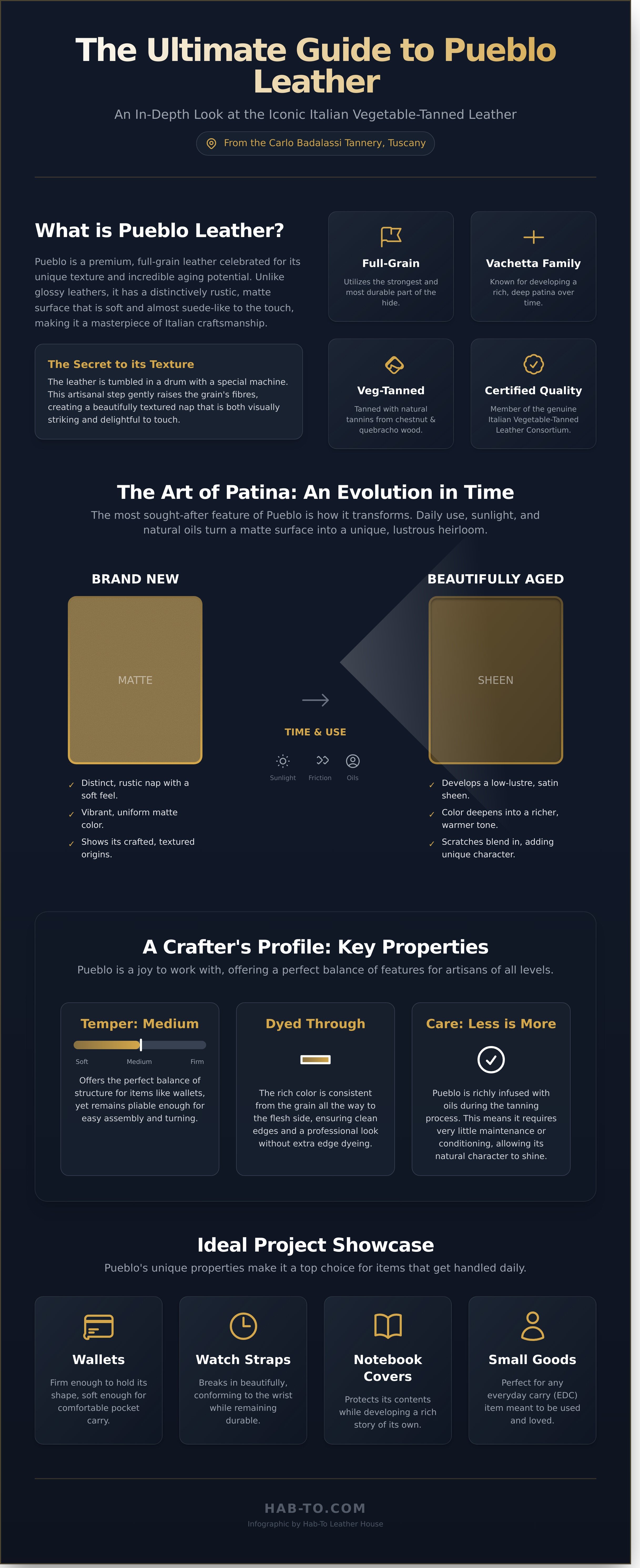
When you first encounter Pueblo leather, you know you're holding something special. It's a premium, full-grain leather celebrated by artisans for its unique texture and incredible aging potential. Unlike the glossy leathers you might be used to, Pueblo has a distinctively rustic, matte surface that feels soft and almost suede-like to the touch. This iconic material is a masterpiece of Italian craftsmanship, a signature article of pueblo leather by Carlo Badalassi Tannery Tuscanny.
As part of the legendary 'Vachetta' family of leathers, Pueblo is known for developing a rich, deep patina over time. Every scratch, every touch, and every bit of sunlight enriches its story, making your leather goods truly one-of-a-kind. The Badalassi Carlo tannery’s commitment to tradition is so profound that they are a proud member of the prestigious Pelle Conciata al Vegetale in Toscana (The Genuine Italian Vegetable-Tanned Leather Consortium), a mark of authentic, superior quality.
The Heritage of Badalassi Carlo Tannery
Nestled in San Miniato, Tuscany, the Badalassi Carlo tannery is a standard-bearer for traditional leather production. They don't take shortcuts. Instead, they rely on centuries-old tanning methods passed down through generations. This age-old process, using natural tannins extracted from chestnut and quebracho wood, is the heart of what makes authentic vegetable-tanned leather so durable and character-rich. This commitment to quality materials and real craftsmanship is why we trust them.
The Secret to the 'Pueblo' Texture
The unique feel of Pueblo leather doesn't happen by accident. The process begins with the tannery's classic smooth veg-tan article, Minerva. To achieve its signature finish, the leather is then tumbled in a drum with a special machine. This final, artisanal step gently raises the fibres of the grain, creating a beautifully textured nap that is both visually striking and delightful to touch. It’s an intentional, crafted texture that stands in beautiful contrast to perfectly smooth leathers, giving it an immediate look of rustic elegance.
The Art of Patina: How Pueblo Leather Ages and Transforms
If there's one reason crafters and connoisseurs seek out premium vegetable-tanned leather, it's for the patina. This is arguably the most sought-after feature of pueblo leather by Carlo Badalassi Tannery Tuscanny. Patina is the beautiful, evolving story of your leather goods-a unique sheen and depth of colour that develops through daily use, exposure to sunlight, and the natural oils from your hands. What begins as a distinctly matte, textured surface slowly transforms into a piece that is uniquely yours, chronicling every journey and interaction.
From Rustic Nap to Smooth Sheen
The magic starts with Pueblo's signature rustic nap. As you handle your wallet, notebook cover, or watch strap, the friction from your hands and pockets gradually polishes the raised fibres. This doesn't result in a high-gloss, plastic-like shine. Instead, a subtle, low-lustre satin sheen emerges, giving the leather a warm glow. This process typically begins within a few weeks of regular use, with high-wear spots like corners and edges becoming smooth and developing their lustre first.
Color Deepening and Character Development
Alongside the change in texture, the colour of your leather will deepen and grow richer. As it absorbs oils, a light tan can evolve into a warm honey, and a deep olive can become a complex, darker brown. This is where its character truly shines. Unlike perfectly smooth leathers that show every initial scuff, Pueblo's textured grain beautifully conceals minor scratches, absorbing them into its evolving story. This forgiving nature makes the pueblo leather by Carlo Badalassi Tannery Tuscanny an exceptional choice for everyday carry items that are meant to be used and loved. Each mark and burnished spot contributes to a rich visual history, a tradition that echoes through the long history of leathercraft and becomes a testament to your personal journey.
A Crafter's Guide: How to Work With Pueblo Leather
One of the true joys of leathercraft is finding a material that works with you, not against you. For crafters of all skill levels, from weekend hobbyists to seasoned professionals, working with pueblo leather by Carlo Badalassi Tannery Tuscanny is a remarkably rewarding experience. This leather has a medium temper, giving it enough body for structured items like wallets and watch straps, yet remaining pliable enough for easy assembly. Because it's dyed completely through, you can be confident the rich colour is consistent from the grain to the flesh side. The tannery's dedication to heritage techniques, recognized by its membership in the Genuine Italian Vegetable-Tanned Leather Consortium, results in a leather that is not just beautiful, but also exceptionally workable.
Cutting, Skiving, and Assembly
Pueblo’s dense fibre structure allows for incredibly clean work. A sharp knife glides through it, leaving a crisp, burr-free edge that requires minimal cleanup. It skives beautifully, whether by hand with a French edger or by machine, resisting tearing or chattering. When it comes to assembly, its unique, slightly roughened texture provides an excellent surface for adhesives like contact cement, ensuring a strong and even bond for your projects.
Edge Burnishing: Achieving a Professional Finish
This is where Pueblo truly shines. Burnishing the edges of this leather is one of the most satisfying steps in the crafting process. Using a bit of water, Tokonole, or gum tragacanth and a wooden slicker, the results are simply stunning. The key is to first apply your burnishing agent and gently compress the fibres with the slicker. Once compressed, you can build up speed and friction. This process darkens the edge to a deep, rich tone and creates a smooth, semi-glossy finish that provides a beautiful contrast to the matte grain.
Stitching and Creasing
The firm and consistent nature of pueblo leather by Carlo Badalassi Tannery Tuscanny makes it ideal for hand stitching. Pricking irons sink in cleanly, creating perfect, well-defined holes that won’t tear or stretch under tension. This structural integrity ensures your stitches will sit neatly and securely. A heated creaser will also leave a handsome, subtle line that adds a touch of refinement without overpowering the leather's rustic texture. For a classic look, we recommend pairing it with threads like Ritza 25 or Meisi.
What to Make with Pueblo Leather: Ideal Project Showcase
The true magic of a material is revealed when it's used for the right purpose. The unique character of pueblo leather by Carlo Badalassi Tannery Tuscanny lends itself to projects where touch, durability, and visual evolution are paramount. Its medium temper provides a fantastic balance of structure and pliability, opening up a world of creative possibilities for both seasoned artisans and passionate beginners.
Because its signature rustic texture helps to mask minor scratches and scuffs, Pueblo is a forgiving and practical choice for items that see daily action. The more you handle it, the better it gets, as the oils from your hands smooth the fibres and begin to develop a rich, lustrous patina.
Perfect for Small Leather Goods
Pueblo truly shines in items that are held, touched, and carried frequently. This constant interaction accelerates the patina process, turning a beautiful new item into a unique personal treasure. It’s an ideal material for:
- Wallets and Cardholders: The constant handling will quickly polish the surface, creating a beautiful sheen and deepening the colour in high-contact areas.
- Watch Straps: Its texture offers a distinctive, rugged-yet-refined look that stands out. The leather is comfortable against the skin and durable enough for daily wear.
- Key Fobs and Valet Trays: These are excellent small projects that fully highlight Pueblo's satisfying tactile nature and vibrant colours.
- Phone Sleeves: The slightly roughened surface provides a secure grip, while the dense vegetable-tanned structure offers reliable protection.
Excellent for Bags and Covers
While its structure is firm, Pueblo has enough flexibility for larger items that require a bit of body. It’s a joy to work with for structured accessories that showcase clean lines and a premium feel.
Consider it for projects like journal and notebook covers, where the feel of the leather enhances the daily ritual of writing. Its structure is also fantastic for small-to-medium bags like clutches, dopp kits, or structured cross-body bags that need to hold their shape. However, due to its medium temper, it’s not recommended for large, unstructured bags that require a soft, flowing drape. For larger totes, consider using Pueblo as an accent material for straps, pockets, or panels to add a stunning pop of texture.
Ready to bring your next project to life with this exceptional material? Explore our hand-selected Pueblo collection and find the perfect colour for your craft.
How to Care For Pueblo Leather (Hint: Less is More)
One of the greatest joys of owning an item made from pueblo leather by Carlo Badalassi Tannery Tuscanny is its refreshingly simple maintenance routine. This isn't a delicate material that needs constant attention. Thanks to the rich blend of fats and oils infused into the hide during its unique vegetable tanning process, Pueblo leather is robust, durable, and largely self-sufficient. The primary goal of "care" is not to preserve it in a pristine, new state, but to allow it to live, breathe, and develop its own stunning patina. In fact, incorrect care can do more harm than good, potentially ruining the signature rustic texture you fell in love with.
Conditioning: When and How
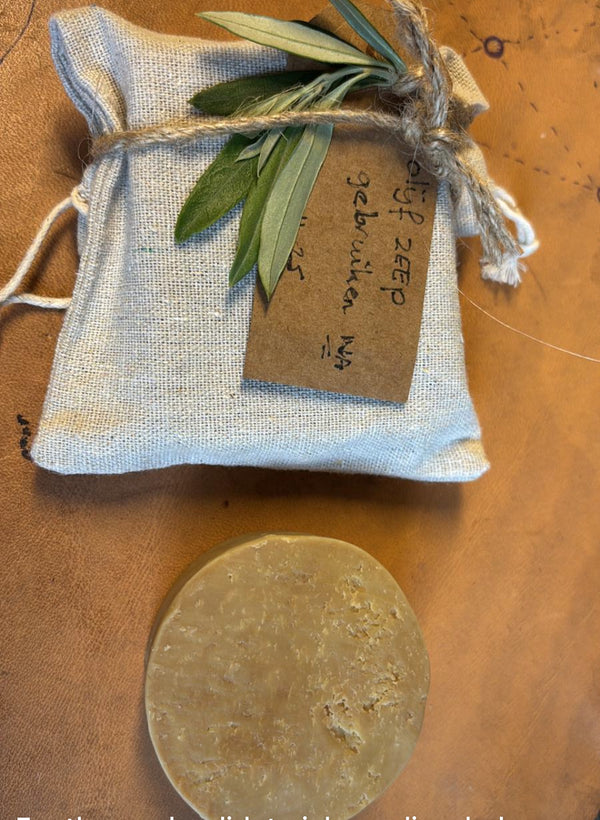
When you receive a new Pueblo leather good, your first instinct might be to condition it. Our advice? Don't. It needs absolutely nothing. For the first year or more, the leather will draw on its own internal oils. Only after extended, heavy use might you notice it looking a bit dry. If that day comes, a very light touch is all that’s needed. We recommend a high-quality, wax-free conditioner like Smith's Leather Balm. Apply a pea-sized amount to a clean cloth, dab it on sparingly, and gently work it in. Over-conditioning is the enemy here; it will flatten the beautiful nap and clog the fibers, permanently altering its feel.
Cleaning and General Maintenance
Life happens. Your leather wallet, watch strap, or bag will encounter dust and daily grime. For most situations, a simple approach is best. A quick, gentle brushing with a soft horsehair brush will dislodge most surface dust and debris. If you encounter a minor spot or spill, act quickly. Use a clean, soft cloth very slightly dampened with water and blot the area gently-never rub. Let it air dry naturally.
The most important rule is what not to do. To protect the integrity and finish of your Pueblo leather, avoid the following at all costs:
- Soaps, detergents, or any household cleaners.
- Harsh chemical-based leather cleaners.
- Excessive water or soaking the leather.
Embrace the small scratches and marks that accumulate over time. They aren't defects; they are the visual story of your journey with a piece of true craftsmanship. Ready to start your own project with this incredible material? You can explore our hand-selected Pueblo leather hides.
Your Journey with Pueblo Leather Begins Here
From its uniquely rustic texture to the rich, personal patina it develops over time, Pueblo is more than just a material-it's a story waiting to be told through your craftsmanship. We've seen how this iconic Italian veg-tan transforms with use and how its versatility makes it a favourite for crafters worldwide. This exceptional quality is a hallmark of the authentic pueblo leather by Carlo Badalassi Tannery Tuscanny, a testament to generations of tradition.
I believe every artisan deserves to work with materials that inspire. That’s why I personally travel to Italy to hand-select our Pueblo hides, ensuring you receive only the finest quality sourced directly from the tannery. And because we believe in supporting every crafter's journey, we offer no minimum order requirements. It’s about real craftsmanship, without compromises.
Ready to feel the difference? Shop our hand-selected Pueblo leather from Badalassi Carlo and start your next project with confidence.
We can't wait to see what you create.
Frequently Asked Questions About Pueblo Leather
Is Pueblo leather considered full-grain?
Yes, absolutely. Pueblo is a premium full-grain leather. Its unique, slightly rustic texture is not created by sanding away the grain layer, but by a special process that gently raises the fibres. This technique preserves the strongest, most durable part of the hide, ensuring your creations will not only last but also develop a beautiful, rich patina over time. It’s pure quality, right from the surface down.
What is the typical thickness of Pueblo leather?
Pueblo leather is typically produced in a thickness of 1.2-1.4mm (around 3-3.5 oz). This versatile weight makes it an ideal choice for a wide range of small to medium-sized leather goods. It’s perfect for crafting items like wallets, cardholders, watch straps, and notebook covers, offering a wonderful balance of structure, flexibility, and a substantial feel without being bulky. It's a crafter's favourite for good reason.
Can you dye or tool Pueblo leather?
We generally advise against dyeing Pueblo. It arrives from the tannery already "struck-through," meaning the dye penetrates the entire hide, resulting in deep, consistent colour. Applying new dye would ruin its signature texture. While light tooling is possible, the fibrous surface doesn't capture crisp, detailed impressions as well as a smooth leather like Buttero. Pueblo’s beauty truly lies in its unique finish and how it patinas naturally.
How does Pueblo compare to other Badalassi Carlo leathers like Minerva or Waxy?
While all are exceptional vegetable-tanned leathers from the same tannery, their finishes are distinct. Minerva has a smooth, supple surface with a visible natural grain. Waxy is similar but infused with waxes for a richer, slightly pull-up effect. The key difference with Pueblo is its unique texture-a deliberately rustic, slightly fuzzy feel that is soft to the touch. All three develop a stunning patina, but Pueblo offers the most dramatic initial texture.
Why is Pueblo leather more expensive than some other veg-tan leathers?
The price of pueblo leather by Carlo Badalassi Tannery Tuscanny reflects its artisanal production process. The unique textured finish is not a simple step; it is achieved by hand-working the leather with specialized machinery, a time-consuming and skillful task. This, combined with the slow, traditional vegetable tanning methods and the use of only the finest shoulder hides, contributes to a higher cost. You are paying for true Italian craftsmanship and uncompromising quality.
Will the fuzzy texture of Pueblo wear off over time?
Yes, and that is a celebrated part of its character. With regular handling and use, the raised fibres on the surface will gradually lie down and smooth out, a process known as burnishing. High-contact areas will become darker, smoother, and develop a beautiful, subtle sheen. This evolution is what creates the famous Pueblo patina, turning your item into a unique piece that tells the story of its use.
Is Pueblo leather water-resistant?
Like most natural vegetable-tanned leathers, Pueblo is not waterproof. It is quite absorbent and can develop spots or darken if exposed to significant amounts of water. While its rich oil content offers some minor resistance, it's best to wipe away any spills immediately. For finished goods that may face the elements, a light coat of a quality leather conditioner or wax can offer a degree of protection.