Pueblo Leather: The Ultimate Artisan's Guide to Badalassi Carlo's Masterpiece
Why would a legendary Italian tannery intentionally distress the surface of its most prestigious hides? It seems counterintuitive until you run your fingers across a fresh panel of Pueblo Leather. That signature, buffed texture isn't just for show; it's the beginning of a story that only gets better with time. You've probably felt that mix of excitement and hesitation when looking at premium Italian skins. It's a significant investment. You don't want to get the thickness wrong or feel forced into buying a massive hide just to try it out.
I understand that pressure. At Hab-To Leather House, we believe every artisan deserves access to the best materials without the stress of high minimum orders. In this guide, I'll walk you through everything you need to know about this Badalassi Carlo masterpiece. You'll learn how that matte surface transforms into a deep, lustrous patina and how to choose the perfect weight for your specific craft. From sourcing small panels to mastering professional edge-finishing, we're going to ensure your next project is nothing short of exceptional.
Key Takeaways
- Understand the unique buffed surface of Pueblo Leather and how it transforms into a rich, lustrous patina through daily use.
- Discover why the Badalassi Carlo heritage and the Tuscan Consortium certification are the gold standards for ethical, sustainable crafting.
- Learn professional studio techniques for cutting and finishing these premium hides to achieve a high-end, artisan look.
- Identify the perfect weights and thicknesses for your specific projects, from slim cardholders to durable carryalls.
- Source genuine Italian hides in small panels without the hassle of high minimum order quantities or wholesale barriers.
What is Pueblo Leather? Understanding the Rustic Italian Icon
Pueblo Leather is a full-grain, vegetable-tanned masterpiece from the world-renowned Badalassi Carlo tannery in Tuscany. It's not your typical smooth hide. When you first hold a panel of Badalassi Pueblo Leather, you'll notice a distinct, rustic appearance that looks almost like suede or sandpaper. This isn't a defect. It's an intentional artistic choice. I've spent years working with these hides, and the smell alone still gets me every time I open a new shipment. It smells rich and earthy, a hallmark of the traditional vacchetta tanning process that uses natural plant tannins instead of harsh chemicals. It feels matte and slightly grippy under your fingertips. It provides a sensory experience that stands apart from standard finished leathers.
The Signature Buffed Surface
The artisans at Badalassi Carlo achieve this look by lightly buffing the grain with a metal ball. This creates a scuffed texture without compromising the structural integrity of the hide. Don't confuse this with cheap distressed leathers. Those often use texture to hide imperfections in lower-grade skins. With Pueblo, the buffing is done on top-tier full-grain hides. This texture makes it incredibly approachable for your first high-end project. Small slips with a tool or accidental fingernail marks disappear into the rustic pattern. You can focus on your stitching rather than worrying about every microscopic scratch. It's a forgiving material that helps you build confidence in your craft.
The Evolution of Patina
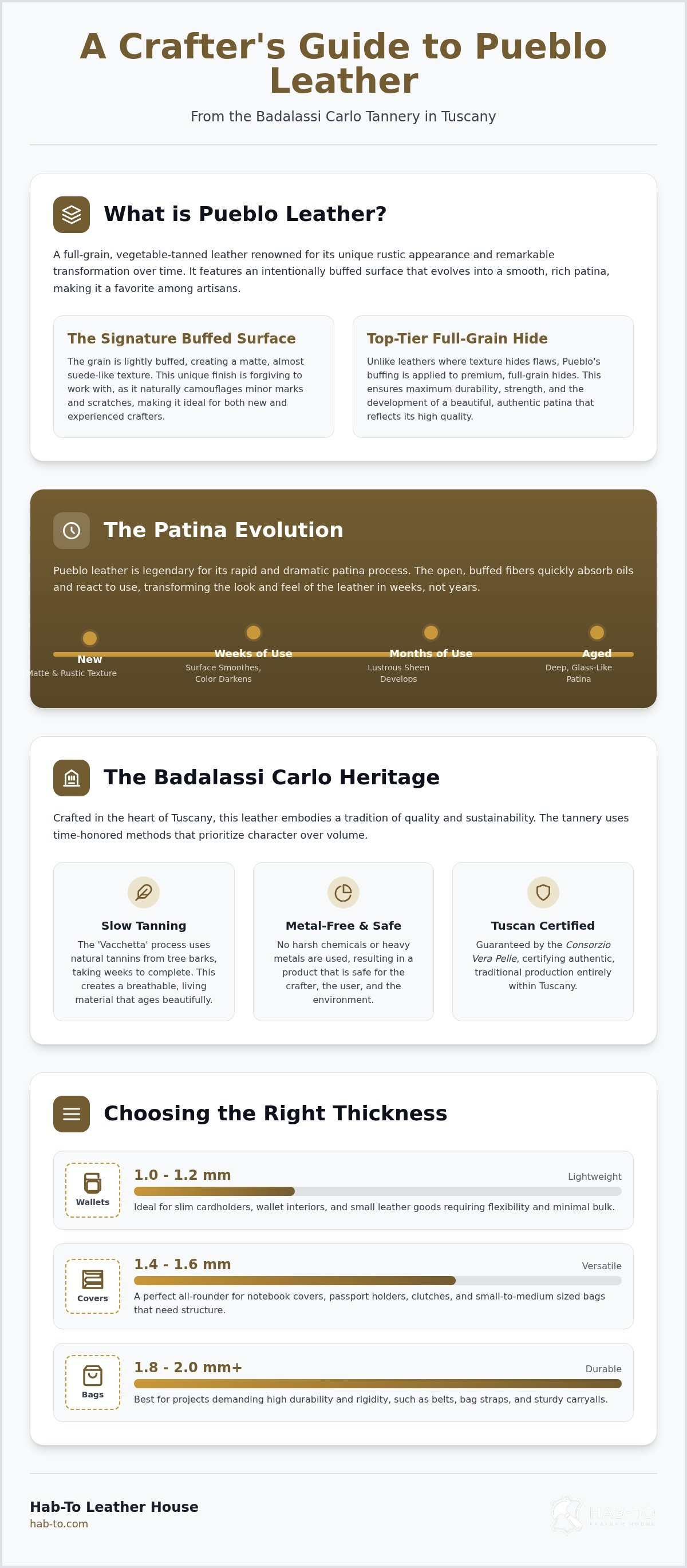
Patina is the natural darkening and smoothing of leather over time. Pueblo is legendary for having one of the fastest and most dramatic patina processes in the world. While smooth leathers like Buttero or Vacchetta take months to change, Pueblo begins its transformation in weeks. The open, buffed fibers are thirsty. They absorb the oils from your hands and the friction from your pocket. Those initial matte scuffs flatten down into a deep, glass-like sheen. A vibrant Giallo yellow will eventually mature into a warm, antique gold. It's a living material that records your history and truly rewards the person who uses it every day.
The Badalassi Carlo Heritage: Why Tuscany’s Tradition Matters
I've always believed that to understand Pueblo Leather, you have to look at the soil it comes from. Conceria Carlo Badalassi sits in the heart of the Tuscan leather district, where the air itself seems to carry the scent of tannin. This isn't a factory mass-producing generic goods. It's a sanctuary where tradition is guarded like a family secret. At Hab-To, our family has been in this trade since 1857. We recognize that same unwavering commitment to quality in Badalassi’s work. They don't take shortcuts. They don't use harsh chemicals. Instead, they rely on the slow, patient rhythm of nature. In a global leather tanning market valued at over $29 billion in 2026, this artisanal approach is a rare find that prioritizes character over volume.
The Art of Slow Tanning
The 'Vacchetta' process is the soul of this tannery. While industrial tanneries might finish a hide in days using chrome, Badalassi takes weeks to achieve perfection. They use natural tannins derived from tree barks like mimosa and chestnut. This isn't just about being eco-friendly; it's about the final character of the hide. Vegetable tanning keeps the fibers alive. It allows the leather to breathe and react to its environment over decades. Because no heavy metals are used, the leather is metal-free and safe for both the craftsman and the end-user. It's a circular process that respects the earth while producing a material that only gets better with age.
Authenticity and the Tuscan Mark
When you work with Pueblo Conceria Carlo Badalassi, you aren't just buying material. You're inheriting a legacy. Each hide undergoes a hand-buffered dyeing process. This struck through method ensures the color penetrates deep into the fibers while maintaining a natural, transparent look. Each piece comes with the guarantee of the Consorzio Vera Pelle Italiana Conciata al Vegetale. This mark is a shield of quality. It proves the leather was produced entirely in Tuscany using traditional, metal-free methods. For your customers, this certificate adds immense perceived value. It tells them their wallet or bag is ethically sourced as a byproduct of the food industry from European farms. In 2026, research shows that over 90% of consumers prioritize this level of transparency and traceability. We take pride in making these exclusive hides accessible to everyone. You don't need a wholesale license to work with the world's best. If you're ready to start your journey with these legendary materials, our curated leather bundles offer a great entry point into the world of Italian excellence.
Mastering the Craft: Working with Pueblo in Your Studio
Working with Pueblo Leather is a visceral experience that requires a bit of preparation. Before you unroll your hide, ensure your cutting mat is free of debris. Those buffed fibers are beautiful, but they can pick up stray dust or oils if you aren't careful. I always suggest using a clean, dedicated workspace for your Italian leathers to keep that matte finish pristine until the patina starts its work. It's about respecting the material from the moment it hits your bench. You want to avoid accidental marks that don't fit the natural evolution of the piece.
Precision starts with your blade. A sharp knife is non-negotiable for Pueblo. Because the surface is already textured, a dull edge will drag and create messy, feathered cuts that ruin the look of your project. You want a clean, crisp line that showcases the grain integrity. Whether you are working with a thin 1.4mm panel for a wallet interior or a heavy 2.4mm shoulder for a bag, let the weight of the tool do the work. Don't force the cut; let the steel glide through the fibers to maintain a professional finish.
Choosing the right thickness is your next critical decision. For minimalist cardholders, a 1.2mm to 1.4mm weight provides enough strength without adding unnecessary bulk. If you are building a structured tote or a rugged field notes cover, the 2.2mm to 2.4mm range offers the durability you need. Managing these weights correctly ensures your final piece feels balanced and professional. It prevents your work from feeling flimsy or overbuilt, which is a common mistake for those transitioning from thinner skins.
What You Will Need
- Tokonole: This is the industry standard for achieving that coveted glass-like edge finish.
- Professional Edge Bevelers: Essential for removing sharp corners and preparing the edge for a smooth, rounded profile.
- Professional pricking irons: These are essential for creating clean, consistent stitch spacing that matches the quality of the hide.
- Ecostick 1804: I recommend this water-based, eco-friendly adhesive because it creates a strong bond without the harsh fumes of traditional cements.
- Starter Bundle: This is a curated selection of essentials for those just beginning their journey with premium Italian hides.
Professional Edge Finishing Steps
- Bevel the edges: Use a sharp edge beveler to remove the sharp corner and create a rounded profile. This prevents the edges from mushrooming over time and creates a comfortable feel in the hand.
- Apply Tokonole: Rub a small amount sparingly onto the edges. You can also apply it to the flesh side of the leather if you want a smoother, more finished interior for unlined projects.
- Burnish with friction: Use a wooden slicker and brisk, repetitive movements. You'll hear the leather sing as it heats up and compresses into a dark, durable shine.
Pueblo's high oil content makes it one of the easiest leathers to burnish. You don't need excessive pressure. The heat from light, fast friction is enough to activate the waxes and create a durable, glossy edge that perfectly complements the rustic face of the hide. It is a satisfying process that brings the whole project together.
Choosing the Right Pueblo for Your Project
Selecting the right weight of Pueblo Leather is the difference between a project that feels like a hobby and one that feels like a professional masterpiece. This leather is widely considered the king of minimalist wallets. Its structural stability allows you to create incredibly thin cardholders that don't lose their shape over time. Because the leather is so rich in oils, the constant friction from being pulled in and out of a pocket accelerates that beautiful patina. It's the perfect material for an everyday carry item that needs to feel premium from the very first day.
For watchstraps, the flexibility of the Badalassi finish is a significant advantage. It wraps comfortably around the wrist without the stiff, painful break-in period common with other vegetable-tanned hides. If you're a stationery enthusiast, using this leather for a journal cover creates a true family heirloom. The scuffed surface picks up the story of your travels and daily thoughts, eventually smoothing out into a dark, lustrous shield that protects your notes for decades. It's a material that truly grows with the user.
Thickness and Weight Guide
- 1.0-1.2mm: This is the ideal weight for linings, card pockets, or delicate watchstraps where you need strength without excessive bulk.
- 1.8-2.0mm: This is the sweet spot for unlined wallets, small clutches, or field note covers that need a bit more body and presence.
- 2.2mm+: Essential for belts, bag straps, or heavy-duty covers. If you're planning a larger build, I recommend reading our Artisan’s Guide to Premium Leather for Handbags for deeper insights on structural integrity.
Project Inspiration
One of the best technical features of this leather is the struck-through dyeing process. The color penetrates all the way through the hide. This means you don't actually need edge paint to achieve a high-end look. A simple burnish with Tokonole will reveal a beautiful, dark edge that matches the face perfectly. To elevate the aesthetic, I always recommend pairing the rustic texture of Pueblo with solid brass hardware. The contrast between the matte, textured leather and the golden gleam of brass creates a timeless look that never goes out of style.
Explore our premium leather collection for your next bag project
Sourcing Premium Pueblo Without the Wholesale Hurdles
Finding high-end Italian hides used to be a frustrating gatekeeping exercise. Most wholesalers require you to buy entire hides or meet massive minimum order quantities that just don't make sense for a small studio. At Hab-To, we've decided to do things differently. I believe that elite materials like Pueblo Leather should be accessible to every maker, whether you're a seasoned professional or a weekend hobbyist. By removing those traditional wholesale hurdles, we allow you to focus on the quality of your craft rather than the size of your storage space. You shouldn't have to be a major brand to work with the world's finest vegetable-tanned leather.
Our location in the heart of Amsterdam provides a strategic advantage for makers across the continent. Sourcing directly from our European warehouse means you avoid the unpredictable customs delays and exorbitant shipping fees that often come with ordering from overseas. We handle the complex logistics of the Tuscan tanneries so you can get to work faster. It's a more efficient, sustainable way to build your supply chain. You get the same premium quality found in luxury boutiques, but with the convenience of a local partner who understands your needs.
Small Panels for Big Ideas
Buying pre-cut panels is the ultimate way to prototype new designs without the risk of ruining an expensive full shoulder. It significantly reduces waste for micro-brands and allows you to test different colors before committing to a larger project. If you're working on a specific cardholder or a small accessory, our Badalassi Pueblo Leather Panels give you exactly what you need with zero leftover scrap. This flexibility is essential for artisans who want to maintain a diverse inventory without tying up all their capital in raw materials.
Get Expert Advice
I'm not just here to ship boxes; I want to ensure you have the right material for your specific vision. That's why we offer free 1-on-1 video consultations where we can look at the hides together and discuss your specific project requirements. If you find yourself in the Netherlands, you are always welcome to make an appointment and visit our showroom in Amsterdam to touch and feel the textures in person. Our deep connection to the trade is detailed in our Hab-To Heritage, which explains how 160 years of family experience translates into better support for your own craft. We are more than a supplier; we are your partners in quality.
Elevate Your Craft with a Tuscan Legend
Mastering Pueblo Leather is more than just learning a technique; it's about entering a tradition that spans generations. We've explored how the unique buffed surface of this Badalassi Carlo icon transforms through daily use, creating a patina that is entirely unique to the owner. By choosing the right weight for your project and using professional tools like Tokonole, you can turn a simple panel into a professional-grade masterpiece that lasts a lifetime.
At Hab-To Leather House, we bring over 160 years of family leather expertise directly to your workbench. Our direct partnership with Italian tanneries ensures you receive authentic, high-quality hides without the barrier of wholesale minimum order quantities. If you ever feel stuck or need help choosing the right color for your next project, remember that I offer free one-on-one video consultations to help you navigate our collection and find the perfect fit for your vision.
Your journey into the world of premium vegetable-tanned leather starts with a single, precise cut. I can't wait to see what you create with these extraordinary Italian hides. Keep crafting with passion and never settle for anything less than the best materials.
Frequently Asked Questions
Is Pueblo leather waterproof?
Pueblo leather is not waterproof because its buffed, open-fiber structure is highly absorbent. Spills can soak in quickly and leave water spots if they aren't blotted away immediately. While the natural oils from the tanning process offer a small degree of resistance, you should avoid heavy rain. If your project does get wet, let it air dry slowly at room temperature. Never use a hair dryer or radiator, as extreme heat can make the fibers brittle.
How do I clean and maintain Badalassi Pueblo leather?
Cleaning this hide requires a light touch and minimal products. I suggest using a soft horsehair brush to sweep away dust from the textured surface regularly. You should avoid heavy creams or oils during the first few months of use. The hide is already saturated with natural fats from the tannery. If the surface feels dry after a year of use, a tiny amount of olive-oil-based care product will restore suppleness without clogging the grain.
Does Pueblo leather scratch easily?
Yes, it marks easily, but that is part of its unique charm. Because the surface is intentionally scuffed, light fingernail marks or tool slips usually disappear with a quick rub of your thumb. Your body heat and natural oils help redistribute the waxes within the hide to heal the mark. Over time, these small scratches contribute to the rich, lived-in character that defines high-end Italian leather and makes every piece unique.
What is the difference between Pueblo and Buttero leather?
The primary difference is the texture and the speed of the patina. Buttero is known for its smooth, polished grain and firm structure, making it ideal for sleek, formal goods. Pueblo Leather has a rustic, matte finish and a slightly more supple feel right off the bench. While both are full-grain vegetable-tanned hides from Tuscany, Pueblo patinas much faster, transforming from a dry, sandy texture to a dark, waxy sheen in just weeks.
Can I use Pueblo leather for laser engraving?
Laser engraving works beautifully on this material. The buffed surface provides a high-contrast background that makes intricate logos or text pop. Since it is strictly vegetable-tanned and metal-free, it is safe for your machine and won't release toxic chemicals. I always recommend doing a quick test on a scrap panel to dial in your power settings, as the high oil content can affect the burn depth compared to drier leathers.
Why is my Pueblo leather changing colour so quickly?
Your leather is changing color because the buffed fibers are incredibly receptive to the environment. They absorb sunlight and oils from your hands much faster than smooth, finished leathers. This rapid evolution is a hallmark of the Badalassi Carlo tanning process. It isn't fading or failing; it is maturing. Within a few months of daily carry, the matte surface will flatten out and darken into a deep, lustrous finish.
What is the best thread to use with Pueblo leather?
I recommend using a bonded polyester or linen thread in the 0.6mm to 0.8mm range. This leather has a bold, rustic presence that pairs well with a visible, traditional saddle stitch. A slightly thicker thread complements the textured grain and ensures the seams are as durable as the hide itself. Whether you choose a matching tone or a high-contrast color, ensure your thread is high-quality to prevent fraying over years of use.
Do I need to line Pueblo leather for a wallet?
You don't need to line a wallet made from this leather. The flesh side is pasted and finished very cleanly at the tannery, so it won't shed or feel fuzzy inside your pockets. Many minimalist designs rely on a single layer of 1.2mm or 1.4mm thickness to keep the profile slim. If you want a more structured, high-end feel, you can add a lining, but the raw, authentic interior is part of the material's appeal.
Disclaimer
All our blog articles are made for information purposes only we dont take responsability for any content from third parties.