

Slow craft and the lasting value of quality leather
A leather project can be finished quickly, but speed alone doesn’t make it valuable. Explaining the value of slow craft means looking beyond the finished surface to the care behind each choice: the leather selected, the way it’s worked, and the attention given to details that affect how it wears over time.
It’s natural to notice a leather piece’s appearance first. But its quality also depends on the material’s character and the skill and patience used to shape it. Slow craft makes room for considered work instead of shortcuts, while recognizing that time alone doesn’t guarantee quality.
Here, you’ll see how careful leatherworking can add lasting value, from choosing suitable leather to thinking about durability, repair, and the experience of making. We’ll also look at what slow craft means in practice, helping you understand why a considered approach matters when selecting leather and planning a project.
Key Takeaways
- Look beyond appearance to understand how material choices and careful making shape leather’s lasting value.
- Consider durability and repairability when judging whether a handcrafted object is made to serve over time.
- See how practiced skills, thoughtful design, and attention to the making process distinguish slow craft.
- Connect your project goals with suitable leather, hardware, and tools to make considered choices from the start.
- Explore crafting bundles as a practical next step when you’re ready to bring a leatherworking project together.
Explaining the value of slow craft
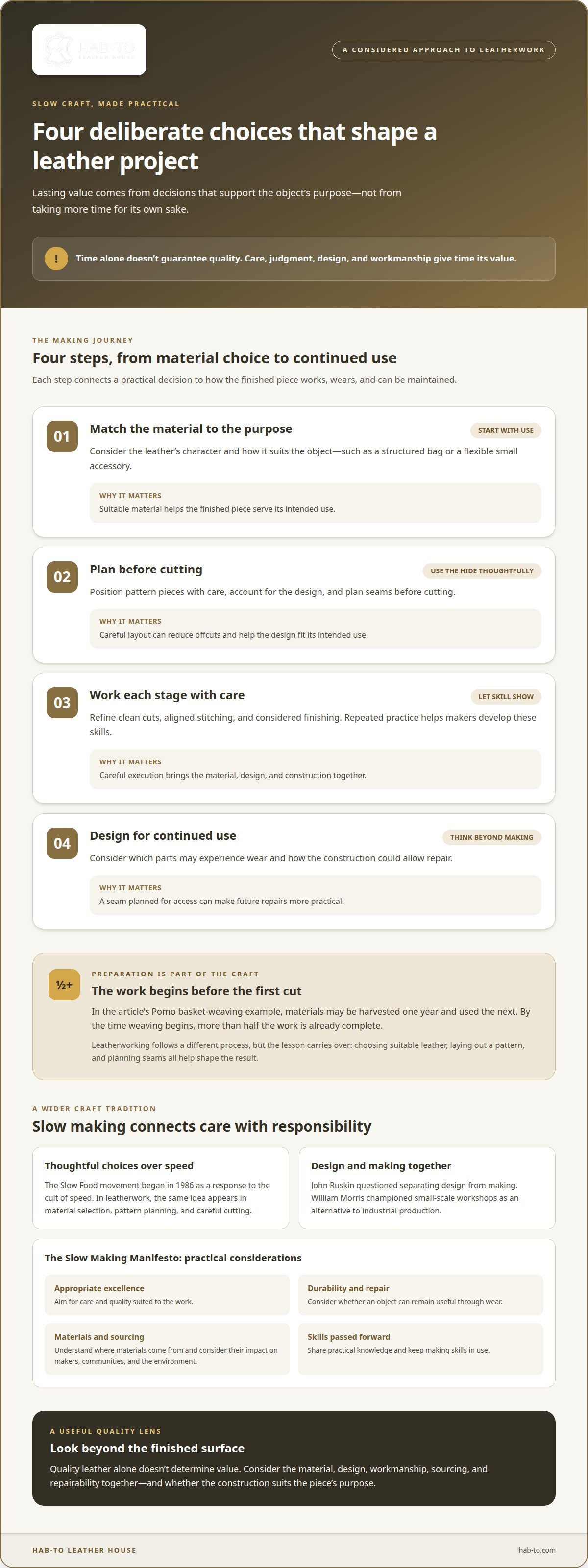
Slow craft values thoughtful decisions over speed for its own sake. Its modern story includes the Slow Food movement, which began in 1986 as a response to the cult of speed. In leatherworking, that principle can be seen in practical choices: selecting hide for a project, planning a pattern, and refining each cut. Time matters when it supports care and judgment. Working slowly without purpose, however, doesn’t make an item better.
The idea has roots in the Arts and Crafts movement. John Ruskin argued that separating design from making harmed society and the beauty of objects. William Morris championed small-scale workshops as an alternative to industrial production. Their ideas offer a useful lens for leatherwork: a maker who considers a wallet’s shape, material, and construction together can adapt the design as work progresses. The result reflects connected decisions, not just a finished appearance.
The Slow Making Manifesto puts these values into practice. It calls for appropriate excellence, durable and repairable objects, and materials and processes that respect makers, communities, and the environment. It also values passing on skills, understanding where materials come from, and finding pleasure in making. These principles don’t mean every handmade item is automatically ethical or long-lasting. Instead, they give makers practical questions to consider, from how materials are sourced to whether a worn seam can be repaired.
A Pomo basket weaver offers a vivid example of preparation as part of craft. Materials may be harvested one year and used the next. By the time weaving begins, more than half the work is already complete. Leatherworking follows a different process, but the lesson applies: preparation shapes the result. Choosing suitable leather, laying out a pattern carefully, and planning seams before cutting can help avoid waste and make the finished piece better suited to its intended use.
In a leather project, slow craft can be understood through a few deliberate steps:
- Match material to purpose. Consider how the leather’s character suits the object, such as a structured bag or a flexible small accessory.
- Plan before cutting. Position pattern pieces thoughtfully to use the hide well and account for the design.
- Work each stage with care. Clean cuts, aligned stitching, and considered finishing contribute to a coherent result.
- Design for continued use. Think about which parts may experience wear and how construction could allow repair.
Each step adds value through intention, not simply extra hours. A carefully placed pattern can reduce offcuts, while a seam planned for access can make future repairs more practical. These choices shape how a leather object functions and how easily it can be maintained. They also explain why two pieces made from similar materials can differ: planning and execution influence the finished construction.
Slow craft also respects the skill involved in repeated tasks. Cutting a clean edge and stitching evenly take practice, and every project gives the maker a chance to refine technique. Sharing skills keeps knowledge in use rather than treating craft as a hidden trick. Morris’s workshop ideal and the Manifesto’s emphasis on passing skills forward meet here: making can preserve practical knowledge while creating an object for everyday life.
A useful way of explaining the value of slow craft is to consider the whole journey, from choosing materials to maintaining the finished piece. Quality leather alone doesn’t determine value. Design, workmanship, sourcing, and repairability all matter. A considered process makes those decisions visible. It asks not only how quickly an object can be made, but whether its materials and construction suit its purpose and whether it can remain useful through wear.
Each step gains meaning when guided by purpose. In “In Praise of Slow,” Carl Honore explores the worldwide Slow movement and urges greater attention to daily life, human relationships, and the quality of experience. This perspective helps explain why making is about more than an item's appearance: it also involves the care and choices behind its creation.
William Morris argued for a return to a system of manufacture based on small-scale workshops. The Slow Making Manifesto calls for striving for appropriate excellence in the making process, and for fostering, using, and passing on skills that enhance the making process. It also calls for knowing where materials come from and ensuring they respect the country and communities that produced or harvested them and come from sustainable sources. A Pomo basket weaver may harvest materials one year and use them the next year.
Hab-To Leather House: Crafting Bundles
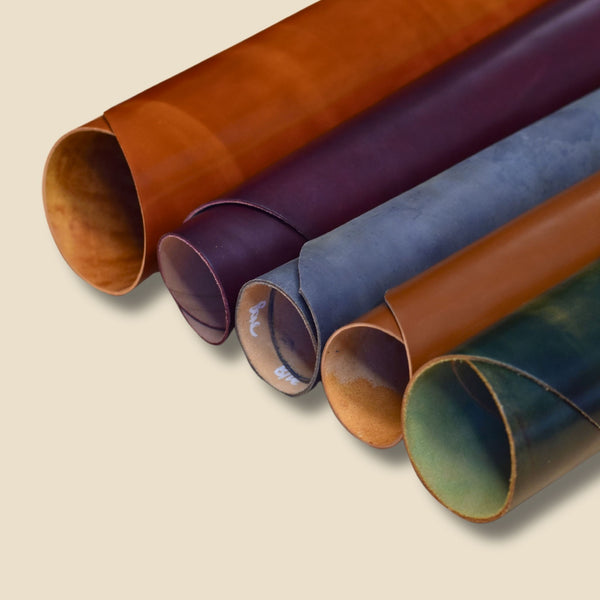
Hab-To Leather House offers crafting bundles as a practical next step when you’re ready to bring a leather project together. Pair your project plan with suitable vegetable tanned leather, leather hardware, and leatherworking tools, considering how each choice supports the design and intended use. A bundle can help you gather materials for making, while the right leather and components give you room to focus on careful construction. Choose this route when you have a project in mind and want to explore materials and tools in one place.
If you’d like to discuss your project, contact Hab-To Leather House.
Put Thoughtful Craft Into Practice
Your next project is a chance to turn careful thinking into a considered choice. Hab-To Leather House offers vegetable-tanned leather, leather hardware, and leatherworking tools to support your work. Begin with your project’s purpose, then choose materials and tools suited to the piece you want to make.
For your next project: Browse crafting bundles for leatherworking materials and tools.
To keep learning, explore leatherworking masterclasses for more inspiration as you develop your skills.
Choose your materials with intention, and enjoy making something by hand.
Disclaimer
All our blog articles are made for information purposes only we dont take responsability for any content from third parties.