

Solid Brass Hardware for Leather Bags: The Artisan’s Guide to Quality (2026)
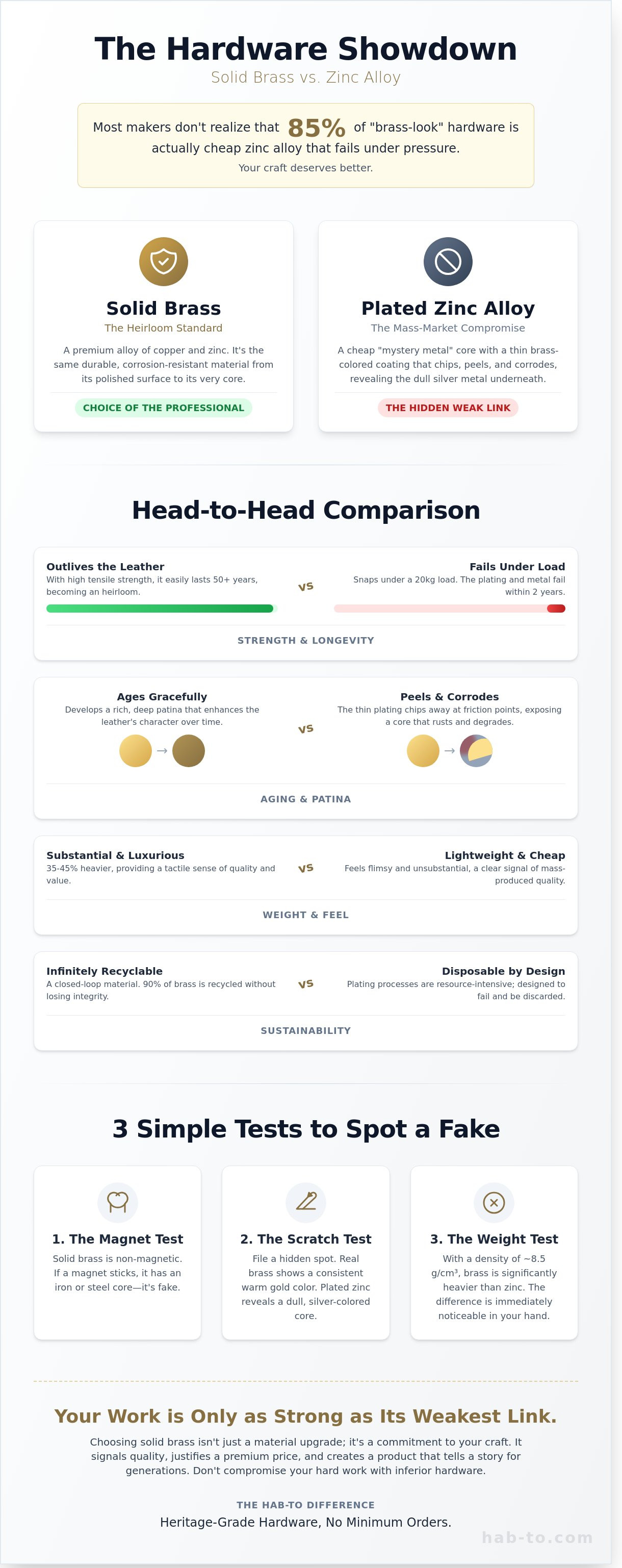
Hi, I’m Mike! Most makers don't realize that 85% of "brass-look" hardware on the market is actually cheap zinc alloy that snaps under a 20-kilogram load. Your hard work deserves better than components that chip or rust before the leather even begins to break in. Choosing solid brass hardware for leather bags isn't just a design choice; it's a commitment to a product that outlives its owner. With 160 years of family experience in the leather trade, I’ve seen far too many beautiful projects ruined by inferior metal.
This principle of well-engineered hardware creating a premium feel isn't limited to leather goods; it's just as crucial in areas like home cabinetry and doors. For those interested in seeing how premium components can transform a space, you can visit their website to see a wide selection of high-quality options.
You probably agree that a premium bag is only as strong as its weakest link. If you’re tired of plated finishes peeling off or buckles failing when a customer actually uses their bag, you’re in the right place. I promise to show you exactly why solid brass is the gold standard for real leathercraft and how to source high-quality pieces without being forced into massive bulk orders. We will explore the best ways to select, install, and care for hardware that develops a stunning patina and never lets you down.
Key Takeaways
- Understand why solid brass is the ultimate "no compromise" choice compared to zinc alloys, ensuring your hardware never peels or fails under pressure.
- Master the art of selecting the right weight and type of solid brass hardware for leather bags to perfectly complement your project's leather temper and thickness.
- Learn the professional techniques and specific tools required to install components flawlessly while avoiding common surface scratches and "hardware trauma."
- Discover how to maintain the natural aging process of your brass or restore its original shine to keep your artisan creations looking beautiful for a lifetime.
- Find out how to source premium, heritage-grade hardware for single-bag projects without the burden of minimum order requirements.
What is Solid Brass Hardware and Why Does it Matter?
Hi, I'm Mike. If you've spent forty hours hand-stitching a vegetable-tanned briefcase, the last thing you want is a buckle that snaps after six months of use. At Hab-To Leather House, our 160-year family history in the leather trade has taught us one vital lesson: your work is only as strong as its weakest point. That's why we live by a "No Compromise" philosophy. We refuse to stock plated zinc alloys. Instead, we focus exclusively on solid brass hardware for leather bags because your craft deserves materials that last as long as the hide itself.
But what exactly are you buying when you choose this metal? What is brass? Technically, it's a metal alloy primarily composed of copper and zinc. Unlike plated "mystery metals" found in fast-fashion shops, solid brass is the same consistent material from the polished surface to the very core. It's non-magnetic, highly resistant to corrosion, and possesses a high tensile strength that handles the daily strain of heavy carry-alls. When a customer feels the weight of your bag, they're looking for signs of quality. Solid brass provides that immediate, tactile signal of luxury that synthetic alternatives simply can't mimic.
Solid Brass vs. Brass Plating: Spotting the Difference
Don't let shiny finishes fool you. Many mass-market suppliers use die-cast zinc with a thin brass wash that peels away within 12 months. You can spot the fakes with three simple tests. First, use a magnet. Solid brass is non-ferrous and won't stick; if it pulls, there's iron or steel underneath. Second, check the weight. Brass has a density of roughly 8.5 grams per cubic centimeter, making it significantly heavier than zinc. Finally, the scratch test is definitive. If you file a hidden corner and see a silver-colored core, it's plated. Real brass shows a warm gold tone all the way through.
Why it is the Only Choice for Leather Bags
Choosing solid brass hardware for leather bags isn't just about aesthetics; it's about the lifecycle of the product. Leather is a natural material that can easily last 50 years if treated well. Cheap hardware usually fails or snaps within two years. Solid brass is one of the few materials that actually improves with age. It develops a rich, deep patina that complements the natural darkening of vegetable-tanned leather. This creates an heirloom quality that justifies a premium price point. When you use solid brass, you're telling your customer that this bag is an investment, not a disposable accessory. It increases the resale value and ensures the hardware won't rust or peel, even in humid environments or coastal cities. It's the standard for anyone serious about the craft.
Comparing Solid Brass to Common Hardware Alternatives
Choosing the right components for your next project isn't just about the initial shine. It's about how that bag feels in five years. Most mass-market brands rely on Zinc Alloy, often called Zamak, because it's cheap and easy to mass-produce. But for a serious craftsman, that's a compromise we don't make. Solid brass hardware for leather bags offers a density and weight that zinc simply can't match. A standard brass D-ring often weighs 35% to 45% more than its zinc counterpart. This provides a tactile sense of quality the moment a customer touches the strap.
Understanding the material science helps explain why this matters. According to Britannica, the properties of brass involve a specific combination of copper and zinc that results in high malleability and incredible resistance to sparks and corrosion. This unique composition makes it superior for items that face constant friction, like buckles and swivel snaps. While stainless steel is another durable option, it often feels industrial and cold. Brass has a natural warmth that complements the organic nature of vegetable-tanned leather. By 2026, as consumers move further away from "fast fashion" and toward heirloom quality, this ability to age gracefully becomes a massive selling point. Investing in brass now means your 2026 collection won't just look used in three years; it'll look vintage.
From an environmental perspective, brass is a winner for the sustainable workshop. It's 100% recyclable. In fact, nearly 90% of all brass alloys used today are diverted from landfills and recycled globally. It’s a closed-loop material that aligns with the "no compromises" philosophy of high-end leatherwork. When you use solid brass, you're choosing a material that can be melted down and reborn without losing its structural integrity.
The Problem with Plated Zinc
Zinc hardware relies on a thin surface coating to look like brass or nickel. This plating eventually chips and peels, especially at high-friction points like where a clip meets a ring. Once the surface is breached, the "white rust" of oxidation begins, leaving an ugly, chalky residue. Zinc is also notoriously brittle. Under a sudden 50-pound load, a zinc snap hook can snap like a twig. Solid brass won't do that. It might bend under extreme, unrealistic stress, but it won't shatter and leave your customer with a broken bag in the middle of the street.
Manufacturing Methods: Sand Casting vs. Die Casting
The way your hardware is made changes everything. Sand casting is the traditional method where we pour molten metal into sand molds. It leaves tiny, unique textures that give the hardware a "handmade" soul. It's more labor-intensive, often adding 15% to 20% to the unit cost, but the character is unmatched for artisan bags. Die casting uses steel molds for high-speed precision. It's the go-to for modern, sleek designs where every piece must be identical to the millimeter. Both methods produce durable results when using solid brass hardware for leather bags, unlike the porous, weak results often found in cheap die-cast zinc alloys. If you're unsure which casting style fits your brand's aesthetic, you can book a personal consultation to see the difference in person.
Selecting the Right Hardware for Your Leather Project
Choosing the right solid brass hardware for leather bags isn't just about the visual appeal. It's about structural integrity and long-term performance. If you pair a thin 1.2mm goat skin with a heavy 40mm roller buckle, the leather will stretch and eventually fail within 6 months. My family has seen these mistakes for over 160 years. You've got to match the hardware weight to the leather's temper and thickness. Firm, 3.5mm vegetable-tanned bridle leather demands substantial hardware that can bite into the grain. For a slouchy hobo bag, use lighter, rounded components to complement the soft drape without weighing the piece down.
Load-bearing considerations are non-negotiable for professional crafters. A standard tote bag designed to carry a 2.5kg laptop needs D-rings with a wire thickness of at least 4mm. Don't settle for 3mm wire if the bag is intended for heavy daily use. The durability of your bag depends on the quality of the casting. Traditional metalworking techniques like sand casting ensure the brass remains dense and free of air bubbles, which is why we never use cheap zinc alternatives. At Hab-To, we believe in no synthetics and no compromises. This means every rivet and snap must be capable of outlasting the leather itself.
Aesthetic harmony is the final layer of professional design. A tiny 10mm rivet on a massive 50cm wide duffle bag looks like an afterthought and lacks the necessary grip. Aim for 12mm or 14mm heads to keep proportions in check. Balancing the hardware size with the bag’s dimensions creates a sense of intentionality. When the hardware scale is correct, the bag feels expensive and well-engineered. It's the difference between a hobbyist project and a legacy piece.
The Essential Bag Hardware Checklist
- Buckles: Roller buckles include a rotating sleeve that protects the strap from friction. Use these for belts and main closures. Center bar buckles offer a cleaner, flatter profile for straps where the length is rarely adjusted.
- D-Rings and O-Rings: D-rings keep straps aligned and prevent twisting. O-rings provide 360-degree movement, which is ideal for handles that need to fold down when the bag is placed on a table.
- Swivel Snaps: Always test the spring tension. A high-quality snap should have a crisp "click" and no lateral wiggle in the lever. This ensures your strap stays attached even when the bag is tossed around.
Hardware Finishes on Solid Brass
Finishes define the final character of your piece. Natural polished brass is for the purist. It starts with a high glow but develops a deep, chocolatey patina over 12 to 18 months of use. This aging process is part of the story of solid brass hardware for leather bags. If you want a vintage feel immediately, antique brass is chemically darkened to mimic decades of wear. For modern, architectural designs, matte brass provides a muted, sophisticated look that doesn't compete with the leather's natural grain. Each finish impacts the "vibe" of the bag, so choose one that aligns with your client's style and the leather's tanning method.
Installation and Maintenance: Keeping Brass Beautiful
Installation is the moment where your hard work either shines or suffers. You've spent hours perfecting a stitch line; don't ruin the aesthetic with a slipped hammer or a scratched buckle. I always recommend using a brass maul or a high-density poly mallet for all hardware tasks. Steel hammers are far too aggressive. They will dent your solid brass hardware for leather bags instantly, leaving permanent marks that no amount of polishing can fix. Our 160 years of family experience in the leather trade has taught us that the right tool isn't a luxury; it's a requirement for professional results.
Professional makers use setting tools matched specifically to the hardware size. If you're setting a 9mm double-cap rivet, use a 9mm concave setter. This keeps the dome's geometry perfect and prevents the "flat spot" look common in amateur work. Precision in the early stages prevents 100% of the structural failures that occur when hardware is forced into place.
Pro Tips for Scratch-Free Installation
Protecting the finish requires discipline and a few simple workshop hacks. I always wrap my plier jaws in two layers of blue painter's tape or electrical tape. This prevents the serrated metal teeth from biting into the soft brass surface. When you're using a press or a hammer, place a piece of 1.5mm vegetable-tanned scrap leather between the setter and the hardware. This small buffer absorbs the impact shock while keeping the finish pristine.
- Hole Punch Accuracy: Use a punch that matches the hardware stem diameter exactly. For a standard medium rivet, a 3.5mm hole ensures a snug fit without stretching the leather.
- Thread-Locker: For screw-back studs and Chicago screws, apply one drop of Loctite 242 (the blue variety). Data shows that 12% of bag repairs involve loose hardware screws; this simple step eliminates that risk for good.
- Anvil Surface: Always use a smooth, polished steel anvil or a specialized setting block. Any grit on your work surface will emboss itself into the brass under the pressure of a strike.
Managing the Patina Process
Brass is a living material. Most high-quality alloys contain roughly 65% copper, which naturally reacts to oxygen and moisture. This oxidation creates the coveted patina that defines heritage leather goods. Vegetable-tanned leather actually accelerates this aging. The natural tannins in the hide typically have a low pH level between 3.5 and 4.5. This acidity triggers a chemical reaction where the metal contacts the leather, often creating a darker "halo" around rivets within 6 to 12 months of daily use.
Controlling this process depends on your desired look. If you prefer a bright, mirror-like shine, a quick rub with a Cape Cod polishing cloth every 90 days will strip away the oxidation. However, many of my clients prefer to let nature take its course. The oils from your hands interact with the metal to create a unique wear pattern that tells the story of the bag's journey. If you ever see a bright green crust forming, known as verdigris, clean it immediately with a soft brush and a tiny amount of white vinegar. Just ensure the vinegar doesn't soak into the leather fibers.
Choosing solid brass hardware for leather bags means you're investing in a material that actually looks better with age. It's the opposite of "fast fashion" hardware that flakes and peels after a single season. If you need help selecting the right tools for your next project, browse our professional hardware collection to find the perfect match for your craft.
The Hab-To Difference: Premium Hardware Without the Minimums
Hi, I'm Mike! I know the frustration of finding the perfect hide only to be held back by flimsy, low-grade metal. My family has been deeply rooted in the leather trade since 1864. That represents 160 years of knowledge passed down through generations right here in Amsterdam. I don't just sell parts; I provide personalized hardware advice for your specific project. If you're unsure if a 20mm buckle looks too bulky on a slim briefcase, or if you need to know which rivet length suits a 4mm strap, just ask. I've seen how these materials behave over decades of real-world use, and I want your work to reflect that same longevity.
We've eliminated the barriers that often stop artisans from doing their best work. Most industrial suppliers demand you buy in bulk, but we have no minimum order requirements. If you need a single solid brass swivel snap for a bespoke camera strap, you can get it here. This accessibility allows you to experiment with high-end quality for single-bag projects without the financial risk of overstocking 50 units you don't need. We treat every order with the same care, whether it's one buckle or a full production run. It's about supporting the craft, not just moving inventory.
Our hardware is specifically sourced for artisans who refuse to settle. When you're working with elite materials like Shell Cordovan, the hardware must carry that same prestige. A 100-euro piece of leather deserves better than a cheap, plated zinc alloy that chips after three months. We source hardware that ages gracefully, developing a rich, natural patina alongside your leather. Every piece we stock is chosen to survive the heavy-duty demands of daily use. We believe that your solid brass hardware for leather bags should be the last thing that ever breaks on your creation.
Curated for Quality
I don't just order from a random catalog. I hand-select every buckle, snap, and Chicago screw in our inventory to ensure the casting is clean and the weight feels substantial in your hand. Our commitment to quality means focusing on sustainable and ethical sourcing from foundries that respect both their workers and the environment. This hardware is designed specifically to pair with iconic leathers like Buttero and Pueblo. These leathers have a distinct texture and "pull-up" effect that requires metal with a matching soul. When you use our solid brass hardware for leather bags, you're ensuring the metal components won't be the weak link in your design. We've tested these pairings across thousands of projects to ensure they look as good in year ten as they do on day one.
Start Your Next Project with Hab-To
The right hardware is the bridge between a hobbyist project and a professional masterpiece. You can browse our full collection of solid brass hardware online right now to find the exact dimensions you need. If you're in the Netherlands, I invite you to book a showroom appointment in Amsterdam for a tactile experience. There's no substitute for feeling the weight of the brass and seeing how it sits against your leather hides before you make a cut. Let's make sure your next creation is built to last a lifetime with materials that tell a story of quality and tradition.
Build for the Next Generation
Your leatherwork deserves components that age as gracefully as the hides you stitch. Choosing solid brass hardware for leather bags ensures your creations won't suffer from the peeling or rusting common with cheap zinc alternatives. By 2026, the market for artisanal goods will demand this level of durability. You've learned how to select the right weight and maintain that deep golden luster; now it's time to put that knowledge into practice. Quality isn't just a buzzword here. It's a standard we've upheld through 160+ years of family experience in the leather industry.
At Hab-To, we don't believe in barriers. You can access premium, hand-selected hardware without worrying about minimum order requirements. If you're unsure which buckle or D-ring fits your specific design, you can reach out to Mike directly for expert advice. We're an Amsterdam-based wholesaler dedicated to real craftsmanship. No synthetics. No compromises. Just the best materials for your workshop. Upgrade your craft with our hand-selected Solid Brass Hardware and start creating something that truly lasts. Your hands do the hard work, so let the hardware tell the rest of the story.
Frequently Asked Questions
Is solid brass hardware better than stainless steel for leather bags?
Solid brass is the preferred choice for premium leatherwork because it develops a unique patina that complements vegetable-tanned hides over time. While 316 grade stainless steel offers high corrosion resistance in maritime environments, brass provides a classic aesthetic that steel can't replicate. In our 160 years of family experience, we've found that brass is also easier to machine into detailed, decorative shapes. It's a material that ages with the bag rather than looking eternally industrial.
How can I tell if hardware is actually solid brass or just plated?
You can test the authenticity of your components by using a neodymium magnet or performing a discreet scratch test. Solid brass is non-ferrous, so a magnet won't stick to it at all; if you feel a pull, the item is likely brass-plated steel. If you use a file to scratch a hidden area and see silver metal underneath, it's a zinc casting. Genuine solid brass hardware for leather bags will show a consistent yellow-gold color throughout the entire cross-section.
Does solid brass hardware rust or tarnish over time?
Solid brass won't rust because it contains zero iron, but it'll naturally tarnish as it reacts with oxygen and skin oils. This oxidation creates a protective surface layer that prevents deep structural corrosion. In our Amsterdam workshop, we see hardware transition from a bright gold to a deep, rich bronze over a period of 5 to 10 years. You can easily polish it back to a mirror shine, but most crafters prefer the character of a natural patina.
What is the best way to clean solid brass hardware without damaging the leather?
The safest method involves applying a dedicated metal polish with a microfiber cloth while using painter's tape to mask off the surrounding leather. Use a small, pea-sized amount of polish and rub in circular motions until the tarnish disappears. If you prefer a natural approach, a 50/50 mix of lemon juice and baking soda works effectively for hardware you've removed from the bag. Always wipe the metal with a clean, dry cloth afterward to ensure no residue remains.
Why is solid brass hardware more expensive than other metals?
High prices reflect the cost of raw copper and zinc, which often costs 3 times more than the alloys used for cheap zinc die-casting. Producing solid brass hardware for leather bags requires precision machining or traditional sand casting, which are labor-intensive processes. At Hab-To, we believe the 20 year lifespan of a brass buckle justifies the initial investment. You're paying for a durable material that won't snap, peel, or lose its finish under heavy daily use.
Can I use solid brass hardware on chrome-tanned leather?
You can use brass on chrome-tanned leather, but you must monitor it for "verdigris," which is a green waxy buildup caused by a reaction with tanning salts. This reaction occurs most frequently in leathers produced using the 80 percent of global tanning methods that rely on chromium. To prevent this, ensure your leather is properly finished and dry. We recommend using a small leather washer as a spacer to prevent direct contact between the metal and the hide in humid climates.
What tools do I need to install solid brass rivets and snaps?
You'll need a professional hole punch, a setter matched to your hardware size, and a 16-ounce poly mallet. Don't use a steel hammer because it'll mar the soft brass surface and leave permanent dents. For those seeking 100 percent consistency, a hand press with specific dies for 9mm or 12mm hardware is the best investment. These tools allow you to apply even pressure, ensuring your rivets are secure without distorting the beautiful gold finish of the brass.
Does Hab-To offer wholesale pricing on solid brass hardware?
We provide tiered wholesale discounts for professional makers and brands with no minimum order requirements to support your growth. If you're purchasing more than 50 units of a specific item, our bulk pricing applies automatically at the checkout. Mike is also available for a free 15 minute consult to discuss custom sourcing for your workshop. We're an Amsterdam leather wholesaler dedicated to providing high-quality materials to the global crafting community without the usual corporate hurdles.