Sustainable Leather for Crafts: The Artisan’s Guide to Ethical Sourcing
As a leather artisan, you pour your heart into every cut, stitch, and burnish. But when it comes to sourcing your core material, does a wave of uncertainty wash over you? You're navigating a confusing world of "green" claims, trying to distinguish truly ethical hides from those produced by questionable tanneries, all while struggling to find premium quality without committing to massive orders. The search for genuinely sustainable leather for crafts shouldn't compromise your values or your passion. You deserve clarity and confidence in the materials that define your work.
This guide is your roadmap. Forget the confusion. Here, we'll demystify the tanning processes and their true environmental impact, giving you the knowledge to make informed choices. I’ll provide a clear framework for sourcing ethical hides from suppliers who respect both the planet and the craft. We'll even uncover how you can access world-class materials like Shell Cordovan in artisan-friendly quantities. It's time to source leather that not only elevates your projects to a professional standard but also aligns perfectly with your commitment to quality and integrity.
Key Takeaways
- Learn to identify truly eco-friendly leather by evaluating its full life cycle, from ethical sourcing to its end-of-life impact.
- Discover why vegetable-tanned (Veg-Tan) leather stands out as a superior environmental choice for quality-conscious artisans.
- Uncover the truth about 'vegan' leather by comparing the biodegradability of natural hides versus plastic-based synthetics.
- Get a simple sourcing checklist to help you choose the best sustainable leather for crafts, focusing on tannery certifications and transparency.
What Makes Leather Sustainable for Crafting in 2026?
Hi, I'm Mike. When artisans ask me for sustainable leather for crafts, they're looking for more than just a label. They're seeking a material with a story of responsibility. In 2026, true sustainability in leather rests on three core pillars: ethical sourcing as a byproduct, clean, low-impact processing, and a design for extreme longevity. It starts with hides from the food industry, moves through a non-toxic vegetable tanning process, and ends as a product that is biodegradable and built to last for generations, not seasons.
To see how innovation is pushing the boundaries of sustainable materials, check out this fascinating look at a leather alternative:
The Byproduct Philosophy: Upcycling Waste
The ethical foundation of sustainable leather is its role as an upcycled material. The global meat industry produces millions of tons of animal hides each year. Without the leather industry, these hides would become waste, burdening our landfills. By transforming them into a durable material, we honor the life of the animal and participate in a circular economy. As standards for 2026 emphasize complete traceability, it's crucial to distinguish these hides from those sourced from exotic or endangered species. As a crafter, choosing byproduct leather makes you a vital link in this chain of responsible use.
Longevity as a Sustainability Metric
As I always say, "Quality materials are the first step in creating something that never needs to be replaced." This is the antithesis of 'fast fashion' leather, which often uses cheap, plastic-coated hides that crack and end up in the trash. Premium, vegetable-tanned leather is an investment. Think of it in terms of 'Cost Per Year'—a high-quality wallet that lasts 30 years is infinitely more sustainable than a cheap one replaced every two. This commitment to durability is at the heart of our philosophy at Hab-To. No synthetics. No compromises. Just real craftsmanship.
The Environmental Case for Vegetable-Tanned Leather
When we talk about sustainable leather for crafts, we're really talking about a return to tradition. At its heart, vegetable-tanned (veg-tan) leather is an organic process, one that relies on the natural world to create something beautiful and lasting. Instead of harsh chemicals, this age-old method uses the power of tannins—natural polyphenols found in organic matter like chestnut wood, mimosa bark, and quebracho leaves—to transform a raw hide into stable, workable leather.
This method stands in stark contrast to the modern industry standard, chrome-tanning, which accounts for over 90% of global leather production. While faster and cheaper, chrome-tanning relies on chromium salts. If not managed with extreme care in state-of-the-art facilities, the toxic wastewater can cause significant environmental damage. While modern, well-regulated chrome tanneries can mitigate these risks, often verified by a Leather Working Group certification, the potential for harm from unregulated facilities remains a serious concern.
Vegetable tanning is a slower, more deliberate craft. The water used in premier European tanneries often runs in closed-loop systems, where it is treated and recycled, minimizing the environmental footprint. And the result? A material that is not only safe to work with but is also the only type of leather that is truly biodegradable. It can return to the earth when its long life is over. This process also yields a unique aesthetic benefit: a rich, deep patina that develops with use, telling the story of the product's life—a quality no chemical process can replicate.
For the discerning artisan, this commitment to quality and sustainability is embodied in several premium leathers:
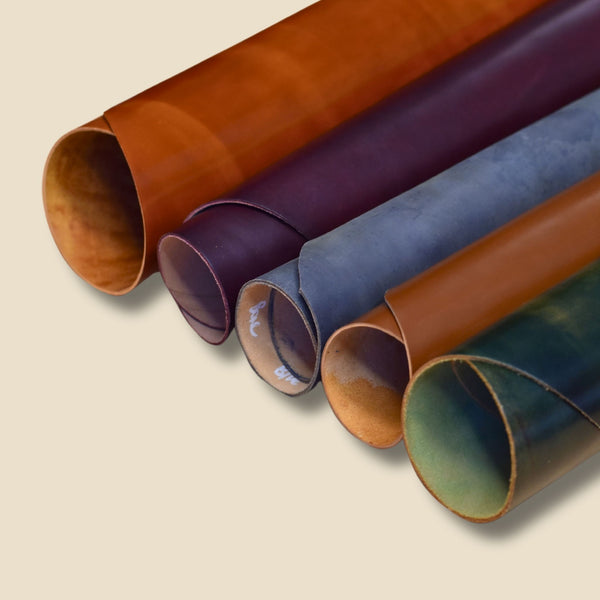
- Buttero & Pueblo: From the Conceria Walpier tannery in Tuscany, these leathers are famous for their vibrant colors and exceptional feel, perfect for high-end small goods.
- Shell Cordovan: An equine leather known for its unparalleled density, durability, and glossy finish.
Shell Cordovan: The King of Sustainable Durability
Shell Cordovan is the ultimate expression of 'slow leather.' The vegetable tanning process takes a minimum of six months, involving dozens of meticulous steps. The result is a non-porous, incredibly dense material that is practically indestructible, making it ideal for heirloom-quality wallets, watch straps, and shoes that can last for generations. For those who believe true sustainability is longevity, Shell Cordovan is in a class of its own. Want to dive deeper? Explore our complete Shell Cordovan: The Ultimate Guide.
Real Leather vs. Synthetic 'Vegan' Alternatives: A Life-Cycle Comparison
As artisans, we're driven by a desire to create lasting beauty. So, when it comes to materials, the choice between real leather and its 'vegan' counterparts is a critical one. While the term 'vegan' sounds eco-friendly, the reality is often rooted in plastic. Many synthetic leathers are simply fabric coated with polyurethane (PU) or polyvinyl chloride (PVC)—fossil fuel derivatives that create a lifetime of environmental problems.
The true measure of sustainability isn't just the source; it's the entire life cycle. When a synthetic bag starts to peel and crack after a few years, it's destined for a landfill, where it will sit for over 500 years. A well-made vegetable-tanned leather item, by contrast, can biodegrade in as little as 10-50 years. This is a foundational difference when choosing a genuinely sustainable leather for crafts.
Microplastics and the Environment
Every time a synthetic leather product is used, flexed, or cleaned, it sheds invisible microplastics into our environment. Even the newer "plant-based" alternatives—like those from pineapple or cactus fibers—often rely on PU binders to hold them together. These materials still require energy-intensive chemical processing to become a usable textile. That's why you should be cautious with vague terms like 'Eco-Leather,' which can hide a plastic core behind a green-washed label.
The Heritage Argument: Crafting for Generations
Picture this: a 50-year-old vegetable-tanned briefcase, rich with patina, its stitches still strong. Now, picture a 5-year-old synthetic handbag, its surface flaking away, revealing the cheap fabric beneath. The briefcase can be repaired and reconditioned indefinitely; the handbag is trash. Real leather's fibrous structure allows it to absorb oils and conditioners, healing scratches and building character over a lifetime. It’s not just a material; it’s an investment in a future heirloom. No compromises.
- Natural Leather: Can be cleaned, oiled, stitched, and restored for decades.
- Synthetic 'Leather': Once the plastic coating delaminates or peels, it cannot be repaired.
This ability to extend the life of your work is the heart of true craftsmanship. By properly caring for your material, you ensure it serves its purpose for generations. Learn more about how to care for and condition your veg-tan goods here.
How to Source Sustainable Leather: A Checklist for Small Studios
Navigating the world of leather sourcing can feel complex, but finding truly sustainable material for your projects comes down to asking the right questions. As an artisan, the leather you choose is the foundation of your craft. This checklist is built from my family’s experience to help you make choices that honour both your work and the planet.
Your goal is to find a material that is not only beautiful and durable but also produced with respect for the environment and traditional craftsmanship. Here’s what to look for:
- Look for Tannery Certifications: Don't just take a supplier's word for it. The Leather Working Group (LWG) Gold or Silver rating is a key indicator of a tannery's commitment to managing its environmental footprint.
- Choose Transparent Supply Chains: A good supplier is proud of their sources. We work directly with renowned Italian tanneries like Walpier and Badalassi Carlo because we know their process and trust their quality. If a seller can't tell you where their leather comes from, that's a red flag.
- Prioritize 'Full Grain' for Maximum Lifespan: True sustainability is longevity. Full Grain leather is the highest quality grade, using the entire grain of the hide. It’s incredibly strong and develops a beautiful patina over time, ensuring your creations last for generations. Avoid 'Genuine' or 'Bonded' leather—they are inferior products that won't stand the test of time. No compromises.
- Support Wholesalers Who Hand-Select Hides: A passionate wholesaler acts as your quality control. By partnering with an expert who travels to tanneries and hand-selects each hide, you gain access to premium, vetted materials without the guesswork.
Understanding Tannery Certifications
The LWG rating audits a tannery on critical environmental metrics, including water waste, energy consumption, and raw material traceability. For classic vegetable-tanned leather, look for the Consorzio Vera Pelle Italiana Conciata al Vegetale. Their 'Hand' logo is a protected trademark certifying that the leather was produced traditionally in Tuscany, without the use of prohibited chemical substances.
Selecting the Right Grade for Zero Waste
Sourcing sustainable leather for crafts also means minimizing waste on your cutting table. Choosing the right hide size and a cleaner grade for your project prevents excessive offcuts. Furthermore, 'natural' or crust leathers are often the most eco-friendly choice, as they skip the chemical-intensive dyeing process, offering a perfect canvas for your own finishes. (Want to learn more? Read our Leather Grades Explained guide.)
Sourcing from Hab-To: Premium Sustainable Materials with No Minimums
Finding a supplier who shares your commitment to ethics and quality can be the final, crucial step in your creative process. At Hab-To Leather House, we've built our family business around a simple principle: providing artisans with access to the world's finest materials without the barriers of traditional wholesale. Our approach is designed for the modern crafter who values both quality and conscience.
A core part of our philosophy is our No Minimum Order policy. We believe this is a powerful sustainability feature. It allows you to purchase exactly what you need for a specific project, eliminating waste and preventing the accumulation of 'dead stock' in your workshop. This mindful approach to buying not only respects your budget but also the resources used to create these beautiful materials.
Every hide in our collection is hand-selected by me, Mike, from tanneries renowned for their ethical practices and exceptional vegetable-tanned leathers. If you're in the Netherlands, I invite you to our Amsterdam showroom to see and feel the quality for yourself. For everyone else, I'm here to offer personalized advice to help you find the perfect piece of sustainable leather for crafts, ensuring your vision is brought to life with a material that tells a story of true craftsmanship.
Empowering the Small-Scale Artisan
We are more than just a supplier; we are a partner in your craft. By offering premium articles like Italian Pueblo and Buttero in project-sized quantities, we empower you to work with leather that speaks for itself. To further support our community, we offer free consultations for personalized guidance and share insights and stories on our podcast, The Leather Hour. We're here to help you succeed.
Ready to Start Your Sustainable Project?
Taking the next step in your ethical crafting journey is simple. We provide the resources and materials you need to create with confidence and integrity.
- Browse our curated collection of world-class, vegetable-tanned hides and premium hardware.
- Need advice? Book a free, one-on-one consultation with Mike to discuss your project and sourcing needs.
- Begin creating with materials you can be proud of.
Shop Sustainable Leather at Hab-To Leather House
Your Craft Deserves a Conscious Choice
As we've explored, the path to responsible artistry is paved with informed decisions. The key takeaway is clear: true sustainability in leathercraft goes beyond a simple label. It involves understanding the environmental benefits of time-honored methods like vegetable tanning and recognizing the superior life-cycle of authentic materials over synthetic compromises. Choosing the right sustainable leather for crafts is a powerful statement about the quality and integrity of your work.
At Hab-To, we make that choice simple. Backed by over 160 years of family experience, we’ve done the sourcing for you, hand-selecting a premium collection from world-class tanneries like Horween and Walpier. We believe every artisan deserves access to the best materials, which is why we have no minimum order requirements. No synthetics. No compromises. Just quality materials for real craftsmanship.
Ready to elevate your projects with leather you can be proud of? Discover our premium Vegetable-Tanned Leather collection and start building a legacy of responsible, beautiful work.
Frequently Asked Questions About Sustainable Leather
Is vegetable-tanned leather biodegradable?
Yes, absolutely. Because vegetable-tanned leather is processed using natural tannins from sources like tree bark and leaves, it is biodegradable. Unlike chrome-tanned alternatives, it can break down and return to the earth without releasing harmful chemicals. This natural lifecycle is a core reason why it's considered a truly sustainable choice for conscientious crafters. It’s leather made the way nature intended, designed to last a lifetime and then gracefully retire.
Why is sustainable leather more expensive than standard leather?
The higher cost of sustainable leather, particularly vegetable-tanned, reflects the time, skill, and quality of materials involved. The tanning process can take months, not days, and relies on the expertise of master tanners and premium natural tannins. This meticulous process results in a superior, more durable material. You're not just buying leather; you're investing in a tradition of quality craftsmanship and a commitment to environmentally responsible practices. It’s a price that reflects true value.
Is 'vegan leather' actually better for the environment?
It's a common misconception. Most 'vegan leather' is made from plastics like polyurethane (PU) or PVC, which are derived from fossil fuels. These materials don't biodegrade and can shed harmful microplastics into the environment for centuries. In contrast, high-quality, ethically sourced leather is a natural, durable byproduct of the food industry. When you choose vegetable-tanned leather, you're choosing a renewable material over a synthetic one. No compromises, just real materials.
What is the Leather Working Group (LWG) and why does it matter?
The Leather Working Group (LWG) is a global organization that audits tanneries for their environmental performance. An LWG certification (rated Gold, Silver, or Bronze) means a tannery meets strict standards for water and energy use, waste management, and chemical safety. For an artisan, choosing leather from an LWG-certified tannery provides confidence that your material was produced with a lower environmental impact. It’s a key indicator of a tannery’s commitment to sustainability.
Can I buy high-quality sustainable leather in small quantities?
Yes, you certainly can. At Hab-To, we believe every artisan, from hobbyist to professional, deserves access to the best materials. That's why we have no minimum order requirements. You can purchase a single panel or even a small cutting for your project. Our goal is to make premium sustainable leather for crafts accessible to everyone, ensuring you can get exactly what you need for your specific creation without being forced to buy in bulk.
What is the most durable type of sustainable leather for a wallet?
For a wallet that will last a lifetime, I always recommend a full-grain vegetable-tanned leather. This type of leather comes from the strongest part of the hide and is known for its incredible durability and ability to develop a beautiful, rich patina with use. Leathers like Buttero or other firm, shoulder-cut veg-tans are excellent choices. They are robust enough to handle daily wear and tear while gracefully telling the story of their use over the years.
How do I know if a tannery is ethical?
Look for transparency and certifications. An ethical tannery is often LWG-certified and open about its processes, from water treatment to waste management. They should also be clear about sourcing their hides as a byproduct of the meat industry, ensuring no animal is harmed for its skin alone. The best way is to partner with a trusted supplier who has already done this research. We personally vet all our tannery partners to ensure they meet our high standards for quality and ethics.
Does Hab-To ship sustainable leather internationally?
Yes, we proudly ship our hand-selected leather and tools to crafters all over the world from our home base in Amsterdam. We believe that true craftsmanship knows no borders. During checkout, you can see the available shipping options and costs for your specific country. If you have any questions about a shipment to your location, feel free to reach out. We're here to help you get the best materials, wherever your workshop may be.