



The Calming Effect of Hand Stitching Through Slow Craft
What if a few careful stitches gave a busy mind one small thing to focus on? The calming effect of hand stitching can come from its steady rhythm: guiding the needle, feeling the material, and watching each stitch take shape. It won’t erase what’s difficult, but it may offer a quiet pause within it.
If you’ve found comfort in working with your hands, that feeling makes sense. Slow stitching invites you to set aside multitasking and focus on one stitch at a time. The task is simple, but completing a line or small piece can bring a genuine sense of accomplishment.
Here, you’ll learn how hand sewing can become a moving meditation, why repetition and tactile attention may feel soothing, and how stitching can support focus and comfort through challenging moments. We’ll also look at how to begin gently, so the practice can meet you where you are, whether you’re making something useful or simply taking a few mindful minutes with needle and thread.
Key Takeaways
- Approach slow stitching as a process, not a race to finish; steady attention to each stitch can create a quieter focus.
- Use the feel of fabric and thread, the movement of the needle, and the shape of each stitch to bring your attention back to the task.
- Let a small, finished piece provide a tangible sense of accomplishment, especially when larger goals feel out of reach.
- Stitching can offer a comforting routine during difficult times, though it is not a substitute for professional mental health care.
- For a leathercraft project, explore handbag leather, vegetable tanned leather, leather hardware, and leatherworking tools as materials for making by hand.
What is Slow Stitching?
Slow stitching is intentional hand sewing that gives attention to each movement rather than a fast finish. A needle, thread, and material are enough to begin, whether you’re making a small embroidered motif or mending fabric.
Process-Focused Hand Sewing
Slow stitching makes the act of sewing the focus, with each stitch placed deliberately. The process gives a busy mind one clear task: guide the needle, pull the thread, and notice the mark left behind. A beginner can practise a simple running stitch on a scrap, without planning a polished finished piece.
For a first project, choose a small patch, a simple embroidered shape, or a visible clothing mend. These let beginners practise one or two stitches without managing a large pattern. Hand stitching, knitting, and crochet can all offer repetitive, hands-on focus. Stitching uses needle, thread, and fabric, while each craft has its own movements and materials.
Mindful Making and Visible Time
Mindful making means noticing the materials and actions as your work develops, rather than measuring success only by completion. Embroidery makes time visible: a line of backstitch grows one mark at a time, while a cluster of French knots emerges through repeated motions. That gradual change can ground a small, meaningful practice in the present.
Start with fabric, a needle, and thread. Scraps or repurposed textiles work well for practice. The cost depends on what you already own and the materials you choose, so you can begin with supplies at hand instead of buying a full kit.
Repetition and Relaxation
Repeated stitches may feel calming because they give attention a steady pattern to follow. The feel of the thread, the needle’s movement, and the sight of stitches forming offer concrete details to notice. For some people, this gentle focus makes it easier to pause competing thoughts. It doesn’t promise that difficult feelings will disappear.
There’s no set stitching time that guarantees a calmer mood. Try a short session, such as a few rows, and notice whether the rhythm feels settling. Pause when your attention or comfort fades. For hand, wrist, or eye comfort, support your arms, keep the work close, use good light, and relax your grip. Take breaks, change position, and stop if discomfort begins.
Hand sewing as moving meditation
A hand-sewing rhythm can act like a moving meditation: your hands repeat a simple task while your attention returns to what’s happening now. Each pass of the needle offers a point of focus, from the fabric’s texture to the thread sliding through it. Thoughts may still wander; noticing this gives your attention somewhere gentle to return.
This practice engages touch, sight, and sound. Feel the fabric beneath your fingers, watch a line of stitches take shape, and listen as the thread moves through the weave. These details connect you to the work in front of you. A visible seam or embroidered leaf can also remind you that small, steady actions have added up to something meaningful.
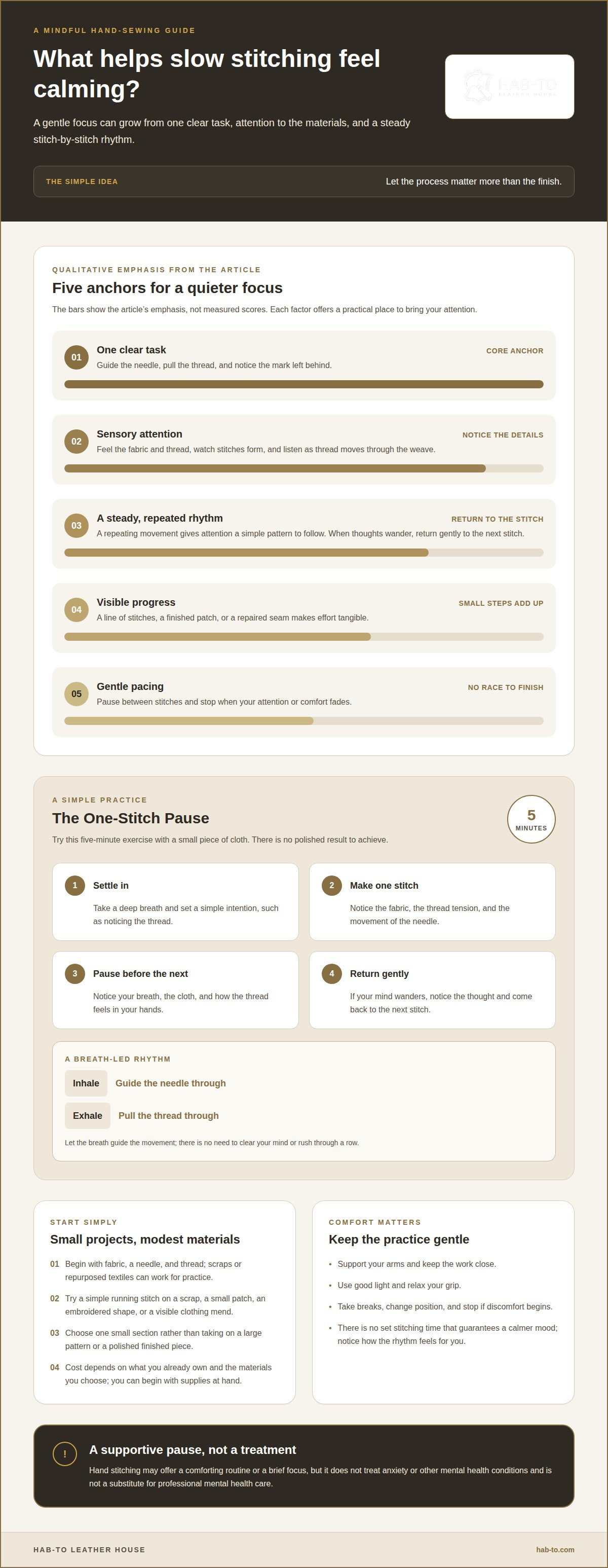
Try the One-Stitch Pause for five minutes with a small piece of cloth. Before you begin, take a deep breath and set a simple intention, such as noticing the thread. Make one stitch, then pause before the next. Notice your breath, the fabric, and the thread tension. This interval shifts the task away from speed and toward attention.
Let your breath guide the movement. Inhale as you guide the needle through the fabric, then exhale as you pull the thread through. Pause between stitches instead of rushing to finish a row. If your mind turns to a task list, notice the thought and return to the next stitch. This sequence gives your attention a practical anchor without requiring you to clear your mind.
A small square of cloth is enough for this meditative exercise. You might stitch a simple line, follow the edge of a patch, or add a few marks that reflect the day. There’s no need to make a polished design. The work can remain modest and personal, with each stitch recording a moment of attention. For a related leathercraft project, explore stitching bundles.
Hand sewing can also connect people through shared practice. In a stitching group or workshop, participants can exchange techniques, ideas, and inspiration as they work on separate pieces. A quiet communal session offers both individual focus and company. If you prefer solitude, the same needle-and-thread rhythm can create a pause beside a window, with outdoor sounds offering a reminder of nature.
The calming effect isn’t fixed, and there’s no test to pass. Treat the five-minute exercise as an invitation to notice one stitch at a time. Whether your thoughts settle, wander, or return repeatedly, the practice gives your hands a clear, deliberate movement to follow.
Mental health and sense of accomplishment
Hand stitching can give your attention a practical place to rest: the next stitch, the thread, or a small section of fabric. For some people, the calming effect of hand stitching comes from giving a busy mind one immediate task. This focus may briefly interrupt anxious thoughts, but it doesn’t treat anxiety or other mental health conditions. A row of running stitches, for example, offers a sequence to follow and a visible change to notice.
Visible progress matters, too. A finished patch, embroidered initial, or repaired seam marks effort in a form you can hold. If a larger project feels demanding, choose one small section and finish it before deciding what comes next. This keeps the goal within reach and lets accomplishment come from completing a manageable task, not producing perfect work.
History offers examples of stitching used during difficult circumstances. After the First World War, doctors used embroidery with shell-shocked soldiers as a way to help address mental scars. Mary, Queen of Scots, embroidered during 19 years in prison. These examples show how needlework has occupied hands and attention through hardship, but they don’t prove that stitching works as a treatment for everyone.
For a simple practice, pick a technique such as backstitch and repeat it across a fabric scrap. Notice the physical details: how firmly you hold the needle, how the thread moves, and when your shoulders begin to tense. Adjust your grip or pause when needed. These observations keep the activity connected to the present instead of turning it into another demand.
Creative work can also give self-care some structure. Barbara described spending one hour a day on creative practice as time to focus on herself. That isn’t a required schedule; shape a stitching session around the time and energy you have. The calming effect of hand stitching may come from a brief pause between tasks, while a longer session gives a project room to develop.
Keep the aim modest: complete a line, mend a tear, or make a small motif. If the work becomes frustrating, simplify the design or set it aside. Hand stitching can offer a meaningful activity and a sense of progress, while professional mental health support remains important when distress affects daily life.
Personal experiences of stitching during lockdown, illness, and caregiving
During Spain’s strict lockdown, Teresa Valverde and her family spent 35 days unable to walk outside. Slow stitching offered one creative activity within the limits of home life. A piece of fabric, needle, and thread gave the day a small, repeatable rhythm. Each completed row made time visible, even when ordinary routines and outdoor movement were restricted. Stitching did not change the circumstances, but it gave attention a deliberate task.
For Alison Wyatt, lockdown began in November 2019 with surgery for breast cancer. Illness and confinement brought practical and emotional demands, while needlework offered a familiar activity to return to. A few stitches could mark a pause between rest and other daily needs. This kind of practice isn’t a cure for illness; its value lies in providing something creative and tangible to do during an unsettled period.
Caregiving can bring long stretches of waiting and uncertainty. One account describes sewing for four days and nights while sitting with a dying mother. Another author mentions experiencing two miscarriages. These examples show how stitching can accompany grief without explaining it away. The repeated movement of needle and thread gives the hands a task while emotions remain complex, and a small piece of work can hold personal meaning.
A commenter described a 94-year-old mother who had recently discovered needlework while confined to bed. For someone with limited mobility, fabric and thread can offer a seated activity that still involves choice, attention, and creative expression. Completing a simple line or motif can build confidence in a modest way: the maker decides what to do, sees the result, and can stop whenever needed.
These stories differ, but each connects stitching to a particular circumstance: Teresa’s restricted days, Alison’s treatment, caregiving beside a dying parent, or an older woman’s confinement to bed. Stitching doesn’t ease every source of distress, and no single project suits everyone. A small, manageable piece is often a useful place to begin. Choose a fabric scrap, repeat a simple stitch, and fit the activity around your energy, comfort, and care responsibilities.
Slow stitching can be meditative and may help some people enter a focused state of flow. Attention settles on small decisions: where a stitch goes, how the thread moves, and what the material feels like beneath your fingers. These tactile sensations can contribute to hand sewing’s soothing quality. Still, not everyone will feel calm, and a focused activity doesn’t remove grief or worry. Its effects can be modest and personal, shaped by your comfort and circumstances.
Mary Carson experienced the loss of both her brother and her mother in 2015. Such losses can make ordinary moments feel difficult to navigate. For some people, a quiet hand-sewing activity may offer a gentle point of focus alongside complicated emotions, without requiring them to explain or resolve those feelings. A few stitches can be enough; the practice can remain flexible and pause whenever needed.
Why can repetitive hand stitching feel calming?
A repeated stitch gives attention a small, clear sequence: pass the needle through, draw the thread, then begin again. For some people, the calming effect of hand stitching comes from following that sequence instead of juggling several demands. Each movement produces an observable result. You don’t have to solve the whole project at once; focus on the next point in the line.
Hand stitching also engages several senses at once. Feel fabric or leather beneath your fingers, watch the stitch appear, and notice the thread sliding through the material. These details give your attention something concrete to register. If thoughts drift to tomorrow’s errands, noticing the material under your fingertips can bring your focus back to the task.
The rhythm comes from repetition, but it isn’t mechanical. You adjust the thread, check the spacing, and respond to how the material behaves. Stitching along a straight seam, for example, repeats a familiar movement while inviting small decisions at each point. That balance between familiarity and attention can make the task absorbing without requiring constant new choices.
Visible progress can bring another layer of satisfaction. A short row of stitches turns a loose edge into a joined seam. Each mark shows where effort has gone, giving the mind a simple record of progress. This tangible change is one part of the calming effect of hand stitching: the work offers a clear next action and a visible result, even while the larger project remains unfinished.
Repetition also creates natural moments to pause. After drawing the thread through, check its tension, loosen your grip, and notice whether your shoulders are raised. If a stitch catches, slow down and correct it before continuing. These practical adjustments keep your attention on the work and help prevent rushing through a craft that rewards care.
The experience differs from person to person, and the same project may feel absorbing one day and frustrating the next. Start with a simple seam or a short line on a scrap. Notice what holds your attention: the tactile pull of thread, the even pattern, or seeing the line grow. That can help you shape stitching into a gentle practice that suits your pace.
Hab-To Leather House: Handbag leather
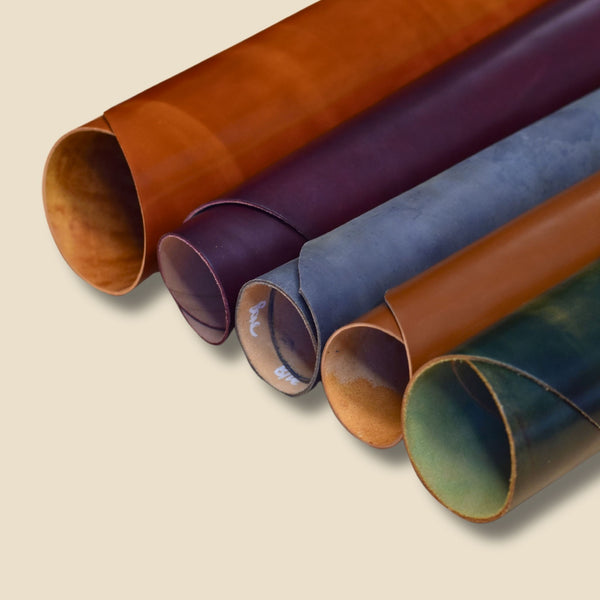
Hab-To Leather House offers materials and tools for turning slow hand stitching into a leathercraft project. A small handmade piece gives each stitch a visible purpose, from joining panels to attaching a detail. The focus stays on the process: prepare the materials, make deliberate stitches, and watch the project take shape through steady work.
For a bag project, start by considering the role of each piece. Handbag leather is the material for the main body, while lining leather can be used for an interior layer. The project’s design, construction, and intended use guide those choices. Working on a small panel or simple component first can make the process easier to approach than beginning with a complete bag.
Vegetable-tanned leather is another material for leathercraft. The right choice depends on what you plan to make and how you intend to work the leather. Preparing a piece, marking a stitch line, and sewing along it gives your hands a clear sequence to follow. Each step can make the work purposeful without making the finished object the only measure of success.
Leather hardware can add practical details to a bag project. Fitting a closure gives you a defined task: position the component, prepare its place, then continue with the surrounding work. Leatherworking tools support specific stages of making. Choose tools to suit the project, rather than adding steps that don’t serve the design.
Think of materials as part of the craft experience. A considered piece of leather, a chosen fitting, and the right tool give your hands something concrete to work with. If you’re new to leathercraft, a modest project lets you learn how leather feels to stitch and build familiarity through practice. If you already sew, leather introduces a different material and new decisions to explore.
Choose a leathercraft project that suits your interest and pace. Contact Hab-To Leather House to discuss your project.
Frequently Asked Questions
How can threading a needle and making some marks lighten the load?
Threading a needle can offer a small, manageable task when the day feels demanding. Choose a scrap of fabric, make a few marks, and follow one line with simple stitches. The goal isn’t to solve a problem or produce a polished design. A small, visible piece of work gives your attention somewhere specific to rest, while leaving room for whatever feelings are present.
How does hand stitching affect stress and anxiety?
Hand stitching may help some people feel less caught up in stress by giving their hands and attention a clear activity. Repairing a loose button, for example, involves handling thread, aligning fabric, and completing a practical task. The experience varies from person to person, and stitching isn’t a treatment for anxiety. If anxiety affects your daily life, seek support from a qualified health professional.
What does research say about the mental health benefits of hand stitching?
Research discussed in relation to embroidery and crafts suggests creative activities may support mood, focus, and a sense of control. These findings don’t establish hand stitching as a treatment or show that everyone experiences the same benefit. Treat stitching as a supportive activity, not a clinical intervention. A completed repair or small motif can offer a visible result, but it cannot replace mental health care.
Can hand stitching help with mindfulness and focus?
Yes, hand stitching can be a practical way to practise mindfulness by focusing on one detail at a time. Choose a clear point, such as keeping stitches evenly spaced along a marked line. If your attention drifts, notice where the needle is and return to the next stitch. This works for a small repair or simple design and doesn’t require a particular skill level.
Explore stitching supplies
If you’d like to bring mindful handwork into a leathercraft project, stitching bundles offer a relevant place to explore materials for the craft.
Disclaimer
All our blog articles are made for information purposes only we dont take responsability for any content from third parties.