

Togo Leather vs. Pebble Leather: A Crafter's Guide to Textured Calfskin
Imagine sourcing the perfect material for that luxury handbag you've designed. You're searching for that iconic, supple, and scratch-resistant texture, a high-quality togo leather that elevates your craftsmanship. But your search is flooded with options labeled 'pebble grain' or 'pebbled leather.' Are they the same? Is one a cheap imitation of the other? This confusion is a common roadblock for passionate crafters, making it difficult to invest confidently in the right materials for a project you’ve poured your heart into.
Worry no more. In this crafter's guide, we're cutting through the noise. We'll break down the crucial differences between the naturally shrunk grain of authentic Togo and the mechanically embossed pattern of standard pebble leather. By the end, you'll not only be able to identify each one with confidence but also understand their unique pros and cons. You'll know exactly which texture is best suited for your next bag, wallet, or accessory, empowering you to choose the perfect material that matches your skill and vision. Let's get to it.
Key Takeaways
- Understand the crucial difference between a natural shrunken grain and a machine-embossed pattern to make smarter material choices.
- Learn to identify the signature characteristics of premium togo leather, ensuring you select the authentic material for luxury craftsmanship.
- Discover when the consistent, uniform surface of pebble leather makes it a more practical and durable choice for certain projects.
- Receive project-based recommendations to confidently select the right textured calfskin for your next wallet, bag, or accessory.
What is Togo Leather? The Icon of Natural Grain
When you hear the name Togo, one image often comes to mind: the iconic Hermès Birkin bag. This isn't a coincidence. The French luxury house catapulted this specific leather to fame, making it a benchmark for quality in the world of fine leather goods. But what exactly is it? At its core, togo leather is a premium, 'shrunken' calfskin (or veau in French). It's crucial to understand that 'Togo' is a trade name, not a generic category. Before we dive into its unique process, it helps to have a grasp on what is leather in its most fundamental form. Each hide of Togo has a unique story told through its grain, a testament to true craftsmanship.
To get a better feel for this material and what makes it special, this video offers an excellent hands-on perspective:
The 'Shrinking' Process Explained
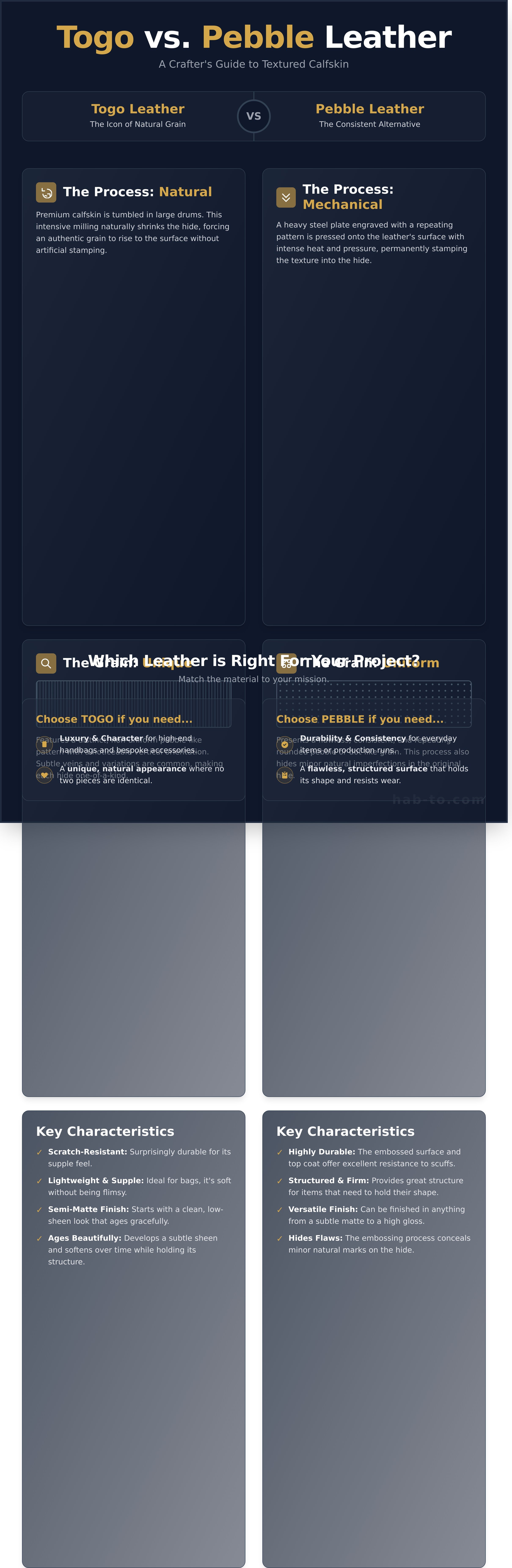
The secret to Togo's signature texture lies in its specialized tanning process. The calf hides are tumbled in large drums for an extended period. This intensive milling causes the leather to naturally shrink and contract, which tightens the fibre structure and forces the grain to rise to the surface. This is the key difference from embossed leathers, where a uniform, artificial pattern is stamped onto the surface. The Togo method creates an authentic, non-uniform grain that is unique to each hide. World-renowned tanneries, like Weinheimer in Germany, have perfected this art, producing the very leather sought after by top luxury brands.
Key Characteristics at a Glance
So, what can you expect from a piece made with this exceptional material? Here are its defining features:
- Natural Grain: A distinct, pebble-like vertical grain pattern, often with subtle, beautiful veins that add character.
- Remarkable Durability: For such a soft and supple leather, it is incredibly scratch-resistant and holds its shape well over time.
- Lightweight & Semi-Matte: It’s surprisingly light, making it ideal for bags. It starts with a clean, semi-matte finish that isn't overly shiny.
- Graceful Aging: With use, it develops a subtle sheen and becomes even softer to the touch, without losing its structure.
Understanding Pebble Leather: The Consistent Alternative
While many leathers are celebrated for their unique, natural grain, pebble leather offers a different kind of beauty: flawless consistency. This isn't a specific type of animal hide, but rather a finish applied to leather. It’s defined by its uniform, embossed pebble-like pattern that is consistent across the entire surface. This reliable texture has made it a staple in the industry, from accessible everyday bags to iconic luxury goods crafted from premium hides like togo leather.
The primary advantage of pebble leather is its uniformity. For projects requiring multiple, identical pieces, it guarantees that every cut will match perfectly in texture and appearance, something that is nearly impossible with naturally grained leathers.
The Art of Embossing
The signature texture of pebble leather is created through a process called embossing. After tanning, a large, heavy steel plate engraved with the pebble pattern is pressed onto the leather’s surface using a combination of intense heat and pressure. This permanently sets the grain into the hide. A key benefit of this technique is its ability to hide minor imperfections, such as small scars or insect bites, that might be present on the original hide. This allows tanneries to utilize more of the leather, reducing waste and creating a perfect, repeating pattern ideal for production.
Typical Qualities of Pebble Leather
Beyond its consistent look, pebble leather brings several practical qualities to the craft table, making it a favourite for items that need to withstand daily use. If you're considering it for your next project, here’s what you can expect:
- Uniform Texture: It features a distinct, rounded pebble or dot-like grain that is identical across the entire panel.
- Excellent Durability: The embossed surface and protective top coat make it highly resistant to scuffs, scratches, and everyday wear.
- Structured Temper: Generally, this leather has a medium to firm temper, providing excellent structure for items like handbags, wallets, and portfolios that need to hold their shape.
- Versatile Finish: The final look can be tailored to the project, with finishes ranging from a subtle, sophisticated matte to a higher gloss.
Togo vs. Pebble Leather: A Head-to-Head Comparison for Crafters
When you're choosing a textured leather, the details matter. Both Togo and pebble leather offer a beautiful grained finish, but for a crafter, their similarities end there. Understanding their core differences is key to selecting the right material that not only looks the part but also behaves correctly under your tools. This isn't about which is "better," but which is right for your specific project and vision.
To help you decide, here’s a quick-glance comparison of the characteristics that matter most in the workshop.
| Feature | Togo Leather | Pebble Leather |
|---|---|---|
| Grain & Appearance | Natural, vertical grain with unique veins. Organic and distinct to each hide. | Embossed, uniform "pebble" pattern. Consistent and predictable. |
| Durability & Wear | Highly scratch-resistant and holds its shape exceptionally well over time. | Very robust. The deep texture is excellent at hiding minor scuffs and scratches. |
| Feel & Temper | Soft, supple, and relatively lightweight with a luxurious hand-feel. | Can vary, but often firmer and more structured than Togo. |
| Aging Process | Develops a subtle, rich patina over years of use, enhancing its character. | The finish is designed to be static and remains largely unchanged over time. |
Feel, Temper, and Workability
In your hands, the difference is immediate. Togo leather is renowned for its soft, supple temper. It’s a joy to work with for projects that require a sophisticated drape, like handbags or portfolio cases. It cuts cleanly and skives beautifully, though its natural grain requires a steady hand for perfectly straight stitch lines. Pebble leather, on the other hand, is typically firmer. Because "pebble" is an embossed finish applied to various base leathers, its temper can vary. However, it generally provides more structure. Its uniform pattern can be more forgiving for beginners, as the texture helps mask slight imperfections in stitching.
Durability and Aging
Both leathers are workhorses, but they wear in different ways. Togo is celebrated for its remarkable scratch resistance, a quality derived from the premium calfskin it's made from. With use, it doesn’t just wear out; it wears in, developing a gentle sheen and a rich patina that speaks to quality craftsmanship. Pebble leather is also incredibly durable, with its pronounced texture doing an excellent job of concealing the daily bumps and scrapes. Its finish, however, is designed for consistency and will not develop the same character or patina over time.
Cost and Sourcing
There is a significant difference in investment here. As a premium material made from a specific type of calfskin through a complex process, Togo comes at a higher price point. It’s an investment in quality and exclusivity. Pebble leather is a more accessible and widely available option. The embossing process can be applied to many different types of hides, making it a cost-effective choice for durable, everyday goods. Whether you're seeking the unmatched quality of a specific hide or a versatile textured workhorse, the right material is waiting for your next project. Explore our collection of premium textured leathers.
Which Leather is Right For Your Project?
Understanding the difference between tanning methods is one thing, but choosing the right hide for the project on your workbench is where craftsmanship truly begins. The character of the leather should match the purpose of your creation. Let's move beyond the theory and look at some practical applications to help you make a confident, informed choice for your next piece.
When to Choose Togo Leather
When your project demands a touch of luxury and a distinctive character, togo leather is an exceptional choice. Renowned for its remarkable balance of a soft, supple feel with enough body to hold a structured shape, its unique natural grain becomes a central feature of the final piece. It’s a material that speaks of quality before a single stitch is seen.
- High-End Handbags & Portfolios: Its elegant drape and inherent structure are perfect for sophisticated accessories that need to look impeccable.
- Luxury Small Goods: Ideal for watch straps, premium wallets, and clutches where the fine grain and tactile feel are experienced up close.
- Statement Pieces: Use it when the leather’s unique texture isn’t just a surface, but a key part of your design aesthetic.
Of course, a beautifully crafted accessory is just one component of a standout look. For inspiration on how to style such pieces, fashion and lifestyle curators like Dutchess Martha offer a great perspective on effortless elegance.
When to Choose Pebble Leather
For items that face the rigors of daily life, a durable and consistent pebble leather is often the perfect partner. Its embossed grain provides excellent scratch resistance and a uniform appearance, which is a huge advantage for creating matching sets or for those just starting their leathercraft journey. It’s a reliable workhorse that doesn't compromise on a quality look.
- Everyday Bags: A great fit for totes, backpacks, and dopp kits that need to withstand constant use and abuse.
- Beginner-Friendly Projects: The consistent texture is more forgiving of small imperfections, helping build confidence in new crafters.
- Matching Sets: When you need several items to have an identical finish, the uniformity of pebble leather is invaluable.
Ultimately, the right choice comes down to your project's story. Is it a story of everyday resilience or one of refined elegance? Every hide has its purpose. If you're still weighing your options or just want a second opinion, that's what we're here for. Don't hesitate to browse our hand-selected leathers or reach out for personal advice.
The passion for creating, whether with leather or in the garden, often starts with selecting the best raw materials. For those who also find joy in cultivating their own patch of green, the first step is often to hobby zaden kopen from a specialized source.
Bringing Your Vision to Life with the Right Textured Leather
Choosing between Togo and pebble leather ultimately comes down to the story you want your creation to tell. Do you desire the unique, natural grain and sophisticated feel of authentic togo leather, which develops a beautiful patina over time? Or does your project call for the consistent, uniform texture and rugged durability of an embossed pebble grain? Each has its distinct character, capable of elevating a good design into a truly exceptional piece of craftsmanship.
The right material is the foundation of any great project. At Hab-To Leather House, we understand that quality and choice are paramount. That's why we offer a curated collection of hand-selected premium leathers with no minimum order requirements. If you're still unsure which path to take, our 4th generation leather specialist, Mike, is always ready to offer his expert advice to help you make the perfect selection for your work.
Ready to begin your next masterpiece? Find the perfect textured leather for your craft at Hab-To Leather House. We can't wait to see what you create.
Frequently Asked Questions
Is Togo leather just another name for shrunken calf?
Not exactly. While Togo is a type of shrunken calf, the name specifically refers to the version made famous by Hermès from the French Tannerie Degermann. The process involves shrinking the calfskin in a drum to create its signature pebble grain. Think of "shrunken calf" as the general process and "Togo" as a premium, trademarked example of that craft, renowned for its specific texture and quality.
Why is Togo leather so expensive and associated with Hermès?
The prestige of Togo leather comes from a combination of superior materials and its association with luxury. It's crafted from high-quality baby calfskin, which is naturally soft and fine-grained. The specialized shrinking and tanning process is complex and time-consuming, adding to the cost. Its exclusive use by Hermès for iconic bags solidifies its status as a premium, highly sought-after material in the world of fine leather goods.
Is pebble leather considered real, high-quality leather?
Yes, pebble leather is real leather, but its quality can vary. High-end pebble leather is typically full-grain hide with a pattern embossed onto the surface for a uniform look and added scratch resistance. However, the term can also apply to lower-quality corrected-grain leathers where the pebbling hides imperfections. The key is to assess the underlying quality of the hide itself, not just the surface texture.
How can I tell the difference between real Togo and an embossed copy?
The key is in the pattern's consistency. Real Togo has a natural, irregular grain with veins and variations because it's shrunken, not stamped; no two sections are identical. An embossed copy will have a perfectly uniform, repetitive pattern that looks machine-pressed. Authentic Togo also feels softer and more supple to the touch, while an embossed version can sometimes feel stiffer or have a more artificial finish.
Which leather is more durable, Togo or pebble?
Both are champions of durability, which is why they're so popular for everyday items. Togo is exceptionally scratch-resistant and known for holding its shape while remaining soft. High-quality embossed pebble leather is also incredibly tough. However, Togo often has a slight edge because the natural shrinking process creates a denser grain structure. It's also famous for being relatively easy for a professional to refurbish, extending its life even further.
How do you care for Togo and pebble leather goods?
Proper care is simple for both. For daily maintenance, wipe your item with a soft, dry microfiber cloth. For minor spills, gently blot the area with a slightly damp cloth and allow it to air dry naturally, away from heat. Avoid harsh chemical cleaners and over-conditioning. When not in use, store your leather goods in a dust bag in a cool, dry place to maintain their shape and texture.