

What Is Saffiano Leather? A Crafter's Guide to the Textured Icon
Ever run your hand over a luxury handbag and felt that distinctive, cross-hatched texture? It's incredibly durable, almost rigid, and can sometimes feel more like a high-tech synthetic than a natural hide. This unique finish often leaves crafters and enthusiasts asking the same questions: Is it genuine leather? And what is Saffiano leather, really? The material, made famous by Prada, is one of the most recognizable yet misunderstood finishes in the world of craftsmanship.
Here at Hab-To Leather House, we believe in quality materials and honest craftsmanship. That’s why we’re demystifying this textured icon for you. In this guide, we'll explore Saffiano's unique manufacturing process, weigh its significant pros (like scratch and water resistance) against its cons, and see how it truly stacks up against traditional, full-grain leathers. You'll gain the clarity you need to choose the right material for your projects with confidence.
What Exactly is Saffiano Leather? The Definition Behind the Finish
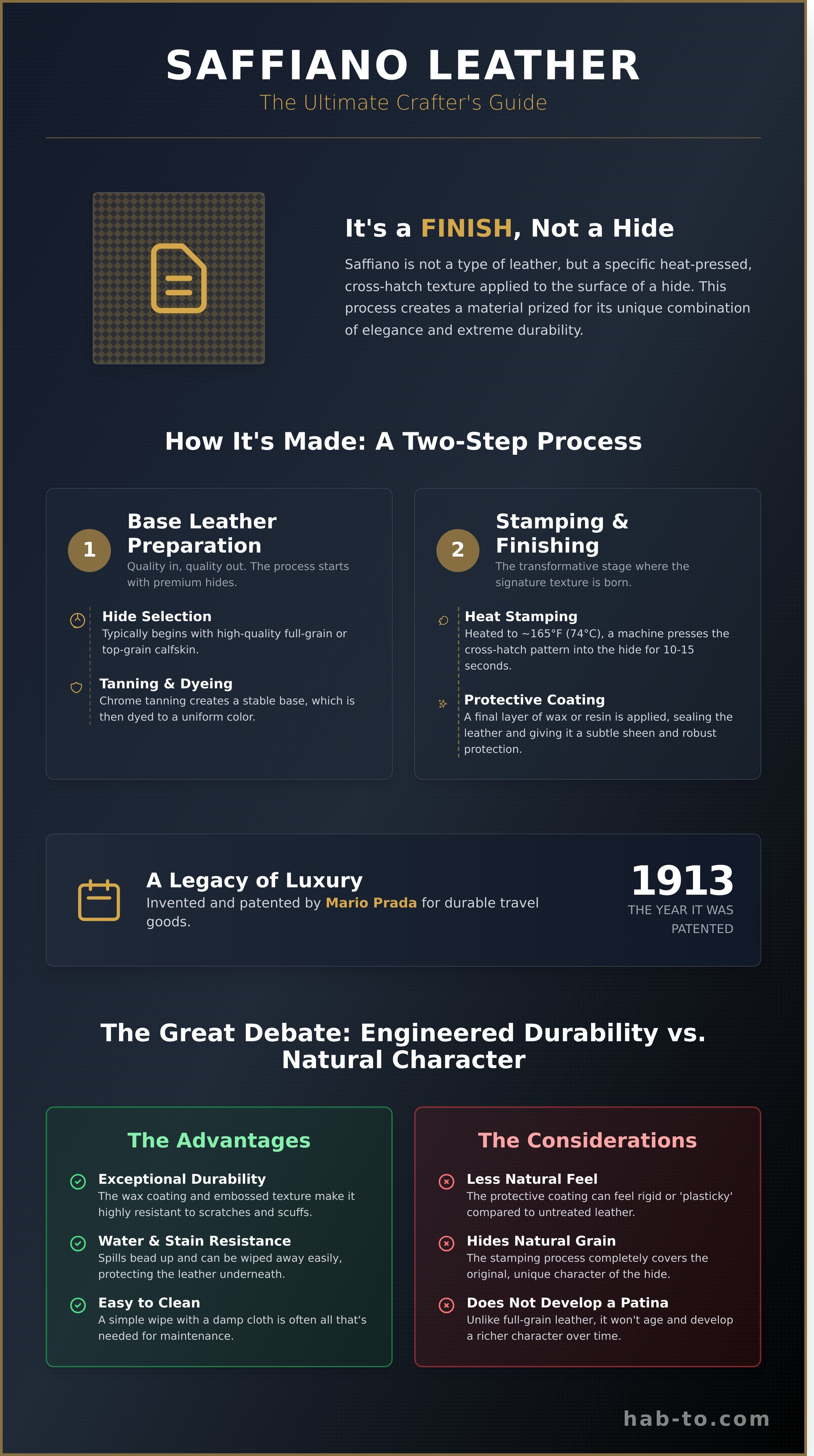
Let's get straight to the point. When you ask, "what is saffiano leather," the most important thing to understand is that Saffiano is not a type of hide, but a specific finish applied to it. It refers to the distinctive cross-hatch texture that is pressed into the material's surface, creating an iconic and highly durable product. This treatment transforms the leather, giving it a unique combination of elegance and resilience that stands up to daily life.
To get a better sense of this unique finish and how it feels, take a look at this detailed overview:
The Saffiano process is a testament to clever craftsmanship. After the pattern is stamped, the leather is treated with a pigmented or wax finish. This final layer is what gives Saffiano its most celebrated qualities: it becomes incredibly resistant to scratches, stains, and even water. While the finish is the star, the foundation matters. The underlying material is typically a premium, full-grain calfskin, ensuring the final product retains the quality and structure of genuine Leather.
The Signature Cross-Hatch Pattern
The Saffiano texture is unmistakable. It consists of a series of fine diagonal lines pressed into the hide, creating a precise cross-hatch pattern. This isn't a natural grain; it's achieved by a machine that stamps the pattern onto the leather at a high temperature for about 10-15 seconds. This method ensures a perfectly uniform and consistent appearance across the entire piece, something a natural grain could never guarantee.
The Prada Connection: A Brief History
The origin of Saffiano is tied directly to one of fashion's biggest names: Mario Prada. He invented and patented this finishing technique in 1913, making it a signature of the Prada brand. Originally, he used it for luxury luggage and travel accessories, valuing its incredible durability for items that needed to withstand constant use. Its success was so profound that, after the patent expired, countless other high-fashion houses adopted it for their own handbags, wallets, and accessories.
How is Saffiano Leather Made? A Step-by-Step Look at the Process
Saffiano leather’s journey from a natural hide to a finished product is a testament to industrial precision and modern engineering. To truly understand what is Saffiano leather, it's crucial to see it not as a specific type of hide, but as a unique finishing process applied to leather. This stands in stark contrast to the slow, hands-on artistry of traditional vegetable tanning, a method we champion for the way it celebrates the natural grain and character of the hide. The Saffiano process, on the other hand, uses sophisticated machinery to create a uniform, durable, and highly resilient surface. While the technique is industrial, the final quality of the product is still deeply rooted in the quality of the base hide it starts with. A poor hide will result in a poor Saffiano, no matter how perfect the finish.
Step 1: Selecting and Preparing the Base Leather
The process begins with a carefully selected hide. For high-end goods, this is typically a premium full-grain or top-grain calfskin, chosen for its smooth surface and durability. The quality of this base layer is non-negotiable for a lasting product. The journey then follows these key preparations:
- Tanning: The hide is tanned to stabilize its structure. Chrome tanning is the most common method here, valued for its speed and ability to produce a soft, consistent leather ready for finishing.
- Dyeing: After tanning, the leather is dyed to a solid base color. This creates a uniform canvas, ensuring the final color is even and vibrant beneath the textured finish.
Step 2: The Stamping and Finishing Process
This is the transformative stage where the leather gets its signature identity. It's a high-pressure, high-temperature process requiring absolute precision.
- Heating and Stamping: The dyed hide is heated to a specific temperature, typically around 165°F (74°C). A large machine then presses a metal plate engraved with the iconic cross-hatch pattern into the leather’s surface for approximately 10-15 seconds. This immense pressure permanently embosses the texture.
- Protective Coating: To complete the process, a final protective layer of specialized wax or synthetic resin is applied. This finish is what imparts many of the unique properties of Saffiano leather, from its signature subtle sheen to its renowned resistance against scratches, stains, and water. It effectively seals the leather, creating a barrier that is both beautiful and incredibly practical.
The Great Debate: Pros and Cons of Saffiano Leather
Few materials divide the leather community quite like Saffiano. Its signature cross-hatch pattern and stiff feel often lead to the critique that it's 'plasticky' or artificial. The truth is, the answer to the question What is Saffiano Leather? often depends on who you ask. For the daily commuter, it might be the perfect, worry-free material. For a craftsman who loves the soul of a hide, it can feel like a compromise. At its core, the choice is a trade-off: the unique, evolving character of natural leather versus the consistent, engineered durability of a finished one.
The Advantages: Why Luxury Brands Love It
From a purely practical standpoint, the appeal of Saffiano is undeniable. Luxury brands didn't adopt it by accident; they chose it for its remarkable performance in everyday life. For the consumer, this translates to several key benefits:
- Exceptional Durability: The wax coating makes it incredibly resistant to scratches and scuffs. You can toss a Saffiano wallet into a bag with your keys and worry far less about damage.
- Water and Stain Resistance: Spilled a coffee? Caught in the rain? A quick wipe with a damp cloth is usually all that's needed to clean it, making it exceptionally low-maintenance.
- Maintains Its Structure: The stiffness isn't a flaw; it's a feature. This rigidity is perfect for creating structured handbags, briefcases, and accessories that won't sag or lose their shape over time.
- Uniform Appearance: The stamped texture and color coating create a perfectly consistent finish, hiding any natural imperfections in the hide. This ensures every product looks identical, a key for brand consistency.
The Disadvantages: An Artisan's Critique
From a purist's or artisan's perspective, however, the very things that make Saffiano practical are also its biggest drawbacks. Here at Hab-To, we believe in the soul of the material, and that's where this particular finish can fall short for a true leather lover.
- The Natural Grain is Hidden: The heavy finish completely obscures the beautiful, unique grain of the leather beneath. You lose all the character-the story-of the original hide.
- It Doesn't Develop a Patina: Unlike a quality vegetable-tanned leather that darkens and softens with use, Saffiano looks the same on day one as it does on day one thousand. It doesn't age gracefully; it simply wears out.
- A Synthetic Feel: The protective coating removes the warm, supple touch that leather lovers cherish. It can feel cold and stiff, lacking that organic connection to the material.
- Difficult to Repair: While resistant to light scratches, a deep gouge or crack in the finish is nearly impossible to repair seamlessly. You can't simply buff it out or recondition it like you can with natural full-grain leather.
Saffiano vs. Other Leathers: A Crafter's Comparison
As crafters, we know that the soul of a project lies in the material. Saffiano leather, with its distinctive finish and durability, certainly has its place in the world of luxury goods. But to truly understand what is saffiano leather from a hands-on perspective, it’s essential to compare it to the leathers we often reach for in our workshops. The right choice always comes down to the story you want your finished piece to tell.
Saffiano vs. Full-Grain Vegetable Tanned Leather
This is a comparison of machine-like precision versus natural, evolving character. While Saffiano’s stamped cross-hatch pattern is uniform and predictable, a beautiful piece of full-grain veg-tan showcases the hide's unique, open grain. The biggest difference for a true artisan is in the aging process:
- Aging: Saffiano is static; its protective wax coating ensures it looks nearly the same on day 1,000 as it did on day one. Veg-tan, however, comes alive with use, developing a rich, personal patina that is impossible to replicate.
- Workability: The Saffiano finish resists traditional leatherworking techniques. You can't tool it, burnish its edges to a high gloss, or dye it. Veg-tan is a blank canvas, ready to absorb your creativity.
Saffiano vs. Pebbled Leather
Both leathers have a textured surface, but they get there in very different ways. Saffiano’s texture is a rigid pattern pressed onto the leather by a machine. In contrast, the soft, irregular bumps of pebbled leather are often created by tumbling the hide in a large drum, which naturally raises and softens the grain. Saffiano feels structured and firm, making it ideal for rigid briefcases, while the pliability of pebbled leather is perfect for a more relaxed, slouchy tote bag.
Saffiano vs. Synthetic (Vegan) Leather
Here, the distinction is fundamental. Saffiano is genuine leather that has been finished, whereas most "vegan leather" is a plastic-based material like Polyurethane (PU) or PVC. While a Saffiano finish conceals the natural grain, the underlying material is still a real hide, offering superior durability and tear resistance compared to most synthetics. It’s a core part of our philosophy: No synthetics. No compromises. For us, the breathability and strength of real leather are non-negotiable for quality craftsmanship.
Ultimately, the choice is yours. Saffiano offers consistency and resilience, but for projects that demand character, a story, and the touch of an artist's hand, nothing compares to the beauty of natural grain leather.
Working With and Caring for Saffiano Leather
Understanding what is Saffiano leather is the first step; knowing how to care for it and use it in your projects is the next. Its unique, coated finish means its needs are quite different from the vegetable-tanned leathers we often work with here. Whether you own a Saffiano handbag or are considering it for a project, this practical advice will help you get the most out of it.
Simple Cleaning and Maintenance
The beauty of Saffiano leather lies in its resilience and low-maintenance nature. The protective wax finish that gives it its signature texture also shields it from most daily wear and tear. Forget complex conditioning routines; simple cleaning is all you need.
- For everyday dust and minor spills, simply wipe the surface with a soft, lint-free, damp cloth.
- For more stubborn marks, use a small amount of mild soap on your damp cloth, gently rub the area, and then wipe it clean with a fresh damp cloth. Always pat the area dry afterwards.
- Do not use leather conditioners. The wax coating prevents conditioners from penetrating the hide, meaning they will only sit on the surface and create a sticky residue.
- Avoid harsh chemical cleaners, alcohol-based solutions, and abrasive sponges, as these can strip or scratch the protective finish.
Popular Applications and Use Cases
Designers choose Saffiano for its specific structural and durable qualities. It’s the material of choice for items that need to look sharp and withstand constant use. You’ll commonly find it used for:
- Structured Bags: Its rigidity is perfect for creating handbags, briefcases, and laptop bags that hold their shape without slouching.
- Small Leather Goods: The exceptional scratch resistance makes it ideal for wallets, phone cases, and cardholders that are frequently handled and tossed into bags.
- Travel Accessories: From passport holders to luggage tags, Saffiano’s durability ensures it can handle the bumps and scrapes of travel while remaining easy to wipe clean.
Tips for Crafters
While Saffiano is a premium material, its finished nature presents certain limitations for craftsmanship. It’s not a leather for tooling, stamping, or dyeing-the resin coating prevents any new impressions or colors from taking hold. Instead, it excels in cut-and-sew projects where precision and structure are key.
My top tip? Always use a very sharp blade. The tough finish can dull a blade more quickly than softer leathers, and a clean, crisp cut is essential for a professional-looking seam. Because it doesn't have a 'natural' grain direction in the same way as other hides, your focus should be purely on pattern accuracy and clean construction.
Need advice on the right leather for your project? I'm Mike, let's talk.
Embracing Craftsmanship Beyond the Finish
Ultimately, the answer to what is saffiano leather lies in its distinctive, machine-pressed finish. It’s a durable, water-resistant material created by pressing a cross-hatch pattern onto a wax-coated hide. While this makes it incredibly practical for high-use goods, it also means the natural beauty and unique grain of the leather are hidden-a key consideration for any discerning artisan.
When a project calls for leather that tells a story, nothing compares to the authentic character of a natural hide. At Hab-To, our 160+ years of family experience are dedicated to sourcing premium, sustainable, vegetable-tanned leathers that celebrate this uniqueness. We support crafters at every level with no minimum order requirements because we believe in quality without compromise. If you're ready to work with materials that have soul, we invite you to explore our collection of natural, full-grain leathers for true craftsmanship.
Whatever path your craft takes you on, choose your materials with intention. Happy crafting!
Frequently Asked Questions About Saffiano Leather
Is Saffiano leather real leather?
Yes, authentic Saffiano leather is absolutely real leather. It typically starts with a high-quality calfskin base. The signature cross-hatch texture is not natural; it's embossed into the hide by a machine at high temperature. Afterwards, a protective wax finish is applied. So, while the surface is heavily treated for durability, the foundation of the material is genuine animal hide, combining traditional material with modern innovation.
Is Saffiano leather good quality?
Saffiano leather is considered excellent quality, prized for its remarkable durability and sophisticated appearance. The wax coating makes it highly resistant to scratches, stains, and water, ensuring it holds up beautifully to daily use. While it doesn't develop a rich patina like vegetable-tanned leathers, its quality lies in its resilience and consistently pristine look, making it a premium choice for luxury goods that last.
Why is Saffiano leather so expensive?
The cost of Saffiano leather is a reflection of its premium base material and the intricate finishing process. It begins with high-grade leather, which is a significant expense on its own. The subsequent steps-heat-pressing the precise pattern and applying the specialized wax coating-require specific machinery and skilled craftsmanship. This combination of quality raw materials and detailed production justifies its position as a luxury material.
Does Saffiano leather peel or crack?
Properly crafted, genuine Saffiano leather is exceptionally resistant to peeling or cracking. The wax finish is fused onto the leather, creating a tough, protective layer that is both durable and flexible. Issues with peeling are almost always seen in low-quality imitations or synthetic materials trying to mimic the style. True Saffiano is engineered for longevity and to withstand the rigors of everyday life without failing.
Is Saffiano leather waterproof?
While not fully waterproof (meaning you shouldn't submerge it), Saffiano leather is highly water-resistant. The protective wax finish causes liquids to bead up and roll off the surface rather than soaking in. This makes it incredibly practical for items like handbags and briefcases that might be exposed to rain. If it gets wet, you can simply wipe it dry with a soft cloth without damaging the leather underneath.
How can you tell if Saffiano leather is real?
To tell if it's real, examine the texture and feel. The cross-hatch pattern on authentic Saffiano is crisp and uniform. The material itself feels structured and firm, not flimsy or plastic-like. While the wax coating masks the typical leather scent, it should not have a strong chemical odor. Understanding what is Saffiano leather-a treated genuine hide-helps distinguish it from cheap synthetic knock-offs which often look and feel inferior.
