What is Waxed Linen Thread? The Artisan’s Guide to Traditional Stitching
Welcome to the workshop. Why does a bespoke saddle from a master atelier feel like a piece of history, while a mass-produced wallet often looks like it belongs in a bargain bin? The secret usually lies in the details you can't see at first glance. If you've ever wondered what is waxed linen thread and why it's the weapon of choice for luxury brands, you're asking the right question. It's more than just a string; it's a structural reinforcement that bonds with leather through natural friction, creating a finish that synthetic fibers simply can't replicate.
You've likely felt the frustration of thread fraying mid-stitch or knots that come undone when the leather is under stress. It's discouraging when a project you've poured hours into ends up looking 'plastic' because of your materials. We're going to fix that. In this guide, you'll learn how to match thread weight to your leather and achieve the luxury look seen in high-end saddlery. We'll walk through everything from LEA counts to the prestigious Lin Câblé sizing so you can choose your materials with the confidence of a master artisan.
Key Takeaways
- Understand exactly what is waxed linen thread and how the combination of natural flax and wax creates a structural bond that synthetic fibers cannot match.
- Learn why top-tier artisans prefer linen’s matte, organic finish and unique 'seating' effect over the shiny, plastic appearance of polyester.
- Master the Lin Câblé sizing system to ensure your thread weight perfectly complements your pricking iron’s stitches per inch (SPI).
- Discover professional techniques like the 'Snap Test' to verify wax quality and prevent fraying before you pull your first stitch.
- Identify the critical differences between generic waxed cord and heritage-grade linen to ensure your projects stand the test of time.
What is Waxed Linen Thread? Defining the Craft Standard
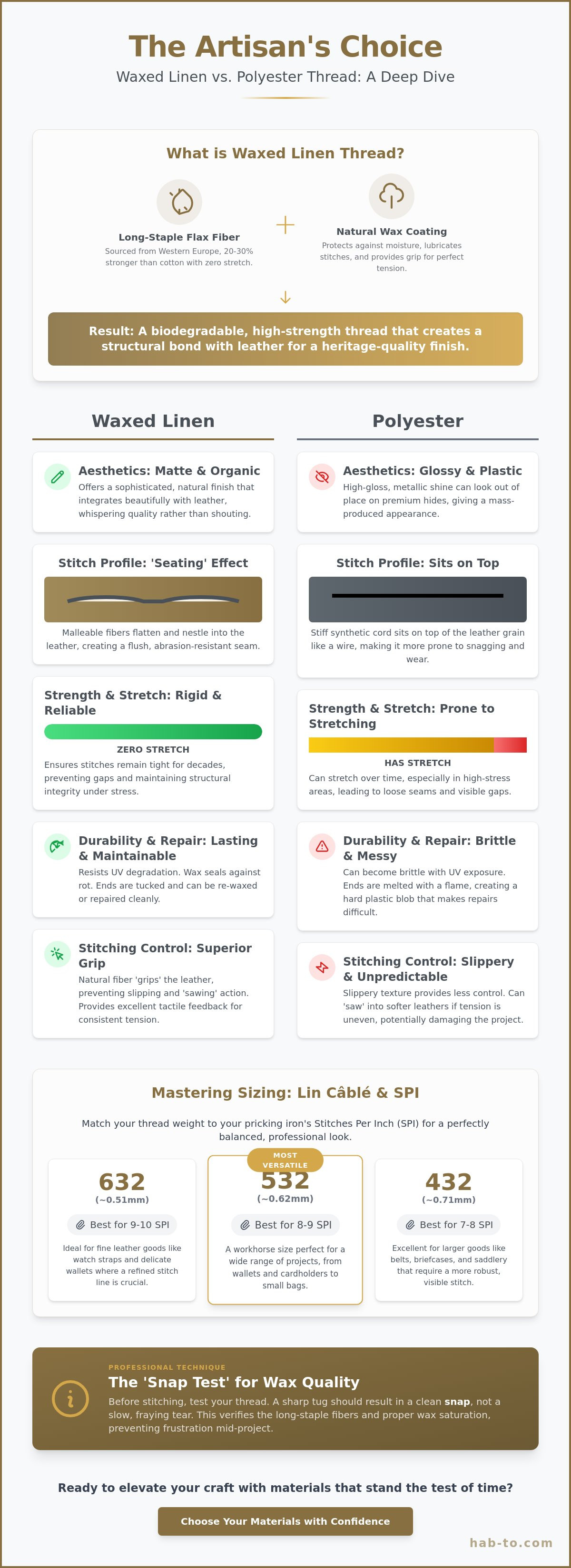
If you're chasing that perfect, traditional finish, you've likely asked: what is waxed linen thread and why does it matter? It's a natural fiber thread derived from the flax plant, renowned for its high tensile strength and its ability to withstand the rigors of daily use. While modern synthetics have their place, linen remains the gold standard for artisans who refuse to make concessions on quality. Unlike polyester, which can stretch and eventually cause gaps in your seams, linen has zero stretch. This rigidity ensures your stitch lines remain tight over decades. Waxed linen thread is the intersection of botanical strength and artisanal protection.
From Flax to Fiber: How Linen is Made
The story of a great stitch begins in the soil. High-quality linen comes from flax fibers, with over 80% of the world's premium supply originating in Western Europe. The production involves a careful retting process, where the stalks are broken down to harvest long, continuous strands. We always look for long-staple linen for hand-stitching. These longer fibers create a smoother cord that won't fray or snap when you pull it tight. It's also 20 to 30% stronger than cotton. Because it's a natural plant product, it's fully biodegradable and carries a much lower environmental footprint than petroleum-based plastics.
The Role of the Wax Coating
The wax isn't just there for a shiny finish. By saturating the fibers in beeswax or paraffin, we create a thread that's built for the real world. This coating protects the core against moisture, sweat, and salt; this prevents the rot that often kills vintage leather goods. Lubrication is another massive benefit. The wax allows the thread to glide through tight holes made by your pricking iron without generating friction heat. This heat can actually melt synthetic threads, but with linen, it just helps the wax settle. Finally, the "tack" of the wax provides a unique grip. It holds the thread in place while you prepare your next pass, making it much easier to maintain the perfect tension required for professional-grade saddlery. It's this combination of natural grit and protective coating that makes it the choice for heritage projects.
Linen vs. Polyester: Why Traditional Artisans Make the Switch
Many makers start their journey with synthetic thread because it's accessible and forgiving. However, as you refine your technique, the question of what is waxed linen thread becomes less about a definition and more about a standard of excellence. The most immediate difference is aesthetic. Polyester has a high-gloss, almost metallic shine that can look 'plastic' against premium hides. Linen is different. It offers a sophisticated matte finish that feels organic and integrated. It doesn't shout; it whispers quality.
The secret to that high-end saddlery look is the 'seating' effect. While synthetic cord often sits on top of the grain like a stiff wire, linen fibers are slightly malleable. Under the tension of a proper saddle stitch, the thread flattens and nests into the leather surface. This creates a flush, professional profile that's much more resistant to abrasion. To truly appreciate this durability, you can look back at the , which has been trusted for centuries to hold together everything from ship sails to revolutionary war gear.
Repairability is another win for the traditionalist. When you finish a polyester stitch, you melt the end with a flame, creating a permanent plastic blob. If that stitch ever breaks, the repair is messy. Linen ends are tucked and hammered, and the fibers can be re-waxed or conditioned over time. Natural linen also stands up to the sun. While cheap synthetics can become brittle and 'crunchy' after years of UV exposure, linen maintains its structural integrity.
Longevity and the 'Rot' Myth
New crafters often worry that natural fibers will rot. This is largely a myth when dealing with professional-grade materials. Modern saturation techniques ensure the wax deeply penetrates the core of the thread, sealing it against internal moisture and bacteria. We've seen century-old saddlery in museums where the leather has started to crack and fail, yet the linen stitching remains tight and unbroken. It's a testament to the fiber's incredible resilience when properly prepared.
Tactile Feedback and Stitching Control
Stitching with linen gives you a level of control that polyester can't match. Synthetic threads are slippery and can 'saw' into soft hides if your tension is uneven. Linen has a natural 'grip' that holds its position. This is why it's our preferred choice for textured materials like Badalassi Pueblo leather. The rustic, scuffed surface of Pueblo deserves a thread that shares its character. Because linen doesn't stretch, you get immediate tactile feedback with every pull. You'll feel exactly when the knot is set. If you're ready to elevate your bench game, feel free to browse our collection of heritage tools designed for these traditional methods.
Understanding Thread Sizes and Weights (Lin Câblé)
Once you understand the botanical heritage of the material, the next hurdle is mastering the technical specifications. If you've spent time researching what is waxed linen thread, you've likely encountered the term "Lin Câblé" followed by a series of three-digit numbers. This is the traditional French numbering system, and it's the language of high-end ateliers. Unlike the decimal systems used for synthetic cords, this system is inverse. A higher number indicates a thinner thread. For example, 632 is significantly finer than 332. Choosing the wrong weight can ruin the visual balance of your project, making your stitches look either crowded or fragile.
You might also see notations like 18/3 or 20/3. While these are common in the world of bookbinding, they describe the weight of the individual yarn and the number of plies. In professional leathercraft, we stick to the Lin Câblé standard because it's designed specifically for the high-tension environment of a saddle stitch. It's also important to distinguish between round and flat threads. Linen is naturally round. This shape creates a distinct, three-dimensional "rope" effect in your stitch line that flat synthetic threads simply can't replicate. It's this round profile that gives traditional leatherwork its signature texture.
The French Numbering System Explained
Mastering these numbers is a rite of passage for any serious maker. Lin Câblé refers to the 'cabled' or multi-ply twist of the thread. Here is how those numbers translate into real-world diameters:
- 332 (0.77mm): Best for heavy bags, straps, and structural seams where strength is paramount.
- 432 (0.63mm): A versatile weight for medium-sized goods and rugged accessories.
- 532 (0.57mm): The "goldilocks" size for many, perfect for standard wallets and cardholders.
- 632 (0.51mm): An elegant, thin thread for fine watch straps and delicate interior pockets.
Choosing the Right Weight for Your Leather
The golden rule is to match your thread weight to your pricking iron’s Stitches Per Inch (SPI). If you're working with a high-density stitch like 10 or 12 SPI, a thick 332 thread will look like a cluttered mess. Conversely, a thin thread on a 6 SPI seam will look weak and out of proportion. We recommend pairing ultra-fine threads like 632 or 832 with delicate materials like Maryam Shell Cordovan. The tight grain of Cordovan demands a thread that sits neatly without overwhelming the leather's natural luster. For more rugged projects using Virgilio Vacchetta, you can step up to a 432 or even a 332 to provide the visual and structural "heft" that a heavy-duty vegetable-tanned hide requires. Getting this balance right is what separates a hobbyist's project from an heirloom piece.
How to Work with Waxed Linen: Professional Tips
Working with natural fibers requires a different touch than handling synthetics. When you first understand what is waxed linen thread, you realize it's a living material that responds to heat and tension. Before you pull your first stitch, perform the 'Snap Test'. Hold a short length of thread between your hands and pull it taut quickly. It should make a sharp, audible 'snap'. If it sounds dull or feels limp, it likely needs more wax to perform correctly. This simple check ensures the thread has enough structural integrity to survive the friction of the sewing process.
Managing the organic nature of linen is part of the craft. Unlike polyester, which you can melt to a stop, linen requires mechanical precision. Use a very sharp knife for all cuts. A dull blade will crush the fibers and lead to 'fuzzing' at the tips, which makes threading a nightmare. If you find your thread fraying mid-stitch, it's often because the wax has been stripped away by the edges of the leather. Tapering your thread ends is another vital trick. Use your knife to thin the last inch of the thread before passing it through the needle. This prevents a bulky 'shoulder' that can get stuck in tight awl holes.
The Custom Waxing Technique
Many master artisans prefer to buy 'lightly waxed' thread and apply their own finish. This allows you to control the 'tack' based on the specific leather you're using. We recommend the 'friction pull' method. Pass the thread through a block of pure beeswax, then pull it rapidly through a piece of scrap leather or a soft cloth held between your fingers. The heat generated by the friction melts the wax, sinking it deep into the flax core. For projects requiring extreme durability, some makers add a small amount of pine rosin to their beeswax. This increases the grip, ensuring the thread stays exactly where you pull it during a complex saddle stitch.
Fixing Mistakes and Finishing Ends
One of the biggest shifts for those moving away from polyester is the finish. You cannot use a lighter here. Burning linen just creates ash and ruins the aesthetic of a high-end piece. The traditional way is to backstitch two or three times, then trim the thread flush with a sharp blade. Use a bone folder to firmly rub over your stitch line once you're done. This 'sets' the stitches, flattening the linen and forcing the wax to bond with the leather fibers. If you're looking to upgrade your bench, you can explore our range of professional leatherworking tools to get the precision these traditional methods demand. Properly finished, your starting and ending knots should be completely hidden within the layers of the hide, leaving a clean, unbroken line of heritage-grade stitching.
Sourcing Quality: Why the Right Materials Define the Result
Choosing your materials is where the soul of a project begins. Now that you understand what is waxed linen thread and how it behaves under tension, you can see why generic 'waxed cord' often falls short. Many mass-market cords are actually polyester or low-grade cotton disguised with a heavy, sticky layer of paraffin. They lack the internal strength of long-staple flax and the refined finish of a true cabled thread. At Hab-To Leather House, we prioritize European-sourced threads for heritage projects. Because Western Europe produces over 80% of the world's premium flax fibers, these threads offer a level of consistency and durability that cheaper alternatives simply can't match.
The relationship between your thread and your hide is a partnership. Natural linen is the perfect companion for vegetable tanned leather. Both materials are organic, breathable, and designed to age gracefully over time. As the leather develops a rich patina, the linen thread settles further into the grain, creating a bond that feels like a single, unified piece of craft. We're building a workshop culture that honors 160 years of leatherworking tradition. This means choosing materials that won't just look good today, but will remain structurally sound for the next generation.
The Artisan's Investment
It's a common irony in leathercraft that thread is the least expensive part of a project, yet it's the most likely point of failure. You might spend significant sums on premium Maryam or Badalassi hides, only to have the entire piece compromised by a thread that frays or fades. Investing in professional-grade linen increases the resale value of your finished goods. Discerning collectors look for that matte, hand-stitched signature. Beyond the economics, there's a deep sensory satisfaction in using tools that feel alive. The way a well-waxed linen cord glides through your fingers is a tactile reminder of why we choose the slow way of doing things.
Connecting the Community
We know that starting a heritage workshop can feel overwhelming. That's why we support small crafters by offering professional materials with no minimum order requirements. You don't need a massive industrial account to access the same threads used by the world's leading luxury houses. Once you've selected your thread, I invite you to check our Essential Leather Hardware guide to ensure your buckles and rivets match the quality of your stitching. Trust the process. Trust your materials. Every stitch is a lesson, and with the right foundation, your work will speak for itself for decades to come.
Master the Art of the Heritage Stitch
Choosing the right materials is the difference between a project that merely holds together and one that becomes an heirloom. By now, you understand exactly what is waxed linen thread and why its zero-stretch, natural grip is the secret to professional saddlery. You've learned how the Lin Câblé system ensures the perfect visual balance and how traditional finishing techniques preserve the organic beauty of your leather. These details might seem small; however, they define the longevity and character of every piece you create.
At Hab-To Leather House, we bring 160 years of family leather expertise to your bench. Based in Amsterdam with global shipping, we support independent crafters by offering premium supplies with no minimum order requirements. We believe that every maker deserves access to the world's finest materials. Shop our curated selection of premium leather and tools at Hab-To Leather House and start your next project with the confidence of a master artisan. Trust your hands, respect the material, and enjoy the slow, rewarding process of traditional stitching.
Frequently Asked Questions
Is waxed linen thread stronger than polyester?
Linen thread is not technically stronger than polyester in terms of raw tensile strength; however, it is 20 to 30% stronger than cotton and significantly more stable. While polyester can stretch under pressure, linen remains rigid. This lack of stretch ensures your seams don't migrate over time. For leatherworking, the strength of the fiber is less important than its ability to stay tight and seated within the hide.
Does waxed linen thread rot or mold over time?
Professional-grade linen thread will not rot or mold under normal circumstances. The heavy wax saturation seals the flax core, creating a barrier against moisture and bacteria. Artisans have found centuries-old saddlery where the linen stitching outlasted the leather itself. As long as you use high-quality thread and store your finished goods in a ventilated area, the natural fibers will remain structurally sound for decades.
What size waxed linen thread should I use for a wallet?
For most wallet projects, we recommend using Lin Câblé size 532 (0.57mm) or 632 (0.51mm). If you're working with a high stitch density of 9 to 10 stitches per inch, the thinner 632 provides a very elegant, refined look. For more rugged cardholders or exterior seams, the 532 is the "goldilocks" weight that balances strength with a traditional aesthetic. Always match your thread thickness to your pricking iron size.
Can I use waxed linen thread in a sewing machine?
No, you should never use waxed linen thread in a sewing machine. The wax coating will quickly rub off and gum up the tension discs, bobbin case, and needle bar of your machine. This leads to skipped stitches and expensive repair bills. This material is designed specifically for traditional hand-stitching techniques like the saddle stitch, where the wax provides necessary lubrication and grip as you pull each pass by hand.
How do I stop my linen thread from fraying while I stitch?
Fraying is usually caused by using thread lengths that are too long or needles that are too small. Try to limit your thread to about 1.5 meters per pass. If the thread starts to look "fuzzy," it means the wax has been stripped away by the leather. You can stop this by re-waxing the thread mid-stitch using a block of beeswax. A sharp needle also ensures the thread doesn't snag on the internal leather fibers.
Do I need to add more wax to thread that is already waxed?
It's often beneficial to add a fresh layer of wax, even if the thread is pre-waxed. Factory coatings can be light or may have dried out during storage. Passing the thread through a block of beeswax before you start increases the "tack" and lubrication. This helps the thread pass through tight holes more easily and ensures the knots lock firmly into the center of your leather layers for a permanent bond.
Why is linen thread more expensive than nylon or polyester?
Linen thread carries a higher price point because it's a natural, labor-intensive crop. Unlike petroleum-based polyester, flax must be grown, retted, and spun into long-staple fibers. When asking what is waxed linen thread, you're really asking about a premium agricultural product. Most high-quality flax is grown in Western Europe under strict standards, resulting in a superior, biodegradable material that synthetic alternatives simply cannot replicate in feel or appearance.
What is the difference between beeswax and paraffin-waxed thread?
Beeswax is a natural product that provides a superior "grip" and a pleasant, organic scent. It stays slightly tacky, which helps the thread seat into the leather and stay in place. Paraffin is a synthetic petroleum derivative that's often more slippery and less expensive. While paraffin works well for lubrication, most heritage artisans prefer beeswax because it creates a more secure structural bond and aligns with the traditional ethos of using natural materials.