

Choosing the Best Leather for Bag Making: A Professional Artisan’s Guide
The success of a leather bag is 70% material selection. Choosing the right leather for bag making matters more than your stitching technique or the brand of your tools. If you have ever unrolled a beautiful hide only to realize it is too floppy for a tote or too stiff for a clutch, you know the frustration of a wasted investment. It is a common hurdle for artisans trying to translate complex tannery jargon into practical crafting decisions.
I understand that feeling of uncertainty when staring at a screen full of weight measurements and tannage types. You want a bag that looks professional and ages beautifully, not something that loses its shape after a week. This guide will help you master the art of selecting the perfect hide by breaking down weight, temper, and tannage for every bag style. We will look at how to decode "tannery talk" and find high-quality European leather without the stress of massive minimum orders. By the end, you will have the confidence to choose the exact material your project deserves.
Key Takeaways
- Understand the critical difference between leather weight and temper to build bags that hold their shape for years.
- Learn why vegetable-tanned leather for bag making is the industry gold standard for durability and a beautiful natural patina.
- Match your project to the right hide by following a professional framework for tote bags, clutches, and messenger styles.
- Overcome common crafting challenges like hand-stitching thick hides and selecting the best parts of the shoulder or belly for specific components.
- Discover how to source premium European materials with no minimum orders to keep your small business or hobby agile.
The Fundamentals: Understanding Weight and Temper in Bag Making
You can't build a house on a weak foundation. The same logic applies to your craft. Selecting the right leather for bag making is the most critical decision you will make before you ever pick up a knife. If you get the weight or the temper wrong, the project is doomed before the first stitch. Understanding these technical specs isn't just about "tannery talk"; it's about predicting how your bag will behave in the real world. Most hides go through either chrome and vegetable tanning, which significantly influences the final density and durability of the material.
To better understand this concept, watch this helpful video:
Decoding Leather Thickness (The Ounce vs. MM Guide)
In the leather world, thickness is often measured in ounces rather than standard metric units. One ounce equals approximately 0.4mm of thickness. This can be confusing if you're used to working with a ruler, so a leather thickness gauge is a small investment that will save you from costly errors. For projects requiring a sturdy, character-filled finish, consider a robust hide like Badalassi Pueblo, which sits in the 5-6oz range.
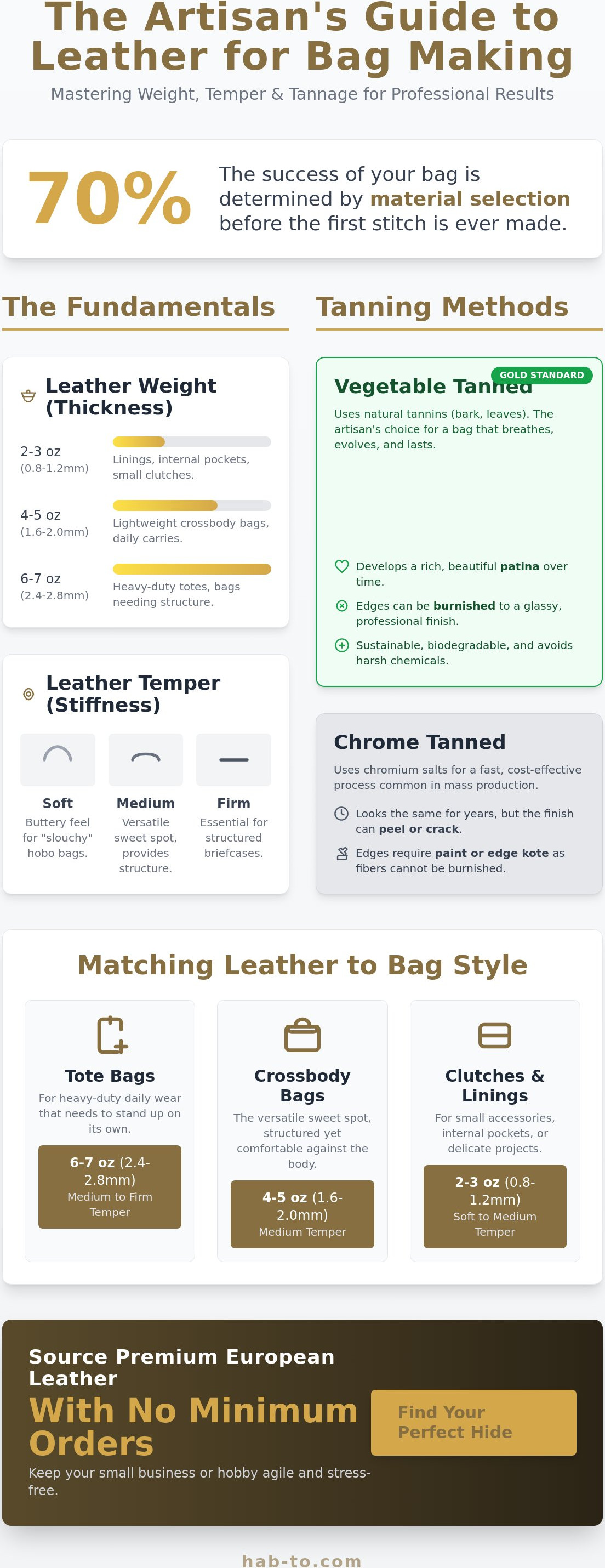
- 2-3oz (0.8mm - 1.2mm): Ideal for linings, internal pockets, or very small clutches.
- 4-5oz (1.6mm - 2.0mm): The standard weight for lightweight crossbody bags or daily carries.
- 6-7oz (2.4mm - 2.8mm): Necessary for heavy-duty totes and bags that need to survive years of daily wear.
The Temper Test: How Will Your Bag Stand Up?
Temper refers to the "memory" or stiffness of the hide. It determines whether your bag stands tall or collapses into a pile of beautiful leather. Soft temper hides have a buttery feel and are perfect for "slouchy" hobo bags or projects with "turned" construction. Medium temper is the versatile sweet spot. It provides enough structure for a crossbody bag but remains comfortable against the body. Firm temper is essential for structured briefcases and bags that must stand upright on their own.
Beginners often make the mistake of choosing a soft temper for unlined bags. Without a lining to provide support, the bag will quickly lose its shape. Be honest about your tools as well. Domestic sewing machines often struggle with anything over 4oz, especially when crossing seams. If you're working with a home machine, choosing a medium weight leather for bag making and pairing it with a thin lining is often the smartest path to a professional result.
Vegetable Tanned vs. Chrome Tanned: Which is Best for Your Project?
The tanning method you choose defines the soul of your bag. Chrome tanning uses chromium salts to speed up the process; it is fast and cost-effective. However, vegetable tanning remains the undisputed gold standard for artisanal leather for bag making. Instead of harsh chemicals, this method relies on natural tannins found in tree bark and leaves. This traditional tanning and finishing process creates a material that breathes and evolves with the user.
Think about the patina factor. A chrome-tanned bag looks the same on day one as it does in year three, right until the finish starts to peel. A vegetable-tanned bag is different. It absorbs the oils from your skin and the sunlight from your travels. It develops a rich, deep glow over time. Beyond aesthetics, veg-tan offers a major technical advantage: edge burnishing. Because the fibers are dense and natural, you can achieve a professional, glassy edge with just a wooden slicker and some water. Chrome-tanned edges usually require layers of plastic-based paint to look finished because the loose fibers cannot be compressed through friction.
The Sustainable Choice: Why We Prioritise Vegetable Tanned Hides
Sustainability isn't a trend for us; it's a foundation. Vegetable tanning is biodegradable and avoids the heavy metal runoff often associated with mass-market production. You can identify high-quality veg-tan by its earthy, sweet scent and its firm, responsive feel. At Hab-To Leather House, we draw on a 160-year heritage of sourcing these premium materials from the best European tanneries. We believe in providing hides that respect both the environment and the longevity of your craft. It is worth checking our collection of Virgilio Vacchetta to see how tradition meets modern color palettes.
When to Consider Chrome-Free or Specialty Leathers
Modern European tanneries are pushing boundaries with chrome-free alternatives that offer unique textures and softer tempers. These leathers provide a supple hand-feel while maintaining an eco-conscious profile. If you want a durable material with a distinct character that stands out from factory-made goods, explore options like Maryam Vacchetta. For a deeper dive into these techniques, read our Vegetable Tanned Leather: The Complete Guide for Crafters. Choosing the right leather for bag making means balancing these traditional methods with the specific structural needs of your design.
Matching the Leather to the Bag: A Style Framework
Structure determines survival. When you design a bag, you are essentially creating an architectural blueprint. The material must support the design. Choosing the right leather for bag making depends entirely on the architecture of your project. If the leather is too soft, the bag collapses. If it's too thick, the bag becomes a heavy burden rather than a functional accessory. When selecting your materials, it's helpful to understand the Federal Trade Commission's Guides for Leather to ensure you are buying genuine, high-quality hides that match their technical descriptions.
The tote bag remains an artisan favorite because of its simplicity and utility. However, utility requires strength. You need a firm temper hide to prevent the "slump" that happens with inferior materials. Selecting a 5-6oz (2.0mm to 2.4mm) weight ensures the bag maintains its silhouette even when empty. Messenger bags and crossbody designs need to move with the body. A 4-5oz leather provides durability without the rigidity of a briefcase. It feels substantial but remains comfortable for daily use. For small leather goods like wallets and clutches, look for thin hides with high-tensile strength. This allows you to keep the profile slim while ensuring the leather doesn't tear at the stitch lines.
Don't overlook internal linings. A high-end bag is defined by what's on the inside. Adding a secondary leather lining, such as a 1.5oz calfskin or goat leather, adds a tactile luxury that fabric simply cannot match. It protects the flesh side of your main hide and adds structural integrity without creating unnecessary bulk. It's the difference between a craft project and a professional heirloom.
The Iconic Pueblo Choice for Character Bags
Pueblo leather is a favorite for a reason. Its unique, roughened texture gives it a rustic look that transforms into a smooth, deep patina over time. Badalassi Pueblo Leather is perfect for bags that need to tell a story. The 1.4mm variants are excellent for small goods, while the 2.4mm thickness provides the rugged durability needed for unlined totes or field bags. Its distinct finish hides scratches well, making it ideal for daily-use items.
The Elegance of Vacchetta for Classic Designs
Vacchetta is the hallmark of heritage bags and high-fashion history. It starts with a smooth, buttery feel and evolves into a rich chestnut color through use. Maryam Vacchetta Leather is the professional choice for classic silhouettes that require a sophisticated evolution. It is particularly effective for straps and handles because of its density and strength. It provides a comfortable grip that only gets better the more it is handled.
Overcoming Common Bag Making Challenges
Even the most seasoned artisans face moments of doubt when a project doesn't behave as expected. One of the most common hurdles is the technical limitation of your equipment. You might look at a beautiful 6oz hide and worry that your sewing machine simply won't handle the thickness. In many cases, you're right. Domestic machines aren't built for heavy-duty leather for bag making. However, this shouldn't stop you from using premium materials. Hand-stitching with a saddle stitch is actually more durable than a machine lockstitch. It adds a level of artisanal value that mass-produced bags can never replicate. If you're willing to slow down, the thickness of your material becomes a mark of quality rather than a technical barrier.
Natural materials also come with natural stories. You will occasionally find scars, insect bites, or fat wrinkles on a hide. Instead of seeing these as flaws to be discarded, try to embrace them. Placing a unique scar on a non-structural part of the bag can prove the authenticity of the material. It shows your customer that they are holding a piece of nature, not a synthetic imitation. Managing these "imperfections" is part of the skill that separates a hobbyist from a professional maker.
Navigating Hide Anatomy: Where to Cut Your Bag Panels
Understanding where to cut your panels is just as important as the leather itself. Every hide has "growth" and "stretch" patterns that change depending on the area. The shoulder is the densest, most stable part of the animal. It's the ideal place to cut your main body panels and long straps. The belly, however, is prone to stretching and has a looser fiber structure. Use these softer sections for internal pockets, gussets, or decorative linings where structural rigidity isn't the priority. Mastering this layout is a key part of Buying Leather Online: Sourcing Hides that actually work for your specific designs. It's about maximizing your yield and respecting the animal by reducing waste.
Finishing Touches: Edges and Hardware
Your choice of finishing should match the leather's personality. If you've chosen a rustic vegetable-tanned leather for bag making, a high-friction burnish with wood and water is the most authentic choice. If you're working with a modern, chrome-free hide, edge paint provides a clean, contemporary look. Don't forget the importance of thread weight. A thick leather requires a substantial thread, usually 0.8mm or 1.0mm, to maintain visual balance. Finally, support your heavy leather with hardware that won't fail under pressure. We always recommend using solid brass hardware. It offers the strength needed to prevent the leather from tearing at stress points like D-ring attachments and handle joins.
Ready to start your next project with materials that stand the test of time? Explore our collection of Badalassi Pueblo Leather and find the perfect match for your design.
Sourcing Quality Leather in Europe: The Hab-To Advantage
Finding high-quality leather for bag making in Europe shouldn't feel like a gatekept secret. Many artisans struggle to find a balance between premium quality and accessible quantities. Large tanneries often require massive minimum orders that are impossible for small workshops or hobbyists to meet. This is where our Amsterdam-based wholesale approach changes the game. We believe that every maker deserves access to the same hides used by luxury fashion houses, regardless of the size of their project.
Transparency is our currency. When you source from us, you aren't just buying a piece of material from an anonymous big-box retailer. You're tapping into 160 years of family experience. This heritage means we've spent generations building relationships with the finest tanneries in Italy and beyond. We've done the vetting for you. We understand the stories behind the hides and the specific technical qualities of every side we stock. This personal connection ensures that the material you receive is exactly what you need for a professional result.
Our "No Minimum Order" policy is a core part of our mission. It allows you to stay agile. You can experiment with a new color or a specific temper without the financial risk of buying a whole pallet. We provide a tactile advantage that digital-only stores can't match. If you're unsure about a specific hide, you can reach out for personalized advice. We're here to help you match your pattern to the perfect material, ensuring your vision translates into a durable, beautiful bag.
From Shell Cordovan to Premium Hides
If you want to create a truly ultra-premium piece, you have to consider Shell Cordovan. Often called the "King of Leathers," it is prized for its incredible density and glassy finish. While it's frequently used for high-end footwear, it makes for stunning accents on luxury bags. To understand why this material is so unique, read our Shell Cordovan Guide. Whether you're looking for a full hide or a specific accent piece, I'm always available to provide custom advice for your specific bag pattern.
Your Next Steps: Building Your First Professional Bag
Mastering your craft is a journey of constant learning. Success boils down to a simple formula: Weight + Temper + Style. If you match these three elements, your bag will look professional and function perfectly for years. Don't be afraid to start with a high-quality shoulder or side. These sections offer the best stability for your first major project. The right leather for bag making is the one that respects your design and challenges your skills.
Ready to get started? Browse our curated collection of bag-making leathers at Hab-To and find the hide that will define your next masterpiece. We're excited to see what you create.
Craft Your Legacy with the Right Materials
Mastering the art of selecting leather for bag making is a process of aligning your design's architecture with the natural characteristics of the hide. You now understand how weight and temper dictate a bag's longevity and why vegetable-tanned leather remains the gold standard for achieving a professional edge and a rich patina. These technical decisions are what separate a simple project from a professional heirloom that stands the test of time.
At Hab-To Leather House, we don't just sell hides; we share a 160-year family tradition of excellence. Based in Amsterdam and shipping worldwide, we provide sustainably sourced vegetable-tanned leathers without the barrier of minimum order requirements. This allows you to focus on your craft rather than managing massive inventories. Whether you are building a rugged tote or a delicate clutch, our expertise is here to support your creative journey. We believe that every artisan deserves access to the finest materials the world has to offer.
Start your next project with premium leather from Hab-To Leather House and experience the difference that expert selection makes. Your next masterpiece is waiting within a single side of premium leather. We can't wait to see the bags you build.
Frequently Asked Questions
What is the best leather weight for a tote bag?
The ideal weight for a sturdy tote bag is 5-6oz (2.0mm to 2.4mm). This thickness provides the structural integrity required for the bag to stand upright on its own without collapsing. Using a firm temper hide in this specific weight ensures the base doesn't sag when carrying heavy daily essentials. If you're building an unlined tote, this weight is the industry standard for durability and a professional finish.
Can I sew real leather on a home sewing machine?
You can sew real leather for bag making on a domestic machine, but only within specific limits. Most home machines handle up to 3oz or 4oz leather if you use a dedicated leather needle and bonded nylon thread. However, sewing multiple layers or crossing heavy seams can easily damage your machine's motor. For heavier hides, hand-stitching with a saddle stitch is the safer and more durable professional alternative.
Is vegetable-tanned leather waterproof for bags?
Vegetable-tanned leather is not naturally waterproof, though it is remarkably resilient. Because it's a porous material, it will absorb moisture if caught in a heavy downpour, which can lead to staining or stiffening as it dries. You can improve its water resistance by applying a high-quality leather conditioner or a natural beeswax finish. This creates a protective barrier while allowing the leather to develop its signature patina over time.
What is the difference between "Side," "Shoulder," and "Belly" leather?
These terms describe specific sections of the hide with different physical characteristics. A "Side" is half of a full cowhide, offering the most versatility for large projects. The "Shoulder" is the most stable and firm area, making it perfect for structural bag panels and straps. In contrast, the "Belly" is the stretchiest part with a looser fiber structure. It's best reserved for non-structural elements like internal pockets or decorative linings.
How much leather do I need to make a medium-sized handbag?
A medium-sized handbag typically requires between 5 and 7 square feet of leather. This estimate accounts for the main body panels, gussets, and straps, while leaving a small margin for error or natural flaws in the hide. Purchasing a single shoulder or a half-side usually provides more than enough material for a standard project. Always lay out your patterns first to maximize your yield and reduce waste in your workshop.
Why is my leather bag stretching out of shape?
Leather bags often stretch out of shape because the wrong part of the hide was used for load-bearing panels. If you cut your main panels from the belly section, the loose fiber structure will inevitably give way under the weight of the bag's contents. Another common cause is choosing a soft temper leather for a design that requires structural rigidity. Using a firm shoulder cut prevents this unwanted stretching over time.
Does Shell Cordovan make good bags?
Shell Cordovan makes exceptional bags, though it's typically reserved for ultra-premium small bags or luxury accents. It's incredibly dense and naturally glossy, offering a level of durability that few other leathers can match. Because Cordovan comes in small "shells," it's rarely used for large totes. However, it's the perfect choice for a luxury clutch or high-wear components like strap attachments where strength and beauty are both essential.
What tools do I need to start making leather bags?
To start making leather bags, you need a basic kit of high-quality hand tools. Focus on a sharp utility knife for cutting, a set of stitching chisels for consistent holes, and a wing divider for marking stitch lines. You'll also need saddler's needles, waxed polyester thread, and a poly mallet. As you progress, you might add edge bevelers and burnishing tools to achieve a professional, glassy finish on your edges.