

Creating a Durable Handmade Leather Belt: The Ultimate Artisan’s Guide
Most high-street belts are essentially cardboard wrapped in plastic, designed to crack and peel before a single year passes. Hi, I'm Mike, and at Hab-To, we believe in a different approach where quality is never a compromise. If you're tired of accessories that fail, creating a durable handmade leather belt is the ultimate way to reclaim the tradition of true craftsmanship. It's natural to feel overwhelmed by leather weights or worry about ruining a premium piece of vegetable-tanned hide with a single mistake.
You want a finished product that looks professional, not like a hobbyist project gone wrong. Drawing on over 160 years of our family's expertise in the heart of the leather industry, this guide gives you the exact blueprint to build something that lasts 50 years or more. You'll learn how to distinguish artisan leather from mass-market imitations and master the secrets of a perfect, glassy burnished edge. We'll start with selecting the right 9-10 oz strap and move through the precise techniques that turn a simple strip of leather into a functional work of art.
Key Takeaways
- Discover the "genuine leather" myth and why handcrafting your own gear is the only way to ensure a piece that patinas and improves over decades.
- Master the foundation of creating a durable handmade leather belt by selecting the ideal 8-10oz weight from the strongest parts of the hide.
- Identify the non-negotiable tools and hardware, such as solid brass and strap cutters, required to achieve a professional-grade result.
- Learn the artisan secrets of edge burnishing and precise measuring to seal leather fibers and ensure a perfect, custom fit every time.
- Source premium materials with no minimum order requirements, leveraging 160 years of family expertise to find the perfect leather for your project.
Why Handcrafting a Leather Belt Beats Mass-Produced Alternatives
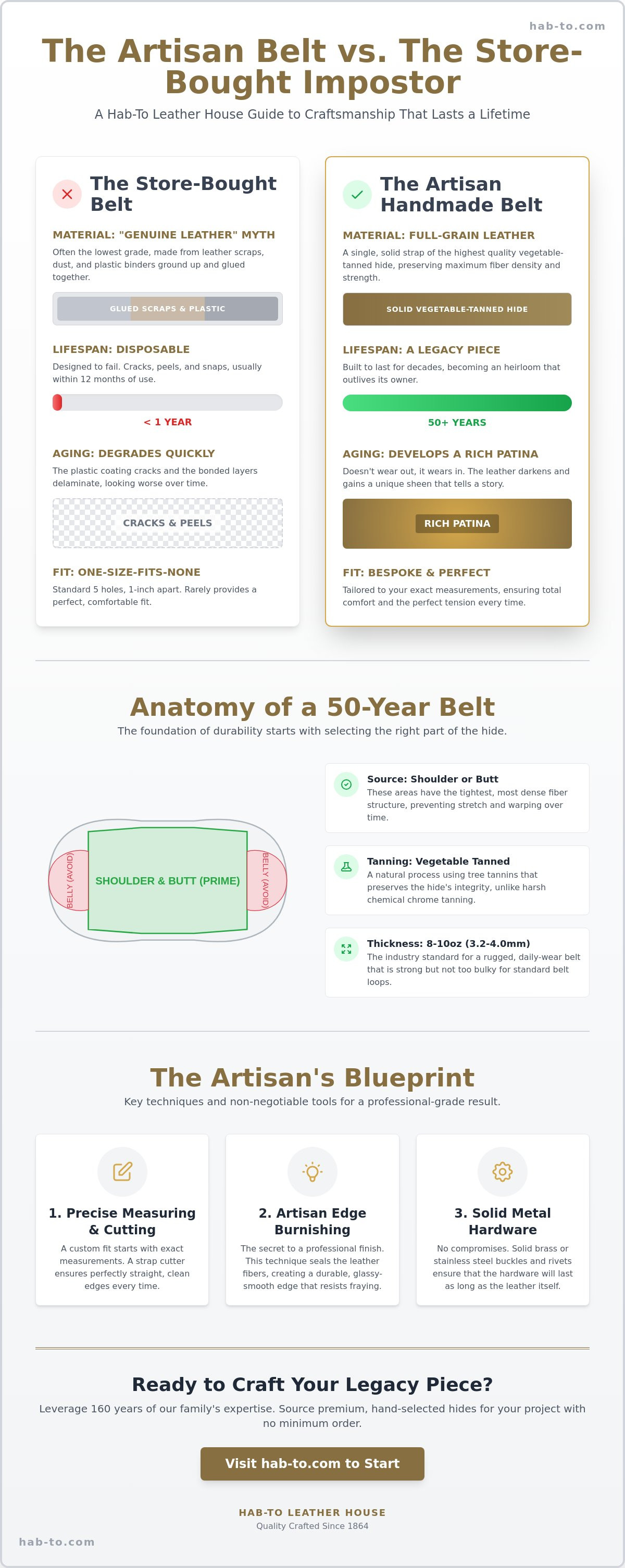
Most people fall for the "Genuine Leather" trap. It sounds premium, but in the industry, it's often the lowest grade of real leather available. These store-bought belts are frequently made from leather scraps ground up and glued together with plastic binders. They look decent on the rack, but they usually crack, peel, or snap within 12 months of daily use. Creating a durable handmade leather belt is the only way to escape this cycle of disposable fashion.
When you craft a belt by hand, you aren't just making an accessory; you're creating a legacy piece. High-quality leather doesn't wear out; it wears in. Over time, the material develops a rich patina, a unique darkening and sheen that reflects your lifestyle. It's a personal connection to an object that improves with age. Beyond the aesthetics, there's the practical benefit of a bespoke fit. Retail belts usually offer five holes spaced exactly one inch apart, which rarely provides the perfect tension. A handmade belt is tailored to your specific waist measurement for total comfort.
To see the level of detail involved in this process, watch this demonstration of the craft:
Sustainability is another core reason to choose the artisan path. By making it once and making it right, you reduce the waste generated by replacing cheap belts every year. Mastering traditional leatherworking techniques allows you to control every variable, from the thickness of the hide to the strength of the thread. This ensures the finished product can withstand decades of tension without failing.
The Anatomy of a Durable Belt
Structural integrity depends entirely on the source of the material. Vegetable-tanned leather is the only serious choice for creating a durable handmade leather belt. Unlike chrome-tanned leather, which uses harsh chemicals, vegetable tanning uses natural tannins from tree bark. This process preserves the "fiber density" of the hide. We specifically look for leather from the shoulder or butt of the cow, where the fibers are tightest. This prevents the belt from stretching or sagging, even after years of supporting the weight of tools or denim.
The Artisan Philosophy: No Synthetics, No Compromises
At Hab-To, we believe true quality can't be faked by a machine. We reject "bonded" leather, which is essentially glorified cardboard. Our philosophy is built on 160 years of family experience in the Amsterdam leather trade. We use hand-selected hides that are thick, resilient, and full-grain. No synthetics. No compromises. Just premium materials that honor the history of the craft. When you start with a superior hide, the belt doesn't just last longer; it becomes a testament to real craftsmanship that outperforms industrial alternatives every time.
Selecting the Right Hide: The Foundation of a 20-Year Belt
Hi, I'm Mike! If you want a belt that lasts two decades, you can't start with subpar materials. Creating a durable handmade leather belt begins with selecting the right thickness. For a rugged, daily-wear belt, the 8-10oz (3.2-4.0mm) range is the industry standard. Anything thinner will stretch under the pressure of a buckle; anything thicker becomes too bulky for standard belt loops. You need the density found in full-grain leather, which retains the strongest outer fibers of the hide. Top-grain leather, while common, has had the surface sanded down, which compromises the structural integrity of the piece.
Understanding the biological structure of the hide is essential for any maker. As noted in this academic guide to leathercraft from Eastern Illinois University, the fiber density varies significantly across different parts of the animal. You should always source your straps from the shoulder or the spine area. These sections have the tightest grain. Avoid the belly, as it's stretchy and prone to warping. In the context of belt shoulders, tensile strength refers to the leather's ability to resist breaking or permanent deformation when pulled under tension.
Heritage tanneries like Walpier (makers of Buttero) or Badalassi Carlo (Pueblo) produce world-renowned hides because they don't take shortcuts. Their slow tanning processes ensure the leather remains firm and resilient. When you're creating a durable handmade leather belt, using these premium hides ensures the edges burnish to a glass-like finish, a hallmark of true quality.
Vegetable Tanned Leather vs. Chrome Tanned
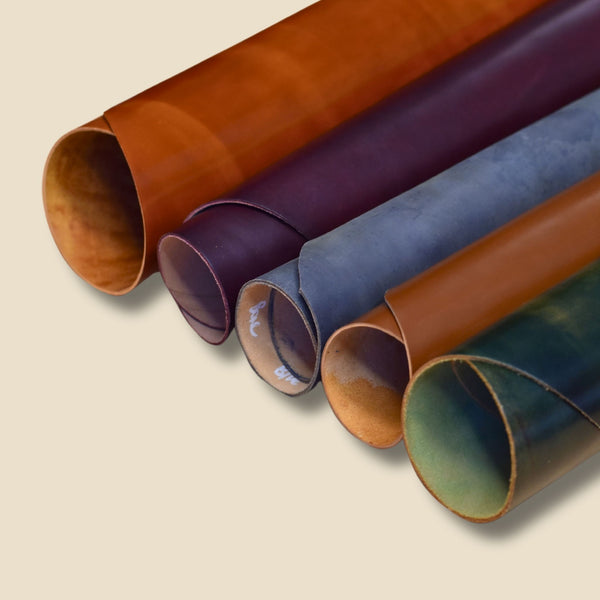
Chrome tanning uses heavy chemicals to process hides in a few days. It's soft, but it lacks the "memory" required for a belt. Vegetable tanned leather uses organic plant-based tannins like oak or chestnut bark. This traditional method is eco-friendly and allows the leather to develop a rich patina over time. It absorbs the oils from your hands and the environment, turning a simple strap into a piece of personal history. Because veg-tan leather is stiffer, it maintains its shape even after years of supporting a heavy buckle or tools.
Choosing Your First Hide as a Beginner
If you're just starting, buying a full side of leather can feel overwhelming. Starting with a pre-cut strap reduces initial anxiety and lets you focus on your technique. Look for leather with a "firm temper." This means the leather is stiff and holds its shape. If the leather feels too soft or floppy, it'll sag and lose its professional look within months. Ready to start your project? You can browse our hand-selected leather to find the perfect temper for your next build.
Essential Tools and Hardware for a Professional Finish
Creating a durable handmade leather belt requires more than just a strip of hide; it demands tools that offer precision and hardware that won't fail under pressure. At Hab-To, we believe in no synthetics and no compromises. If you start with cheap tools, you'll end up with a hobbyist result. To achieve a professional finish, you need a dedicated strap cutter for consistent width, an edge beveler to round off sharp corners, and a high-quality hole punch. These aren't just accessories; they are the foundation of your craft.
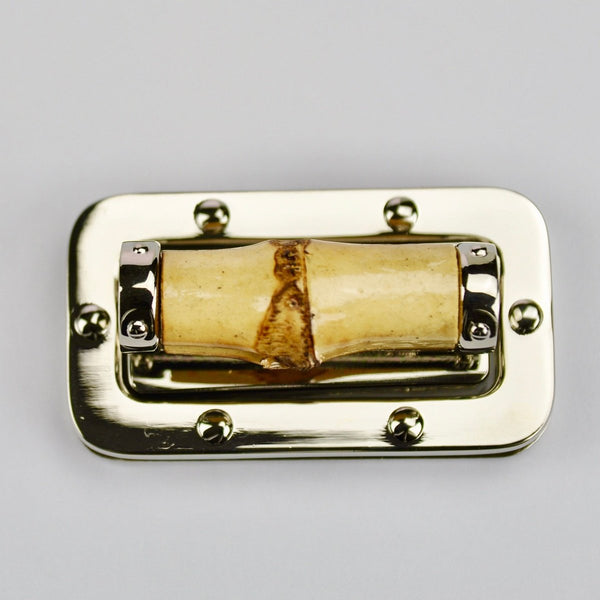
Your choice of hardware defines the lifespan of the belt. We exclusively recommend solid brass or stainless steel. Zinc alloy hardware, often found in mass-produced items, is brittle and prone to snapping at the pin. Solid brass develops a beautiful patina over time and can withstand decades of daily use. As you learn how to work with leather, you'll realize that the weight and "heft" of quality hardware provide a tactile sense of luxury that cheaper alternatives simply can't match.
For the assembly, the saddle stitch is king. Unlike a lockstitch from a sewing machine, a saddle stitch uses two needles passing through the same hole from opposite sides. If one thread breaks, the other remains intact, preventing the entire seam from unraveling. Finish your project by burnishing the edges. A wood slicker and a bit of beeswax or gum tragacanth will compress the leather fibers, creating that glossy, high-end edge finish that distinguishes an artisan piece from a factory product.
Hardware: Beyond the Buckle
Distinguishing between solid brass and zinc alloy is easy once you know what to look for. Zinc is often lighter and feels "hollow" when tapped, while solid brass has a distinct weight and a warm yellow tone under any plating. When attaching your buckle, you must choose between rivets and Chicago screws. Rivets provide a permanent, clean look, but Chicago screws allow you to swap buckles later. For a full breakdown of your options, visit our guide to essential leather hardware.
The Beginner Tool Kit: Quality over Quantity
Don't buy a 30-piece "starter kit" from a random marketplace. Those tools are usually dull and made of soft steel. Instead, invest in one high-quality skiving knife. A sharp blade is safer and produces cleaner cuts. A wing divider is another essential; it allows you to scribe a faint, perfectly straight line for your stitching or decorative creasing. Keep your tools sharp using a leather strop and polishing compound. Dull tools tear the grain, which ruins the aesthetic when creating a durable handmade leather belt. Precision starts with maintenance.
Step-by-Step: Crafting Your First Professional-Grade Belt
Success in creating a durable handmade leather belt depends on precision. You aren't just making a strip of leather to hold up pants; you're engineering a piece of gear that should last decades. Quality starts with the right 9-10 oz vegetable-tanned hide. Every cut and punch affects the structural integrity of the final product. At Hab-To, we believe in no synthetics and no compromises. This means focusing on the small details that separate a hobbyist project from a professional heirloom.
Measuring and Cutting the Strap
The biggest mistake beginners make is cutting the strap to the user's waist size. Pant sizes are often vanity-scaled and don't represent reality. Always add 2 inches to the pant size to find the true belt size. For example, a 34-inch waist typically requires a 36-inch belt measurement from the buckle fold to the center hole. Use a strap cutter to ensure perfectly parallel edges. A hand-cut strap often results in "waving" that ruins the professional look. Choose an English point for a classic, tapered finish or a round point for a modern, blunt aesthetic.
Mastering the Edge Finish
Raw edges are vulnerable to the elements. Use an edge beveler to remove the sharp 90-degree corners on both the top and bottom of the strap. This prevents "mushrooming," where the leather flattens and rolls over the sides after a few months of wear. Apply a small amount of Tokonole and use a wooden slicker with fast, light strokes. Friction creates heat, which melts the fibers together into a smooth, glassy surface. A sealed edge prevents moisture rot by creating a physical barrier that stops sweat and rain from penetrating the inner core of the leather.
Installing the Hardware
Skiving is non-negotiable for a professional finish. Use a sharp skiving knife to thin the leather at the buckle fold to about 50% of its original thickness. This reduces bulk so the buckle sits flush against the waist without an awkward bulge. When setting rivets, ensure the post is only 1/16th of an inch longer than the leather thickness. If the post is too long, the rivet will bend sideways and eventually pop under the 50 pounds of pressure a belt can face during daily movement. Finish the project with a light coat of natural beeswax balm to lock in essential oils.
Ready to start your project with the best materials? Browse our premium vegetable-tanned leather straps to find the perfect foundation for your belt.
Sourcing Premium Leather for Your Project with Hab-To
Finding the right hide is the most critical step in creating a durable handmade leather belt. You don't want to spend hours stitching only to have the leather stretch or crack within a year. At Hab-To, we've spent 160 years perfecting the art of leather selection. We're an Amsterdam-based wholesaler with deep roots in the industry, but we don't believe high-end materials should be reserved for big factories only.
Most wholesalers require you to buy entire pallets or massive hides. We do things differently. We offer a no minimum order policy even for the most prestigious materials, like Shell Cordovan. This allows you to work with the king of leathers without a massive upfront investment. Every hide we stock is hand-selected for its quality and character. We focus exclusively on sustainable, chrome-free, and vegetable-tanned leathers. These traditional tanning methods use natural tannins from bark and leaves; this results in a belt that ages beautifully and develops a rich patina over time.
If you're feeling overwhelmed by the choices, just ask for help. Hi, I'm Mike, and I'm here to ensure your project succeeds. You can book a personal consultation with me to discuss your specific needs. Whether you're a seasoned professional or a hobbyist creating a durable handmade leather belt for the first time, I'll help you pick the right weight and temper for your specific design. No synthetics. No compromises. Just quality materials for real craftsmanship.
The Amsterdam Showroom Experience
There's nothing quite like the smell and feel of premium leather. You can book an appointment at our Amsterdam showroom to touch the hides and see the colors in person before you buy. It's the best way to select the perfect hardware, like solid brass buckles, to match your leather choice. While you're here, you can join our growing community of makers. Follow The Leather Hour for ongoing inspiration and deep dives into the technical aspects of the craft.
Ready to Start Your Project?
We've made it easy to get everything you need in one place. If you're a beginner, we recommend browsing our curated leather bundles. These kits take the guesswork out of material selection. We provide fast shipping across Europe for all your crafting supplies, ensuring you don't have to wait weeks to start your build. We treat every order with the same care, whether you're buying a single strap or a full side of leather.
Master the Craft of Lasting Quality
Creating a durable handmade leather belt is more than just a hobby; it's an investment in a piece of gear that outlasts mass-produced alternatives by decades. You've seen that the secret lies in selecting the right vegetable-tanned hide and using professional-grade tools to ensure every edge and stitch stands the test of time. By focusing on premium materials, you’re building something that gains character rather than falling apart.
At Hab-To, we bring 160+ years of family leather expertise directly to your workbench. We hand-select every sustainable, vegetable-tanned hide to ensure you’re working with the best possible foundation. Whether you’re an experienced artisan or just starting your first strap, we offer no minimum order requirements. This means you get exactly what you need for your project without any waste. No synthetics. No compromises. Just the quality your craftsmanship deserves.
Ready to get started? Shop Premium Belt Leather and Hardware and see the difference that heritage quality makes. I'm here to help you turn that vision into a reality. Happy crafting!
Frequently Asked Questions
What is the best leather weight for a durable belt?
The ideal weight for a rugged belt is between 9 and 12 ounces, which equals a thickness of 3.6 to 4.8 millimeters. This specific range provides the structural integrity required for creating a durable handmade leather belt that won't warp or fold over time. We recommend a 10 oz strap for everyday wear to ensure the piece remains functional for 20 years or more.
Can I make a leather belt without expensive tools?
You can craft a professional belt using only a sharp utility knife, a metal ruler, and 120-grit sandpaper. While specialized strap cutters and edge bevelers speed up the process, they aren't strictly necessary for a high-quality result. Our 160 years of family experience proves that a steady hand and patience are more valuable than a 500 dollar tool kit when you're just starting.
How do I stop my handmade leather belt from stretching?
To minimize stretching, always cut your strap from the "bend" or "butt" of the hide where the collagen fibers are most dense. These sections offer 40 percent more resistance to elongation compared to the softer belly area. You can also pre-stretch the leather by hanging the strap with a 5-kilogram weight for 24 hours before you punch your final holes and finish the edges.
Is vegetable-tanned leather better than chrome-tanned for belts?
Vegetable-tanned leather is much better for belts because it's firm, holds its shape, and develops a beautiful patina over time. Unlike chrome-tanned leather which uses harsh chemicals, veg-tan leather is processed with organic tree barks. This traditional method results in a strap that won't over-stretch or peel, ensuring your craftsmanship stands up to 10,000 cycles of buckling and unbuckling.
What is the difference between a belt shoulder and a belt belly?
A belt shoulder is cut from the toughest part of the hide and offers a consistent grain, while a belt belly is spongy and prone to extreme deformation. Shoulders provide the stability needed for creating a durable handmade leather belt that stays true to its size. In contrast, belly leather can stretch by as much as 15 percent, making it unsuitable for anything other than small decorative goods.
How do I choose the right size buckle for my belt strap?
You must select a buckle with an internal width that matches your strap width exactly. If you've cut a 38-millimeter strap, you need a 38-millimeter buckle to prevent the leather from sliding side-to-side. A gap of even 2 millimeters will cause the edges of your belt to scuff against the hardware, leading to premature wear and a sloppy appearance after just 6 months of use.
What happens if I don’t burnish the edges of my belt?
Leaving edges unburnished allows the leather fibers to fray and absorb 30 percent more moisture from sweat and rain. These exposed fibers act like a sponge, which can lead to the leather rotting or cracking from the inside out within 2 years. Using a wooden slicker to create a heat-fused, smooth edge seals the hide and protects your work from environmental damage.
Can I use Shell Cordovan to make a belt?
It's possible to use Shell Cordovan for a belt, but you'll likely need to stitch it to a vegetable-tanned leather backing for sufficient length and strength. Since Cordovan comes from the small, circular muscle of a horse's hindquarters, single pieces are rarely long enough for a full waist strap. It's an exceptionally dense material that resists creasing, making it a premium choice for high-end, lined dress belts.