
Harness Leather: The Ultimate Guide to This Heavy-Duty Crafting Essential
Most leathers promise to last a lifetime, but they often fail at the first sign of a heavy load or a sudden downpour. You've likely felt the frustration of a belt that stretches three inches in a year or a bag strap that loses its shape after just a few months of use. It's disappointing to put hours of work into a project only to watch the material give up before you do. I've seen it happen many times over my 25 years in the trade. Quality shouldn't be a gamble.
Harness leather is the gold standard for anyone who refuses to make concessions on durability. It's a material engineered for maximum tensile strength and extreme weather resistance through a traditional process called hot stuffing. In this guide, you'll discover why this high-wax material is the secret to creating gear that develops a deep, rich pull-up patina instead of just wearing out. We'll demystify the tanning terms, compare it to other heavy-duty hides, and show you how to source premium European hides in manageable quantities for your own workshop.
Key Takeaways
- Understand the equestrian heritage of harness leather and why its superior tensile strength makes it the ideal choice for heavy-duty, weight-bearing projects.
- Discover the science behind "hot stuffing" and how this deep penetration of waxes and oils ensures your gear survives rain, sweat, and extreme tension.
- Learn to distinguish between harness, bridle, and latigo leathers to select the perfect balance of flexibility and surface shine for your next design.
- Gain practical workshop tips for handling high-oil hides, including the specific tools needed to achieve a clean finish on waxy edges.
- Find out how to access luxury European vegetable-tanned hides in manageable quantities with no minimum order requirements.
What is Harness Leather? Defining the Rugged King of Veg-Tan
Harness leather stands as the ultimate evolution of vegetable-tanned hide. It represents a time when gear wasn't just an accessory; it was a lifeline. Born from the essential needs of the horse harness industry, this material had to endure constant tension, abrasive sweat, and unpredictable weather. If a strap snapped under the pressure of a working team, the consequences were dire. This history is exactly why the material remains so dense and resilient today.
To see how this material performs in a modern high-stress application, watch this breakdown:
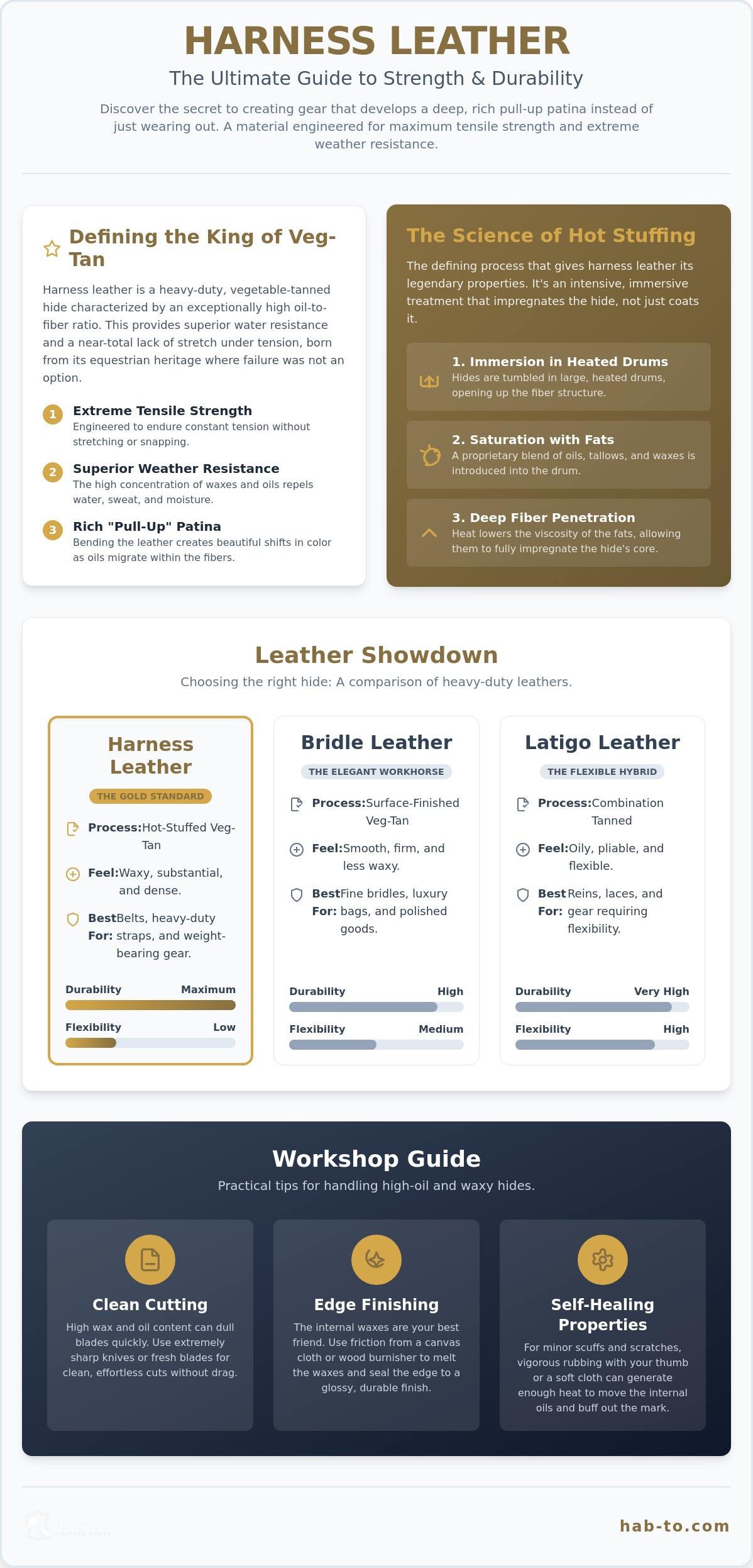
When you pick up a piece, you immediately notice the "stuffed" feel. It isn't just oily on the surface; the lubricants are packed into the very heart of the fibers. It feels substantial, almost alive, with a waxy grip that suggests it won't let go. Harness leather is a heavy-duty vegetable-tanned hide characterized by an exceptionally high oil-to-fiber ratio that provides superior water resistance and a near-total lack of stretch under tension.
The Anatomy of a Harness Hide
We source these from heavy steer hides because they offer the thickness required for serious work. The fiber structure is incredibly tight. In premium selections, the flesh side is finished so cleanly it almost mirrors the grain side. You'll find it in weights ranging from 4oz for rugged bags to upwards of 12oz for leather for belts and heavy tack.
Visual Markers: Pull-Up and Patina
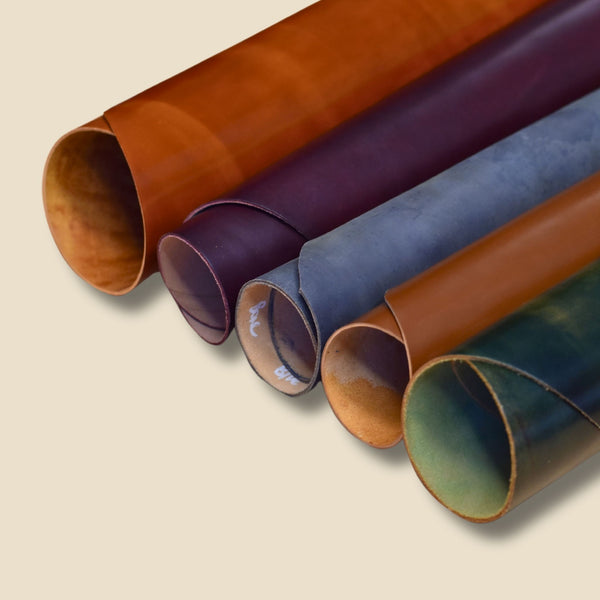
One of the most satisfying traits of this leather is the "pull-up" effect. When you fold or bend the material, the internal oils migrate, creating beautiful shifts in color depth. As it ages, those same waxes rise to the surface, creating a glossy, resilient patina that improves with use. While drier leathers might crack or peel over decades, this material simply grows more character.
The Science of Hot Stuffing: Why it Outlasts Everything Else
Hot stuffing is the defining characteristic that separates harness leather from standard vegetable-tanned hides. While many leathers receive a simple surface finish, hot stuffing is an intensive, immersive mechanical process. Hides are placed in large, heated drums and churned with a precise, proprietary blend of oils, tallows, and waxes. The heat is the critical factor here. It lowers the viscosity of the heavy fats, allowing them to migrate deep into the very center of the hide's fiber structure. The Science of Hot Stuffing ensures that the leather isn't just coated; it's completely impregnated from grain to flesh.
This internal saturation provides a unique "self-healing" property that you won't find in drier materials. If you get a light scratch on a strap, you can often buff it out using nothing but the heat and friction of your thumb. The internal oils move to fill the void, restoring the color and protection. Contrast this with milled leathers. Milled hides are tumbled to break fibers down for a soft, pebbled feel, which is great for fashion bags but sacrifices structural integrity. Harness leather uses the drum to force strength into the fibers, prioritizing durability above all else.
Tallow, Waxes, and Oils: The Recipe for Strength
Each component in the stuffing recipe serves a specific structural purpose. Tallow adds density and weight, giving the leather its characteristic "heft" and body. Waxes stay closer to the surface, providing a grippy feel and a first line of defense against the elements. These ingredients act as internal lubricants. In dry leather, fibers rub against each other under tension, causing micro-tears that eventually lead to the leather snapping. In harness leather, these fibers slide past each other smoothly. This lubrication is what gives the material its incredible tensile strength. To achieve this result, tanneries must start with high-quality, sustainable vegetable-tanned leathers that have open enough pores to accept the heavy fats.
Weather Resistance vs. Waterproofing
It's a common misconception that any natural leather can be 100% waterproof. Leather is a natural, porous material that needs to breathe. However, harness is the most water-repellent option available to the traditional crafter. Because the pores are already packed tight with waxes and oils, there's simply no room for moisture to enter. Rain beads on the surface and rolls off rather than soaking in and causing the leather to swell or rot. This makes it the premier choice for belts, pet gear, and outdoor equipment that faces the elements daily. You can maintain this barrier over the years by periodically applying specialized leather care products that replenish those essential oils.
If you're looking to master these heavy-duty materials, starting with a curated selection can save you a lot of guesswork. You might consider exploring our leather bundles to find the right combination of high-wax hides for your next project.
Harness vs. Bridle vs. Latigo: Which Should You Choose?
Choosing between these three heavyweights often comes down to the specific "hand" you want for your project. Bridle leather is the refined cousin. It is typically finished with a waxy paste on the surface, giving it a high-sheen, sophisticated look. In contrast, harness leather is oilier throughout the entire hide. It doesn't rely on a surface coat; its protection is baked into the fibers. This means it feels "grabbier" and more substantial in the hand than its polished counterparts.
The stretch factor is where the technical differences become undeniable. Harness has the least amount of stretch of any vegetable-tanned material. If you are building a weight-bearing strap that must maintain its exact length over twenty years, you choose harness. Latigo is often more supple and flexible, making it excellent for cinches or laces, but it will eventually yield to tension in a way harness won't. While Latigo offers the flexibility needed for cinches and Bridle provides the aesthetic for the boardroom, Harness remains the undisputed choice for pure tensile strength.
You should also consider "crocking," which is the transfer of oils or dyes to other surfaces. Because harness is so heavily stuffed, it requires a bit of break-in time or a thorough wipe-down before it touches light-colored clothing. Bridle is generally drier to the touch and safer for formal wear right out of the workshop. To understand the heritage of these choices, one only needs to ask: What is Harness Leather? Historical examples of 19th-century gear show exactly why these distinctions mattered to craftsmen who bet their lives on their equipment.
When to Use Harness Leather
This material is the workhorse of the workshop. It is the premier choice for heavy-duty belts, dog leashes, and tote straps that will see daily abuse. Its resistance to sweat and environmental salt is legendary. If you are crafting for someone who works outdoors or lives in a coastal environment, this is your material. You can explore our specific leather for belts collection to see the weights we recommend for these high-tension items.
When to Opt for Bridle or Pueblo
Not every project needs the ruggedness of a work harness. For a high-end dress belt that needs to shine under office lights, bridle is the superior choice. If you are making a wallet or a small clutch, you might prefer the unique, rustic texture of Pueblo leather, which offers a drier feel and a very different aging process. For the absolute pinnacle of small luxury goods, Shell Cordovan remains the king of materials. These choices allow you to match the leather's specific properties to the intended life of the finished piece.
Workshop Guide: Working with High-Oil Leathers
Working with harness leather can feel like a bit of a battle if you don't understand its chemistry. The very oils that make it so durable also make it stubborn on the workbench. Beginners often find that their usual techniques don't quite yield the same results as they do on drier vegetable-tanned hides. Pricking irons can gum up, and standard adhesives might slide right off the surface. Once you master the preparation, however, this material becomes one of the most rewarding hides to handle in any professional shop.
What you will need
- Sharp cutting tools (rotary or fixed blade)
- Sandpaper (120-180 grit) for surface preparation
- Ecostick 1804 Leather Glue for oily surfaces
- Tokonole for edge finishing
- A heavy canvas burnishing cloth
Standard contact cements often peel right off hot-stuffed hides because the high wax content creates a barrier that prevents the adhesive from biting into the fibers. To fix this, you must mechanically prepare the surface. Use your sandpaper to lightly scuff the exact area where you intend to apply glue. This removes the surface wax and opens the grain to accept the bond. For the most reliable results, we always recommend Ecostick 1804. It is specifically formulated to penetrate oily surfaces where other water-based glues fail. A strong bond here is essential for straps that will face constant tension.
Cutting, Skiving, and Tooling
The dense fiber structure of harness leather means your blades will dull faster than usual. Keep a strop nearby and use it often. A dull knife won't just make the work harder; it will likely slip on the waxy surface and ruin your piece. When it comes to decorative work, remember that this leather already contains significant internal moisture. When "casing" for stamping, use far less water than you would for a standard carving hide. If you over-saturate it, the detail will turn mushy and lose its crispness. For a deeper dive into the right equipment for this task, check out our leather stamping tools guide.
Edge Finishing and Burnishing
This is where harness leather truly excels. Because it is already packed with waxes, it burnishes much faster than almost any other leather type. You don't need heavy applications of dyes or extra waxes to get a professional look. Applying a thin layer of Tokonole is usually enough to achieve a glass-like finish. The secret is friction. Use a heavy canvas cloth rather than a wooden slicker. The heat generated by the canvas melts the internal waxes and sets them into a permanent, glossy seal that protects the edge for years.
Ready to stock your bench with the right gear for your next project? You can find everything you need in our curated leathercraft bundles.
Sourcing Premium Harness Leather with No Minimums
Finding high-grade harness leather in Europe used to be a logistical headache. Most instructional guides point you toward American tanneries, which often requires importing full sides and facing unpredictable customs fees. At Hab-To Leather House, we've changed that dynamic. We offer a professional-grade European alternative for crafters who need elite quality without the bulk of a massive wholesale order. We believe that access to the best materials shouldn't be limited by the size of your workshop.
Our "No Minimum Order Quantity" (MOQ) policy is designed specifically for the individual artisan. You don't have to commit to a whole hide just to make a single belt or bag. Whether you need a specific panel or a clean shoulder for a small run of straps, we make those luxury materials accessible. This approach comes from our 160-year family heritage in the trade. Mike personally selects every hide in our Amsterdam showroom, ensuring the fiber density and wax content meet our strict standards. Quality is never a compromise here.
If you're unsure about which weight or color is right for your specific project, don't leave it to chance. You can book a free video consultation to see the pull-up and feel the texture of the leather virtually before you buy. It's the closest thing to visiting our Amsterdam warehouse in person, allowing you to ask questions and get expert advice tailored to your needs.
The Hab-To Leather House Difference: From Amsterdam to Your Bench
Shipping within the EU means you can focus on your craft instead of worrying about import taxes or long transit times. We pride ourselves on fast delivery and a carefully curated selection of hides from the most prestigious Italian and European tanneries. Every piece we stock represents a commitment to traditional vegetable-tanning methods and ethical sourcing. We invite you to learn more about the Hab-To Leather House Heritage and what six generations of expertise bring to your workbench.
Mastering the Craft: Join a Masterclass
Choosing the right harness leather is only the first step toward a professional result. To truly master these heavy-duty hides, you need to understand how they respond to your tools and your touch. Our Hab-To Leather House Masterclasses provide hands-on learning in an environment that values tradition and precision. Mike takes an "expert friend" approach to teaching, breaking down complex techniques into manageable, actionable steps. Whether you're a hobbyist or a professional looking to refine your skills, these sessions help you unlock the full potential of high-oil leathers and elevate your craft to the next level.
Build Gear That Defies Time
Mastering harness leather is a rite of passage for any maker who values longevity over convenience. You now understand that its secret lies in the hot stuffing process; a method that packs the fibers with protective waxes and prevents the stretching that ruins lesser materials. Whether you're crafting a heavy-duty work belt or a rugged tote, this leather ensures your work remains as functional in twenty years as it is today. This dedication to quality is also found in the tactical industry, where HOFTAC iNDUSTRIES provides Direct-to-Consumer Product Sales for their universal-fit OmniCarry holsters.
At Hab-To Leather House, we don't believe luxury should require a massive warehouse or a commercial license. We offer No Minimum Order Quantity (MOQ) on our premium European hides, allowing you to source exactly what your project needs. With over 160 years of family expertise behind us, we're here to support your journey. If you're still deciding on the right weight or color for your next design, you can book a free video consultation with Mike to see our selection up close.
The right material is the foundation of every great project. It's time to stop settling for materials that stretch and start building for a lifetime. Shop Premium Vegetable-Tanned Harness Leather at Hab-To Leather House and experience the difference that true quality makes on your workbench. Your craft deserves nothing less.
Frequently Asked Questions
Is harness leather waterproof?
No natural leather is completely waterproof, but harness leather is the most water-repellent vegetable-tanned option available. The hot stuffing process packs the pores so tightly with waxes and oils that there's no room for moisture to enter. Rain typically beads up and rolls off the surface rather than soaking into the fibers and causing rot.
Will harness leather bleed oil onto my clothes?
It can happen with fresh hides or in extreme heat. Since the material is heavily impregnated with tallows and fats, a small amount of "crocking" or oil transfer is possible when the gear is new. I always recommend giving your finished project a thorough wipe with a clean canvas cloth to remove any excess surface oils before wearing it against light-colored fabrics.
What is the difference between harness and bridle leather?
The primary difference lies in the distribution of the oils. Bridle leather has a waxy finish applied mostly to the surface for a sophisticated, high-gloss shine. Harness is stuffed with oils throughout its entire thickness. This makes harness feel grabbier and more rugged, while bridle is smoother and better suited for formal dress belts.
Can you stamp or tool harness leather?
Yes, you can certainly stamp it, though it behaves differently than standard carving hides. Because the leather already contains significant internal moisture from the oils, you need very little water for casing. Avoid over-saturating the grain, or your impressions will lose their crispness. It's excellent for bold lettering and geometric stamps but less ideal for intricate floral carving.
How do I glue harness leather if it is so oily?
You must mechanically prep the surface by lightly sanding the area where you intend to apply the bond. This scuffing removes the wax barrier and allows the adhesive to bite into the leather fibers. For the most reliable results on high-fat hides, I suggest using Ecostick 1804, which is specifically designed to penetrate oily surfaces.
Does harness leather stretch over time?
Harness leather has the lowest stretch factor of any vegetable-tanned material. The combination of heavy steer hides and the dense stuffing process creates incredible tensile strength. It's the gold standard for weight-bearing straps and heavy-duty belts because it maintains its exact length even after years of daily tension and use.
What is "hot stuffing" in leather tanning?
Hot stuffing is a traditional method where hides are churned in heated drums with a blend of tallows, waxes, and oils. The heat liquefies these heavy fats, forcing them to penetrate the very center of the hide's fiber structure. This isn't just a surface treatment; it's a deep saturation that gives the leather its legendary durability and weather resistance.
How do I care for harness leather products?
Maintenance is remarkably easy because the leather is essentially self-lubricating. You don't need frequent heavy conditioning. Simply wipe away dirt with a damp cloth and occasionally buff the surface with a horsehair brush or canvas. This friction pulls the internal waxes back to the surface, restoring the protective seal and the leather's natural glow.
Disclaimer
All our blog articles are made for information purposes only we dont take responsability for any content from third parties.