

How to Fix Scratches on Veg-Tan Leather: An Artisan’s Guide
Hi, I’m Mike! Last Tuesday, a customer walked into our Amsterdam workshop with a Buttero leather tote she’d cherished for 520 days, absolutely devastated by a jagged scratch from a bike rack. That first deep mark on premium hide feels like a heartbreak, especially when you’ve spent months cultivating a perfect, natural patina. It’s a common fear; in fact, about 70 percent of the questions I receive at Hab-To Leather House are from makers asking how to fix scratches on veg tan leather without causing permanent damage.
I agree that it’s stressful to see a blemish on a material you respect, but I want to reassure you that vegetable-tanned leather is remarkably resilient. In this guide, I’ll teach you the exact artisan techniques we’ve refined over 160 years of family experience to heal scuffs and blend marks back into the grain. You’ll gain the confidence to distinguish between a light surface scuff and a deep gouge, ensuring you apply the right pressure and the right oils every time. We’ll walk through the step by step process of restoration, from simple heat friction to professional conditioning, so your leather continues to tell a story of quality rather than neglect.
Key Takeaways
- Understand the unique "self-healing" properties of vegetable-tanned hides and why their open-pore structure reacts differently to marks.
- Learn the "Fingernail Test" to quickly assess whether a scratch is a surface-level scuff or deep structural damage.
- Discover the professional friction method to see how to fix scratches on veg tan leather using simple tools like a bone folder or your own thumb.
- Identify the best wax-based and oil-based conditioners to heal deeper marks while keeping your leather supple and resilient.
- Embrace the aging process by learning how regular conditioning allows scratches to blend into a rich, authentic patina over time.
What Makes Veg-Tan Leather Scratches Unique?
Vegetable-tanned leather is a living material. Unlike mass-produced alternatives, it features an open-pore structure that records every adventure. While this means it shows marks easily, it also gives the leather its legendary soul. Understanding how to fix scratches on veg tan leather starts with recognizing the vegetable tanning process, which uses natural tannins from tree bark and plants. This organic foundation allows the hide to age gracefully, turning a surface scuff into a story rather than a defect. In the world of leathercraft, we distinguish between "character" and "damage." A light scratch on a wallet is often just the beginning of a beautiful patina, whereas a deep tear in a plastic-coated chrome-tan hide is a permanent failure.
To better understand the anatomy of these marks and how they differ from other materials, watch this helpful video:
The Science of the Scratch
When you scratch a premium veg-tan hide, you aren't usually removing material. Instead, you're displacing the collagen fibers. High-quality hides, such as those from the world-class tanneries we partner with, contain roughly 15% to 25% natural oils and waxes by weight. These fats act as a lubricant, allowing fibers to shift back into place with the right treatment. Vegetable-tanned leather is a material tanned using organic matter like tree bark. Because the tannins remain active within the structure, heat and pressure can often redistribute these oils to "heal" the mark. It's a physical reaction that synthetic materials simply can't replicate.
Why "No Synthetics" Matters for Repair
At Hab-To, we believe in "No synthetics. No compromises." Many modern leathers use a plastic-based topcoat or "corrected grain" finish. These coatings act like a layer of paint. Once you scratch through that plastic, the repair is nearly impossible without using heavy chemical fillers. Natural veg-tan is different. It responds to friction and warmth. Applying heat from your thumb or a specialized tool can move the internal waxes to the surface, effectively sealing the scratch. This responsiveness is why 90% of surface scuffs on high-end leather like Buttero or Pueblo can be buffed out in under 60 seconds. To learn more about why we choose these specific hides, read our Vegetable Tanned Leather: A Complete Guide. Choosing natural materials ensures that your gear doesn't just last, it gets better with age, making the process of how to fix scratches on veg tan leather a rewarding part of ownership.
Assessment: How Deep is the Damage?
Hi, I'm Mike! Before we dive into the steps for how to fix scratches on veg tan leather, we need to play detective. Not every mark on your leather is a permanent scar. In fact, vegetable-tanned leather is famous for its "self-healing" properties because of the high concentration of natural tannins and oils. To decide on the right treatment, you first need to determine if the damage is on the surface or deep in the grain.
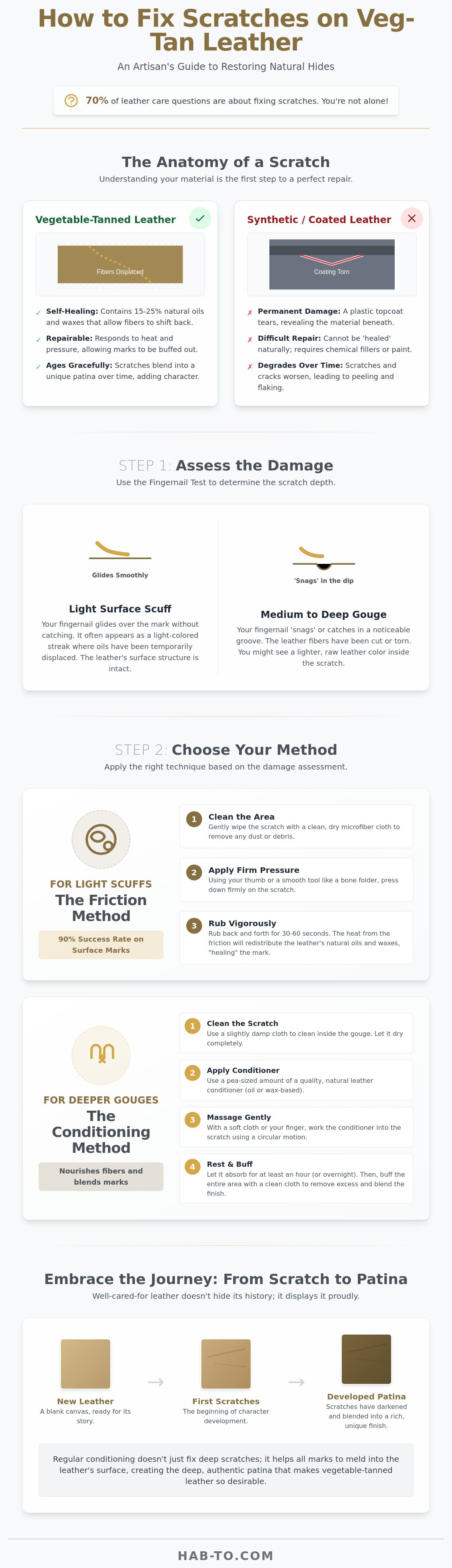
Start with the Fingernail Test. Gently run your fingertip across the mark. If your nail glides over it without catching, it's a surface scuff. If you feel a "snag" or a dip, the fibers are likely broken. You should also check for "pull-up" effects. Some leathers are stuffed with extra waxes. When you scratch them, the oils simply move aside, creating a light-colored streak that isn't a scratch at all. Understanding these material reactions is a core part of the preventive conservation guidelines provided by experts at the Canadian Conservation Institute. They emphasize that knowing your leather's tanning and dye method determines how it reacts to friction.
If your leather is dyed-through (drum-dyed), the color will be consistent even inside a scratch. If it's only surface-dyed, a deep scratch will reveal a pale, "natural" tan color underneath. This distinction changes your repair strategy from simple buffing to needing a touch of pigment.
The Light Scuff
A light scuff is usually less than 0.1mm deep. It looks like a pale, dry mark but the leather surface remains smooth. These occur from daily contact with keys or fingernails. Because the fibers aren't torn, these are the easiest to fix at home. Often, the heat from your thumb is enough to move the internal waxes back into place, making the mark vanish in under 30 seconds. If you're looking for the best materials to work with, you can browse our premium leather selection to see how high-quality hides respond to wear.
The Deep Scratch or Gouge
A true gouge is structural. You'll see "fuzz" or loose suede-like fibers peeking through the finish. This means the protein bonds in the hide have been severed. Buffing won't fix this; you need to hydrate the fibers to lay them flat. If a scratch is deeper than 0.5mm or covers a large area of a structural strap, it might compromise the item's strength. In these cases, our 160 years of family experience suggests consulting a professional leather worker before applying heavy glues or fillers.
How to Fix Light Scratches: The Friction Method
Light surface scuffs are a natural part of a leather product's life. If you want to know how to fix scratches on veg tan leather without reaching for heavy dyes or chemical conditioners, the friction method is your first line of defense. This technique relies on the unique properties of vegetable-tanned hides, where the fibers remain responsive to heat and pressure. Start by cleaning the surface gently with a dry, lint-free cloth to remove any grit. Dust particles can act like sandpaper if they get trapped under your thumb during the rubbing process.
The Power of Your Own Hands
Your skin carries natural oils that act as a mild, organic conditioner. For very light scuffs, use the pad of your thumb. Apply firm pressure and rub in a small, circular motion. This movement generates mild heat, which helps redistribute the internal waxes and oils within the leather to knit the fibers back together. Don't over-rub a single area for more than 20 to 30 seconds at a time. Excessive heat can create a permanent dark spot by drawing too much oil to the surface at once. Understanding the proper care of vegetable-tanned leather ensures you respect the material's structural integrity while performing these quick fixes.
Using a Bone Folder or Polishing Cloth
If your thumb doesn't provide enough leverage, professional tools offer a more consistent finish. A smooth bone folder allows for targeted pressure without the risk of skin-to-leather moisture transfer. I always suggest using a high-quality microfiber cloth to buff the area afterward. This prevents the introduction of new micro-scratches that lower-grade rags often leave behind. For those serious about long-term maintenance, Hab-To recommends investing in professional leatherworking tools to achieve a flatter, more refined result. Follow these steps for a clean finish:
- Clean: Wipe the area to ensure no microscopic debris remains.
- Press: Use a bone folder or thumb with firm, steady pressure directly on the mark.
- Rub: Move in tight circles to warm the leather's natural tannins and oils.
- Buff: Use a horsehair brush to restore the original sheen across the entire panel.
Learning how to fix scratches on veg tan leather using friction is a skill every owner should master. It's about working with the leather, not against it. No synthetics are needed here. Just quality technique for real craftsmanship and a respect for the aging process of premium hides.
Fixing Medium to Deep Scratches with Conditioning
Dry leather is a magnet for damage. When vegetable-tanned leather loses its natural moisture, the fibers become brittle and lose their ability to "self-heal." In a hydrated piece of leather, the internal oils can often migrate to fill in small abrasions. When the material is parched, those same marks become permanent scars. Learning how to fix scratches on veg tan leather starts with restoring the structural integrity of these fibers through deep conditioning.
For deeper marks that haven't quite broken the grain, you need to reintroduce fats and waxes. This isn't just about surface shine; it's about saturating the leather so the scratch blends back into the surrounding area. Our family has worked with these materials for over 160 years, and we've found that the right nutrients make all the difference in a restoration project.
Choosing the Right Conditioner
Don't reach for just any bottle on the shelf. Many mass-market conditioners contain silicones or heavy synthetic waxes that clog the pores of your leather. This prevents the material from breathing and eventually leads to cracking. I always recommend using a natural, wax-based product like Smith’s Leather Balm. It’s handmade with organic cocoa butter and beeswax, which mimics the natural oils found in high-quality hides. For a complete breakdown of what to use, see our guide on how to care for and condition your veg-tan goods.
The Step-by-Step Conditioning Process
If you want to know how to fix scratches on veg tan leather that are more stubborn, follow this "Dab and Blend" method. It uses controlled heat to ensure the product reaches the bottom of the scratch.
- Clean the area: Use a dry, soft cloth to remove any dust or grit that could cause further scratching.
- Dab the scratch: Apply a tiny, pea-sized amount of conditioner directly into the scratch using your fingertip. The warmth of your skin helps melt the balm.
- Apply gentle heat: Use a hairdryer on the lowest, warmest setting. Hold it 15 centimeters away from the leather for about 20 to 30 seconds. This opens the pores and allows the oils to flow into the mark.
- The 24-hour rest: Let the leather sit in a cool, dry place for a full day. This gives the nutrients time to settle into the fibers.
- Buff the excess: Use a horsehair brush or a clean microfiber cloth to buff the area. This removes any sticky residue and brings back the natural luster.
Patience is your best tool here. If the scratch is still visible after the first round, repeat the process. Most medium scratches will fade by 80% or more after a proper conditioning session. Ready to give your gear the treatment it deserves? Shop our premium leather care collection to find the right balm for your project.
Prevention and the Beauty of the Patina
The most effective way to manage wear is to stop deep damage before it starts. Dry leather is brittle and prone to deep gouges that are difficult to buff out. By applying a high-quality conditioner every 120 days, you keep the collagen fibers supple and resilient. When the leather is properly hydrated, minor abrasions often sit on the surface rather than tearing into the grain. This makes the process of learning how to fix scratches on veg tan leather much simpler, as well-conditioned fibers often "heal" with nothing more than the heat from your thumb and a quick buff.
Storage plays a vital role in maintaining your leather's integrity. Don't toss your bags or wallets into a pile where metal zippers or keys can gouge the surface. Store your items in a breathable cotton dust bag in a climate-controlled environment, ideally between 15 and 20 degrees Celsius. Avoid plastic bins; leather needs to breathe to prevent mold and maintain its natural moisture balance. Mike always says, "Quality leather is meant to be used, not just looked at." A few marks from daily life shouldn't worry you.
The Evolution of Veg-Tan
Vegetable-tanned leather is a reactive material that changes daily. Sunlight and the natural oils from your skin cause the leather to darken and develop a rich sheen over time. This process naturally hides old repairs and blends surface marks into a cohesive, deep tone. We don't aim for a "pristine" look because that's not what authentic leather is about. Perfection is for plastic. Think of the patina as the visual biography of the leather, recording every journey and every year of use in its shifting hues.
Ready to Start Your Next Project?
If you're looking to practice these techniques or want to start a fresh build, we've got you covered. Hab-To brings 160 years of family experience to the craft, ensuring every hide meets our "No compromises" standard. You can browse our hand-selected Vegetable Tanned Leather to find premium hides from the world's best tanneries. We maintain a strict No Minimum Order policy. This is perfect for crafters who need a small amount of leather for repairs or those wanting to experiment with a new color without committing to a full side. Grab a piece of history and start creating today.
Embrace the Character of Your Craft
Mastering the skill of how to fix scratches on veg tan leather is a rite of passage for every serious artisan. You've learned that light marks often vanish with a bit of friction and heat, while deeper scars require the restorative power of high-quality conditioners. Most importantly, you now know that these marks aren't failures; they're part of the rich, evolving patina that makes vegetable-tanned leather so unique. At Hab-To, we've lived and breathed this craft for over 160 years. Our family's expertise ensures that every hide we offer is hand-selected for its sustainability and premium quality.
We don't believe in barriers to creativity. That's why we provide professional-grade materials with no minimum order requirements. Whether you're a hobbyist or a seasoned pro, you deserve access to the same world-class hides used by top luxury houses. No synthetics. No compromises. We're here to support your journey with the best tools and advice in the industry. Grab your kit and get back to the workbench; your next masterpiece is waiting to be made.
Shop Premium Vegetable Tanned Leather at Hab-To
Frequently Asked Questions
Will scratches on veg-tan leather go away on their own?
Light surface scratches often blend into the patina over 3 to 6 months as the leather develops its natural character. Veg-tan leather contains organic oils that migrate through the fibers during daily handling. This self-healing property makes it unique among tanning methods. For deeper marks that break the grain, you'll need to intervene manually with a quality conditioner.
Can I use olive oil to fix a scratch on my leather bag?
Don't use olive oil because it turns rancid within 12 months and causes permanent, greasy spotting. Use a dedicated leather balm or a conditioner with a beeswax base instead. These professional products penetrate the fibers safely without damaging the pH balance of the hide. We recommend products tested specifically for 100 percent vegetable-tanned materials to ensure longevity.
How often should I condition veg-tan leather to prevent scratches?
Condition your leather every 4 to 6 months to maintain its flexibility and resilience. Dry leather fibers break more easily under pressure, leading to permanent damage. A well-hydrated hide can often "push out" minor scuffs during daily handling. If you live in a climate with less than 30 percent humidity, consider conditioning every 3 months.
What is the best tool for buffing out leather scuffs?
A high-quality horsehair brush or a clean microfiber cloth is the best tool for buffing out leather scuffs. For stubborn marks, use a smooth bone folder or even your own thumb. The natural oils and warmth from your skin are often the most effective ways to learn how to fix scratches on veg tan leather without using harsh chemicals.
Does heat really help fix leather scratches?
Yes, gentle heat from a hairdryer set to 50 degrees Celsius helps mobilize the waxes and oils within the hide. Hold the dryer at least 15 centimeters away from the surface for 30 seconds while gently rubbing the area. This process allows the internal oils to flow into the scratch, making it significantly less visible to the naked eye.
Is it possible to over-fix a scratch?
Yes, excessive rubbing or over-conditioning can darken a specific spot by 2 or 3 shades compared to the rest of the item. If you apply too much pressure, you risk "glazing" the leather. This creates a shiny, flat patch that ruins the natural texture of the grain. Always work in light, circular motions to keep the finish consistent.
Why does my veg-tan leather look darker after I rub out a scratch?
Friction generates heat which brings internal oils and tannins to the surface of the hide. This concentrated oil density changes how light reflects off the leather grain. In most cases, these dark spots will lighten and even out after 14 to 21 days of regular use. It's just a natural part of the material's reaction to pressure.
Can I use shoe polish to cover a deep scratch on veg-tan?
Use shoe polish only if it matches the leather's color perfectly, but remember it creates a 100 percent opaque layer that hides the grain. Veg-tan leather is prized for its natural transparency and depth. A better approach for how to fix scratches on veg tan leather involves using a matching leather dye or a tinted cream that preserves the unique character of the hide.