

Latigo Leather: Comparison and Crafter's Guide 2026
The most durable leather in your workshop shouldn't feel like a piece of plywood. Many crafters settle for excessive stiffness because they fear oily hides won't hold their shape. It's a common struggle. You want the rugged strength of a traditional saddle. You need a material pliable enough for daily use. If you've ever felt overwhelmed by technical terms like dual-tannage, or worried about sourcing small quantities, you aren't alone. Understanding Latigo Leather is the key to balancing these two worlds.
I've spent decades selecting hides that meet our strict family standards for quality and sustainability. I'm here to share those secrets with you. This 2026 guide will help you discover the unique dual-tanning process that gives Latigo its legendary resilience. You'll learn how to choose the perfect hide for high-durability projects without the stress of high minimum orders. We'll compare it directly to Bridal and Harness options. You'll also learn exactly which tools you need to master this versatile material in your own workshop.
Key Takeaways
- Demystify the "dual-tannage" process to understand how Latigo achieves its unique balance of suppleness and extreme durability.
- Learn to distinguish Latigo Leather from Bridal and Harness leather to ensure you select the right material for straps that require constant movement.
- Master specific cutting and edge finishing techniques designed for oil-stuffed hides to avoid stretching and achieve a professional burnish.
- Discover how to source premium, sustainably tanned Italian Latigo in small quantities without the burden of high minimum order requirements.
What is Latigo Leather? Defining the Craft's Workhorse
Finding a leather that survives the elements while remaining comfortable against the skin is a tall order. Latigo leather was specifically engineered to solve this problem. Originally developed for the "latigo" straps on western saddles, this material had to endure the sweat of a horse and the strain of a rider without snapping or chafing. It's a specialized leather that prioritizes exceptional tensile strength and flexibility above all else. It isn't just a material; it's a legacy of functional endurance.
You'll notice the difference the moment you handle a hide. The deep color saturation isn't just on the surface; it goes deep into the fibers. This is thanks to the fat liquoring process where oils and waxes are drum-processed into the leather. It results in a material that feels "alive" and responsive. If you're building gear that needs to move with the body, this is your best friend. It bridges the gap between rigid saddlery leathers and the softer utility hides you might use for lightweight goods.
To better understand this concept, watch this helpful video:
The 'Hybrid' Reputation of Latigo
Traditionally, Latigo Leather is a chrome-tanned then vegetable-retanned leather. This hybrid approach provides the durability of chrome with the body and smell of veg-tan. I personally select hides that balance this traditional toughness with modern ethics. Many crafters are moving away from purely chrome-tanned products due to environmental concerns. Our Italian selections from tanneries like Conceria Maryam provide that classic Latigo performance while leaning into the beauty of sustainable vegetable tanning. With EU regulations tightening on Chromium (VI) limits in 2026, choosing high-quality veg-retanned versions is a smart move for any professional workshop. These hides react beautifully to handling, developing a deep, rich patina over time. It doesn't just wear out; it wears in.
Common Applications in Modern Craft
Today, Latigo remains the gold standard for heavy-duty leather for belts and straps. It’s perfect for pet accessories like leashes and collars because it’s weather-resistant and comfortable for the animal. When you visit our Amsterdam showroom, I often show makers how it works for leather for bags and backpacks. It provides the necessary structure for a large tote but maintains a soft touch that feels premium from day one. Because it's "stuffed" with oils, it handles moisture much better than standard vegetable tanned hides, making it ideal for gear that will actually see the outdoors. Whether you are crafting for a rugged hiker or a city commuter, this leather delivers the reliability they expect.
The Dual-Tannage Secret: How Latigo is Made
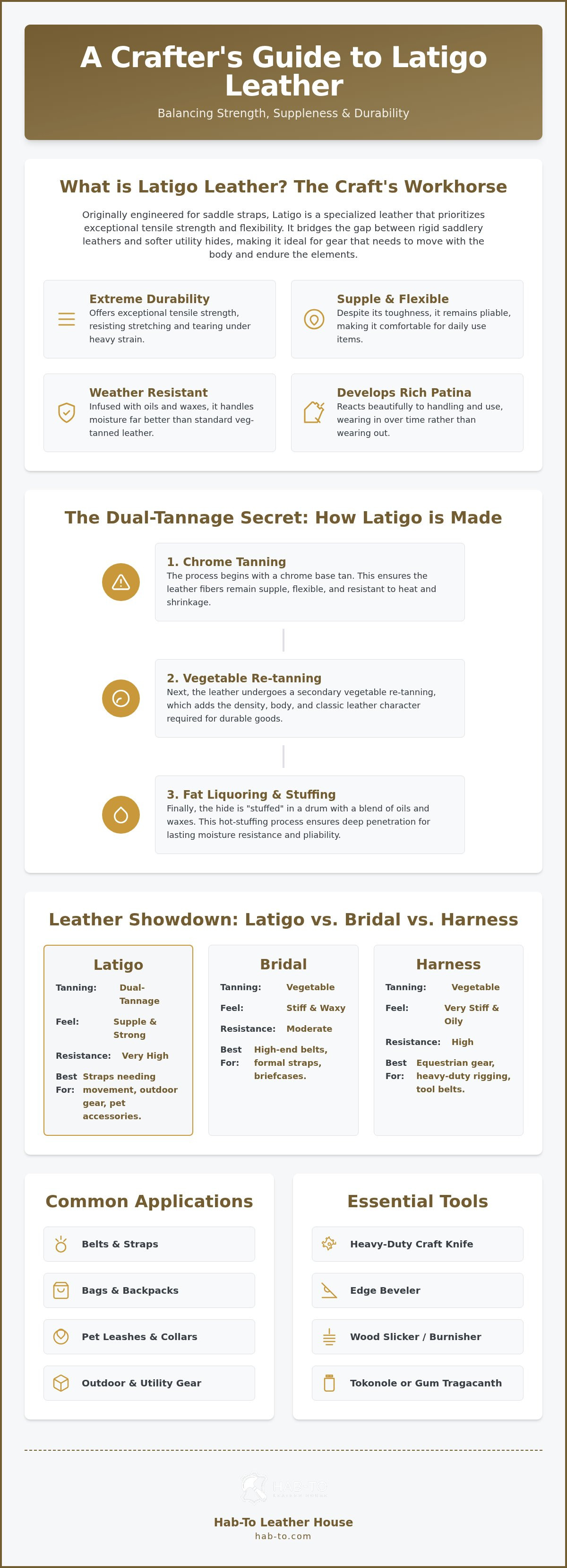
The secret to Latigo's performance lies in its "dual-tannage" identity. Most leathers pick a side. Chrome tanning offers flexibility and heat resistance. Vegetable tanning provides structure and that classic leather scent. Latigo refuses to choose. It starts with a chrome base to ensure the fibers remain supple and resilient. Then, it goes through a secondary vegetable re-tanning process. This adds the density and body required for saddlery. Some traditional methods even incorporate alum tanning to further tighten the grain, creating a material that is nearly impossible to stretch or tear.
This process concludes with fat liquoring. Fat liquoring is the infusion of oils and waxes into the leather fibers to ensure long-term pliability. This isn't a surface treatment. The leather is "stuffed" in a rotating drum until the oils penetrate every layer. This is why Latigo Leather is famously moisture-resistant. It doesn't just repel water; the internal oils prevent the fibers from drying out and cracking after a rainstorm. Because it's drum-dyed, the color is consistent throughout the hide. If you scratch the surface, you won't find a pale, unfinished center. This total saturation is vital for items that see heavy wear and tear.
Drum Stuffing vs. Surface Finishing
Premium tanneries often employ "hot stuffing" during the final stages. This technique uses heat to liquefy heavy waxes and tallow, forcing them deep into the hide. It creates a material that feels substantial and slightly waxy to the touch. These deep-seated oils act as a permanent internal lubricant. Unlike surface-finished leathers that require constant conditioning, Latigo is built to be low-maintenance. It's designed to live outdoors. If you're looking for practical advice on handling these oily hides in your workshop, check out these Tips for working with Latigo Leather.
Sourcing from Elite Tanneries
Not all Latigo is created equal. Many mass-market versions rely too heavily on chrome, losing the character that makers love. I work closely with tanneries like Conceria Maryam to source hides that respect traditional Italian craft standards. We prioritize "Full Grain" selections. By keeping the original top layer of the hide intact, we preserve the maximum fiber strength. This is critical for safety-related gear like horse cinches or heavy-duty pet leashes. If you want to sample a variety of these high-performance materials without buying a full hide, our leather bundles offer a perfect entry point for your next project.
Latigo vs. Bridal vs. Harness Leather: The Comparison
Choosing the right hide for a heavy-duty project shouldn't be a guessing game. While all three of these leathers are staples in the saddlery world, their internal chemistry dictates how they'll behave in your workshop. Latigo Leather is the most flexible of the trio. If your project involves straps that need to wrap, bend, or move frequently, Latigo is the correct choice. It also features a pronounced "pull-up" effect. When you fold or bend the leather, the internal oils and waxes displace, creating a lighter color at the crease. This adds instant character and proves the richness of the tannage. It’s the perfect balance for gear that needs to be tough but responsive.
Bridal Leather: The Polished Alternative
While Latigo feels oily and rugged, Bridal leather is all about the finish. It’s a vegetable-tanned hide that has been "dressed" with heavy waxes on both the grain and flesh sides. This gives it a smooth, glossy surface that screams luxury. You'll often find it on high-end fashion belts and formal handbags. It doesn't have the same moisture resistance as drum-stuffed Latigo, but it offers a refined aesthetic that Latigo can't match. The flesh side is often pasted smooth, making it ideal for unlined goods. If you want to dive deeper into these specialized materials, I recommend our Equestrian Leathers and Hardware Masterclass for professional sourcing tips.
Harness Leather: The Heavyweight Champion
Harness leather is the toughest of the bunch. It’s designed for extreme weather and literal horsepower. Unlike the hybrid tanning of Latigo, Harness is typically pit-tanned for long periods to create incredibly dense fibers. It’s less flexible than Latigo but significantly more resistant to stretching. If you’re making a cinch or a heavy-duty work belt that must hold its exact length under tension, Harness is your best bet. It has a "firm hand," meaning it feels stiff and substantial. It’s packed with tallow and greases, making it the most weather-proof option available for professional gear.
To help you decide, here is a quick breakdown of their best uses:
- Latigo Leather: High flexibility, great pull-up, best for dog leashes and saddle strings.
- Bridal Leather: High polish, smooth flesh side, best for fashion belts and luxury attire.
- Harness Leather: Maximum density, stretch-resistant, best for work belts and heavy tack.
I always tell my students to feel the leather before they cut it. The oily grip of Latigo tells you it’s ready for the trail. The waxy surface of Bridal tells you it belongs in the city. Understanding these tactile cues will make you a better maker.
Working with Latigo: Projects and Essential Tools
Working with Latigo Leather requires a shift in your workshop habits. Because the hide is packed with internal oils, it has a unique "creep" when you take a blade to it. If you use a dull knife, you'll end up pulling the leather rather than slicing it, which can distort your patterns. I always recommend using a freshly stropped head knife or a heavy-duty rotary cutter from our professional tool collection. Keep your pressure light and consistent. Slicing through a 4mm shoulder should feel like cutting through cold butter. If you feel the blade dragging, stop and sharpen immediately.
Managing the friction during stitching is another hurdle. The internal waxes can grab your thread, making hand-sewing feel like a workout. Using polished needles and a high-quality thread will save your hands from fatigue. For your assembly, you need components that can keep up with the leather's longevity. I always pair my Latigo projects with solid brass hardware. Brass doesn't rust, and its weight complements the substantial feel of a thick Latigo strap. It’s about building something that your grandkids could use.
What You Will Need
To get professional results, your toolkit needs to handle the specific chemistry of dual-tanned hides. I've curated the Leathercraft Master Bundle to include the essentials for this type of work. Before burnishing, you'll need a sharp edge beveler to take the corners off and create a clean radius. For the finish, use Tokonole to achieve a slick edge that won't flake off the oily surface. When bonding layers, Ecostick 1804 is the best choice. It provides a strong, water-based bond that penetrates the fibers without adding toxic fumes to your workshop.
Top 3 Latigo Projects for Beginners
If you're new to this material, start with these three projects to get a feel for the "hand" of the leather:
- The Indestructible EDC Belt: A single strap of Latigo Leather makes a belt that lasts a lifetime. It requires minimal hardware and showcases the leather's natural pull-up. You'll learn how to punch clean holes and set a buckle without marring the finish.
- Heavy-Duty Pet Leash: Pair your leather with solid brass snap hooks. This project tests your ability to finish long edges and set rivets. The leather's flexibility makes it comfortable for the handler, even if the dog pulls.
- Minimalist Tote with Latigo Straps: Use a lighter body leather and contrast it with thick, rugged Latigo straps. It’s a great way to add structural integrity to a softer bag. This project helps you practice attaching heavy straps to lighter materials without causing puckering.
Sourcing Quality Latigo with No Minimum Orders
Sourcing premium Latigo Leather shouldn't feel like an exclusive club for large-scale factories. Many traditional wholesalers require you to purchase five or more sides just to get a seat at the table. This is a massive barrier for hobbyists and small independent brands. I've built Hab-To Leather House to break those rules. We believe that every maker deserves access to the world's best hides without the burden of high minimum order quantities. Whether you need a full hide for a large production run or just a small panel for a custom prototype, we've got you covered. You can buy exactly what your project requires, which keeps your workshop lean and your overhead low.
I personally oversee the selection of every hide that enters our Amsterdam showroom. This hands-on approach ensures that the "hand" and temper of the leather meet our rigorous standards. If you're struggling to decide between a 2mm shoulder for a bag or a 4mm strap for a heavy-duty harness, don't guess. You can Book a free video consultation with me to discuss your specific design. We can look at the grain together and discuss how the leather will behave under tension. It's about more than just selling a hide; it's about ensuring your project succeeds.
Quality Control and Heritage
Our commitment to quality is backed by 160 years of family experience in the leather trade. We don't just source leather; we curate it from the finest European tanneries. My strict policy is that Hab-To Leather House only stocks Vegetable Tanned Leather and high-quality veg-retanned hybrids. This isn't just about tradition. It's about sustainability. By choosing hides tanned with plant-based agents, we avoid the environmental toll of mass-market chrome tanning. These hides are safer for you to work with and better for the planet. The result is a more authentic, high-character material that tells a story of craftsmanship rather than industrial processing.
Care and Longevity
Because Latigo Leather is drum-stuffed with oils and waxes, it’s remarkably resilient. However, it still requires the right attention to maintain its internal balance. Over time, salt from sweat or exposure to extreme heat can draw those vital oils to the surface. To keep your creations looking their best for decades, I recommend following our Vegetable Tanned Leather Care Guide. A light application of a high-quality conditioner every few months is usually all it takes to replenish the fibers. Latigo is an investment. It’s a material that doesn't just age; it matures. With proper care, the gear you make today will only look better ten years from now.
Elevate Your Craft with the Right Hide
You now have the technical foundation to choose your materials with total confidence. Understanding the dual-tannage process changes how you approach every cut and stitch in your workshop. Latigo Leather isn't just a rugged workhorse; it's a bridge between old-world tradition and modern utility. It offers a unique balance of strength and suppleness that standard hides simply can't match. By mastering the specific edge finishing and stitching techniques required for oily hides, you ensure your work stands the test of time.
My family has spent 160 years refining the expertise needed to select these premium European hides. We believe quality should be accessible to everyone. That’s why we offer no minimum order quantities and provide global shipping directly from our Amsterdam showroom. You can focus on the art of the craft while we handle the logistics of sourcing the best materials for your bench. Whether you're building an heirloom belt or a heavy-duty leash, the right start makes all the difference.
Your next design deserves a material that matures with character and survives the elements. I'm excited to see how you use these world-class hides to bring your vision to life. Keep pushing the boundaries of your craft and never settle for anything less than authentic quality.
Frequently Asked Questions
What is the difference between Latigo and standard veg-tan leather?
Latigo is a dual-tanned hybrid, whereas standard vegetable tanned leather relies solely on plant tannins for its structure. This specific tanning process makes Latigo more flexible and moisture-resistant from day one. Standard veg-tan is often stiffer and requires more initial "breaking in" to become pliable. Because Latigo is drum-stuffed with oils and waxes, it feels much more supple than a traditional dry-tanned hide of the same thickness.
Is Latigo leather waterproof or water-resistant?
Latigo leather is highly water-resistant but not entirely waterproof. The heavy infusion of oils and waxes during the fat liquoring stage allows the leather to repel moisture better than almost any other variety. It won't easily soak through during a rainstorm, and it resists the drying and cracking that often plagues other leathers after they get wet. It remains a top choice for outdoor gear and equestrian tack for this reason.
Does Latigo leather stretch over time?
Latigo is remarkably resistant to stretching because of the density added during the vegetable re-tanning stage. While all leather has a small amount of natural give, Latigo holds its shape under tension much better than chrome-tanned utility leathers. This dimensional stability is why it became the gold standard for cinch straps and heavy-duty belts. It provides the flexibility you need without compromising the safety or long-term fit of your gear.
Can you carve or stamp Latigo leather like standard veg-tan?
You cannot carve or stamp Latigo leather with the same precision as standard vegetable tanned leather. The high oil and wax content prevents the fibers from holding intricate tool marks or deep impressions. While you can successfully use a heat stamp or a basic maker's mark, detailed Sheridan-style carving is nearly impossible. If your project requires heavy decorative tooling, you should stick with a traditional dry veg-tan hide instead.
Why is Latigo leather so expensive compared to other types?
The higher cost of Latigo Leather reflects the complexity and duration of its production. It essentially undergoes two full tanning processes, chrome followed by vegetable, which requires more time, labor, and materials. Additionally, the premium oils and waxes used during drum stuffing are expensive ingredients. When you buy from elite tanneries like Conceria Maryam, you are also paying for the superior fiber strength found in top-tier European bovine hides.
What is the best way to burnish the edges of Latigo leather?
The best way to burnish Latigo edges is to sand them smooth and then use a high-quality agent like Tokonole. Because the leather is so oily, traditional water-based burnishing often fails to produce a lasting shine. A dedicated burnishing cream penetrates the fibers and seals the edge despite the internal waxes. Use a dense wood slicker and moderate friction to achieve a glossy, professional finish that won't flake off over time.
Is Latigo leather suitable for making wallets?
Latigo is generally better suited for rugged, outdoor-style wallets rather than slim dress wallets. Its natural thickness and oily "hand" can make a pocket-sized item feel bulky if not skived down significantly. However, if you are crafting a biker-style long wallet or a heavy-duty card carrier, the durability and pull-up effect of Latigo Leather create a stunning, long-lasting product. Just ensure your design accounts for the leather's substantial weight.
How do I clean and maintain Latigo leather gear?
Maintenance is simple because the leather is already packed with internal lubricants. Wipe away surface dirt with a damp cloth and use a mild leather soap for deeper cleans. You only need to apply a conditioner once or twice a year to replenish the surface oils. Avoid over-conditioning, as this can make the leather too soft. If the gear gets soaked, let it air dry away from direct heat to prevent the fibers from becoming brittle.
Disclaimer
All our blog articles are made for information purposes only we dont take responsability for any content from third parties.