Leather Craft for Mental Wellbeing: The Therapeutic Power of Slow Craft
Hi, I'm Mike! You spend eight hours staring at a glowing rectangle, moving pixels that don't exist in the real world, only to close your laptop and feel like you've accomplished nothing tangible. It's a heavy, modern kind of exhaustion. You aren't alone in this feeling. The global arts and crafts market reached $50.7 billion in 2026 because thousands of people are desperate to reconnect with the physical world. Engaging in leather craft for mental wellbeing is more than just a hobby. It's a sensory anchor that swaps blue light for the organic scent of vegetable-tanned leather and the steady, rhythmic click of a stitching pony.
I agree that the digital grind can leave your focus shattered and your stress levels high. This article shows you how slow craft provides a genuine digital detox, helping you find a flow state that reduces cortisol through deliberate, tactile movement. You'll discover why creating something lasting with your hands is the ultimate antidote to the sense of finishing nothing at your day job. We'll look at the neurological benefits of hand-stitching, the importance of the new 2026 LWG Sustainability System for mindful material choice, and how to start your own journey toward a quieter, more focused mind.
Key Takeaways
- Understand why physical creation is the essential antidote to digital burnout and how finishing a tangible project restores your sense of agency.
- Discover the science behind the saddle stitch and how using leather craft for mental wellbeing can help regulate your nervous system through rhythmic, bilateral movement.
- Learn how the organic scents and tactile feedback of premium vegetable-tanned leather serve as powerful sensory anchors to reduce daily stress.
- Master a simple 4-step mindfulness exercise designed to help you find a flow state during every cut and stitch of your project.
- Get expert advice on starting small with curated grounding bundles and high-quality materials that support a calm, focused crafting experience.
Beyond the Screen: Why Tactile Hobbies Like Leathercraft Are Essential for Wellbeing
Digital burnout is more than just a tired mind. It's a fundamental disconnect from the physical world. When you spend your day pushing pixels or moving data, your brain misses out on "haptic feedback." This is the information we get through touch and physical resistance. A mouse click feels the same every single time, but the resistance of a sharp blade through a 4mm piece of vegetable-tanned leather is a unique, grounding experience. This physical interaction is why Art therapy often focuses on raw, organic materials that demand our full sensory attention.
Using leather craft for mental wellbeing provides a powerful sense of "Object Agency." In a digital career, your hard work can be deleted or updated in a second. A hand-stitched leather bag, however, is a permanent, physical fact. It has weight, a distinct scent, and a surface that changes as you work it. At Hab-To, our philosophy is built on this permanence: No synthetics. No compromises. We only provide materials that are as real as the people using them. Leather is a "living" material that patinas over time, making it a lasting record of your focus and patience.
To better understand how working with your hands can transform your mental state, watch this helpful video:
The Antidote to the 'Instant' World
Digital notifications arrive in milliseconds, but a perfectly burnished leather edge can take an hour of steady work. This forced slowness is a gift. It helps rebuild the patience that modern technology often erodes. My family has been in the leather trade for over 160 years, and that tradition has taught us to value the process over the result. You can't rush a good stitch, and the leather won't let you. It rewards the person who stops checking their phone and starts paying attention to the grain. This shift in pace is the first step toward reducing daily cortisol levels.
Finding Your 'Flow State' in the Workshop
Psychologist Mihaly Csikszentmihalyi described "Flow" as a state of total immersion where time seems to disappear. Engaging in leather craft for mental wellbeing is a perfect shortcut to this state. The high stakes of the craft actually help you focus. When you're about to make a critical cut in a premium piece of Badalassi Pueblo leather, your mind doesn't have room to worry about tomorrow's meetings. If you slip, the piece is ruined. This "consequence-based focus" forces you to transition from "doing" to "being." You aren't just making a wallet; you are the knife, the leather, and the movement in that exact moment.
The Science of the Stitch: How Rhythmic Motion Calms the Nervous System
The saddle stitch isn't just a way to join two pieces of leather. It's a bilateral, repetitive movement that shares striking similarities with Eye Movement Desensitization and Reprocessing (EMDR) therapy. As your hands move in a rhythmic left-right-left pattern, your brain begins to settle. This specific motion helps the nervous system shift out of a "fight or flight" state and into a restorative one. When you engage in leather craft for mental wellbeing, you aren't just making a belt. You're giving your brain a structured, predictable task that naturally lowers cortisol levels.
This healing process relies heavily on proprioceptive input. This is the brain's ability to sense the body's position and effort. Every time you push a harness needle through a pre-punched hole, the leather provides a specific amount of resistance. Your brain has to calculate that force, creating a deep connection between your hands and your mind. Research into the mental health benefits of hobbies shows that these types of tactile, goal-oriented tasks trigger the release of dopamine. It's a natural reward for creating something with your own strength and focus.
Manual tools are central to this therapeutic experience. An electric sewing machine is fast, but it removes the "mindful friction" required for true relaxation. Using a traditional mallet and diamond chisels requires your full physical presence. You have to feel the weight of the hammer and hear the strike. If you're looking to start your own practice, you can explore our premium hand tools designed for this level of precision and connection.
Neural Pathways and Repetitive Tasking
Once the muscle memory of stitching is formed, the task becomes instinctive. This "automatic" state is where the magic happens. Because your hands are busy with a safe, repetitive task, your mind is free to process difficult emotions without feeling overwhelmed. The physical resistance of the leather keeps you tethered to the present moment. It prevents the spiraling thoughts that often fuel anxiety. This is why the arts and crafts market reached a $50.7 billion value in 2026. People are realizing that manual work is a biological necessity for a balanced mind.
The Sound of Silence: The Acoustic Therapy of Leatherwork
The workshop offers a unique soundscape. There are no pings, beeps, or digital interruptions. Instead, you hear the satisfying, low-frequency thud of a poly mallet hitting a punch. You hear the crisp zip of waxed thread pulling through a tight hole. These sounds signal to the brain that it's time to slow down. The lack of digital noise is a critical part of the workshop experience. It allows you to create an environment where the only feedback is the sound of your own progress.
Choosing Your Materials Mindfully: Why Vegetable Tanned Leather Enhances the Experience
Hi, I'm Mike! I've seen many people start their journey into this craft, and the first thing I tell them is that your material choice is the foundation of your mental state. Choosing the right hide is the first step in using leather craft for mental wellbeing. It isn't just about the durability of the final piece; it's about how the material speaks to your senses during the hours you spend working it. If you're new to this world, you should check out our Vegetable Tanned Leather: The Complete Guide for Crafters to understand the technical side. From a therapeutic perspective, the difference between mass-produced chrome-tanned leather and premium vegetable-tanned hides is night and day. Chrome-tanned leather often feels cold and plastic-like because it's processed with heavy metals. In contrast, vegetable-tanned leather has an organic grip and a natural warmth that invites touch.
The Aromatherapy of the Workshop
The smell is often the first thing people notice when they walk into my workshop. Vegetable-tanned leather gets its name from the plant-based tannins used in the tanning process, such as oak, mimosa, and chestnut. These tannins provide a deep, earthy aroma that acts as a sensory anchor. When you open a package of premium Pueblo or Buttero leather, that scent immediately signals to your brain that it's time to slow down. There's a direct link between olfaction and the limbic system, which is the emotional center of the brain. This isn't just smelling leather. It's a physiological trigger for relaxation that helps you leave the digital world behind.
Natural Materials vs. Synthetics for Mental Health
At Hab-To, we live by a simple rule: No synthetics. No compromises. This isn't just a quality standard; it's a mental health choice. Choosing natural materials is a core part of leather craft for mental wellbeing because it removes the plastic barrier between you and the craft. The tactile warmth of natural cowhide offers a responsive, high-friction grip that feels fundamentally human, whereas cold synthetic alternatives remain static, slippery, and emotionally hollow.
Sustainability also plays a massive role in self-care. On March 30, 2026, the OEKO-TEX® LEATHER STANDARD was updated to tighten limit values for chemicals like Bisphenols B, F, and S. These regulations, which take full effect on June 1, 2026, ensure that the materials you handle are safer for both you and the environment. Using eco-conscious materials removes the underlying anxiety of chemical exposure. It lets you focus entirely on the rhythm of your work. Finally, consider the patina. As leather ages, it develops marks and darkens, becoming more beautiful with use. This serves as a powerful metaphor for our own lives, teaching us to accept imperfections and value the history of our experiences.
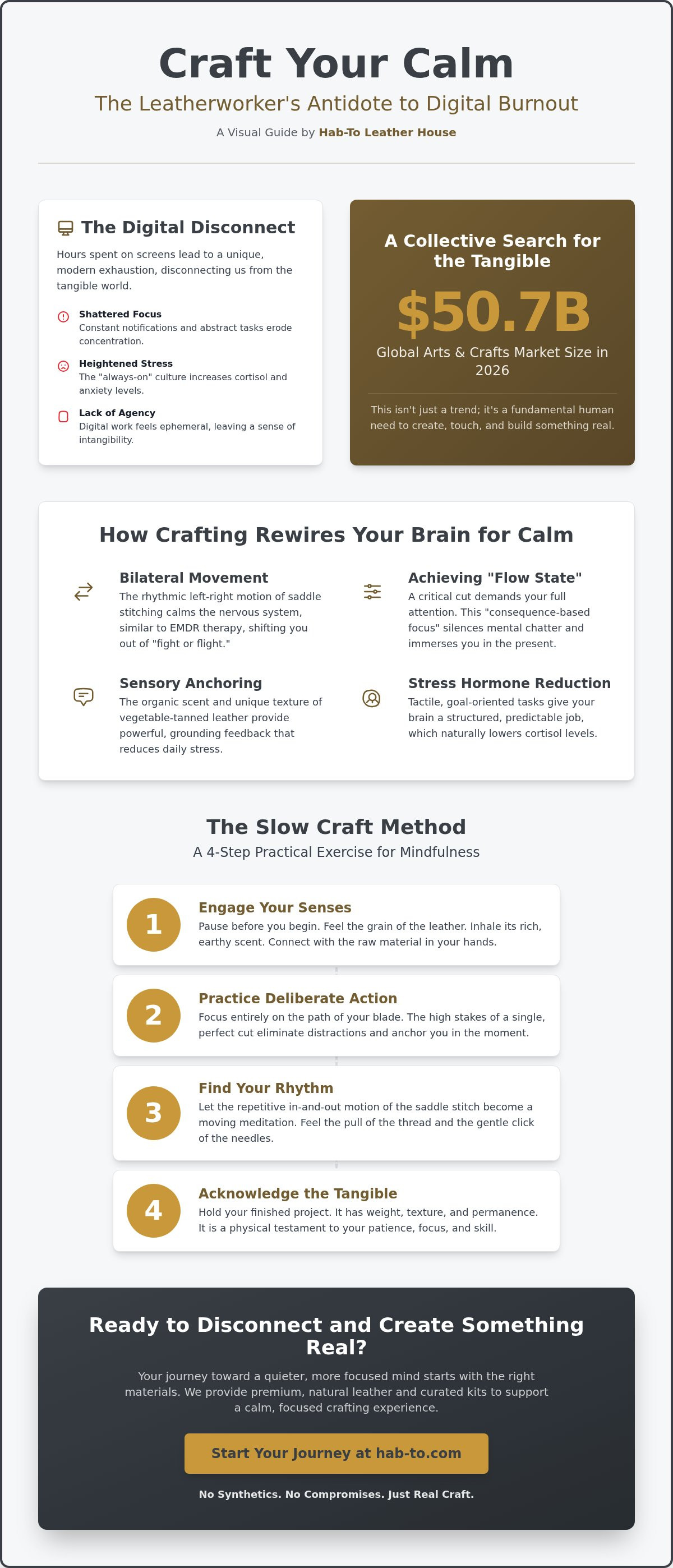
The Slow Craft Method: A 4-Step Practical Exercise for Mindfulness
Practicing leather craft for mental wellbeing is most effective when you treat the process as a structured meditation. Instead of rushing to finish a product, focus on each individual action as its own reward. This method helps you slow down and reclaim your attention from the fast-paced digital world. By following these four steps, you can turn a simple project into a deep exercise in mindfulness.
- Step 1: The Sensory Check-in. Before you pick up a tool, hold the leather in both hands. Feel the grain and the weight of the hide. Take a deep breath and notice the earthy scent of the tannins. This simple act anchors you in the present moment.
- Step 2: The Intentional Cut. When you're ready to cut, focus entirely on the path of the blade. Don't think about the next piece. Watch the steel divide the fibers of the leather. This requires a steady hand and a quiet mind, pushing all outside distractions away.
- Step 3: The Rhythmic Stitch. Connect your breath to your movement. Breathe in as you pass the needle through the hole. Breathe out as you pull the thread tight. This creates a steady, calming cadence that regulates your nervous system.
- Step 4: The Burnish. Finishing an edge is a lesson in persistence. Use a wood slicker to create friction. Feel the heat build up between the wood and the leather. This repetitive, warming motion is the final physical confirmation that your work is complete.
Setting Up Your 'Zen' Workspace
You don't need a massive studio to reap the benefits of this craft. A small, dedicated corner of a room is enough to create a mental sanctuary. The key is to keep it analog. Minimize digital noise and ensure you have natural or warm lighting that reduces eye strain. Surround yourself with high-quality leatherworking tools that feel good in your hand. A heavy brass mallet or a well-balanced awl provides the tactile feedback your brain craves after a day of typing on a hollow keyboard.
Overcoming the 'Perfectionist' Trap
Many beginners worry about making mistakes, but in slow craft, errors are part of the story. This is the essence of Wabi-sabi, the Japanese philosophy of finding beauty in imperfection. Your first wallet doesn't need to look like it came from a factory to provide 100% therapeutic value. In fact, a slightly crooked stitch is a reminder that a human made it. Focus on the hand-selected nature of your materials and the time you spent creating. If you're ready to start your first mindful project, browse our hand-selected leather collections to find the perfect piece to begin your journey.
Starting Your Journey with Hab-To: Quality Materials for a Calmer Mind
Hi, I'm Mike! I know that starting a new hobby can sometimes feel as overwhelming as the digital stress you're trying to escape. Many wholesalers require large bulk purchases that put immediate pressure on your wallet and your workspace. At Hab-To, we do things differently. Our "No Minimum Order" promise is a core part of how we support leather craft for mental wellbeing. It allows you to start small, without the weight of a major financial commitment. You can order exactly what you need for a single evening of focused, quiet work. This low-pressure approach ensures that your craft remains a source of peace rather than another item on your to-do list.
If you're unsure where to begin, I recommend starting with a "Grounding Bundle." These collections of premium vegetable-tanned scraps or belt blanks are perfect for low-stakes practice. They let you get a feel for the material's resistance and scent without the fear of wasting a large hide. For those who want to explore the very best the industry offers, you can read our Shell Cordovan: The Ultimate Guide. While Cordovan is known as the "King of Leathers," every piece we stock follows our "No synthetics. No compromises" rule. Whether it's a scrap or a premium shell, the quality remains the same.
From Amsterdam to Your Doorstep
Our family has been immersed in the leather trade for over 160 years. This isn't just a business; it's a legacy of craftsmanship that we bring from Amsterdam directly to your door. I hand-select every hide to ensure it meets the strict standards your mental health deserves. In 2026, the global arts and crafts market reached $50.7 billion because people are hungry for this level of authenticity. When you buy from us, you aren't just getting leather. You're joining a community of makers who value tradition over speed. If you ever feel stuck or need advice on which tool provides the best tactile feedback, just ask. I'm here to act as your mentor in this creative process.
Your First Project: A Simple Path to Serenity
Don't feel pressured to create a masterpiece on day one. A simple cardholder or a key fob is a perfect entry point. These projects are small enough to finish in one or two sittings, providing that essential sense of "Object Agency" we discussed earlier. There's a profound, long-term mental benefit to carrying an item you made with your own hands. Every time you reach for your keys, the tactile warmth of the leather reminds you of the flow state you achieved at your workbench. Using leather craft for mental wellbeing is a journey that starts with a single stitch. Start today, breathe deeper, and feel the leather. Your mind will thank you for the quiet.
Step Away from the Screen and Into the Workshop
You've seen how the digital world can drain your focus, but leather craft for mental wellbeing offers a physical way to fight back. By using the rhythmic saddle stitch to calm your nervous system and choosing materials that act as sensory anchors, you can reclaim your attention. This isn't just about making products. It's about the 160 years of family tradition that teaches us to value the slow, intentional process of hand-selected craftsmanship.
At Hab-To, we believe your path to serenity shouldn't be blocked by bulk requirements. Our "No minimum order" policy ensures you can start small and focus on the joy of the craft. Whether you're cutting your first piece of sustainable vegetable-tanned leather or burnishing an edge, each step is a move toward a quieter mind. You have the tools and the method; now you just need the material to begin.
Take that first step today. Put down the phone, pick up the leather, and let the rhythm of the craft bring you back to yourself.
Frequently Asked Questions
Is leathercraft an expensive hobby to start for mental health?
Starting this craft is affordable because you don't need expensive machinery to reap the therapeutic rewards. Since we have no minimum order requirements, you can begin with a small selection of premium scraps for under 30 Euros. A basic set of hand tools, including a sharp knife and two needles, is enough to start your first project. This low entry cost makes leather craft for mental wellbeing accessible to anyone needing a break from the digital world.
Do I need a lot of space to practice leatherworking for wellbeing?
You only need a small, dedicated surface about the size of a standard desk to practice comfortably. Most mindful tasks, like hand-stitching or edge burnishing, are compact and don't require a full-scale studio. A quiet corner with good lighting and a cutting mat is enough to build a mental sanctuary. This portability means you can find your flow state in a small apartment just as easily as in a large workshop.
Why is vegetable-tanned leather better for mindfulness than other types?
Vegetable-tanned leather is superior for mindfulness because it provides much more sensory feedback than "plastic" synthetic or chrome-tanned alternatives. The organic surface responds to your touch and changes over time, creating a deep connection between your effort and the material. It's free from the harsh chemical odors of industrial tanning. Instead, it offers the calming, earthy scent of natural bark tannins that helps anchor you in the present moment.
How often should I practice leathercraft to see mental health benefits?
Practicing for just 20 to 30 minutes three times a week is enough to see a noticeable reduction in stress levels. Consistency is more important than the length of each session. A short, intentional period of hand-stitching after work helps reset your nervous system and rebuilds the focus that digital screens often erode. The goal is to create a regular "analog" ritual that signals to your brain it's time to slow down.
Can leatherworking help with anxiety and ADHD?
Leatherworking is a powerful tool for managing anxiety and ADHD because it provides constant proprioceptive input. The physical resistance of the leather and the precision required for a saddle stitch act as a sensory anchor. This "mindful friction" helps stop the mind from wandering or spiraling into anxious thoughts. Many crafters find that the high stakes of cutting premium leather forces a calming hyper-focus that is difficult to find elsewhere.
What are the best beginner projects for someone looking to de-stress?
A simple cardholder or a key fob is the best project for a beginner looking to de-stress quickly. These projects involve basic cutting and stitching but offer a fast sense of accomplishment. Completing a tangible item in a single evening provides a dopamine boost and a sense of "Object Agency." It proves you can create something lasting with your own hands, which is the perfect antidote to the "finishing nothing" feeling of digital jobs.
Do I need to be 'artistic' to enjoy the therapeutic benefits of leathercraft?
You don't need any prior artistic talent to enjoy the benefits of leather craft for mental wellbeing. This hobby is more about geometry, patience, and rhythm than it is about "fine art." Following a pattern is a structured, logical task that quiets the mind and reduces decision fatigue. The therapeutic value comes from the physical act of creation and the sensory experience of the materials, not from the perfection of the final product.
How does the smell of leather actually help with relaxation?
The scent of vegetable-tanned leather triggers relaxation by interacting directly with the limbic system, the brain's emotional center. Natural tannins from oak and mimosa barks produce an earthy aroma that helps lower the heart rate and signals safety to the nervous system. This olfactory input bypasses the logical mind and provides immediate grounding. It's a form of natural aromatherapy that has been part of our 160 year family tradition in the leather trade.