Leather for Cosplay: Sourcing and Crafting Premium Hides
A recent 2025 analysis revealed that over 32% of cosplayers spend up to $200 per costume, while nearly 28% invest double that amount. Despite this investment, many makers still struggle with materials that crack or refuse to hold a stamp. Finding the right leather for cosplay shouldn't involve gambling on low-quality chrome-tanned hides or facing massive shipping fees from outside the EU. You've likely felt the frustration of being forced to buy a huge hide when you only need enough for a single pair of bracers. With 2026 EU regulations tightening the rules on chemical treatments, choosing the right material is more important than ever.
I'm Mike, and I've spent years helping crafters find the exact materials they need without the waste. You want your work to look screen-accurate and stand up to the rigors of a busy convention. This article will show you how to select and work with professional-grade vegetable-tanned leather to create durable, high-end accessories. We'll look at sourcing premium Italian leather in small quantities, matching leather weights to your specific gear, and the techniques needed for a professional patina. It's time to stop settling for "good enough" and start building pieces that carry the weight of authenticity.
Key Takeaways
- Discover why vegetable-tanned leather is the essential material for achieving professional-grade tooling and stamping that synthetic alternatives can’t replicate.
- Learn how to select specific textures from world-class tanneries like Conceria Maryam and Badalassi to give your character designs an authentic, lived-in feel.
- Master the correlation between leather thickness and function, identifying the perfect weights for structural armor versus lightweight decorative overlays.
- Gain a step-by-step understanding of essential crafting techniques, including proper casing for tooling and using the right adhesives for durable construction.
- Understand the strategic advantages of sourcing leather for cosplay in small quantities to avoid waste while still accessing premium Italian hides.
Why Vegetable-Tanned Leather is the Gold Standard for Cosplay
I've spent over 25 years working with this material, and I can tell you that the soul of a costume lives in the quality of the hide. When you're choosing leather for cosplay, you're not just buying a fabric. You're selecting a medium that allows for artistic expression. Vegetable-tanned leather is a traditional, plant-based material processed using natural tannins found in tree bark and leaves. It's a non-toxic alternative to the mass-produced options found in most hobby shops. This organic process keeps the fibers dense and malleable. It's the only material that allows for professional-grade tooling and stamping. When you strike a stamp into a damp piece of veg-tan, the impression stays crisp and deep forever. It doesn't spring back like lesser materials.
Veg-Tan vs. Chrome-Tanned Leather: What Cosplayers Need to Know
Most commercial leather is chrome-tanned. It's fast and cheap to produce, but it's fundamentally "dead" for a maker. Because it's saturated with mineral salts, the fibers lose their ability to hold a shape or an impression. If you try to tool chrome-tanned leather, the design will simply fade away. Safety is another critical factor. As of January 2026, REACH Annex XVII regulations have strictly limited Chromium VI in leather goods that touch the skin. Choosing a natural cow hide tanned with plants avoids these chemical risks entirely. Synthetics often feel like plastic because they are plastic. They don't breathe, and they certainly don't have the organic texture required for high-end character work. Natural leather feels grounded and authentic.
The Aesthetic Advantage: Achieving Screen-Accurate Patina
Authenticity in cosplay often comes down to the finish. Vegetable-tanned leather is incredibly thirsty. It absorbs oils, waxes, and dyes in a way that creates depth and realism. If you want your armor to look like it has survived a hundred battles, you need a material that can age. You can even find sustainable options like Olivenleder, which uses olive leaf extract for tanning. For hero props, the edges must be flawless. Burnishing uses friction to seal the leather fibers, creating a smooth, glossy edge that looks like solid wood or metal. Patina is the natural darkening and character leather gains with use. This "battle-worn" look can't be faked with paint on a synthetic surface. It's a hallmark of quality that separates a costume from a masterpiece.
Choosing Your Hide: From Badalassi Pueblo to Maryam Cordovan
Choosing the right hide is where your character truly starts to take shape. For high-end leather for cosplay, I always point makers toward the legendary tanneries of Tuscany. Conceria Carlo Badalassi and Conceria Maryam aren't just names; they represent centuries of refined vegetable tanning. Whether you need a full shoulder for a breastplate or just a few square decimeters (dm²) for a knife sheath, these hides offer a level of detail that mass-market leather simply can't match. We provide panels and pre-cut sizes so you don't have to buy a whole cow for a small project. This flexibility is vital when you're balancing a budget and a deadline.
Pueblo Leather: The Secret to Rugged Fantasy Character Gear
If you're building gear for a ranger, a battle-hardened mercenary, or a post-apocalyptic survivor, Badalassi Pueblo leather is your best friend. It has a unique, intentional "scratched" surface that gives it an immediate, weathered look. It starts with a rustic matte finish. Over time, as you wear it to conventions, it absorbs the oils from your hands and develops a stunning, lustrous sheen. It's perfect for weathered pouches and ancient-looking armor because it looks legendary right off the bench without needing hours of artificial distressing.
Vaccheta and Shell Cordovan: For the Discriminating Artisan
For hero armor that needs a clean, noble finish, Maryam Vaccheta is the gold standard. It's smooth, consistent, and takes dye beautifully. It's the material of choice for "clean" fantasy looks where the quality of the craft must speak for itself. If you're looking for the absolute peak of luxury for small, high-impact items like watch straps or fine belt pouches, look no further than Shell Cordovan. Known as the "King of Leathers," it's made from a specific muscle layer in a horse hide. This results in a material that is incredibly dense, virtually indestructible, and possesses a natural glow that no synthetic can replicate.
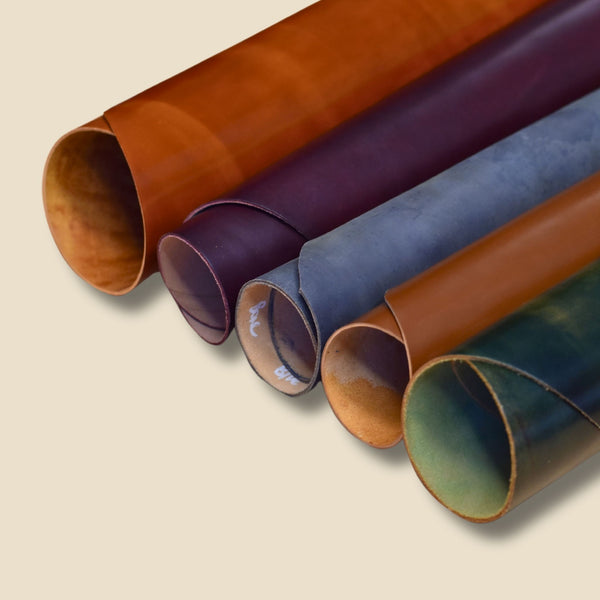
Sourcing the right amount of leather for cosplay shouldn't be a headache. If you're just starting out and aren't sure which textures will work best for your build, I recommend looking at our curated leather bundles to get a feel for these premium Italian hides. Each piece is selected to help you master the art of the craft without the waste of buying oversized hides.
Understanding Leather Weights and Thickness for Armor and Props
Selecting the right thickness is the foundation of structural integrity in your build. I often see makers pick a hide based on color alone, only to find it's too flimsy for a breastplate or too thick for a delicate pouch. In the world of leather for cosplay, we measure thickness in millimeters (mm). This measurement dictates how the material behaves under stress. If you're unsure where to begin, I recommend checking out our Guide to Sourcing Hides to understand the technical side of buying online. Beyond thickness, you must consider "temper." This is the industry term for stiffness. A stiff temper is vital for armor that needs to hold its shape, while a soft temper is better for garments that need to move with your body.
Heavyweight Leathers: 2.5mm to 4.0mm for Rigid Armor
When you're building chest plates, pauldrons, or heavy duty utility belts, you need a material that won't buckle. Harness and Bridal leather are the champions of this category. These hides are stuffed with waxes and oils during the tanning process, making them incredibly durable. For structural armor, the 3.0mm to 3.5mm range is the "sweet spot." It's thick enough to provide a realistic sense of protection, which is essential for LARP or HEMA-adjacent gear, yet manageable enough to cut by hand. Keep in mind that a full suit of 4.0mm leather is heavy. You must design a proper suspension system with wide shoulder straps to distribute that weight during long convention days.
Mid-to-Lightweight Leathers: 0.5mm to 1.5mm for Detail and Lining
Professional costumes aren't just about the outer shell. They're about the details and the comfort of the wearer. Using a lightweight Agneaux Sheep Nappa for gloves or small decorative overlays adds a layer of sophistication that single-layer builds lack. Thinner panels are also much easier to fold and stitch into intricate pouches or scroll cases. I always suggest using a dedicated lining leather for the interior of bracers and collars. It prevents the rough "flesh side" of the armor from chafing against your skin or damaging your under-suit. Combining these weights creates a multi-dimensional look. A 3.5mm belt paired with 1.0mm pouches and 0.5mm trim looks far more screen-accurate than a costume made from a single thickness of leather for cosplay.

Essential Techniques: Tooling, Dyeing, and Edge Finishing
To get the best results from leather for cosplay, you must master the preparation. Casing is the first step. This involves dampening the leather with water and letting it return almost to its natural color. This process softens the internal fibers. It allows them to take a deep, permanent impression from your tools. Achieving that "cool to the touch" state is the secret. If the leather is too wet, the stamp will be mushy; too dry, and it won't hold the design. Once tooled, your construction depends on the strength of your bonds. High-quality adhesives are vital. They ensure your armor doesn't fall apart during a busy convention day. Professional makers spend as much time on the edges as they do on the surface. Burnishing is the process of using friction to seal leather fibers. This transition from a raw, hairy cut to a smooth edge is what defines a hero prop.
What You Will Need: The Cosplay Leathercraft Kit
Every successful build starts with the right bench setup. Having the correct tools prevents frustration and material waste. For those working with premium leather for cosplay, I recommend these essentials:
- Adhesives: EcoStick 1804 provides a strong, non-toxic bond that stays flexible under stress.
- Edge Finishing: Use Tokonole burnishing cream paired with a wooden slicker for a glass-like finish.
- Tools: You'll need pricking irons for clean stitching and a snap kit for securing your hardware.
The Art of the Edge: Achieving a Professional Finish
A raw cut edge looks unfinished. It screams "amateur." To fix this, use an edge beveler to round off the sharp corners on the grain and flesh sides. This creates a rounded profile that's much easier to burnish. The secret to a high-gloss look is applying a small amount of Tokonole to the beveled edge. Wait a few seconds for it to get tacky, then rub it vigorously with a wooden slicker or a canvas cloth. The heat from the friction seals the fibers. For more advanced tips on detailing, you can explore our Edge Finishing Techniques guide. This small step makes your gear look like it came straight from a professional film set.
Sourcing Strategically: Why Hab-To is the Maker’s Choice
I understand the struggle of wanting the best leather for cosplay but being told you have to buy a massive hide. At Hab-To, we do things differently. We've been a family business since 1857. I bring 25 years of my own hands-on experience to every hide we stock. Our family has lived and breathed leather for generations. This tradition means we have established deep roots with the best tanneries in Italy. One of our biggest advantages is having No Minimum Order Quantity (MOQ). You can buy exactly what your project requires, whether it's a small panel or a specific shoulder. Because we are based in the EU, you don't have to worry about customs surprises or expensive import fees. We offer 24-48 hour delivery. This means you can get back to your workbench faster. If you're feeling overwhelmed by choices, I offer a Free 1-on-1 video consultation to help you pick the perfect material for your character.
Small Cuts for Big Ambitions: Panels and Shoulders
Many makers find that buying leather bundles or small panels is the most efficient way to work. It lets you test world-class hides like those from Conceria Virgilio without a massive financial commitment. You get access to the same premium quality used by luxury brands, but in sizes that fit a hobbyist's budget. It's about making professional-grade materials accessible to everyone in the community. You shouldn't have to settle for low-quality scraps just because you're only making one pair of bracers. Accessing world-class tanneries through a local wholesaler means you get the best of both worlds: global quality and local service. Our goal is to provide the same high-end hides to individual makers that we provide to large workshops.
Join the Community: Masterclasses and The Leather Hour
We aren't just a shop; we're a place to grow your skills. You can learn traditional trades through our Hab-To Masterclasses or catch up on the latest tips via TikTok and . Join me for "The Leather Hour" where we dive deep into the technical aspects of different hides. I'm always sharing new techniques to help you push your craft further. Whether you're a beginner or a seasoned pro, there's always something new to discover about leather for cosplay. We believe in transparency and education, ensuring you know exactly where your material comes from and how to treat it with respect. It's about building a community of makers who value quality over convenience.
Shop our curated collection of cosplay-ready leathers
Level Up Your Craft with Professional Materials
Building a screen-accurate character requires more than just a pattern. It demands a material that can tell a story. You've learned that vegetable-tanned leather is the only choice for achieving professional tooling and a natural patina. By matching the right thickness to your build and using the correct finishing techniques, you ensure your work stands out on any convention floor. Choosing the right leather for cosplay shouldn't be a gamble.
At Hab-To, we bring over 160 years of family heritage to your workbench. We exclusively stock sustainable, vegetable-tanned hides because we believe in quality without concessions. If you're still unsure which panel is right for your next project, remember that I'm here to help with a free 1-on-1 video consultation. You don't have to buy a full hide to get world-class results. We are here to support your journey from beginner to master artisan.
I'm excited to see what you create. Your dedication to the craft deserves materials that last a lifetime. Let's build something legendary together.
Frequently Asked Questions
What is the best leather thickness for making cosplay bracers?
Bracers require a thickness between 2.5mm and 3.5mm to provide structural support without being overly restrictive. This weight allows the piece to hold its shape while protecting the forearm during use. If the leather is too thin, it will buckle and lose its form over time. For decorative overlays on the bracers, you can drop down to a 1.0mm thickness. Selecting the right weight ensures your leather for cosplay remains comfortable for all-day wear.
Can I use chrome-tanned leather for cosplay armor?
Chrome-tanned leather is not recommended for cosplay armor because it cannot be tooled or stamped. The chemical tanning process makes the fibers bouncy, so any design you strike into it will simply disappear. Additionally, chrome-tanned hides don't hold a rigid shape, which is essential for structural pieces like breastplates. At Hab-To, we exclusively stock vegetable-tanned hides because they provide the firmness and artistic flexibility required for high-quality costume construction.
How do I make my leather cosplay look weathered and battle-worn?
Achieving a battle-worn look starts with choosing a reactive hide like Badalassi Pueblo, which naturally darkens and gains character. You can physically distress the surface using coarse sandpaper or a wire brush before applying darker dyes to the recessed areas. Rubbing a little extra oil into high-friction points like elbows and knees creates a realistic patina. This organic aging process looks far more authentic than painted-on weathering found on synthetic materials.
Do I need special tools to start working with real leather?
You'll need a small set of specialized tools including a sharp utility knife, pricking irons, a mallet, and stitching needles. A wooden edge slicker and burnishing cream are also vital for achieving professional-looking edges. While it might seem like a large investment, these tools last for decades with proper care. We provide curated starter bundles that include everything a beginner needs to begin crafting professional-grade leather for cosplay without the guesswork.
How much leather do I need for a full suit of armor?
A full suit of leather armor typically requires between 2 and 3 square meters of material, which equals roughly two to three large shoulders. Your specific needs will depend on your height and the complexity of the design. It's always wise to create a paper or foam mockup first to calculate the exact surface area. This prevents you from over-ordering while ensuring you have enough matching hide to finish the entire project.
Is vegetable-tanned leather waterproof for outdoor LARP events?
Vegetable-tanned leather is naturally porous and will absorb water if left untreated, but it can be made highly water-resistant. Applying a heavy coat of beeswax or a specialized leather conditioner creates a protective barrier against rain and mud. For outdoor LARP events, treating your gear is essential to prevent the hide from becoming stiff or warped after a downpour. Regular maintenance after each event will keep your armor durable and flexible for years.
What is the difference between a hide, a shoulder, and a panel?
These terms refer to the size and section of the animal skin provided by a wholesaler. A full hide is the entire skin of the animal, while a shoulder is a specific, high-quality section known for its thickness and durability. A panel is a smaller, pre-cut piece designed for specific projects like pouches or wallets. We offer these varied sizes with no minimum order quantity, allowing you to buy exactly what you need.
Why should I choose vegetable-tanned leather over EVA foam?
Vegetable-tanned leather offers a level of durability and tactile realism that EVA foam simply cannot replicate. While foam is excellent for oversized props, real leather ages beautifully and develops a unique character over time. It allows for deep, permanent tooling and stamping, which adds intricate detail to your character's gear. This natural material is a sustainable choice that doesn't crack or peel like painted foam often does after several conventions. It provides an organic weight and feel that enhances your performance.
Disclaimer
All our blog articles are made for information purposes only we dont take responsability for any content from third parties.