
Mastering the Craft: A Guide to Adopting New Leatherworking Techniques in 2026
What if the only thing standing between your current hobby and a professional heirloom is a single millimeter of leather thickness? You've likely felt the frustration of inconsistent edge finishes or the fear of ruining a premium piece of vegetable tanned leather with one wrong cut. It's a common hurdle. Many crafters find that while their passion is high, their seams still look bulky and amateur. You deserve results that reflect the true quality of your materials.
I've seen how adopting new leatherworking techniques acts as the vital bridge between being a hobbyist and becoming a true artisan. With the global leather goods market estimated to reach at least $464.8 billion in 2026, there's a massive shift toward hand-stitched, high-quality goods that stand the test of time. This guide will show you how to elevate your craft by mastering professional-grade edges and precision skiving for slim profiles. We'll also explore how the latest 2026 ISO standards and evolving EUDR sourcing regulations impact your choice of materials, ensuring your work remains both timeless and ethical.
Key Takeaways
- Identify the "intermediate plateau" and shift your mindset from basic assembly to the pursuit of artisan-level precision.
- Learn how to achieve slim, luxury profiles by mastering advanced skiving and edge finishing techniques for professional results.
- Understand the specific structural requirements for adopting new leatherworking techniques when working with premium materials like Shell Cordovan.
- Master the "Sacrificial Project" method to safely test new hardware and complex seam constructions before committing to your final piece.
- Discover how to access world-class vegetable tanned leathers and specialized tools for small-scale practice through our heritage-backed Amsterdam shop.
Beyond the Basics: Why Adopting New Techniques is Essential for Your Evolution
Every crafter hits a wall eventually. You've learned how to cut, punch, and stitch, yet your work doesn't quite match the artisan pieces you admire. This "intermediate plateau" is a sign of growth. It means your eye for quality has outpaced your current skill set. To move forward, you must embrace a psychological shift. It's no longer about finishing a project quickly. It's about perfecting the craft through extreme precision. Adopting new leatherworking techniques is the only way to bridge this gap and create goods that command respect. You've likely mastered foundational leatherworking techniques, but now it's time to refine those movements.
High-quality materials like vegetable tanned leather are honest. They don't hide mistakes. If your stitch lines are slightly off or your edges are uneven, the material highlights those flaws. Conversely, when you apply advanced methods, these premium hides reveal your mastery. This transition increases both the longevity and the market value of your work. Buyers in 2026 are increasingly educated about quality. They look for the subtle signs of hand-craftsmanship that mass-produced items can't replicate.
To better understand this concept, watch this helpful video:
Identifying the Professional Edge
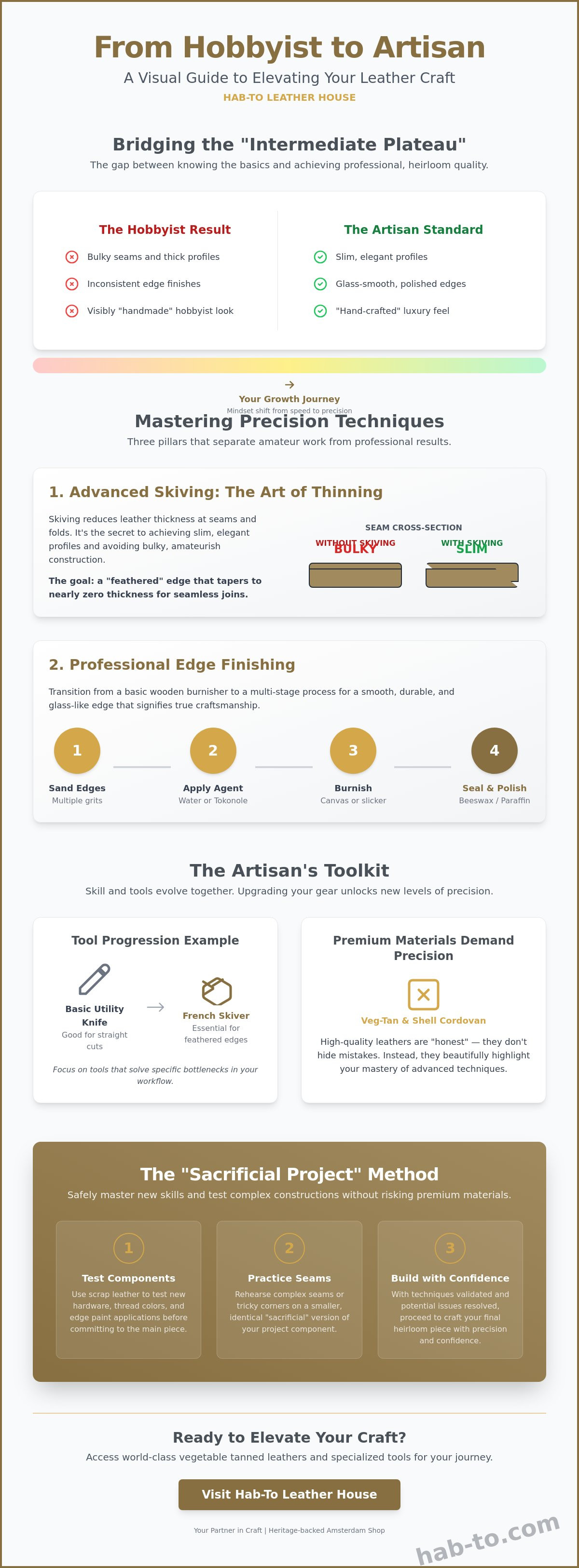
What separates an amateur project from a professional one? It usually comes down to three things: thickness, edge finish, and stitch consistency. Amateur pieces often feel bulky because the maker didn't skive the hidden seams. Professional work uses tapered edges for a slim, elegant profile. "Good enough" is the enemy here. You need a "slow craft" mindset. This means being willing to spend significant time on a single edge if that's what it takes to reach perfection. It's a meditative process that rewards patience with heirloom-quality results.
The Relationship Between Tool Quality and Skill
You can't achieve world-class results with basic hardware store equipment. Upgrading your leatherworking tools is often a prerequisite for progress. For instance, a basic utility knife is great for straight cuts, but you'll need a specialized French skiver to achieve the paper-thin transitions required for luxury wallets. However, don't fall into the "gear trap." You don't need every shiny new gadget. Focus on tools that solve specific technical bottlenecks in your workflow. Master one new tool at a time while adopting new leatherworking techniques to ensure your skill grows alongside your kit.
Mastering Precision: Advanced Skiving and Edge Finishing Techniques
Skiving is the process of thinning leather to reduce bulk at seams and folds. It's the silent hero of luxury leatherwork. Without it, even the best stitching looks amateurish because the seams remain thick and clumsy. By adopting new leatherworking techniques focused on thickness control, you can create wallets and bags that feel sleek and intentional. A well-skived edge allows for delicate turned edges and hidden seams that define high-end craft. It's the difference between a product that looks "handmade" in a hobbyist sense and one that looks "hand-crafted" by an expert.
While a simple wooden burnisher serves beginners well, the path to mastery requires more sophisticated methods. Professional artisans often transition to multi-stage sanding paired with canvas polishing. This method creates a level of smoothness and depth that a wooden tool simply cannot reach. You should also consider the role of edge painting. While natural burnishing is beautiful on vegetable tanned hides, edge paint offers a uniform, durable look for chrome-tanned leathers or vibrant, modern designs. If you're ready to refine your setup, you can find the right leatherworking tools to start your transition toward artisan-level finishing.
The Art of the Feathered Skive
Achieving a zero-thickness edge is the ultimate goal for turned-edge construction. This "feathered" skive ensures that when you fold the leather over, the seam doesn't create an unsightly bump. It requires a steady hand and a deep understanding of your material's grain. Tool maintenance is your best friend here. A razor-sharp blade is the only way to avoid tearing the leather fibers. If your knife isn't sharp enough to shave hair, it's not sharp enough to skive. Always cut away from your body and use a smooth glass or marble surface to ensure the blade glides without resistance. This protects both your fingers and your expensive hide.
Achieving the "Glass" Edge Finish
A "glass" finish is the gold standard for professional edges. To get there, you must be disciplined with your sanding progression. Start with a 400-grit paper to level the edges of your vegetable tanned leather. Slowly work your way up through the grits, finishing at 2000 for a mirror-like surface. Many modern crafters prefer natural binding agents like Tokonole over traditional beeswax because it penetrates deeper into the fibers for a more permanent bond. For a final touch of class, use a heated creaser to press a decorative line along the edge. This compresses the leather and adds a visual frame that signals professional quality. It's these small, disciplined steps that transform a simple project into a lasting heirloom.
Matching Techniques to Material: Working with Shell Cordovan and Veg-Tan
True mastery in this craft requires more than just steady hands. It demands material literacy. Adopting new leatherworking techniques isn't a one-size-fits-all process; the density and oil content of your hide dictate every move you make. For example, a stiff, high-temper leather requires a different stitch length and thread weight than a supple, chrome-tanned alternative. Generally, a denser material calls for a slightly longer stitch, often between 3.0mm and 3.8mm, to ensure the structural integrity of the seam remains intact. If you use a stitch that is too short on a firm hide, you risk creating a "perforation" effect that leads to tearing.
A common mistake many intermediate crafters make is treating every leather like standard cowhide. Over-burnishing chrome-tanned leather often leads to a messy, plastic-like finish because the fibers don't respond to friction the same way natural fibers do. Conversely, under-treating vegetable tanned leather misses the opportunity to utilize its "self-healing" properties. High-oil content hides allow you to literally massage out light surface scratches, a characteristic that defines heirloom-quality goods. Matching your technique to the specific temper of your material is the hallmark of an artisan.
Techniques for the "King of Leathers"
Working with shell cordovan is a peak experience for any maker, but it demands respect. Unlike standard leathers, Cordovan is a dense muscle membrane. It doesn't crease; it ripples. This means your skiving angles must be shallower to prevent the blade from catching and diving too deep. Because of its natural density, traditional burnishing with just water and a canvas cloth often produces a superior mirror finish. You might notice a white waxy substance, known as "bloom," appearing on the surface. Don't panic. This is a sign of the rich oils within. Simply buff it with a soft cloth to restore that world-class luster. Given that Maryam Tannery Shell Cordovan can start at $148.68 for a small B-grade piece, precision is your best financial strategy.
Exploiting the Versatility of Veg-Tan
Vegetable tanned leather is the most versatile canvas for adopting new leatherworking techniques like wet-moulding. By soaking the leather, you can stretch it over forms to create rigid, 3D structures like knife sheaths or molded card cases. When cutting your patterns, always pay attention to the grain direction. Cutting along the spine provides the least amount of stretch, which is essential for belts and bag straps. If you're exploring advanced dyeing, try layering your colors. Start with a light base coat and build up darker tones at the edges to create a "sunburst" or "patina" effect. This adds a depth of character that single-coat dyeing can never achieve, turning a simple accessory into a piece of art.
The Artisan’s Practice: A Framework for Mastering New Skills
Mastery isn't a destination; it's a disciplined practice. When you're adopting new leatherworking techniques, the biggest mistake is trying to learn everything during a high-stakes project. Instead, isolate a single skill. Spend 30 minutes just skiving scraps or perfecting a single corner radius. This focused repetition builds muscle memory without the stress of ruining a masterpiece. Many crafters find this process a welcome "digital detox," allowing them to slow down and connect deeply with the material. This intentional pace is how you move from just making things to truly perfecting the craft.
The "Sacrificial Project" is another vital tool for your evolution. Before you cut into a premium hide, build a prototype. Use a similar weight of leather from one of our crafting bundles to test your seams and hardware placements. This allows you to fail safely. You'll catch errors in pattern dimensions or thread tension before they become permanent. Keep a "leather diary" to track these variables. Record your dye ratios, stitch lengths, and specific thread brands. Over time, this becomes your personal encyclopedia of craft. Don't work in a vacuum; share your technical hurdles with community groups. Often, another artisan can spot a flaw in your blade angle that you've overlooked.
Practicing Without Waste
You don't need to break the bank to improve your skills. Use leather bundles and offcuts to master difficult tasks like the feathered skive. It's crucial to practice on the exact leather type you intend for your final project. A technique that works on soft leather will feel completely different on firm vegetable tanned hides. Set up a dedicated "test bench" in your workshop. This should be a space away from your main assembly area where experimentation is the only goal. It keeps your creative energy separate from your production focus and prevents accidental damage to your main projects.
Iterative Design and Refinement
Advanced craft often involves integrating complex leather hardware. You must adjust your patterns to accommodate the specific thickness of buckles or the reach of rivets. Don't expect perfection on the first try. Make the same small item, like a cardholder, five times in a row. By the third attempt, your hands will know the rhythm. By the fifth, you've achieved a professional finish. Only then should you move from the practice phase to final artisan production. If you're ready to start your next practice session, check out our professional leatherworking tools to ensure your gear matches your ambition.
Supporting Your Growth: Why Hab-To Leather House is Your Partner in Craft
Your journey in leathercraft is deeply personal. It's a path paved with patience, tradition, and the constant pursuit of excellence. At Hab-To Leather House, we don't just see ourselves as a supplier. We are your partners in this evolution. Our 160-year family history in Amsterdam serves as a solid foundation for your learning journey. We've seen the industry change, but our love for authentic, vegetable tanned leather remains unshaken. This legacy means when you ask for advice, you're getting decades of accumulated knowledge passed down through generations. We understand that the transition from hobbyist to artisan requires more than just tools; it requires a mentor who respects the craft as much as you do.
We believe that high-quality materials shouldn't be reserved only for large industrial factories. That's why we maintain a strict no minimum order policy. It gives you the freedom to access premium hides for small-scale practice without a massive financial commitment. Whether you're adopting new leatherworking techniques or refining a signature style, you can buy exactly what you need for your next prototype. Our commitment to sustainable, high-quality leather ensures that every hour you spend at the bench is rewarded with a material that ages beautifully. When the material is right, your technical skills can truly shine. Hab-To Leather House provides the quality that honors your hard work and rewards your technical precision.
A Wholesaler with a Personal Touch
Our Amsterdam warehouse is more than just a storage space. It's a hub for leathercraft expertise. We understand the nuances of the artisan market because we live it every day. If you're unsure which temper is right for a specific project, just reach out. We encourage crafters to ask for personalized material recommendations. For those who prefer a tactile experience, you can even visit us by appointment. There's nothing quite like feeling the grain and scent of the leather in person to inspire your next creation. We bridge the gap between a professional wholesaler and a welcoming mentor, ensuring you never feel like just another order number.
Equipping Your Next Breakthrough
Success at the bench requires the right kit. We've curated a selection of leatherworking tools and hardware specifically designed for advanced work. From precision blades to solid brass hardware, every item in our shop is chosen to support your growth. If you aren't sure where to start, our Crafting Bundles provide the perfect mix of materials for skill-building. They allow you to focus on adopting new leatherworking techniques without the stress of sourcing individual components. Your craft is a lifelong journey. We're here to provide the map, the materials, and the support you need to reach the next level of artistry. If you're ready to start your next practice session, check out our professional leatherworking tools to ensure your gear matches your ambition.
Your Journey Toward Technical Mastery
Mastery isn't just about the final product; it's about the discipline you bring to the bench every day. By adopting new leatherworking techniques like feathered skiving and grit-specific edge finishing, you've already started the transition from hobbyist to true artisan. You now understand that the dense fibers of Shell Cordovan and the versatility of vegetable tanned leather require a specialized approach. These aren't just skills. They're the language of quality that defines a lasting heirloom.
At Hab-To, we're proud to support this evolution. Our Amsterdam-based team brings over 160 years of family expertise directly to your workshop. We don't believe in barriers. That's why we have no minimum order requirements and offer global shipping to crafters everywhere. Whether you need a single hide for a prototype or a curated tool set for advanced work, we're here to help you succeed. Your next masterpiece is waiting for that first, precise cut. We're honored to be part of your story and your growth.
Explore our premium leather collection and start your next project today
Frequently Asked Questions
What is the most difficult leatherworking technique to master?
Feathered skiving is widely considered the most challenging skill to master. It requires thinning the leather to a near-zero thickness at the edge without cutting through the grain. This level of precision demands a perfectly sharpened blade and a deep understanding of fiber density. Mastery often takes months of daily practice on various scraps before it can be reliably applied to a final artisan project.
Can I learn advanced leatherworking techniques without expensive machinery?
You can absolutely learn advanced skills without industrial splitters or electric creasers. In fact, many high-end artisans prefer hand-skiving and traditional saddle stitching because they offer a level of control that machines cannot replicate. By adopting new leatherworking techniques focused on manual precision, you build a stronger foundation. Investing in a few high-quality hand tools is far more effective for a growing artisan than buying bulky machinery.
How long does it take to move from a beginner to an intermediate leatherworker?
Transitioning from a beginner to an intermediate level typically takes six to twelve months of consistent, weekly practice. This timeline depends on how often you challenge yourself with new patterns and materials. You'll know you've reached the intermediate stage when you can consistently produce clean edges and straight stitch lines without overthinking the process. At this point, your focus shifts from basic assembly to refining the aesthetic details.
Why does my skiving knife keep tearing the leather instead of cutting it?
Your knife is likely tearing the leather because the blade isn't sharp enough or your cutting angle is too steep. A skiving knife must be scary sharp to slice through dense fibers without pulling them. If you feel resistance, stop and strop your blade immediately. Also, ensure you are using a smooth, hard surface like glass or marble. This prevents the leather from bunching up while you work.
Is it worth buying Shell Cordovan if I am still learning new techniques?
It's worth investing in Shell Cordovan once you can reliably skive vegetable tanned leather without errors. Because Cordovan is a premium material, you don't want to use it for your very first attempts at adopting new leatherworking techniques. However, practicing on a small piece of B-grade shell can teach you how dense fibers respond to your tools. This experience is invaluable for understanding how luxury materials behave under pressure.
What is the best way to practice saddle stitching for a professional look?
The best way to achieve a professional saddle stitch is to maintain absolute consistency in your casting and tension. Use a stitching pony to keep your work stable and ensure every needle entry follows the exact same path. Practice on long, straight scraps of firm leather to build a rhythmic habit. Focus on how the thread seats into the groove. This creates that iconic slanted look that defines hand-stitched goods.
Do I need different tools for vegetable tanned leather vs. chrome tanned leather?
You generally use the same cutting and stitching tools, but your finishing equipment will differ significantly. Vegetable tanned leather responds beautifully to friction and natural burnishing agents like Tokonole. Chrome tanned leather is much softer and won't burnish the same way. For chrome hides, you'll need to invest in high-quality edge paints and applicators. Understanding these material differences ensures you choose the right method for the leather on your bench.