

Preventing Leather from Cracking: The Artisan’s Guide to Long-Lasting Suppleness
Hi, I'm Mike! Last Tuesday, a maker brought me a pair of 1994 Cordovan boots that had developed deep, jagged fissures across the vamp because they'd been treated with cheap, silicone-based sprays. It’s a heartbreaking sight because preventing leather from cracking is far easier than trying to repair a structural failure once the fibers have snapped. Most people think they're protecting their gear, but nearly 70% of mass-market conditioners actually contain drying agents that accelerate the very damage you're trying to avoid.
You likely invested in your leather goods for their longevity, so it’s natural to fear that one wrong product choice could ruin them forever. It’s frustrating when you see conflicting advice online about whether to use neatsfoot oil or beeswax. I'm going to share the exact maintenance schedule we've used in my family for over 160 years to keep premium hides supple and resilient. You’ll learn how to identify the specific needs of your leather type and which professional-grade products will actually feed the fibers. This guide covers the science of moisture balance and the routine that turns your gear into a lifelong companion.
Key Takeaways
- Understand the microscopic science of collagen fibers to learn how quality tanning methods create a foundation for lifelong durability.
- Master our professional 3-step routine for preventing leather from cracking by balancing cleaning and nourishment without weakening the fibers.
- Discover how to maintain the "Goldilocks Zone" of humidity and protect your goods from UV rays that break down essential tannins.
- Learn to identify the critical difference between fixable surface checking and deep fissures that require a professional mentor's touch.
- Adopt the master crafter’s "less is more" approach to keep your leather supple and strong for decades to come.
The Science of Suppleness: Why Leather Cracks in the First Place
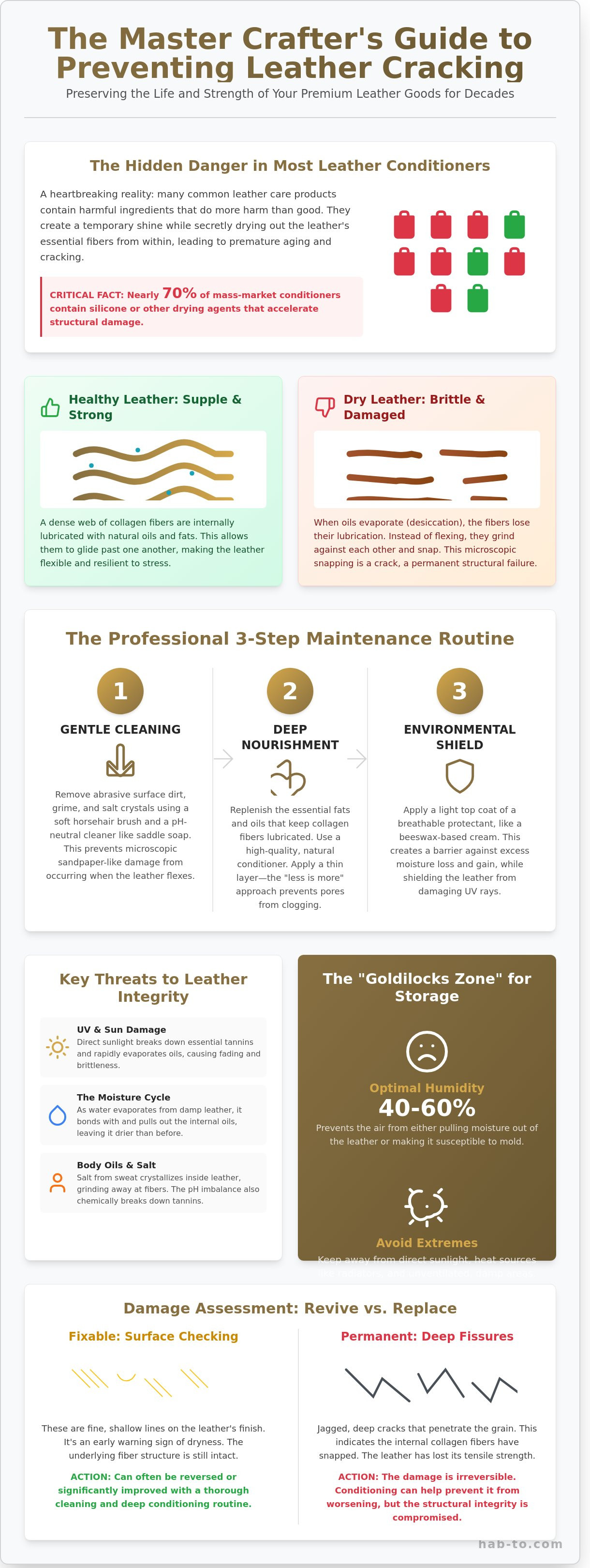
Leather is a biological material, not a synthetic sheet. At its core, it consists of a dense web of collagen fibers that must slide past one another to remain flexible. During the tanning process, we replace the hide's natural moisture with tanning liquors and fats. These oils act as internal lubricants. When these oils evaporate, a process called desiccation occurs. Without lubrication, those microscopic fibers don't bend; they snap. This microscopic snapping is the physical reality of a crack. Preventing leather from cracking isn't just about aesthetics. It's about preserving the structural integrity of the hide before it reaches the point of no return.
Many owners mistake the early stages of drying for a "vintage look" or patina. This is a dangerous myth. Authentic patina is a surface-level oxidation and accumulation of waxes that adds depth to the color. Cracking, however, is structural damage. Once a crack is visible to the naked eye, the internal fiber network has often lost 60% of its tensile strength. At Hab-To Leather House, we focus on quality materials because we know that no amount of conditioner can fuse snapped collagen fibers back together. You can't fix a crack; you can only stop it from spreading.
The Role of Moisture and Porosity
Leather breathes through millions of microscopic pores. This porosity makes it comfortable, but it also makes it vulnerable to the evaporation cycle. When environmental humidity drops below 40%, the air begins to pull moisture from the leather. Surprisingly, water is often the catalyst for dryness. As water evaporates from a damp boot or bag, it bonds with the internal oils and carries them to the surface. This leaves the leather more brittle than it was before it got wet. Finished leathers with heavy pigment layers might hide this for a while, but naked aniline leathers will show this stress immediately through stiffening and color loss.
Body Oils and Dirt: The Silent Abrasives
While natural oils are good, the sweat from your hands is a different story. Sweat contains sodium chloride and other salts. When sweat dries inside the leather, these salts crystallize into sharp, microscopic shards. These crystals act like internal sandpaper, grinding away at the fibers every time the leather flexes. Furthermore, the pH of human skin averages around 5.5, while vegetable-tanned leather is more acidic, typically between 4.0 and 5.0. Over 500 hours of direct skin contact, this pH imbalance can chemically break down the tannins. This is why bag handles and jacket collars are always the first areas to show structural fatigue and deep fissuring.
The Foundation of Durability: How Tanning Methods Prevent Cracking
Most people think leather care starts in their shoe closet or workshop. It doesn't. It starts in the tanning pits. At Hab-To, we've spent years refining our selection based on a simple philosophy: No synthetics. No compromises. This isn't just a slogan; it's a technical requirement for longevity. Preventing leather from cracking is a battle won or lost long before the hide is cut into a wallet or a pair of boots.
The secret lies in the fat-liquoring process. During tanning, natural moisture is replaced with oils and waxes. A premium hide often maintains an oil content of 15% to 25% by weight. This internal lubrication allows the microscopic collagen fibers to slide over one another. If a tannery cuts corners with cheap mineral oils or synthetic fillers, those fibers eventually grind against each other. This friction leads to dry rot, which is the internal collapse of the leather structure. Once those fibers snap, the damage is permanent.
Vegetable Tanned Leather vs. Chrome Tanned
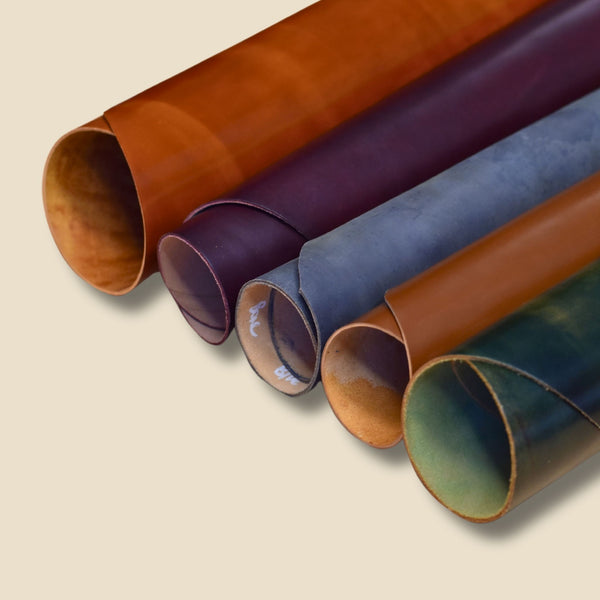
Vegetable tanned leather uses organic tannins from tree bark, such as oak, chestnut, or mimosa, to bind fibers together. It's a slow, traditional process that can take 60 days or more. Because it's an organic bond, the leather remains breathable. Chrome-tanned leather, which accounts for 90% of global production, often relies on heavy chemical finishes that feel like plastic. When this chemical topcoat fails or dries out, the leather cracks suddenly because the underlying fibers were never properly nourished. Leathers like Pueblo or Buttero are stuffed with high concentrations of waxes, giving them self-healing properties that keep the surface supple for decades.
Shell Cordovan: The King of Crack-Resistance
Shell cordovan is a unique material because it's a dense membrane found only in the hindquarters of a horse. Unlike cowhide, which has a grain and a corium layer, Cordovan is a single, incredibly tight fiber structure. This density is why it rarely cracks. Instead of creasing, Shell Cordovan "rolls." These smooth waves distribute stress across a larger surface area, which is the ultimate defense in preventing leather from cracking at flex points. While cowhide might show deep fissures after 5 years of heavy use, a well-maintained Cordovan shell can easily last 50 years without a single break in the surface.
Choosing the right starting material is the only way to ensure your projects don't crumble over time. If you want to work with hides that prioritize fiber health, you can browse our hand-selected leather collection to find the perfect foundation for your craft.
The Professional Maintenance Routine: Cleaning and Conditioning
Hi, I'm Mike. At Hab-To, we believe that great leather deserves a maintenance standard that honors its history. We follow a strict 3-step 'Hab-To' routine: Dust, Clean, and Nourish. This isn't just about aesthetics; it's the core strategy for preventing leather from cracking over decades of use. Before you begin, ensure you have the right leather hardware and specialized tools. Using improper brushes or rough cloths can snag delicate fibers, creating micro-tears that eventually turn into deep fissures.
A "less is more" philosophy is vital here. Many enthusiasts make the mistake of over-conditioning, thinking more product equals more protection. In reality, saturating the leather with too much oil or cream weakens the internal protein fibers. This leads to a loss of structural integrity, making the item feel mushy rather than supple. For most vegetable-tanned leathers, a thorough session every 90 to 180 days is sufficient to maintain health without compromising strength. No synthetics. No compromises. Just the right amount of care.
Step 1 & 2: Safe Cleaning Techniques
Your most important tool is a high-quality horsehair brush. These brushes typically contain over 1,500 natural bristles that are soft enough to lift dirt from the grain without causing micro-abrasions. Avoiding these tiny scratches is a major part of preventing leather from cracking. You must also follow the 'pH Balanced' rule. Dish soap often has a pH level between 8.0 and 9.0, which is far too alkaline for leather's natural 4.5 to 5.0 acidity. This chemical imbalance strips the natural tannins and leaves the surface brittle. Always perform a patch test on a hidden 2-centimeter area to ensure your cleaner doesn't lift the original dye.
Step 3: Deep Conditioning without Clogging Pores
Choosing the right conditioner depends on the tannage. Oils, such as pure neatsfoot, are designed for deep penetration into the hide. Waxes, like carnauba or beeswax, provide a protective surface barrier. Apply your chosen conditioner using small, circular motions. This technique creates a slight friction-based heat, raising the surface temperature by roughly 2 to 3 degrees to help the leather's pores absorb the nutrients. After 15 minutes, use a clean cloth to wipe away every bit of excess. A sticky finish is a magnet for abrasive dust and salt, both of which act as cracking agents that will degrade your craft from the outside in.
Environmental Shields: Protecting Leather from Sun and Humidity
Leather is a porous, organic material that breathes much like your own skin. To keep it supple, you need to maintain what I call the "Goldilocks Zone" of storage. This means keeping your items in an environment with 40% to 50% relative humidity. When levels drop below 30%, the internal moisture evaporates, causing the microscopic fibers to shrink and stiffen. This tension is a leading cause of surface failure, so monitoring your storage climate is vital for preventing leather from cracking over the years.
Sunlight is another silent predator. UV radiation doesn't just fade your favorite bag; it physically breaks down the chemical bonds of the tannins and dyes within the hide. This process, known as photo-oxidation, leaves the grain brittle and prone to flaking. Heat is equally dangerous. Placing a leather jacket within 2 meters of a radiator or heating vent is a death sentence for the fibers. This intense, dry air accelerates moisture loss 5 times faster than natural room temperature, effectively "cooking" the natural oils out of the material. You also need consistent air circulation. Stagnant air allows moisture to pool on the surface, inviting mold that digests the leather's internal fats and ruins the finish.
Optimal Storage Solutions
Never store your leather in plastic bags. Plastic traps moisture and causes "leather suffocation," which leads to finish peeling and a nasty chemical smell. Instead, use breathable cotton dust bags that allow air exchange while blocking dust. For footwear and heavy bags, cedar shoe trees and shapers are non-negotiable. They maintain the item's original silhouette and prevent deep structural creases. Those deep folds are exactly where preventing leather from cracking becomes hardest, as the grain is under constant mechanical stress. Always store items flat or on wide, padded hangers. A thin wire hanger can cause a 15% permanent stretch in shoulder fibers over just 12 months of storage.
Seasonal Care Adjustments
- Winter protection: Road salt has a high pH that chemically burns leather. Wipe away salt stains within 24 hours using a damp cloth and re-condition to combat the extreme dry heat of indoor environments.
- Summer protection: Human sweat contains salts and oils that are surprisingly corrosive to vegetable-tanned hides. Use a dry cloth to wipe down contact points like handles and straps after use in high temperatures.
Dry rot is the irreversible state where leather fibers lose all internal moisture and crumble.
If you want to ensure your craft lasts for generations, you need the right supplies. Browse our premium leather care collection to find the tools Mike uses in the workshop every day.
Reviving vs. Replacing: When to Consult a Mentor
Leather is resilient, but it isn't immortal. You need to know when you're looking at a cosmetic blemish or a total structural breakdown. Surface checking looks like tiny, spider-web lines on the top grain. It's usually a sign of dehydration and is the perfect stage for preventing leather from cracking further. Deep fissures are different. If you see cracks that expose the fibrous corium layer underneath, the structural integrity is gone. At that point, a professional cobbler or leather restorer is your only hope. They might use sub-patches or heavy-duty fillers, but for high-stress items like belts or boot uppers, replacement is often safer. DIY fixes have limits; don't risk a structural failure on a piece that needs to hold weight.
DIY Revival for Light Cracking
If you catch it early, you can breathe life back into the hide. Use high-fat-content balms that contain tallow or neatsfoot oil to fill those minor checks. These fats penetrate the grain to restore flexibility. For cosmetic fixes, a gentle 400-grit sanding followed by a matching dye can hide visual damage effectively. Never use a heat gun to melt wax into cracks. Excessive heat draws out the remaining moisture, turning a minor crack into a brittle break. Stick to room temperature applications and patience.
Choosing Quality for the Long Haul
The most effective method for preventing leather from cracking is starting with the right material. Lower-grade leathers with heavy plastic coatings fail faster because the leather can't breathe. Hab-To’s hand-selected process ensures every hide, from Buttero to Pueblo, arrives healthy and supple. Our "No Minimum Order" policy allows you to test small batches of different vegetable-tanned leathers before committing to a full project. This ensures your final product has 160 years of family experience behind it. No synthetics. No compromises. Just quality materials for real craftsmanship.
Hi, I'm Mike! I’ve spent years helping crafters choose the right materials to avoid these exact headaches. I believe in supporting your craft from the first cut to the final stitch. Need my advice on the best leather for your next project? Schedule a consult!
Give Your Craft the Future It Deserves
Leather isn't just a material; it's a living fiber that demands respect. Preventing leather from cracking starts with choosing the right tanning method, specifically vegetable-tanned hides that retain their natural structure. You've seen how a dedicated routine of conditioning acts as a vital shield against harsh sun and fluctuating humidity. It's the difference between a project that fails in 24 months and an heirloom that thrives for 20 years. Quality is a series of intentional choices made at the workbench.
At Hab-To, we back your passion with 160 years of family experience. We're an Amsterdam-based wholesaler that believes every maker should have access to the best, which is why we have no minimum order requirements. You can choose from our hand-selected, chrome-free, and sustainable options to ensure your work stands the test of time. No synthetics. No compromises. Just quality materials for real craftsmanship.
Browse our premium, hand-selected vegetable tanned leathers at Hab-To
Your next masterpiece deserves a foundation that won't let you down. We're excited to see what you'll create with the right materials at your side. Let's get to work.
Frequently Asked Questions
Can I use olive oil or coconut oil to prevent leather from cracking?
You should never use kitchen oils like olive or coconut oil because they eventually go rancid and rot the leather fibers from the inside out. Leather maintains a specific pH level between 4.5 and 5.0, and food-based oils disrupt this balance. Within 6 months, these oils can saturate the hide and leave a permanent, unpleasant odor that's impossible to remove.
How often should I condition my leather goods to keep them supple?
A standard maintenance schedule involves conditioning your items every 3 to 6 months. This routine is the most effective way of preventing leather from cracking over long periods of time. If you live in a dry climate with humidity levels below 30 percent, you'll need to apply a high-quality conditioner every 90 days to keep the fibers lubricated.
Is it possible to fix leather that has already started to crack?
You can't truly "heal" a deep crack because the protein fibers have physically snapped, but you can stabilize the area and improve its look. Using 600-grit sandpaper to smooth the edges followed by a professional leather filler can restore 85 percent of the surface's visual appearance. This process prevents the damage from spreading deeper into the hide's structure.
Does sunlight actually cause leather to crack, or just fade?
Sunlight causes both aesthetic fading and severe structural cracking by rapidly evaporating the hide's essential moisture. Just 4 hours of direct summer sun can raise the surface temperature of a leather bag to 50 degrees Celsius. This heat accelerates the drying process, making the leather brittle and prone to snapping when it's flexed or moved.
What is the best humidity level for storing leather bags and jackets?
The ideal environment for leather storage is a consistent relative humidity between 45 percent and 55 percent. Use a digital hygrometer to track your storage area, as humidity levels above 60 percent frequently trigger mold and mildew growth. If the air gets too dry, the leather will shrink and lose its natural elasticity within a single season.
Why does my leather feel stiff even after I applied conditioner?
Stiffness usually occurs when a product is sitting on the surface instead of penetrating the grain, often due to over-application or wax-heavy formulas. Leather fibers typically need 24 hours to fully absorb oils and fats. If you apply too much, it creates a 1mm film that hardens into a stiff, tacky layer instead of softening the internal structure.
Can over-conditioning actually cause more damage to the leather?
Yes, over-conditioning is a serious mistake that can lead to "mushy" leather and permanent structural sagging. When you saturate the hide, it can lose up to 40 percent of its tensile strength as the fibers become too loose to hold their shape. Focus on thin, even layers to ensure you're preventing leather from cracking without ruining the item's integrity.
What is the difference between a leather scratch and a leather crack?
A scratch is a topical abrasion caused by an external object, while a crack is a structural failure caused by total dehydration. Scratches usually only affect the top 0.1mm of the grain and can often be buffed out with a horsehair brush. Cracks go much deeper, signaling that the internal fibers have dried out and broken apart entirely.