Pueblo Leather for Crafting: The Artisan’s Guide to Badalassi Carlo’s Masterpiece
Hi, I’m Mike! Most crafters treat a stray scratch on a fresh hide like a total disaster, but with Pueblo, those marks are exactly why you bought it. It’s a bold claim, but this Italian icon is the most forgiving material you’ll ever put on your workbench. When you choose Pueblo leather for crafting, you aren't just buying a hide; you're investing in a surface that rewards every touch with the most dramatic patina in the leatherworking world.
You probably worry that the signature "scuffed" texture looks like a defect or wonder how on earth you’re supposed to burnish such a rustic edge. I get it. It’s intimidating to work with something so unique when you’re used to perfectly smooth finishes. In this guide, I’ll show you why this vegetable tanned masterpiece from the Badalassi Carlo tannery is a favorite among the 27% of makers who have ditched chrome tanned leather for sustainable quality.
We’ll explore the traditional Tuscan tanning secrets that give Pueblo its character and walk through the exact workshop techniques to handle its textured grain. I’ll also share how you can source authentic 1 sq ft panels starting around $29.90; this means you can experience premium Italian leather without the burden of massive minimum orders. Let’s get to work.
Key Takeaways
- Understand why the intentional, machine-buffed grain of Pueblo leather for crafting is the ultimate choice for hiding workshop mistakes while developing a world-class patina.
- Explore the 40-year history of the Badalassi Carlo tannery and their traditional Vacchetta process that uses natural tallow and vegetable tannins for a chemical-free finish.
- Learn the key differences between Italy’s "Big Three" leathers so you can confidently choose between scuffed Pueblo, smooth Buttero, or grainy Minerva for your next project.
- Discover workshop secrets for achieving a glass-like edge on high-oil leathers using only Tokonole and a wood slicker.
- Find out how to source authentic Italian hides with no minimum order requirements, allowing you to buy exactly what you need for a single project.
Understanding Pueblo Leather: Why Crafters Choose the Scuffed Aesthetic
Pueblo isn't your average hide. It's a premium, full-grain cowhide that comes straight from the legendary Badalassi Carlo tannery in Tuscany, Italy. What makes it stand out is the traditional vegetable tanning process, which uses natural tannins rather than harsh chemicals. This foundation creates a leather that's durable, sustainable, and full of character right from the start. Unlike mass-produced leathers, every shoulder of Pueblo carries the marks of its heritage, making it a favorite for those who value authenticity in their work.
The real magic happens during the finishing stage. Artisans use a specialized machine-buffing technique to scuff the surface in a circular motion. This creates a signature grain that looks almost like fine sandpaper or rustic stone. When you first handle Pueblo leather for crafting, you'll notice a distinct, dry "nap" feel. Don't let that fool you into thinking it's low quality; Pueblo’s texture is a deliberate artisan finish, not a defect. This scuffed surface is exactly what allows the leather to age so beautifully over time.
To see how this unique texture performs in a real workshop setting, watch this complete review:
The Aesthetic Appeal of the Matte Finish
Most people are used to the glossy sheen of traditional vegetable tanned leather, but Pueblo takes a different path. Its matte surface diffuses light across the grain, giving it a soft, depth-filled appearance that smooth leathers just can't replicate. This unique look has made it the "Instagram favorite" for makers crafting modern minimalist wallets and EDC gear. It provides a rugged, tactile contrast that looks incredible in product photography and feels even better in the hand. For a crafter, it’s a dream to work with because the matte finish hides small workshop scuffs that would ruin a smooth hide.
Patina Evolution: From Sandpaper to Silk
The paradox of Pueblo leather for crafting is how quickly it transforms. While it starts with a rustic, matte texture, it’s packed with high-quality oils and fats from the tanning process. These oils react to the friction and heat of daily use, causing the leather to darken and smooth out at a surprising rate. Because the buffing process opens up the fibers slightly, Pueblo absorbs oils from your hands more effectively than smooth leathers. This leads to a patina that isn't just a surface change; it’s a deep, rich evolution that tells the story of every pocket it’s lived in.
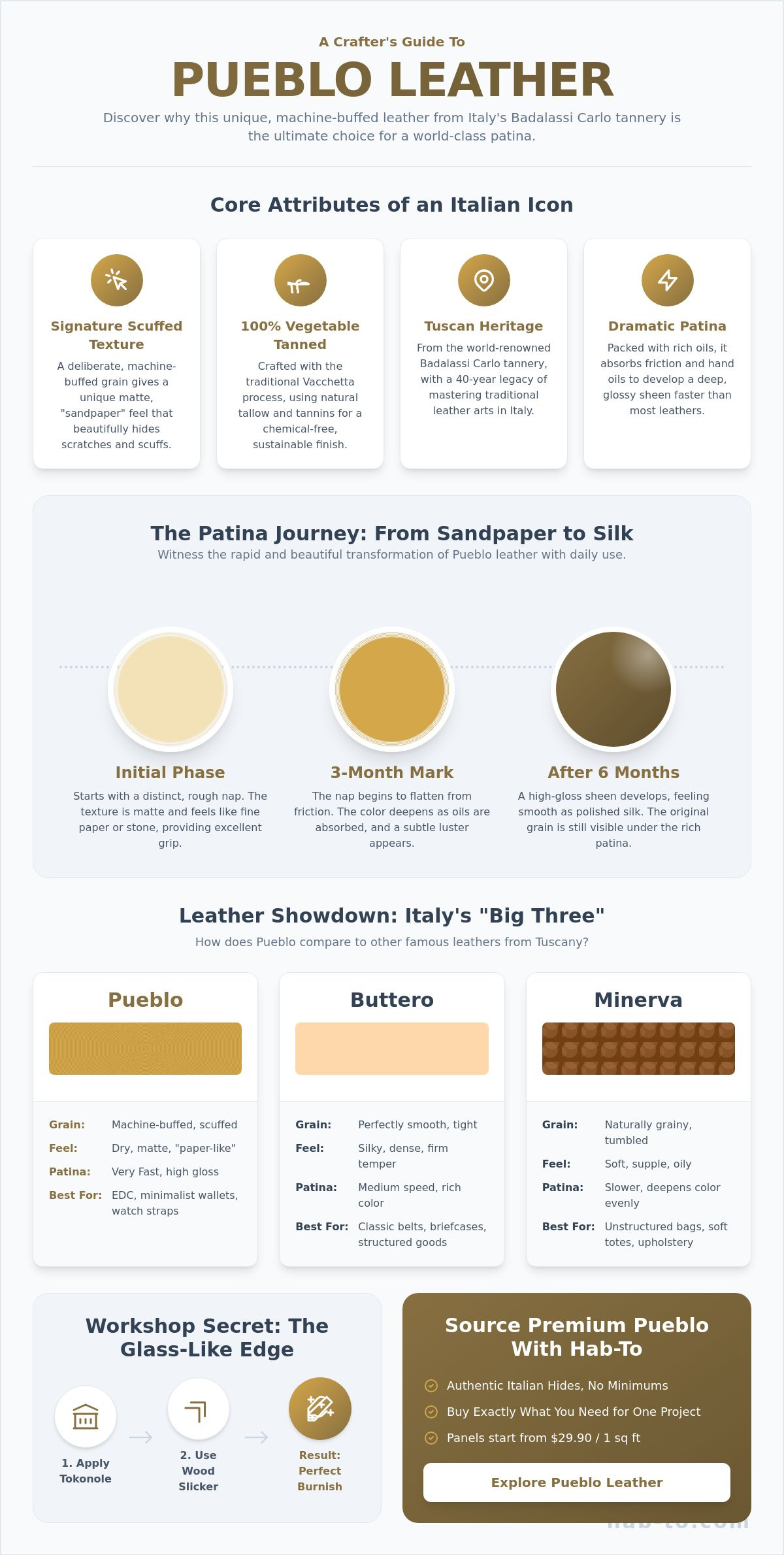
- Initial Phase: A rough, paper-like texture that grips the fingers and looks beautifully matte.
- The 3-Month Mark: The scuffed nap begins to flatten, and the color starts to deepen into a richer tone.
- After 6 Months: The leather reaches a high-gloss sheen, feeling like polished silk while retaining its unique circular grain patterns underneath.
The Badalassi Carlo Legacy: Traditional Tanning in the Heart of Tuscany
Badalassi Carlo has spent over 40 years mastering the art of leather. Located in the famous Tuscan Leather District, they are world-renowned for their Vacchetta leather. This isn't just a marketing term; it's a historical process that defines the quality of Pueblo leather for crafting. While many modern tanneries use shortcuts to speed up production, Badalassi Carlo sticks to a slow, chemical-free method that relies on time and tradition. This commitment to the craft is why their hides are sought after by luxury brands and independent makers alike.
The core of this legacy is the Vacchetta process. It involves soaking hides in pits filled with natural vegetable tannins and pure tallow. This animal fat is what gives Pueblo its incredible suppleness and its ability to heal from light scratches over time. When you hold a piece of this leather, you're feeling a material that has been nurtured for weeks rather than processed in hours. It's a difference you can feel the moment your knife touches the grain. Because the oils are deeply struck through the hide, you don't have to worry about the leather drying out or cracking during the build.
What is the Pelle Vegetale Consortium?
When you see the "Pelle Vegetale" handprint logo, you're looking at the gold standard of Italian craftsmanship. This seal is granted by the Genuine Italian Vegetable-Tanned Leather Consortium. It guarantees that the tannery follows strict environmental regulations and uses only traditional plant-based tannins. For eco-conscious crafters, this means your Pueblo leather is fully biodegradable and free from toxic chromium salts. Choosing "Made in Italy" through this consortium isn't just about prestige; it's about the longevity and safety of your finished goods.
The Role of Natural Tannins
The rich, earthy colors of Pueblo come from a blend of Mimosa, Quebracho, and Chestnut barks. These natural ingredients interact with the hide to create that deep, intoxicating "leather smell" that fills your workshop the moment you unroll a new hide. No synthetic dyes can replicate the depth of Badalassi’s vegetable-tanned colors. These tannins also play a huge role in the patina process we discussed. They allow the leather to react to sunlight and daily use, darkening the hide into a unique masterpiece that evolves with its owner.
At Hab-To, we don't just order whatever is on the shelf. I personally hand-select our hides to ensure consistent grain density and color. We know how frustrating it is to receive a hide with inconsistent scuffing or loose grain. That's why we focus on quality materials for real craftsmanship. If you're ready to start your next project with a piece of Tuscan history, you can browse our hand-selected leather collection today.
Pueblo vs. Buttero vs. Minerva: Choosing the Right Italian Leather
Deciding between the "Big Three" Italian vegetable tanned leathers is a rite of passage for every maker. These hides represent the timeless sophistication of a craft that hasn't changed in centuries. While they all come from top-tier Tuscan tanneries, they serve very different purposes in your workshop. If you're looking for Pueblo leather for crafting, you're likely chasing a specific rustic aesthetic, but it's helpful to know how it stacks up against its famous cousins, Buttero and Minerva.
Buttero, produced by Conceria Walpier, is the sleek, high-fashion choice. It has a smooth, satin finish that looks incredible on formal accessories. However, it's notoriously unforgiving; one slip of a fingernail leaves a permanent mark. Minerva Box, also from Badalassi Carlo, sits at the other end of the spectrum. It's a milled leather, meaning it's tumbled in large wooden drums to bring out a natural, pebbled grain. It's soft and supple, making it better for bags than for structured wallets.
Pueblo is the unique middle ground. It offers the structure and "snap" you want in a cardholder, but with a scuffed texture that makes it the most forgiving leather in your arsenal. Because the surface is already intentionally distressed, minor workshop accidents or daily wear and tear simply blend into the grain. It's the ultimate "user's leather."
When to Choose Pueblo Over Buttero
I usually recommend Pueblo for "everyday carry" (EDC) items like field notes covers or rugged wallets. It feels at home in a jeans pocket or a tool bag. Buttero is your go-to for items that need to stay pristine and sleek, like a dress belt or a minimalist clutch. If you want to elevate a Pueblo project to true luxury status, try using it as a lining or a secondary pocket paired with shell cordovan. The contrast between the matte scuff of Pueblo and the glass-like shine of cordovan is a combination that clients absolutely love.
The Technical Breakdown
To help you pick the right hide for your next build, here is how they compare on the bench:
- Finish: Pueblo is matte and scuffed; Buttero is smooth and satin; Minerva is pebbled and natural.
- Patina Speed: Pueblo is the fastest, often darkening significantly within 30 days. Buttero is moderate, and Minerva is slow.
- Temper: Buttero is firm (stiffest); Pueblo is medium-firm (structured but flexible); Minerva is soft (supple).
- Scratch Visibility: Pueblo is very low; Buttero is very high; Minerva is moderate.
Choose your leather based on the life the finished product will lead. If it's going to be tossed in a bag with keys every day, Pueblo leather for crafting is your best bet for a piece that looks better a year from now than it did on day one.
Mastering Pueblo in the Workshop: Tips for Crafting Success
When you finally get a hide of Pueblo leather for crafting on your bench, the first thing you'll notice is how it behaves under a knife. Because of that scuffed, machine-buffed surface, the grain has a slight "grab" that smooth leathers don't have. If your blade isn't razor-sharp, it will catch on those tiny fibers rather than gliding through. I always recommend a fresh stropping before you make your first cut. For skiving, a dull knife is your worst enemy here; you want to take off thin, consistent layers without the leather bunching up under the pressure.
Burnishing is where Pueblo really shows off its pedigree. Thanks to the high oil content we talked about earlier, you don't need fancy waxes to get a professional finish. A little bit of Tokonole and a sturdy wood slicker are all it takes to achieve a glass-like edge. The friction from the slicker draws those internal oils to the surface, creating a natural seal that looks incredibly high-end. For stitching, I love using a high-contrast thread like a cream or light tan. The matte surface of the leather acts as a backdrop that makes every stitch pop, highlighting your hand-sewn craftsmanship.
Mike’s Pro Tip: Don't over-condition this leather. Many beginners want to slather it in oils immediately, but that will ruin the scuffed aesthetic you paid for. The beauty of Pueblo is that it self-lubricates through use. Let the natural oils do the work for the first few months before you even think about reaching for a conditioner.
Edge Finishing Techniques for Pueblo
Because the grain is textured, you need to be intentional with your sanding. I start with a 400-grit to level the edges, then move up to 800 or even 1000 before burnishing. You'll find that you don't really need edge dye. As you burnish, the edge naturally darkens into a deep, rich tone that perfectly complements the face of the leather. If you're building a heavier piece like a tote bag, make sure you check out A Crafter’s Guide to Essential Leather Hardware to find the right rivets that can handle the density of these Italian shoulders.
Dealing with Scratches and Marks
One of the biggest fears for new makers is marking the hide during assembly. With Pueblo, that fear disappears. If you get a light fingernail scratch, you can often "heal" it by simply rubbing the spot firmly with your thumb. The heat and oils from your skin help the fibers lay back down and blend in. Every mark on Pueblo eventually blends into the unique story of the patina. This forgiving nature makes it the perfect choice for beginners who want to produce professional results without the stress of working with delicate, smooth finishes.
If you're ready to put these tips into practice, you can order premium Pueblo panels and start your next project today.
Sourcing Premium Pueblo Leather: The Hab-To Advantage
Hi, I’m Mike! Finding a reliable supplier for Pueblo leather for crafting shouldn't feel like a gamble. At Hab-To Leather House, we’ve built our reputation on bridging the gap between elite Italian tanneries and the independent maker. Most wholesalers only deal with massive industrial orders, but we believe every artisan deserves access to the world’s best materials. Whether you're making your very first cardholder or scaling a full collection, we provide the same premium quality that luxury fashion houses demand.
Our philosophy is simple: No synthetics. No compromises. We exclusively stock vegetable tanned leather because we respect the craft and the environment. Every hide in our Amsterdam warehouse is hand-selected to ensure it meets our strict standards for grain density and color consistency. With over 160 years of family experience in the industry, we know exactly what to look for in a shoulder of Pueblo to ensure your project turns out perfectly.
Wholesale Quality for Individual Crafters
One of the biggest hurdles for European makers is the "minimum order" requirement. We’ve eliminated that barrier with our "No Minimum Order" promise. You can buy exactly what you need for a single project without having to invest in a full hide. We ship directly from our Amsterdam location, ensuring fast delivery across the EU so you can spend less time waiting and more time at your workbench. If you’re unsure which weight or color is right for your design, I’m always here to help. Need my advice? Just reach out for a free consult, and I’ll help you pick the perfect piece of Pueblo leather for crafting your vision.
Start Your Pueblo Project Today
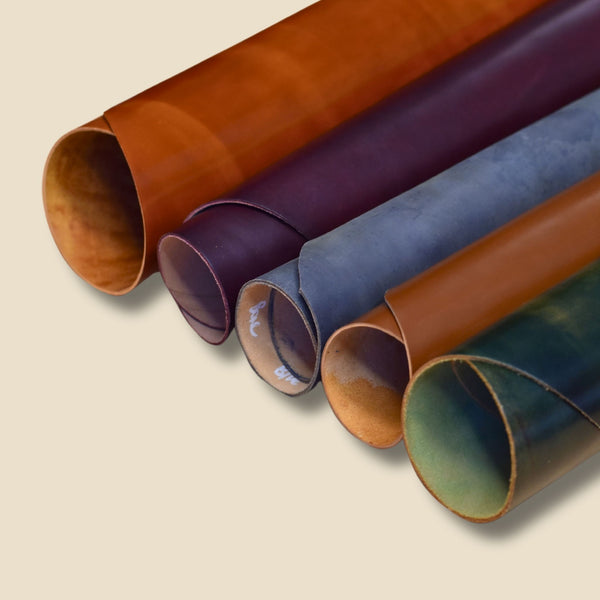
Our current color palette is designed to inspire. We stock everything from the classic, earthy tones of Cognac and Tobacco to the vibrant, modern hues of Ortensia and Olmo. Because Pueblo is so versatile, it pairs beautifully with our range of sustainable tools and premium hardware. When you source from us, you aren’t just buying leather; you’re joining a community that values quality and tradition. Ready to see the difference that hand-selected Italian leather makes? You can browse our full collection of Badalassi Carlo Pueblo leather and find the perfect match for your next build.
- Hand-Selected Hides: Mike personally inspects every shipment from Tuscany.
- Sustainable Focus: 100% vegetable tanned, chrome-free materials.
- EU Shipping: Fast, reliable delivery from the heart of Amsterdam.
- No Minimums: Professional quality available in small quantities for every maker.
Bring Your Vision to Life with Italian Tradition
Choosing Pueblo leather for crafting means you're investing in a material that only gets better with time. We've seen how the signature scuffed texture from the Badalassi Carlo tannery isn't a defect, but a deliberate finish that rewards you with a world-class patina. Whether you are building a rugged wallet or a luxury cardholder, this leather provides the perfect balance of structure and forgiveness that every maker appreciates.
At Hab-To Leather House, we support your journey with 160+ years of family leather expertise. Being an Amsterdam-based wholesaler allows us to offer fast service, but our heart is in personal mentorship. We have removed the barrier of massive industrial quantities by offering no minimum order requirements for crafters. You get hand-selected, premium hides and expert advice directly from me. No synthetics. No compromises. Just quality materials for real craftsmanship.
Your next project deserves the best foundation. Shop Premium Badalassi Carlo Pueblo Leather at Hab-To and discover why this Italian masterpiece is a staple in workshops across the globe. I'm here if you need help picking the perfect color. Happy crafting!
Frequently Asked Questions
Is Pueblo leather real leather?
Pueblo is 100% authentic, full-grain cowhide that comes from the shoulder of the animal. It's a premium product of the Badalassi Carlo tannery, created using a traditional vegetable tanning process. This specific type of Pueblo leather for crafting is prized because it hasn't been sanded down or corrected to hide imperfections; instead, it retains the natural strength and character of the hide.
How do you care for Pueblo leather?
Minimal intervention is the best way to care for this material. Because it's packed with natural oils and tallow, you don't need to apply conditioners for at least the first 6 months of use. Simply wipe it with a dry, soft cloth to remove dust. Applying oils too early will flatten the unique scuffed texture and darken the color prematurely.
Does Pueblo leather scratch easily?
The scuffed surface shows light marks easily, but these aren't permanent defects. You can usually buff out fingernail scratches by firmly rubbing the area with your thumb. The heat from your skin redistributes the internal oils to hide the mark. This makes it much more forgiving for daily use than smooth, satin-finished leathers that show every tiny nick.
Can you burnish the edges of Pueblo leather?
Pueblo burnishes to a glass-like, high-gloss finish with very little effort. Lead with a light sanding, then apply a small amount of Tokonole and use a wood slicker. The high concentration of fats in the hide reacts to the friction, creating a dark, polished edge that looks professional. You won't even need to use edge dyes to achieve a deep color.
How long does it take for Pueblo leather to develop a patina?
You will notice a significant change in both color and texture within 30 to 60 days of daily carry. The initial matte, "sandpaper" feel smooths out into a silky sheen as the nap flattens. By the time you reach 6 months of use, the leather often transforms into a much darker, high-gloss version of its original self.
Is Pueblo leather waterproof?
Pueblo is not waterproof and is actually quite absorbent due to its open, buffed fibers. If it gets wet, water spots may appear temporarily, though they usually blend into the patina as the leather dries. It's best to avoid heavy rain during the first few weeks of use until the natural patina begins to create a protective seal on the surface.
What is the best thread for stitching Pueblo leather?
I recommend using a 0.6mm or 0.8mm waxed polyester thread for most projects. Choosing a high-quality thread is essential when using Pueblo leather for crafting because the matte surface makes your stitching lines stand out. Light colors like cream or sand provide a beautiful contrast that highlights the rustic grain of the Italian hide.
Why is Badalassi Carlo leather so expensive?
The price reflects a slow, artisan tanning process that takes weeks to complete rather than the hours used for mass-produced hides. Badalassi Carlo uses expensive natural tannins from tree barks and pure animal fats instead of cheap synthetic chemicals. You are paying for 40 years of Tuscan heritage and a product that is certified biodegradable and environmentally friendly.