
Sustainable Leather: The Professional Artisan’s Guide to Ethical Sourcing
That "vegan" label on your leather alternative might actually be a death sentence for the planet. Most of what's marketed as eco-friendly today is just fossil fuel-based plastic, destined for a landfill long before it ever develops a soul. I've spent over 25 years working with this material, and I know that finding genuine sustainable leather shouldn't feel like a compromise. You want to create something beautiful that lasts, but the industry often makes it impossible to source high-quality hides without committing to massive bulk orders.
It's frustrating when you're caught between harmful chrome-tanned options and plastic synthetics. You deserve better. In this guide, I'll show you why vegetable-tanned leather remains the ultimate choice for the modern artisan. I'll share how you can access premium Italian hides from world-renowned tanneries like Maryam and Badalassi without any minimum order requirements.
We'll dive into the critical differences between tanning methods and help you identify genuine eco-certifications like the Tuscan Consortium mark. From the traditional art of pit-tanning to modern innovations like Olivenleder, you're about to learn how to source with a clear conscience. Let's build a craft that respects tradition and the environment in equal measure.
Key Takeaways
- Learn how organic vegetable tanning transforms a meat industry byproduct into a durable, natural material without the use of harmful chemicals.
- Compare the lifecycle of sustainable leather against plastic-based "vegan" alternatives to understand why quality hides are the truly eco-conscious choice.
- Discover how to verify ethical standards using the Tuscan Consortium mark and explore plant-based innovations like the Olivenleder process.
- Gain a practical framework for sourcing premium hides from world-class tanneries like Badalassi and Maryam with zero minimum order requirements.
- Understand how a 160-year commitment to traditional methods ensures your materials meet the highest standards of environmental responsibility.
What is Sustainable Leather? Understanding the Vegetable Tanning Process
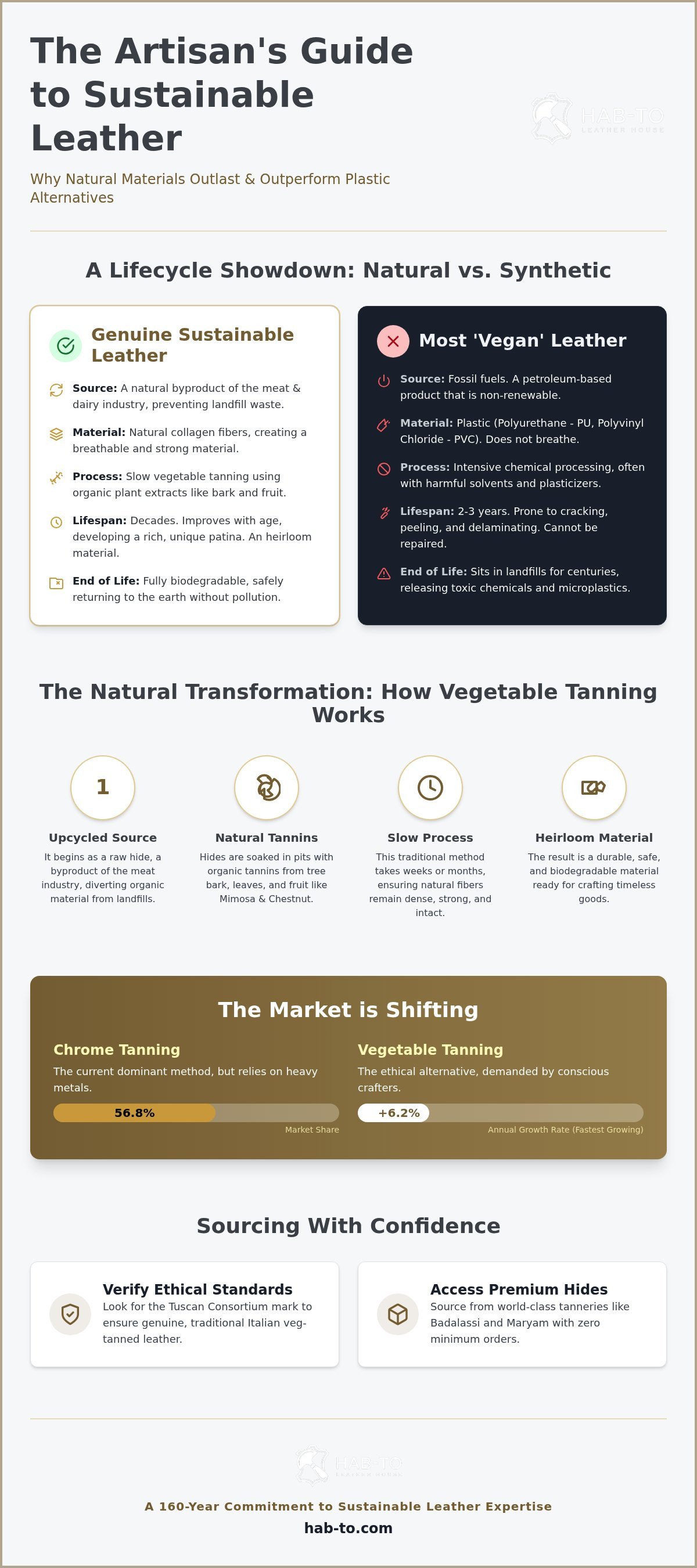
Sustainable leather is often misunderstood. It isn't a synthetic material made in a lab. It's a natural byproduct of the meat and dairy industry. If we didn't transform these hides into leather, they would simply become landfill waste. By choosing sustainable leather, you're participating in a circular economy that respects the animal by ensuring no part of it is discarded. The Leather production processes used in vegetable tanning differ drastically from mass-market chrome tanning. While chrome tanning currently holds a 56.8% market share, the vegetable-tanned segment is growing at a faster rate of 6.2% annually as more crafters demand ethical alternatives. It’s the difference between a fast-fashion item that falls apart and a legacy piece that grows more beautiful with every year of use.
The Chemistry of Nature: Bark, Leaves, and Fruit
The secret lies in the pits. Instead of synthetic acids, master tanners use extracts from mimosa, chestnut, and quebracho trees. These organic tannins bond with the collagen in the hide over several weeks or months. This slow process is exactly what makes the material biodegradable and safe for the environment. Because no toxic chromium is involved, the wastewater is easier to treat and the end product is hypoallergenic. Vegetable-tanned leather is the oldest, most natural method of hide preservation, utilizing plant-based tannins to stabilize organic fibers without heavy metals.
Choosing these natural agents offers several benefits for the artisan:
- Biodegradability: The material eventually returns to the earth without leaving microplastics.
- Artisan Safety: It's safe to handle during the cutting and stitching process.
- Structural Integrity: The slow tanning process keeps the natural fibers dense and strong.
The Patina Factor: Why Sustainability Includes Longevity
True sustainability is measured in decades, not seasons. A synthetic wallet might look "vegan," but it typically ends up in the trash after two years. In contrast, high-quality vegetable tanned leather actually improves with age. It develops a rich patina; a unique sheen that tells the story of its owner. This heirloom quality means you buy less and craft better. Our commitment to this longevity isn't new. You can read the Hab-To Heritage story to see how 160 years of family experience has shaped our refusal to compromise on quality. When you source materials that last a lifetime, you're making the most ethical choice possible for your craft.
Sustainable Leather vs. Vegan Alternatives: A Lifecycle Analysis
Marketing terms often mask harsh realities. The "vegan leather" label sounds ethical, but in most cases, it’s just a clever name for plastic. In 2025, the global vegan leather market reached 22.6 billion USD. Yet, the vast majority of these materials are still PU or PVC-based. These are petroleum products. They don't breathe. They can't be repaired. Most importantly, they don't last. Real sustainable leather serves a different purpose. It takes a byproduct that would otherwise rot and turns it into a material that lives for decades. Hides represent only about 1.5% of an animal's total value, making leather a critical tool for waste reduction in the meat and dairy industry.
The Plastic Problem in Synthetic Leathers
Petroleum-based "eco-leathers" carry a heavy environmental price. Their production requires intensive chemical processing. As they age, they release microplastics into the ecosystem every time the surface cracks or peels. At Hab-To, we maintain a strict "no synthetics" policy. We believe true sustainability shouldn't come from a refinery. The EU's sustainable agriculture strategy emphasizes the importance of circularity in farming. By upcycling hides into high-quality leather, we prevent millions of tons of organic waste from entering landfills annually. Unlike plastic, vegetable-tanned leather is biodegradable at the end of its long life.
Durability as a Pillar of Sustainability
Buying once and buying well is the most effective way to reduce your personal carbon footprint. A synthetic wallet usually ends up in the trash within 2 to 3 years once the plastic coating begins to delaminate. It's a disposable product. A vegetable-tanned piece will easily last 20 years or more. It grows stronger with use. If you're looking for the absolute pinnacle of durability, Shell Cordovan is unmatched. It doesn't crease; it ripples. Its extreme fiber density makes it nearly indestructible, ensuring your work remains functional for a lifetime.
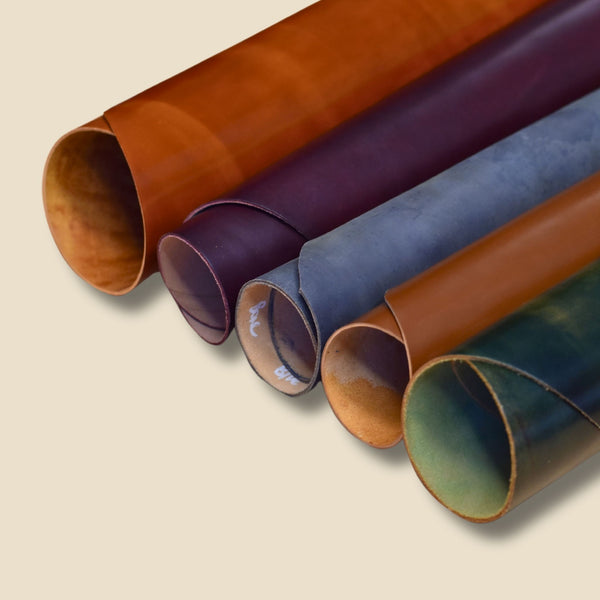
Choosing the right material is the first step in creating an ethical brand. If you're ready to start your next project with materials that respect the planet, our curated leather bundles provide the perfect entry point. You get professional-grade, sustainable hides without the need for large-scale investments.
The Gold Standard: Italian Veg-Tan Traditions
Traditional Tuscan tanneries still rely on hand-buffered techniques. This means the dyes and waxes are applied by hand, allowing the natural grain of the hide to breathe and age naturally. Sourcing from world-class names like Conceria Maryam or Badalassi guarantees a lower chemical footprint compared to industrial alternatives. Maryam's Vacchetta is legendary for its durability, while Badalassi's Pueblo leather offers a unique, rustic texture that artisans love. These tanneries operate under ISO 26000 social responsibility guidelines, ensuring fair labor alongside environmental care. If you're new to navigating these options, check out my buying leather online guide for a deeper look at what to look for in a reliable supplier.Innovative Tanning: The Olivenleder Jesse Collection
Sustainability also means looking forward. A massive breakthrough in 2026 is the rise of Olivenleder. This process uses a patented, 100% plant-based agent derived from fallen olive leaves; a byproduct of the food industry that was once burned as waste. Our Jesse Olivenleder collectionSourcing Sustainable Materials: A Guide for Crafters
Sourcing sustainable leather requires a shift in how you evaluate your materials. It isn't enough to look at the surface of a hide; you must look at its origin. When vetting a supplier, start by asking for the specific tannery name and their certification status. A transparent wholesaler should be able to provide documentation from groups like the Tuscan Consortium. If a supplier is vague about where their hides come from, they likely aren't prioritizing the ethical standards your craft deserves. Traceability is the only way to ensure your leather is a genuine byproduct of the food industry and not a primary driver of environmental harm.
The most effective way to reduce your workshop's environmental impact is to eliminate waste before it starts. Traditional wholesalers often force crafters into high minimum order quantities (MOQ), which leads to stacks of unused material taking up space. Our "No MOQ" policy is designed specifically to solve this. By purchasing exactly what you need, even if it's just a single panel, you prevent "dead stock" from eventually ending up in a landfill. This lean approach to sourcing is a practical, everyday application of sustainable principles for the independent maker.
Choosing the right cut also plays a vital role in waste reduction. For structural projects like belts or equestrian gear, shoulders provide the necessary strength and thickness. However, for smaller items like wallets or watch straps, buying pre-cut panels is often the smarter choice. Panels allow you to avoid the looser grain found in belly or neck areas, ensuring that nearly 100% of the material you buy actually makes it into your finished product. This precision keeps your costs down and your scrap bin empty.
What You Will Need: The Sustainable Starter Kit
Setting up an ethical workshop means choosing tools and supplies that align with your values. Here are the essentials for working with natural, vegetable-tanned materials:
- Leather: Start with our Starter Bundles to test different weights and tempers.
- Adhesive: Use Ecostick 1804 for a water-based, non-toxic bond that is safe for you and the planet.
- Edge Finishing: Achieve a high-gloss, natural edge with Tokonole burnishing cream.
- Precision Tools: Invest in professional edge bevelers and cutting tools to ensure clean, waste-free edges on every cut.
- Finishing Bundles: Our curated bundles provide everything you need to finish your project with a professional look.
Sourcing Small Cuts for Big Projects
Don't let the scale of a project dictate your sourcing habits. Buying panels instead of full hides is a deliberate choice that prevents over-purchasing and supports a zero-waste philosophy. If you're struggling to decide between a shoulder or a panel for your specific design, I'm happy to guide you. You can book free video consultations with Mike to discuss your project requirements. We can look at the hides together and find the perfect material to bring your vision to life without unnecessary waste.
The Hab-To Philosophy: 160 Years of Sustainable Leather Expertise
Our family's journey didn't start with an algorithm. It began in 1857, rooted in a deep respect for the natural world and the slow, deliberate process of traditional tanning. For over 160 years, we've prioritized quality over the hollow promises of mass production. This isn't just business; it's a legacy of respecting the material. We believe that sustainable leather is the only path forward for the serious artisan. This is why we maintain a non-negotiable policy against chrome-tanned hides and synthetic alternatives. We don't make concessions. We don't take shortcuts. We simply provide the materials that allow your work to stand the test of time.
Our Amsterdam showroom serves as more than a registered office. It's a gathering place for the community and a hub for education. We believe that a maker who understands their material is a better advocate for the environment. This is why we encourage artisans to join the movement through Hab-To workshops. These sessions are designed to bridge the gap between ancient traditions and modern design, giving you the skills to handle premium vegetable-tanned hides with confidence. When you join us in Amsterdam, you aren't just buying leather; you're entering an ecosystem of passionate craftsmanship.
Personalized Service from a Master Craftsman
Mike brings more than 25 years of hands-on experience to every consultation. He acts as the "expert friend" every maker needs, helping you navigate the nuances of temper, grain, and weight to find the perfect hide for your specific vision. This personalized approach ensures you never walk away with the wrong material, further reducing waste in your workshop. Beyond one-on-one advice, we share this expertise through The Leather Hour podcast. It's a space where we dive deep into the stories behind the tanneries and the heritage techniques that define our industry. We want you to be as informed as you are inspired.
A One-Stop Shop for Ethical Crafting
We've built a comprehensive resource for the ethical artisan. You can source everything from premium leather to high-grade hardware and professional tools in one place. Every item in our collection is selected because it meets our strict standards for durability and ethical production. We also understand that the modern maker needs efficiency. That’s why we offer 24 to 48 hour delivery speeds for 2026, ensuring your project never stalls. Most importantly, our "No MOQ" policy remains a cornerstone of our philosophy, making world-class materials accessible to everyone from the hobbyist to the professional studio.
Explore our collection of sustainable vegetable-tanned leather today.
Craft Your Legacy with Purpose
Choosing sustainable leather ensures your work stands as a testament to quality over convenience. You've learned how to identify ethical tanneries and how to source effectively without the burden of bulk orders. Now, it's time to put that knowledge into practice by selecting materials that age as beautifully as your skills. Whether you're a hobbyist or a professional artisan, your craft deserves the integrity of vegetable-tanned hides that respect both tradition and the planet.
Related Reading
- Hab-To Heritage: 160 Years of Craft Expertise
- The Ultimate Guide to Shell Cordovan Leather
- A Professional Guide to Buying Leather Online
Ethical Sourcing Essentials
- Olivenleder® Collection
- Conceria Maryam Vacchetta
- Badalassi Pueblo Leather
The path to ethical craftsmanship starts with a single hide. We're here to provide the expertise and the materials to help you succeed. Let's build something together that lasts for generations.
Frequently Asked Questions
Is vegetable-tanned leather biodegradable?
Vegetable-tanned leather is fully biodegradable because it is treated with organic plant extracts rather than synthetic chemicals. Materials like Conceria Maryam Vacchetta are tanned in pits with mimosa and chestnut bark, allowing the fibers to return to the earth at the end of their lifecycle. This process avoids the heavy metals found in the majority of global leather production, ensuring your craft remains environmentally responsible from start to finish.
How can I tell if leather is truly sustainable?
To identify sustainable leather, look for transparency regarding the hide's origin and the tanning agents used. Authentic options, such as Pueblo leather from Badalassi, often carry the Tuscan Consortium mark. This certification guarantees the hide is a byproduct of the food industry and was processed using traditional, metal-free methods in an EMAS-certified district. Always ask your supplier for the tannery name to verify these ethical standards.
Why is chrome-tanned leather considered harmful to the environment?
Chrome tanning relies on heavy metal salts that can become toxic to ecosystems if wastewater is not managed in a strictly closed-loop system. These chemicals also prevent the leather from ever being biodegradable. For a cleaner alternative, consider Olivenleder®, which replaces chromium with a patented extract from fallen olive leaves. This innovation produces a soft, high-performance material while eliminating the chemical risks associated with mass-market chrome-tanned hides.
Is "vegan leather" actually more eco-friendly than real leather?
While "vegan" sounds eco-friendly, most are actually fossil-fuel-based plastics like PU or PVC that release microplastics. Real sustainable leather offers a much lower long-term footprint due to its massive lifespan. A single piece of Shell Cordovan can last for decades, whereas synthetic alternatives often crack and end up in landfills within two years. Investing in natural materials is the most effective way to reduce overall consumption.
Can I buy sustainable leather in small quantities without a business license?
Yes, you can source the world's finest hides without a business license or bulk commitments. We provide premium vegetable-tanned leather in small panels and shoulders to accommodate independent crafters. Our "No MOQ" policy ensures that hobbyists have the same access to high-end materials as major luxury brands. This allows you to purchase exactly what you need for a single project, reducing waste and keeping your workshop organized.
What certifications should I look for when buying ethical leather?
Look for the "Pelle Vegetale Toscano" mark and Olivenleder certifications to ensure ethical standards. These marks indicate that the tannery follows strict environmental and social responsibility guidelines. For example, our Virgilio Vacchetta is produced under these rigorous Italian standards. These certifications give you peace of mind that the leather is metal-free and that the workers involved in its production were treated fairly throughout the process.
How long does a sustainable leather product typically last?
A high-quality leather product can easily last 20 to 30 years with proper construction and care. The durability of the hide should be matched by the quality of your components. Using solid brass hardware and heavy-duty thread ensures that the entire piece ages at the same rate as the leather. This "buy once, buy well" philosophy is the cornerstone of sustainable living, turning everyday items into long-lasting heirlooms.
Does sustainable leather require special care products?
Natural hides thrive when treated with breathable, non-toxic care products to maintain their suppleness. Avoid synthetic sprays that clog pores and instead use organic conditioners like Tokonole for edge finishing and olive-oil-based leather food for the surface. These natural agents penetrate the fibers without introducing harmful chemicals into your home or workshop. Proper maintenance ensures the leather develops its characteristic patina while remaining structurally sound for years to come.
Disclaimer
All our blog articles are made for information purposes only we dont take responsability for any content from third parties.