

The Artisan's Guide to Choosing the Perfect Belt Buckle (2026)
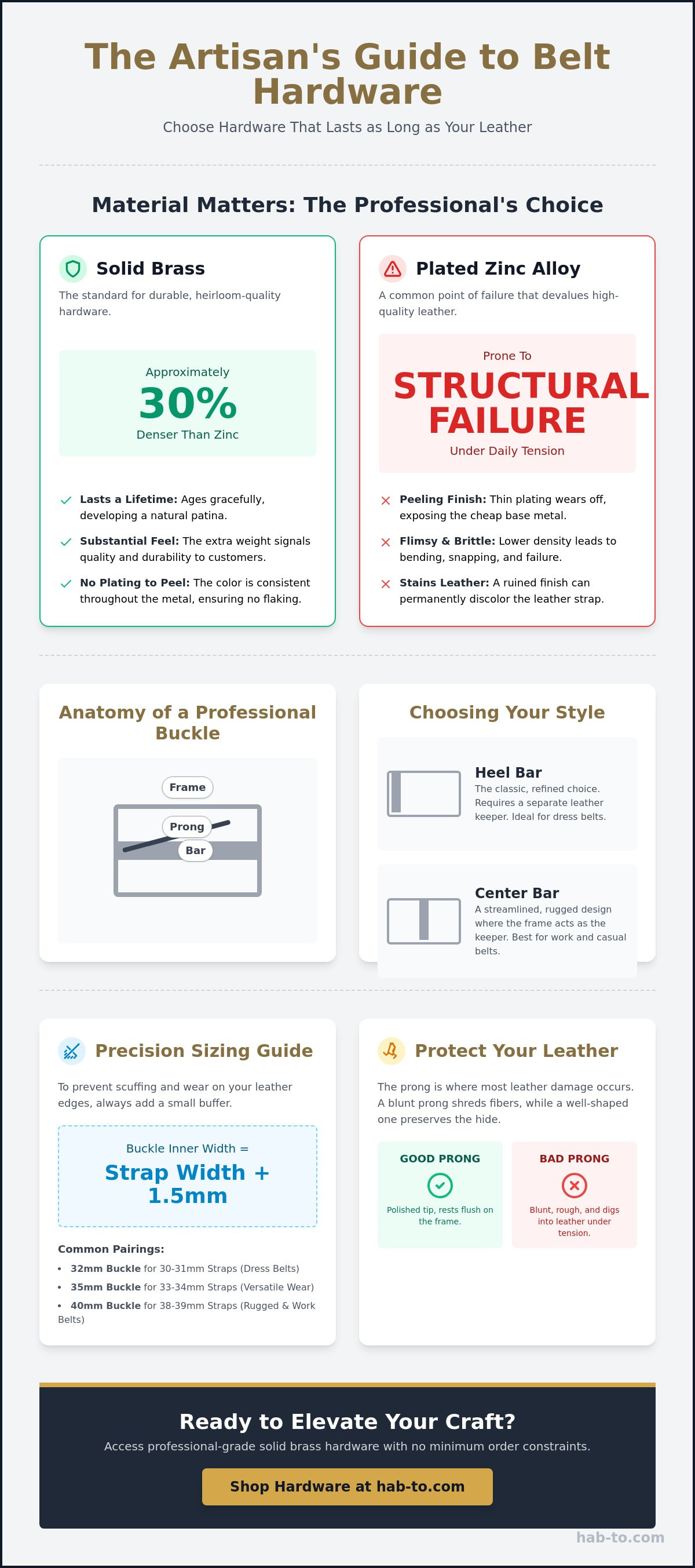
Why spend hours hand-stitching a premium piece of Shell Cordovan only to secure it with a belt buckle that starts peeling within six months? It's a common mistake. It turns a potential heirloom into a disposable accessory. You understand that every component matters when you're working with high-quality materials. A cheap zinc alloy fastener doesn't just feel flimsy; its lower density, roughly 30% less than solid brass, often leads to structural failure or a ruined finish that permanently stains your leather.
It's frustrating when hardware fails to live up to the standard of your craft. You deserve hardware that ages as gracefully as the vegetable-tanned leather you've carefully selected. In this guide, I'll help you master the technical nuances of selecting durable hardware that stands the test of time. We'll explore why ISO 9227 salt spray testing matters for PVD coatings and how to navigate the latest safety regulations regarding nickel and lead. By the end, you'll know exactly how to match the right metal to your finest hides for a professional result that lasts a lifetime.
Key Takeaways
- Learn to identify high-quality construction by understanding the anatomy of the frame and prong for a substantial, professional feel.
- Discover the functional differences between heel bar and center bar styles to choose the right aesthetic and utility for your specific project.
- Understand the material science that makes solid brass the superior choice for a belt buckle over brittle, plated zinc alloys.
- Master the pairing of hardware weight with leather temper to ensure premium hides like Shell Cordovan are complemented by the right hardware.
- Access professional-grade hardware and expert advice without minimum order constraints to support your workshop's growth.
The Anatomy of a Professional Belt Buckle
A belt is only as strong as its weakest link. For an artisan, that link is almost always the hardware. You spend weeks selecting the perfect hide and hours refining your edges; why settle for a closure that feels like an afterthought? A professional belt buckle is more than a fastener. It's a mechanical component that must perform flawlessly under daily tension. If the hardware fails, the entire craft suffers.
To choose wisely, you must understand the anatomy of a belt buckle. The frame provides the structural perimeter. The prong, often called the tongue, does the mechanical work of securing the strap. The bar serves as the pivot point, while the chape is the part of the buckle that attaches to the leather. When these parts are cast from high-density materials, they protect the adjustment holes in your leather from premature tearing and elongation.
To see these functional components in action and understand their aesthetic impact, watch this helpful video:
Quality is often felt before it's seen. Solid brass hardware is roughly 30% denser than common zinc alloy alternatives. That extra weight provides a tactile thud that signals durability to your customers. At Hab-To, our philosophy is simple: hardware should last as long as the hide. If you're crafting with premium Badalassi Pueblo leather, you need hardware that won't snap or lose its finish after a year of wear. We don't believe in concessions when it comes to longevity.
Understanding Buckle Sizing
Precision matters. When we talk about buckle size, we're referring to the internal width where the leather passes through, not the external dimensions. For a comfortable fit, I always recommend a 1.5mm buffer. If your leather strap is exactly 40mm, a 40mm buckle will be too tight. This causes the edges of your vegetable-tanned leather to scuff and wear. Common standards include 32mm for dress belts, 35mm for versatile daily wear, and 40mm for rugged work belts.
Prong Geometry and Leather Health
The prong is where most leather damage occurs. A poorly shaped or blunt prong forces its way through adjustment holes, slowly shredding the internal fibers. Look for hardware with a hand-polished prong and a defined seat on the frame. This seat allows the prong to rest flush against the metal rather than digging into the leather under tension. It's a small detail that makes a massive difference in the lifespan of your finished piece. Don't let a cheap prong ruin a high-end hide.
Choosing the Right Style: Heel Bar vs. Center Bar Buckles
Architecture dictates the silhouette. While we've discussed the "bones" of hardware in the previous section, the specific style you choose defines the belt's personality and its construction requirements. These designs carry a deep historical and fashionable significance, evolving from ancient military utility to modern artisan status. Choosing the right belt buckle isn't just about aesthetics; it's a structural decision that changes how you build the strap itself.
When to Use a Heel Bar Buckle
The heel bar is the classic choice for refined, minimalist designs. It features a frame where the bar is located at the very end. This setup requires you to craft a separate leather keeper to hold the tail of the belt in place. It's the gold standard for dress belts, typically paired with 30mm or 35mm widths. I find it works beautifully with Maryam Vacchetta leather. The clean lines of the hardware allow the natural grain and rich temper of the Italian hide to take center stage in formal or business-casual settings.
The Mechanical Advantage of Center Bar Buckles
Center bar buckles offer a mechanical advantage for those who prefer a streamlined construction or a rugged build. The bar is positioned in the middle of the frame, allowing the frame itself to act as the keeper. You don't need to stitch a separate leather loop. This simplifies the build and makes it a favorite for heavy-duty work belts or casual everyday carry gear. When building for durability, sourcing your components in solid brass hardware ensures the center bar won't bend or fatigue under the constant tension of a heavy strap.
Beyond these standards, you'll encounter plate buckles and niche functional gear. Plate buckles, often called "trophy" buckles, require a specific belt construction using snaps or Chicago screws so the wearer can swap the plate easily. There are also fireman or quick-release buckles. These were originally designed for emergency use, allowing a belt to be undone with a single flick of the finger. They add a unique, heritage-gear feel to any project that requires a more technical aesthetic.
Selecting the right style ensures your hardware complements the leather's temper and the wearer's lifestyle. If you're ready to start your next project, you can explore our curated selection of leather hardware designed for lifelong use.
Material Science: Why Solid Brass Trumps Plated Alloys
A beautiful finish can hide a brittle heart. When you select a belt buckle, you aren't just choosing a color; you're choosing a metal that must survive years of mechanical stress. Cheap die-cast buckles made from zinc alloy suffer from what artisans call "zinc rot." Once the thin electroplating wears away, the base metal reacts with moisture and oxygen. It becomes porous and eventually snaps without warning. This isn't just a failure of the hardware; it's a failure of the promise you made to your customer.
Professional makers rely on the metallurgical properties of solid brass because it's a non-ferrous alloy. Unlike iron or cheap steel, it won't rust. It provides a level of structural integrity that allows the prong to bend slightly under extreme force rather than shattering. For projects requiring maximum resistance to sweat or saltwater, 316L stainless steel is the only alternative that matches the longevity of premium leather. Both materials ensure the hardware remains as functional on day 3,000 as it was on day one.
There's a poetic harmony in how brass interacts with vegetable-tanned hides. As the leather develops a deep patina from sun and oils, the brass oxidizes in parallel. The metal warms in tone, losing its initial "new" shine and gaining a character that only comes with time. This shared aging process is why a brass buckle is the soul of a heritage belt. It doesn't just get older; it gets better.
Identifying Quality Castings
Weight is your first clue. As I mentioned earlier, solid brass is roughly 30% denser than zinc. A high-quality casting feels substantial in the palm. Look closely at the back of the frame. Sand-casting often leaves subtle, organic textures that injection moulding can't replicate. While natural brass is the purist's choice, modern PVD (Physical Vapor Deposition) coatings are the 2026 industry standard for those who want a specific color. These coatings pass a 48-hour salt spray test per ISO 9227, offering scratch resistance that traditional plating simply can't touch.
Avoiding "Green Skin" and Nickel Allergies
Cheap hardware is often a cocktail of regulated substances. As of June 2026, California Proposition 65 and EU REACH regulations have tightened restrictions on lead and cadmium in metal alloys. Using certified lead-free and nickel-free solid brass hardware protects your customers from "green skin" and contact dermatitis. It also prevents nasty oxidation transfer that can permanently stain light-colored hides. Investing in clean hardware isn't just an ethical choice; it's a mark of a master who cares about the wearer's long-term experience.
Pairing Hardware with Premium Leathers: A Maker's Guide
A master artisan views a belt as a single, cohesive system. It's a marriage between organic material and forged metal. When you select a belt buckle, you must consider the "heaviness" of the hardware relative to the temper of the hide. Temper refers to the leather's stiffness. A soft, supple hide paired with a heavy, oversized buckle will result in a belt that sags and loses its shape. On the other hand, a rugged, thick strap requires hardware with enough visual and physical weight to balance the build.
Choosing the right belt buckle color follows a simple rule: warm leathers pair with warm metals. Solid brass is the natural companion for Tan, Cognac, and Chestnut tones. The gold undertones of the brass harmonize with the leather as both materials develop a patina over time. For cool-toned leathers like Black, Navy, or charcoal Grey, nickel or stainless steel finishes provide a crisp, professional contrast that feels contemporary and sharp.
Hardware for Shell Cordovan Belts
Treating the "King of Leathers" requires a delicate touch. Shell Cordovan is prized for its dense fiber structure and brilliant, mirror-like luster. It deserves minimalist solid brass hardware with a high-polish finish. Avoid bulky, decorative frames that might overshadow the unique grain of the shell. Because this leather is so precious, I always recommend refining the internal edges of the buckle with a high-grit polishing cloth before assembly. This prevents the metal from marring the dense cordovan surface as the belt is fastened and unfastened over the years.
Textured Leathers and Matte Hardware
For projects that lean into a rustic, heritage aesthetic, Badalassi Pueblo and Virgilio Pueblo are exceptional choices. These leathers possess a signature "scuffed" nap that eventually burnishes into a deep, rich sheen. Sand-cast brass hardware is the perfect partner here. The slight organic irregularities in the casting process mirror the rustic texture of the Pueblo leather. I prefer matte or antique finishes for these builds, as they don't look "too new" against the rugged hide. It's a combination that feels honest and hardworking from the very first day.
Finding the right balance between metal and hide is what separates a hobbyist from a professional maker. If you're looking for hardware that lives up to the quality of your leather, browse our collection of leather hardware and find the perfect match for your next project.
Sourcing Professional Hardware from Hab-To Leather House
Knowledge is only half the battle. Once you understand the technical requirements of a high-quality belt buckle, the next challenge is finding a reliable source that shares your commitment to excellence. At Hab-To Leather House, our 160 year heritage isn't just a number on a page. It's a deep, cumulative understanding of how materials behave over decades of use. We've spent generations refining our selection process so you don't have to worry about hardware failure in your workshop.
Every piece in our collection is curated specifically to complement our vegetable tanned leather offerings. We believe the hardware should never be the "weakest link" in your project. Our Amsterdam based team is always available for personalized consultations. Whether you're unsure about prong geometry or need to match a specific finish to a new hide, we're here to help you make the right choice for your craft.
The Hab-To Quality Standard
We've built our reputation on a refusal to compromise. You won't find hollow-back or low-grade zinc alloy buckles in our catalog. These cheap alternatives may look fine on a screen, but they fail the weight test and the longevity test every time. Our commitment to sustainable, ethically sourced brass and steel ensures that your work remains compliant with modern regulations like REACH and Proposition 65. We rely on our family's decennial experience to vet every supplier. This rigorous standard is reflected in every item within our leather hardware range. We only sell what we would use in our own workshop.
Start Your Next Project
Supporting the individual artisan is at the heart of what we do. We've eliminated minimum order requirements to ensure that whether you're a hobbyist making one gift or a professional workshop producing a small batch, you have access to the same professional-grade hardware. This flexibility allows you to experiment with different styles of belt buckle without the burden of excess inventory. Combining your hardware order with premium Italian hides also improves shipping efficiency, making it easier to keep your workshop stocked with the best materials available.
Ready to elevate your craftsmanship? Take the first step toward building a belt that lasts a lifetime. Explore the Hab-To Hardware Collection today and find the perfect foundation for your next masterpiece.
Master Your Next Masterpiece
Your craft deserves components that match your dedication. Selecting the right belt buckle is the final step in ensuring your work lives through generations of daily use. We've explored how solid brass prevents the failures common in cheap alloys and why matching hardware weight to leather temper is non-negotiable for a professional finish. These aren't just aesthetic choices; they're technical requirements for any serious artisan. Every stitch you place is a promise of quality. Your hardware must be the one to keep it.
At Hab-To, we bring over 160 years of family expertise to our curated selection of premium Italian hardware. We don't believe in barriers to entry. That's why we offer no minimum order quantities, supporting both the individual hobbyist and the professional workshop. You already have the skills and the premium hides. Now, it's time to secure them with hardware that won't let you down. Upgrade your craft with our Solid Brass Buckle Collection and build something that truly stands the test of time. Your next project is waiting for its perfect finish.
Frequently Asked Questions
How do I know what size belt buckle I need for my strap?
You determine the size you need by measuring the internal width of the buckle frame where the leather passes through. This measurement should match your strap width plus a small buffer. For thick vegetable-tanned leather, a 1.5mm gap is ideal to prevent the edges of the hide from scuffing against the metal. If your strap is exactly 35mm, you should look for a buckle labeled as 35mm, which will already include this necessary clearance.
What is the difference between solid brass and brass-plated buckles?
Solid brass is a uniform alloy throughout the entire piece, whereas brass-plated buckles use a cheaper base metal like zinc covered by a thin coating. Over time, the plating on cheaper hardware will wear away to reveal a greyish metal underneath. Solid brass is the superior choice for a belt buckle because it won't snap under tension and maintains its warm color even if it gets scratched during daily use.
Can I use a 40mm buckle on a 38mm leather strap?
It is possible to use a 40mm buckle on a 38mm strap, though the fit won't be perfectly snug. The strap will have approximately 2mm of vertical play within the frame. While this doesn't affect the mechanical security of the belt, most professional artisans prefer to match the sizes exactly. Using the correct size ensures a tailored appearance and prevents the strap from shifting as the wearer moves.
How do I attach a buckle to a leather belt; screws or stitching?
Choosing between screws or stitching depends on whether you want a permanent bond or the ability to swap hardware. Hand-stitching is the traditional choice for heritage belts because it offers a clean, permanent finish that won't loosen over time. Chicago screws are better for makers who want to offer interchangeable styles. If you use screws, I recommend applying a small drop of thread locker to prevent them from backing out during wear.
Do solid brass buckles tarnish over time?
Solid brass will naturally oxidize and develop a darker patina over time as it reacts with oxygen and skin oils. Many crafters prefer this aged look because it complements the natural darkening of vegetable-tanned leather. If you prefer a bright, polished finish, you can easily restore the original shine. A specialized metal polishing cloth or a mild jewelry cleaner will remove the oxidation and bring back the high-luster glow in seconds.
What is a 'nickel-free' buckle and why does it matter?
A nickel-free buckle is hardware specifically manufactured without nickel to prevent allergic skin reactions. Nickel is a common cause of contact dermatitis, affecting a significant portion of the population. By choosing certified nickel-free hardware, you ensure that your finished leather goods are safe for everyone to wear. This is especially important for belts, as the hardware often has prolonged contact with the wearer's skin throughout the day.
Can I use a center bar buckle without a leather keeper?
You don't need a leather keeper when using a center bar buckle because the frame performs that function. The tail of the belt passes through the frame and tucks underneath the back bar, which holds the leather flat against the waist. This makes the center bar an excellent choice for minimalist builds or rugged work belts where a separate leather loop might feel bulky or unnecessary.
Why are some buckles significantly heavier than others?
Differences in weight are usually caused by the density of the base metal and the casting technique. Solid brass is roughly 30% denser than zinc alloy, which gives it a much more substantial feel in the hand. This extra mass is a hallmark of a high-quality belt buckle. It indicates a solid, non-porous structure that can handle the mechanical stress of holding a heavy leather strap in place for years without failing.