

What Causes Leather to Discolour? An Artisan's Guide to Preserving Hides
That rich, evolving glow on your favorite hide might actually be a sign of quality rather than a defect. Many artisans mistake the natural maturation of a premium skin for a flaw, yet the boundary between a sought-after patina and genuine damage is often misunderstood. Understanding what causes leather to discolor is essential if you want to move beyond guesswork and start mastering the life cycle of your materials.
It's incredibly frustrating to invest in high-end Italian Leather or Shell Cordovan only to watch it fade or spot unexpectedly in your workshop. You want your work to last for generations, but environmental factors often have other plans for your hides. I'm here to help you decode the science behind these changes so you can protect your investment and your craft.
In this guide, we'll break down the specific triggers for discolouration, from UV exposure to chemical reactions during the crafting process. You'll learn how to store your hides safely and discover which leathers, like our vegetable tanned selections, are destined to age most gracefully over time.
Key Takeaways
- Learn the technical difference between a natural patina and chemical damage by understanding exactly what causes leather to discolor at a molecular level.
- Identify the everyday substances, from pH-unbalanced cleaners to alcohol-based solvents, that can strip premium top-coats and cause permanent staining.
- Discover why specific materials like Pueblo Leather are prized for their dramatic aging and how to distinguish this "good" evolution from environmental damage.
- Master professional storage and workshop climate control techniques to protect your expensive hides from humidity and light-induced fading.
- Understand how sourcing world-class hides like Maryam Shell Cordovan reduces the risk of unsightly discolouration and ensures a lifetime of beauty.
The Science of Shade: What is Leather Discolouration?
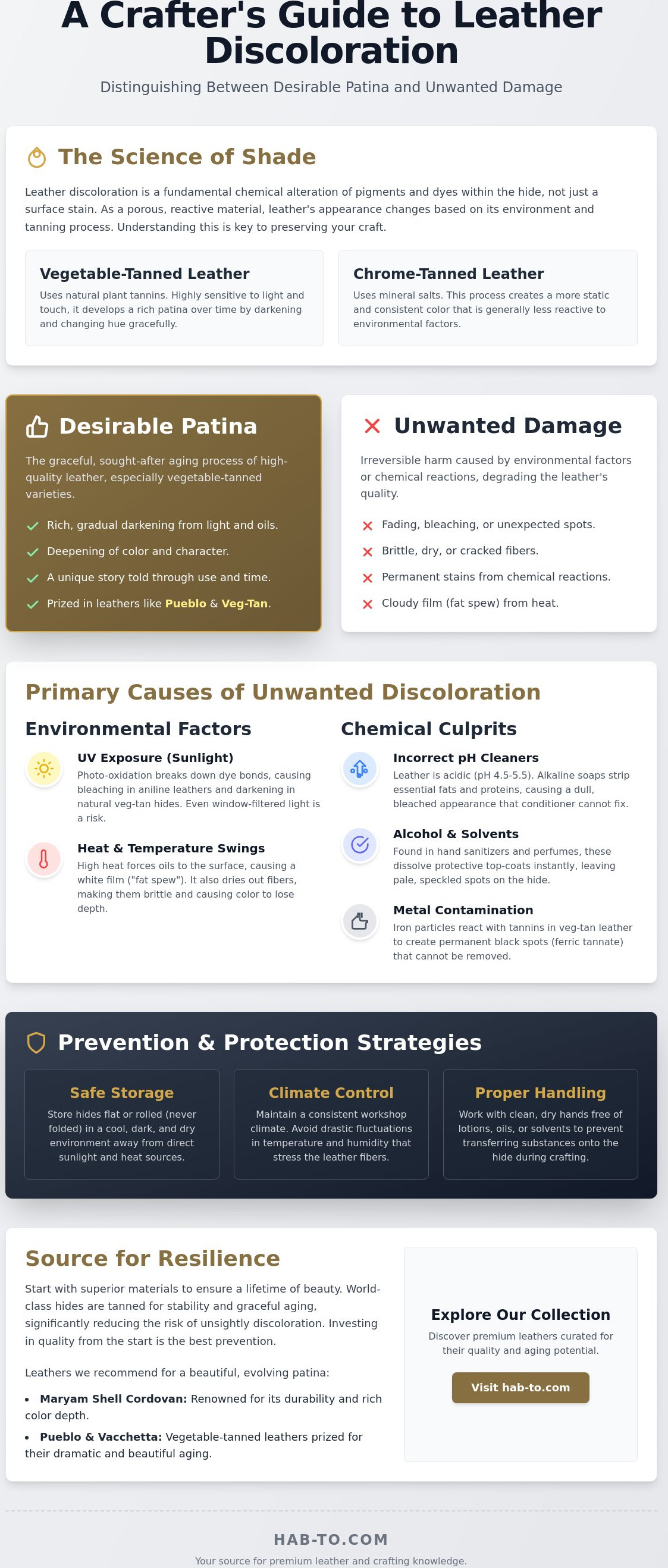
Leather discolouration isn't just a surface stain or a bit of dirt. It is a fundamental alteration of the pigments or dyes within the hide. When we talk about what causes leather to discolor, we are really talking about external stimuli triggering a chemical response. Leather is a living material. Even after the tanning process, it remains porous and reactive to its environment. It never truly stops breathing. This reactivity is exactly why high-quality hides are so prized. They change with you. They tell a story. If the environment is harsh, that story becomes one of neglect rather than grace.
The way a hide reacts depends largely on how it was tanned. Vegetable-tanned leathers, like our Maryam Vacchetta, use natural plant tannins that are highly sensitive to light and touch. In contrast, chrome-tanned options often use mineral salts that create a more static colour. Understanding this distinction helps you separate genuine damage from a beautiful Patina. Surface stains are temporary. Pigment fading or structural changes are often permanent. We must distinguish between these to preserve the integrity of the craft.
To better understand this concept, watch this helpful video:
UV Exposure and Photo-Oxidation
Sunlight is a powerful catalyst. Ultraviolet light physically breaks down the chemical bonds in leather dyes through a process called photo-oxidation. For aniline leathers, this usually results in a bleaching effect where the vibrant tones simply vanish. Natural, undyed vegetable-tanned leather does the opposite. It darkens, much like human skin tans in the sun. This is a primary factor in what causes leather to discolor over time. Even window-filtered sunlight poses a significant risk to your stored hides because standard glass does not block the specific UV spectrum responsible for photo-oxidation.
Temperature Fluctuations and Desiccation
Heat is a silent thief of quality. Central heating or proximity to radiators creates hot spots that force natural oils to the surface. This often leads to fat spew, which is a white, cloudy film that many beginners mistake for mould. It is actually just the fats and waxes within the leather crystallizing as they cool. When leather loses its internal moisture, the fibers become brittle and the colour loses its depth. This desiccation makes even the finest Pueblo Leather look flat and lifeless. Keep your workshop cool. Your hides will thank you for the consistency.
Chemical Culprits: Common Substances That Alter Leather
The workshop environment is often where the most preventable damage occurs. While we discussed environmental factors earlier, chemical interactions are far more aggressive. One of the most common mistakes is using pH-unbalanced cleaners. Traditional soap is alkaline. Leather, however, is naturally acidic, sitting between pH 4.5 and 5.5. When you apply an alkaline substance, it strips the essential fats and proteins. This chemical imbalance is a major factor in what causes leather to discolor, often leaving a dull, bleached appearance that no conditioner can fully restore.
Alcohol and solvents are equally destructive. Hand sanitisers or perfumes contain high concentrations of ethanol that dissolve protective top-coats instantly. If you've ever seen a pale, speckled spot on a finished hide, it's likely a solvent reaction. Metals also play a role. When iron particles touch vegetable-tanned leather, they react with the natural tannins to create ferric tannate. This results in permanent black spots that cannot be sanded away. Even a tiny filing from a metal tool can ruin a pristine hide.
The Impact of Skin Oils and Sweat
Human touch is both a blessing and a curse for leather. Our sweat is naturally acidic, and over time, these acids react with the tannins in the hide. On high-traffic areas like bag handles, this creates a deep darkening. There is a fine line here. A healthy patina is beautiful, but excessive oil saturation leads to "grime," which feels tacky and looks muddy. To avoid marking hides during the cutting phase, I always recommend ensuring your hands are free from lotions or heavy natural oils. Even a small fingerprint can become a permanent mark once the leather is dyed or finished.
Liquid Damage and Water Staining
Water is the most common liquid threat. When a hide gets wet, the liquid doesn't just sit there; it moves through the fibers. As it evaporates, it carries pigments and tannins with it, depositing them at the edge of the wet spot. This is the "tide mark" phenomenon. Open-pore leathers like Pueblo Leather are particularly susceptible. If a spill occurs, never use a hair dryer or radiator. High heat causes the fibers to shrink and harden, turning a simple stain into structural damage.
Adhesives can also leave "ghost" marks. If you use the wrong tape to hold pieces together, the residue alters the surface tension, making future dyeing uneven. For a safer bond that respects the material, explore our Ecostick 1804 leather glue, which is designed specifically for high-end crafting. Choosing the right chemicals from the start is the only way to ensure your work ages with the dignity it deserves.
Patina vs. Damage: Understanding the Vegetable-Tanned Journey
Many new crafters ask what causes leather to discolor with a sense of dread, fearing they have ruined a expensive hide. However, in the world of high-end vegetable-tanned leather, colour change is often the goal. This desirable transformation is known as patina. It is a combination of darkening and a soft sheen that develops as the material matures. While chrome-tanned leathers are designed to look the same on day one thousand as they did on day one, vegetable-tanned hides are meant to evolve. They are reactive by design.
The chemistry behind this shift is primarily oxidation. When the natural tannins in the hide are exposed to air and light, they undergo a slow chemical reaction that develops those deep, sought-after cognac and mahogany tones. This is why Badalassi Pueblo is so famous among artisans. Its unique, buffed surface starts with a matte, almost rustic texture but transforms into a smooth, lustrous finish with a dramatic shift in shade. It records the history of how it is handled. This is not damage; it is the material reaching its full potential.
How do you tell the difference between healthy aging and genuine trauma? True damage usually comes with a change in texture. If you notice brittleness, flaking, or sharp, uneven blotching, you are likely looking at the results of chemical exposure or extreme desiccation. A healthy patina, by contrast, feels supple. The darkening should be smooth and follow the areas of highest contact or light exposure. Understanding what causes leather to discolor in a "bad" way involves looking for signs that the internal fibers have become compromised rather than just aesthetically altered.
The Role of Oil Content in Colour Depth
The way a tannery "stuffs" a hide with oils and waxes dictates its future shade. Leathers with high oil content often exhibit a "pull-up" effect. This is a temporary lightening of the colour when the leather is folded or stretched, as the oils are displaced within the grain. This is a hallmark of quality. Materials like Virgilio Vacchetta use these internal fats to maintain structural integrity even as the surface shade deepens. The oils act as a buffer against the environment, ensuring the leather remains flexible during its decades-long journey.
Why Artisans Choose 'Reactive' Leathers
There is a deep satisfaction in working with a material that responds to its owner. When you explain this process to your customers, you aren't just selling a product; you are selling a legacy. You are teaching them to appreciate the marks of use. For a deeper look at how different hides age, I recommend exploring our Vegetable Tanned Leather Guide. It provides specific aging profiles for various tannery selections, helping you choose the right "canvas" for your next project. Embrace the change. It is the most authentic characteristic of the craft.
Prevention Strategies for Crafters and Collectors
Prevention is the artisan's greatest tool. While we've explored what causes leather to discolor through chemical and environmental means, your workshop habits are the final line of defense. Proper management of your inventory ensures that your materials remain as vibrant as the day they left the tannery. It starts with how you handle the hide before a single cut is made. Consistent protocols are what separate a hobbyist from a master craftsman.
Hide storage requires a specific protocol. If you have the space, flat storage is ideal to prevent creasing and grain distortion. However, most workshops rely on rolling. When rolling hides, always aim for 'flesh-to-flesh' contact. This prevents the rougher underside from marring the delicate grain of the layer beneath it. It's a simple step that saves hours of corrective work later. I always suggest using cotton gloves when handling light-coloured or natural veg-tan to prevent skin oils from creating premature spots.
Climate control is equally vital. Leather is happiest at a relative humidity between 45% and 55%. If your workshop is too dry, the natural oils migrate and the colour pales. If it's too damp, you risk mould and permanent staining. Invest in a simple hygrometer. It's the most cost-effective way to protect thousands of euros in inventory from the silent threat of humidity fluctuations.
Optimal Storage Environments
Your storage area should be dark, cool, and well-ventilated. Direct sunlight is the enemy, but stagnant air is a close second. Never wrap your hides in plastic. Plastic traps moisture and leads to mould-related staining. Use breathable cotton sheets or acid-free paper instead. Also, never store leather directly on concrete floors. Concrete wicks moisture into the hide, leading to uneven discolouration and rot at the contact points. Keep everything elevated on wooden racks or shelving.
Workshop Hygiene and Tool Maintenance
Clean tools are non-negotiable. Metal strike occurs when microscopic iron filings from your blades or punches react with the hide's tannins. Wipe your tools with a dry cloth after every session to keep them moisture-free. Similarly, your workbench must be cleared of dye residue or glue spills before laying out a new hide. If you notice 'fat spew' or a white bloom on the surface, don't panic. Gently buff it with a soft horsehair brush before you begin your build to ensure an even finish.
If you're ready to start your next project with materials that age with true dignity, browse our selection of Maryam Shell Cordovan. Start with quality, and your prevention efforts will go much further.
Sourcing Resilient Materials: The Hab-To Leather House Quality Standard
The foundation of any enduring leather piece is the quality of the raw material. While we've spent time exploring what causes leather to discolor through external trauma, the most effective preventative measure is starting with a hide that possesses a resilient molecular structure. At Hab-To Leather House, we lean on a heritage of 160 years in selecting hides that are destined to age with grace. We don't just look for leather that looks good on the shelf. We look for materials that have been processed with the patience and chemistry required for a lifetime of use.
Choosing full-grain structure over corrected-grain alternatives is a vital decision for any serious artisan. Full-grain hides retain the tightest fiber density of the skin, which naturally resists deep-seated staining better than leathers that have been sanded or heavily pigmented. When you start with premium tannery hides like Maryam Shell Cordovan, you're investing in a material that has already been expertly saturated with the right fats and oils. This internal balance makes the leather far less likely to suffer from the "ugly" discolouration associated with cheaper, drier alternatives.
Vegetable-tanning remains the superior choice for those who value long-term colour character. Because this process uses natural tannins, the leather remains a "living" material that responds to its environment without losing its structural integrity. It is this specific tanning chemistry that allows for the development of a rich, deep glow rather than the brittle fading seen in mass-produced goods. This resilience is what separates a professional hide from a commercial one.
The Shell Cordovan Distinction
Shell Cordovan is uniquely resistant to the specific types of creasing discolouration often seen in bovine hides. Because the "shell" is a dense muscle membrane rather than a grain skin, it doesn't develop the micro-cracks that trap dirt and moisture over time. This dense fiber structure plays a critical role in pigment retention. The dye stays locked within the fibers, ensuring the colour remains vibrant even after years of daily carry. To learn more about why this material is considered the pinnacle of the craft, explore our Shell Cordovan Guide.
Personalized Advice for Your Next Project
I believe that every project deserves a specific material choice based on its intended wear and tear. A wallet needs a different reactivity than a heavy-duty equestrian strap. As a family-run wholesaler, Hab-To Leather House helps crafters select the right hide by understanding the chemistry of our stock. There is a massive benefit to Buying Leather Online from a trusted expert who can guide you toward the right tannery for your specific goals. Don't leave your work's future to chance. Start with a material that was made to last.
Master the Art of Leather Longevity
Your journey as an artisan is etched into every hide you select. Understanding what causes leather to discolor allows you to transform a potential flaw into a mark of mastery. You've learned that while UV light and chemical spills pose real threats, the right workshop protocols and high-quality vegetable-tanned hides turn aging into an asset. A beautiful patina isn't an accident. It's the result of choosing superior materials and treating them with the respect they deserve.
We're here to support your craft with over 160 years of family leatherworking expertise. Whether you're a professional or just starting your first project, we provide access to world-renowned Maryam and Badalassi leathers with no minimum order requirements. It's time to build something that ages with dignity.
Explore our collection of premium, sustainably tanned hides at Hab-To Leather House and find the perfect foundation for your next masterpiece. Keep creating with passion. Your work is meant to last for generations.
Frequently Asked Questions
Is it possible to reverse sun-bleaching on leather?
Reversing sun-bleaching is unfortunately not possible because the ultraviolet rays have physically broken down the dye's chemical bonds. Once photo-oxidation occurs, the pigment is gone forever. You can attempt to mask the area with a matching leather dye, but the original tannery finish cannot be restored. Prevention by storing your hides in dark, ventilated spaces is your only true ally.
Why has my leather turned a greenish or white colour?
A white, cloudy film is usually "fat spew," which occurs when natural waxes rise to the surface and crystallise. You can typically buff this away with a soft brush. However, a greenish tint often indicates a reaction between copper or brass hardware and the tannins in the hide. This is a common chemical factor in what causes leather to discolor when materials like Maryam Vacchetta from Hab-To Leather House are stored in damp conditions.
Can hand sanitiser stains be removed from leather bags?
Hand sanitiser marks cannot be removed because they aren't actually stains; they are areas where the alcohol has dissolved the leather's protective top-coat. This is a chemical burn that strips the pigment away. Your best option is to gently clean the area and apply a tinted leather cream to blend the spot back into the surrounding hide. Always avoid touching premium hides until your hands are completely dry.
How do I know if my leather is developing a patina or just getting dirty?
A healthy patina has a smooth, lustrous sheen and develops gradually in areas of high contact. It feels supple and looks integrated into the grain. Dirt and grime, however, feel tacky or gritty and often look muddy. If the discolouration lacks the characteristic glow of quality Pueblo Leather, it's likely a build-up of external oils and dust rather than natural aging.
Does conditioning leather always make it darker?
Yes, applying conditioner will almost always make your leather slightly darker. The oils and waxes fill the porous structure of the hide, which changes how light reflects off the surface. This effect is especially pronounced on open-pore vegetable-tanned leathers. If you're worried about a dramatic shift, always perform a spot test on a hidden area before treating the entire project.
Why are there black spots appearing on my vegetable-tanned leather project?
Black spots on vegetable-tanned leather are usually the result of "metal strike." This happens when iron particles from your tools or workbench react with the natural tannins in the hide to create ferric tannate. This is a permanent chemical change that cannot be washed away. Keeping your workshop clean and your tools moisture-free is the only way to prevent this specific reaction.
What is the best way to clean leather without causing discolouration?
The best way to clean leather is to use a pH-balanced, leather-specific cleaner and a soft, damp cloth. Never use household detergents, as their high alkalinity is a primary reason for what causes leather to discolor and become brittle over time. Always work in gentle, circular motions and allow the piece to air dry naturally away from radiators or direct sunlight.
Can humidity cause leather to change colour permanently?
Extreme humidity can cause permanent colour changes by encouraging mould growth or causing the leather fibers to rot. High humidity also accelerates the oxidation of tannins, leading to uneven darkening and "tide marks." Conversely, very low humidity causes desiccation, which makes the leather pale and brittle. Maintaining a stable workshop environment between 45% and 55% humidity is essential for long-term preservation.