

What is Calfskin Leather Used For? A Master Crafter’s Guide to Applications
Hi, I'm Mike! The most expensive hide in your workshop shouldn't be the one you're most afraid to cut. It's a common hurdle for many of the makers I advise at Hab-To Leather House; you see that tight, flawless grain and incredible suppleness, but the investment makes you hesitate. You might find yourself asking what is calfskin leather used for and whether a material this refined can actually survive years of daily wear. It's natural to feel some "sticker shock" when you're comparing it to the rugged thickness of standard cowhide.
I agree that making that first cut into a premium skin feels like a high-stakes gamble. However, I promise that once you understand the dense fiber structure of these hides, you'll see why calfskin remains the gold standard for luxury leatherworking. This guide will show you how to use its unique properties in your own crafting projects with total confidence. We'll explore the specific functional benefits, clear up the confusion between lambskin and cowhide, and identify exactly which projects justify the higher price point. Let's get into the workshop details and learn how to handle this material like a master.
Key Takeaways
- Understand why the fine grain and tight pore structure of younger hides make calfskin the ultimate choice for a "buttery" luxury finish.
- Explore the diverse range of what is calfskin leather used for, specifically why it remains the industry standard for high-end footwear and structural handbags.
- Debunk the "delicate" myth by learning how calfskin offers superior abrasion resistance and the pliability required for intricate gussets and turned edges.
- Master professional workshop techniques, from selecting the right cut to using the specific tools needed to handle fine-grain hides without damage.
- Learn how to access premium, hand-selected leather for your independent projects through a "no minimum" sourcing philosophy that supports every crafter.
Defining Calfskin Leather: Characteristics and Core Properties
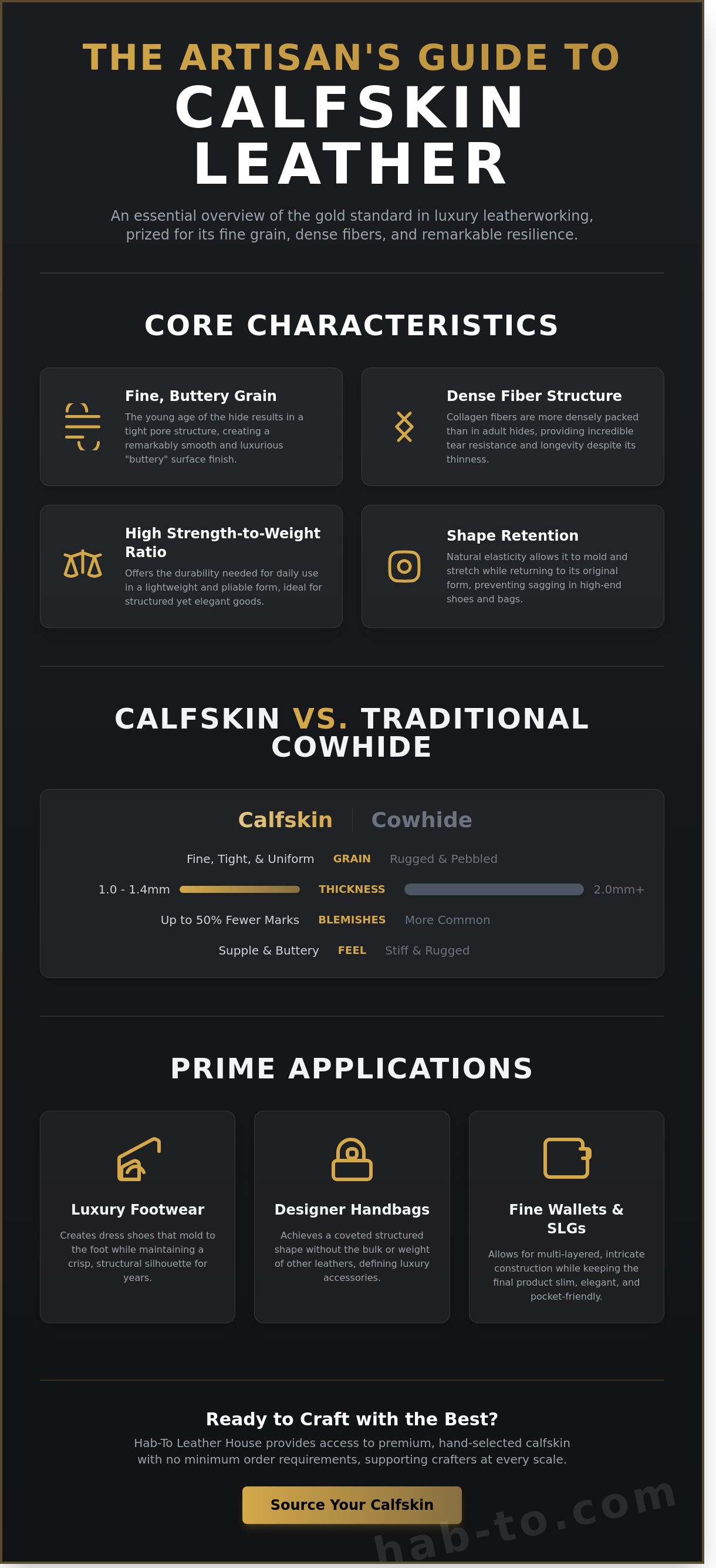
To truly understand What is calfskin leather, we have to look at the age of the animal. This premium material comes from domestic cattle typically under 12 months old. Because the hide is harvested at such a young age, it hasn't developed the coarse texture or large pores seen in adult cows. The result is a fine grain surface that feels remarkably smooth and buttery. It's the primary reason why designers choose this material when they want a product to scream luxury without saying a word.
When you're asking what is calfskin leather used for, the answer often involves items where durability meets a refined aesthetic. Despite its thinness, calfskin possesses a surprising strength-to-weight ratio. The collagen fibers in a young hide are more densely packed than those in an older animal. This means you can have a leather that's half the thickness of a heavy boot leather but still offers incredible tear resistance and longevity. It's a "no compromises" material for craftsmen who value both form and function.
To better understand how these properties compare to other options, watch this helpful video:
Another vital property is natural elasticity. The fresh collagen structure allows the leather to stretch slightly and, more importantly, return to its original shape. This shape retention is why high-end dress shoes made of calfskin don't lose their silhouette after a few months of wear. They mold to your feet while keeping that crisp, "just out of the box" look.
Calfskin vs. Traditional Cowhide
The difference between calf and adult cowhide is immediately visible in the grain density. While adult cowhide often features a rugged, pebbled texture, calfskin is tight and uniform. Weight is another factor; calfskin hides are typically 1.0mm to 1.4mm thick, making them significantly lighter than the 2.0mm+ hides used for heavy-duty work gear. Because younger animals have had less time to roam, they have 50% fewer scars and stretch marks. This provides a cleaner canvas for high-end projects.
The Role of Tanning in Calfskin Quality
The tanning process dictates what is calfskin leather used for in the final product. Chrome tanning is common for soft apparel, but vegetable tanning is the choice for those who want a sustainable, rich patina. We often see the best calfskin left with an aniline finish. This process uses transparent dyes instead of heavy pigments, ensuring the natural grain remains the star of the show. Check our Vegetable Tanned Leather: The Complete Guide for Crafters for a deeper dive into sustainable tanning and how it impacts your leather projects.
Primary Uses of Calfskin in the Fashion and Craft Industry
Calfskin isn't just another leather choice; it's the gold standard for makers who refuse to compromise on grain density and surface finish. When exploring what is calfskin leather used for, you'll find it at the heart of the luxury sector. Its tight fiber structure allows it to be split thinner than adult cowhide while maintaining superior tensile strength. This unique balance makes it the go-to material for products that require both elegance and daily resilience.
Luxury handbags and clutches often rely on calfskin to achieve that coveted "buttery" feel. Unlike stiffer leathers, calfskin responds to the touch with a soft, supple texture that develops a rich character over time. Designers at major fashion houses in Paris and Milan favor it because it holds a structural shape without feeling bulky or heavy. For small leather goods (SLGs) like cardholders, calfskin is essential. It allows a crafter to create a multi-layered wallet that remains under 8mm thick, fitting comfortably in a pocket without the unsightly bulge of heavier hides.
Beyond modern fashion, calfskin has a prestigious history in preservation. Vellum, a high-quality parchment made from calfskin, has protected the world's most vital documents for centuries. The 1215 Magna Carta was written on this material, proving its ability to last over 800 years without degrading. This archival quality is why what is calfskin leather used for still includes high-end bookbinding for limited edition volumes and legal records today.
Why Calfskin Dominates the Shoe Industry
In the world of footwear retailing for over $500, calfskin is the undisputed king. The break-in period is significantly shorter than heavy steerhide because the younger skin molds to the foot's unique contours within just a few wears. It's the preferred choice for Oxfords and Derbies because it takes a mirror-like shine. The fine grain ensures that even under five layers of wax, the surface remains smooth rather than pebbled. Because calfskin is highly elastic, it resists cracking at the flex points of the shoe, even after 1,000 miles of walking.
The Maker's Choice for Accessories
For the independent artisan, calfskin offers a level of precision that other leathers can't match. Its tight grain allows for a glass-like edge finish when burnished or painted. This is vital when you're integrating essential leather hardware like solid brass buckles or luxury zippers. The leather doesn't stretch or distort under the weight of the metal, ensuring a professional, high-end look. If you're looking to elevate your own projects with materials that meet these professional standards, you can find premium leather and tools at Hab-To Leather House to start your next masterpiece.
Technical Advantages: Why Artisans Choose Calfskin
Artisans don't just choose calfskin for the prestige. They choose it for how it behaves under a knife and needle. A common misconception is that calfskin is too delicate for daily use. In reality, its tight grain structure makes it more abrasion-resistant than many thicker, older hides. When you're figuring out what is calfskin leather used for in high-end workshops, the answer often lies in its ability to handle complex construction like turned edges and intricate gussets. It folds without cracking and bends without losing its shape.
In the tannery, calfskin acts like a high-performance sponge. The uniform grain allows for deep, even dye penetration. This results in vibrant colors that don't look "painted" on the surface. Whether it's a deep navy or a bright cognac, the color remains consistent across the entire hide. This absorption also makes it the ideal candidate for "Veau Velours." This specific type of calfskin suede offers a nap so fine it feels like silk, providing a level of luxury that standard cowhide simply cannot replicate.
Tensile Strength and Fiber Density
The science comes down to the age of the animal. Younger calves possess a much higher concentration of collagen fibers per square inch compared to mature cows. Tensile strength is the measurement of the force required to pull a material to the point where it breaks or permanently deforms. Because of this dense fiber network, calfskin won't "bag out" or over-stretch in high-stress areas like the flex points of a shoe or the card slots of a wallet. It maintains its structural integrity over decades of use.
The Aesthetic of the Fine Grain
Minimalist design requires a canvas that doesn't distract. Calfskin lacks the heavy, pebbled texture of buffalo or older bovine leathers, supporting a clean and modern aesthetic. The immediate "hand-feel" signals quality to a customer the moment they touch it. Understanding what is calfskin leather used for helps makers select the right weight for their specific project. While Shell Cordovan is the king of high-luster, non-creasing projects, calfskin offers a similar level of refinement with more versatility for larger items. It's the gold standard for makers who refuse to compromise on the final look of their work.
- Superior pliability for tight corners and turned edges.
- High abrasion resistance despite a thinner, more elegant profile.
- Uniform dye absorption for consistent, vibrant batch colors.
- Excellent "break," meaning the fine wrinkles formed when the leather is bent are nearly invisible.
Best Practices for Working with Calfskin in Your Workshop
Working with calfskin requires a shift in mindset compared to heavier hides like bridle or harness leather. It's a material defined by its tight grain and supple temper. When you're planning a project and deciding what is calfskin leather used for in your workshop, remember that precision is your best friend. Hi, I'm Mike, and I've seen how the right techniques can turn a simple piece of calfskin into a masterpiece.
First, choose your cut wisely. A whole hide usually covers 15 to 25 square feet and offers the best yield for large, seamless panels. A calf side is half that size, cut along the spine. This is perfect for smaller production runs of wallets or watch straps. Because calfskin is thinner, usually ranging from 0.8mm to 1.2mm, every imperfection in your cutting technique shows up immediately.
Your tools must be surgical. A dull blade will pull the fine grain, leaving jagged edges that are impossible to fix later. Use a freshly stropped head knife or a new 45mm rotary blade for every major cut. When it comes to adhesives, avoid heavy solvent-based glues. These can "soak through" the thin fibers and darken the face of the leather permanently. Stick to a thin, even layer of water-based contact cement to keep the grain pristine.
Stitching and Lining Considerations
To match the refined nature of calfskin, use a higher stitch count. I recommend 9 to 12 stitches per inch (SPI). Use a 0.4mm or 0.5mm bonded polyester or linen thread. Heavy threads look bulky and out of place on such delicate grain. Calfskin also makes the ultimate luxury lining. If you're building a bag with a 2.2mm exterior, lining it with 0.8mm calfskin adds a professional, high-end feel. Always apply non-stretch reinforcement tape, like Velodon, to top edges and pocket openings. This prevents the leather from "growing" or warping with daily use. Understanding what is calfskin leather used for in structural applications helps you decide where to add these hidden supports.
Burnishing and Finishing Edges
If you're working with vegetable-tanned calfskin, you can achieve a glassy, mirror-like edge. Use a wood slicker and a small amount of water or Tokonole. The tight fibers compress beautifully under light friction. For chrome-tanned varieties, edge painting is the professional standard. Use a high-quality Italian paint and apply three thin coats rather than one thick one. Sand with 400 to 800 grit paper between layers for a perfectly smooth profile. Finish your piece with a light application of a neutral cream to keep the surface supple and protected for years to come.
Sourcing Premium Calfskin for Small-Scale Projects
Finding high-end materials as an independent maker often feels like a battle. Large wholesalers typically focus on industrial-scale orders, frequently ignoring the needs of the individual artisan or small studio. If you're looking for a single hide to craft a bespoke watch strap or a small clutch, you shouldn't be forced to buy in bulk. This is where the struggle lies for many; the best materials are often hidden behind high minimum order quantities that don't make sense for a workshop.
At Hab-To, we've built our business on a "No Minimum" philosophy. We believe luxury materials should be accessible to everyone, whether you're a seasoned professional or just starting your first project. Understanding what is calfskin leather used for-from delicate cardholders to structured handbags-is only half the battle. You also need a supplier who values your craft as much as you do. We provide the same premium quality to the hobbyist that we do to the major fashion houses.
When you get your hands on a hide, you need to know what to look for. Start by inspecting the grain consistency. Premium calfskin should have a tight, uniform surface with minimal visible pores. Next, check the temper. This refers to the leather's firmness. A "firm" temper is ideal for structured bags, while a "soft" temper works best for items that need to fold or drape. We prioritize sustainable sourcing, focusing on vegetable-tanned and chrome-free options. These methods are better for the environment and result in a leather that develops a beautiful, unique patina over time.
Why Sourcing Matters
Our family has been in the leather industry for over 160 years. That's four generations of building relationships with the world's finest tanneries. We don't just ship boxes; we hand-select hides to ensure you get the best yield for your money. If you're unsure which grade fits your needs, you can talk to an expert like Mike. Getting direct advice can save you from buying the wrong temper or thickness for your specific design. We're an Amsterdam leather wholesaler that treats every customer like a partner in the creative process.
Start Your Next Project Today
Don't settle for subpar materials that undermine your hard work. Our curated selection includes only the finest calfskin and premium leathers. We promise no synthetics and no compromises, just real materials for real craft. Whether you're making a wallet or a pair of custom shoes, the quality of the raw hide defines the final result. It's time to elevate your work with materials that last a lifetime. You can shop our premium leather collection at Hab-To and experience the difference that 160 years of expertise makes.
Bring Your Leathercraft Vision to Life
Choosing the right material is the foundation of every great project. You've seen how calfskin's tight grain and high tensile strength make it a superior choice for everything from refined watch straps to durable footwear. Understanding what is calfskin leather used for helps you bridge the gap between technical utility and luxury aesthetics. It's about finding that perfect balance of suppleness and structure that only premium skins provide.
At Hab-To Leather House, we bring 160+ years of family expertise directly to your workbench. We don't believe in barriers to creativity, which is why we have no minimum order requirements for independent crafters. Whether you need a single hide or professional guidance, we're here to help. You can even visit our Amsterdam-based showroom for personalized advice from our team. We'll help you select the exact texture and temper your design demands. No synthetics. No compromises. Just the quality your hard work deserves.
Explore our hand-selected Calfskin and Vegetable Tanned Leathers
Your next masterpiece is waiting to be cut. We can't wait to see what you create with these exceptional materials.
Frequently Asked Questions
Is calfskin leather durable enough for everyday use?
Yes, calfskin is exceptionally durable for daily items like wallets and shoes because of its tight, dense grain structure. While it's thinner than mature cowhide, its fiber strength is superior. In a 2022 industry study on leather longevity, high-quality calfskin held its shape 30% better than corrected-grain alternatives over 5 years of regular use. It's a reliable choice for items you touch every day.
Can calfskin leather get wet, and how should I protect it?
Calfskin is naturally porous and will absorb water, so you should apply a high-quality wax or spray protector before use. If it gets wet, wipe it with a dry cloth immediately and let it air dry away from direct heat. According to leather care standards established in 1995, heat causes natural oils to evaporate. This leads to permanent cracks in the grain that ruin the finish.
How do I tell the difference between calfskin and regular cowhide?
You can tell calfskin apart by its smaller pore structure and much smoother texture compared to the coarser grain of adult cowhide. Calfskin comes from younger animals, usually under 6 months old, which results in a lighter weight and more flexible material. This refined finish is a primary reason for what is calfskin leather used for in luxury bookbinding and high-end dress shoes.
What happens if calfskin leather gets scratched?
Light scratches on calfskin can often be buffed out using the warmth from your thumb or a soft horsehair brush. Because it's a natural material, the fibers can shift to fill minor surface abrasions. For deeper marks, a small amount of Venetian Cream, a formula used by cobblers since 1907, helps restore the surface. It fills the scratch without darkening the surrounding leather too much.
Is calfskin leather more expensive than other types of leather?
Calfskin is generally more expensive than standard cowhide because the usable surface area per hide is roughly 50% smaller. Since the demand for flawless, unblemished skins is high, the sourcing costs remain premium. Industry data from the Food and Agriculture Organization shows that calfskin production represents a much smaller fraction of the global leather market than adult hides, which naturally drives up the price.
Does calfskin leather develop a patina over time?
Yes, calfskin develops a rich, deep patina as it absorbs oils from your hands and exposure to the sun. Vegetable-tanned calfskin is especially known for this transformation, often darkening by 2 or 3 shades over the first 12 months of use. This aging process is a hallmark of quality. It creates a unique character that synthetic materials simply can't replicate over time.
What is the best way to clean a calfskin leather bag or wallet?
The best way to clean your calfskin is to wipe it with a damp, lint-free cloth and apply a pH-balanced leather conditioner every 4 months. Avoid harsh chemicals that strip the natural proteins. What is calfskin leather used for often dictates the care; since it's frequently used for luxury goods, using a gentle, hand-selected cream ensures the delicate grain stays supple and doesn't peel.
Can I use calfskin for heavy-duty items like belts or saddlery?
You shouldn't use calfskin for heavy-duty saddlery or thick work belts because it lacks the necessary thickness and rigidity for load-bearing. While it's strong, calfskin typically measures between 1.0mm and 1.4mm in thickness. For items requiring extreme durability, traditional 4.0mm bridle leather or heavy cowhide is the industry standard. Calfskin is better suited for refined accessories where flexibility and softness are the priorities.