What to Do with Leftover Leather Pieces: 25+ Creative and Profitable Ideas
What if that overflowing bin of "useless" scraps in the corner of your workshop is actually sitting on $450 of untapped profit? If you're like me, you probably feel a pang of guilt every time a premium piece of vegetable-tanned leather hits the floor. It's hard to toss away material that costs $15 per square foot, yet the pile keeps growing. You're likely searching for exactly what to do with leftover leather pieces to clear your workbench and stop the waste.
I've spent years refining my cutting layouts at Hab-To Leather House to ensure nothing goes to waste. You deserve a workshop that feels organized rather than cluttered by "what-ifs." I promise to show you how to turn every square inch of high-quality leather into functional, beautiful, and even profitable craft projects. We're exploring over 25 creative ideas, ranging from simple cable wraps to intricate watch straps, to help you master material efficiency and boost your shop's bottom line starting today.
Key Takeaways
- Learn how to professionally sort and value your offcuts, ensuring premium vegetable-tanned materials are never treated as waste.
- Discover over 25 creative and profitable ideas on what to do with leftover leather pieces to create high-utility products in under 30 minutes.
- Unlock the secrets of the "luxury scrap" market and learn how to turn elite materials like Shell Cordovan into high-demand boutique items.
- Master essential finishing techniques, such as burnishing, to elevate small-scale projects from simple scraps to professional-grade goods.
- Explore sustainable ways to utilize even the smallest "unusable" bits while fostering connections within the global leatherworking community.
Sorting and Valuing Your Leather Scraps: The Professional Setup
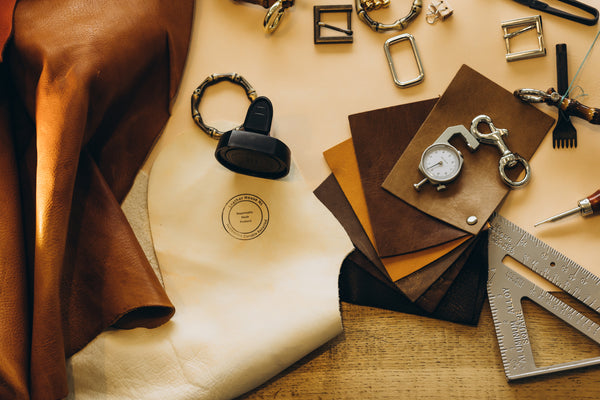
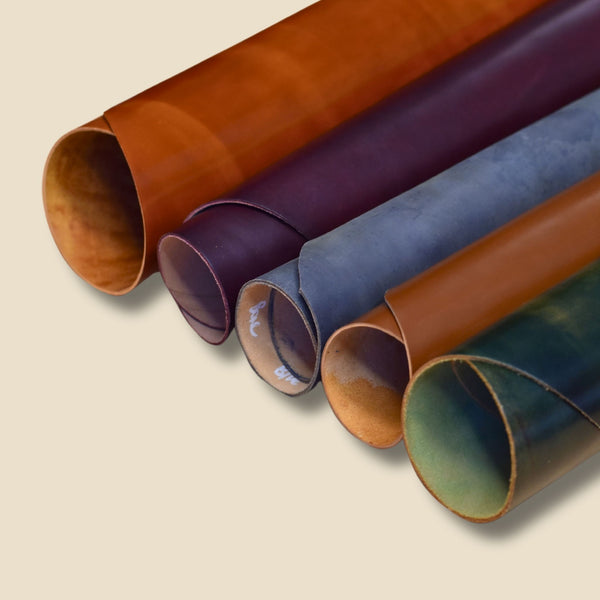
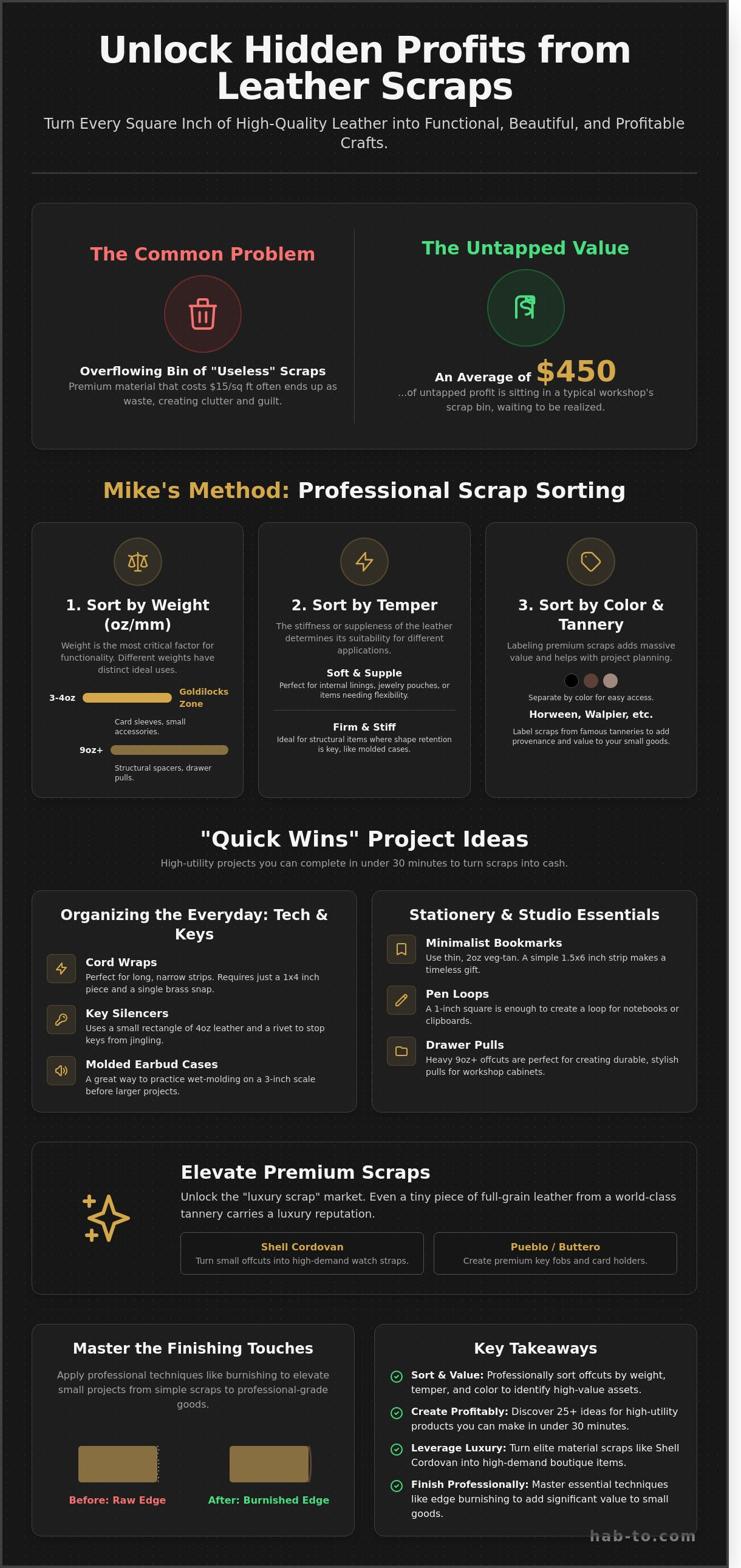
Hi, I'm Mike! When you finish a large project, your workbench is often covered in small strips and odd-shaped corners. Many makers wonder what to do with leftover leather pieces, but I see these as high-value assets rather than waste. These offcuts retain the exact same structural integrity and fiber density as the main hide. If you're working with premium vegetable tanned leather, those scraps are essentially liquid gold. They never truly lose their value because the tanning process ensures they age beautifully, even as a tiny key fob.
To see how these small pieces can transform into professional goods, watch this helpful breakdown:
I use a specific system in my shop called "Mike’s Method." It involves sorting every single offcut by three criteria: weight (oz/mm), temper (stiffness), and color. Don't underestimate the power of a 2x2 inch square. When you apply professional Leather crafting techniques to small-scale items, grain quality is your best friend. A small piece of full-grain leather from a world-class tannery still carries that luxury reputation. It's far better to have a tiny piece of real quality than a yard of synthetic material.
Categorizing by Weight and Temper
Weight is the most critical factor for functionality. Scraps in the 3-4oz (1.2-1.6mm) range are the "goldilocks" zone for small accessories like card sleeves. If you find heavy 9oz+ (3.6mm+) offcuts, keep them for structural spacers in knife sheaths or heavy-duty drawer pulls. Soft-tempered scraps are different. These supple pieces are perfect for internal linings or small jewelry pouches. I've found that keeping a 15% ratio of soft lining leather to firm exterior leather in my scrap bin covers almost any small build.
Storage Solutions for a Tidy Workshop
Disorganization kills creativity. I use clear 12-quart bins to see my inventory at a glance. Color-coded bags are also effective for separating black, brown, and tan hides. If you have scraps from famous tanneries like Horween or Walpier, label them specifically. Being able to tell a customer their cordovan key tag came from a specific batch adds massive value. Always flat-pack offcuts larger than 5 inches. This simple habit prevents permanent creasing and saves you from wasting time trying to iron out wrinkles later.
Small Leather Projects with Massive Utility
I often tell makers that your scrap bin isn't a graveyard; it's a goldmine for "Quick Wins." These are projects you can complete in 20 to 25 minutes that immediately solve a daily annoyance. When you're wondering what to do with leftover leather pieces, think about utility first. You don't need a massive hide to create something that feels premium. By pairing a 4-inch scrap of Pueblo or Buttero with high-quality leather hardware, you elevate a piece of waste into a professional-grade accessory.
Small builds are also the smartest way to experiment without risk. Want to try a new 3.0mm stitching pitch or a specific edge paint? Use a scrap. This approach ensures that when you move to a full-sized bag, your technique is flawless. At Hab-To, we believe in a "No compromises" philosophy. Even a 2-inch square deserves the same precision and edge finishing as a bespoke briefcase. If you want to monetize these efforts, there are many profitable ideas for leather scraps that turn 15 minutes of work into a retail-ready item.
Organizing the Everyday: Tech and Keys
Tech accessories are perfect for those long, narrow strips left over from cutting belts or straps. Simple cord wraps require nothing more than a 1x4 inch strip and a single solid brass snap. For those who hate the jingle of keys, a "key silencer" uses a small rectangle of 4oz leather and a rivet to keep keys tucked away. If you have a slightly larger piece, try wet-molding an earbud case. It's a great way to practice leather forming on a 3-inch scale before attempting larger sculptural projects. These small items are essential for any modern carry.
Stationery and Studio Essentials
In the workshop or the office, small leather additions provide a tactile sense of luxury. High-grade veg-tan is the best choice here because it ages beautifully with frequent handling. Consider these three builds:
- Minimalist Bookmarks: Use thin, 2oz vegetable-tanned leather. A simple 1.5x6 inch strip with a decorative burnish is a timeless gift.
- Pen Loops: A 1-inch square is enough to create a loop for a journal. It adds instant value to any notebook.
- Custom Cord Slides: Use small circles of 6oz leather with two punched holes to manage drawstring cords on workshop aprons or tool rolls.
These small items prove that quality materials matter at every scale. If you're ready to upgrade your workshop supplies, you can browse our premium vegetable-tanned hides to find your next favorite texture. Every scrap has potential if you apply the right technique.
Premium Scraps: Elevating Shell Cordovan and Veg-Tan Offcuts
If you've ever cut into a piece of Shell Cordovan, you know every millimeter feels like gold. At Hab-To, we treat these offcuts as high-density assets rather than waste. With premium equine hides often costing over $100 per square foot, tossing even a 2-inch circle is a missed opportunity. Shell Cordovan is the most valuable scrap in any workshop because it doesn't fray, it's incredibly dense, and it possesses a self-polishing quality that other leathers can't match.
There is a thriving "luxury scrap" market where collectors and hobbyists hunt for small pieces of specific tannery colors. If you have odd-shaped bits of Horween Color #8 or Shinki Hikaku Navy, don't throw them in the bin. These are perfect for sustainable crafting projects that emphasize quality over size. When you're figuring out what to do with leftover leather pieces, consider creating "mosaic" designs. By stitching together geometric offcuts of varying shades, you create a patchwork effect that looks like an intentional architectural choice rather than a way to save material.
Matching your project to the leather's patina potential is the secret to a professional finish. A piece of natural veg-tan will darken significantly over 12 months of use. Use these scraps for items that get handled often, like key fobs or pulls, to let that golden-brown character develop quickly.
Jewelry and Personal Accessories
Leather earrings and bracelets benefit from the structural integrity of Cordovan. Since the leather is so dense, you can achieve sleek, unlined edges that won't go floppy over time. Watch strap keepers are perhaps the smartest use for those tiny 5mm wide strips. They're often the first part of a watch strap to break; replacing a cheap keeper with a Cordovan one is a 10-minute job that adds years of life to a watch. For a more subtle touch, cut small 2-inch strips into collar stays. They're a hidden luxury for those who appreciate fine details and craftsmanship.
Home Decor Accents
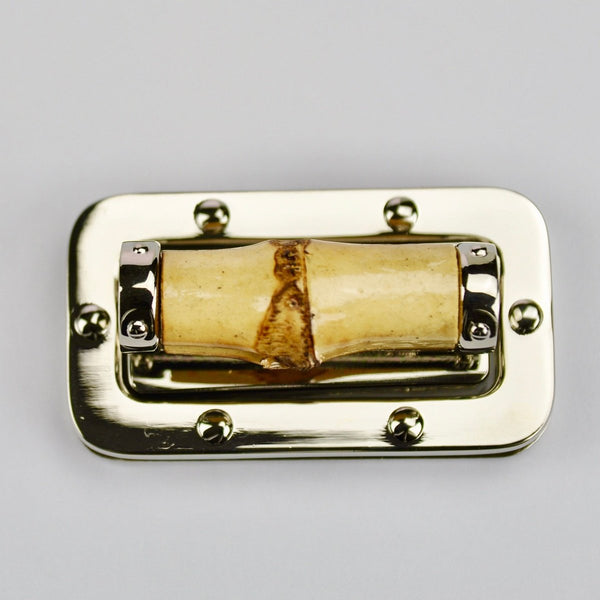
You can transform a room by replacing generic plastic or metal hardware with sturdy veg-tan strips. Drawer pulls made from 4mm thick leather offcuts provide a tactile, warm experience every time you open a cabinet. If you have larger circular or square pieces, coasters remain the gold standard for scrap utility. They protect surfaces while soaking up oils and spills that contribute to a unique, lived-in look. Finally, use long, thin scraps to create wall-mounted tool loops. It's a practical way to organize your workshop using the very materials you work with every day.
Professional Techniques for Small-Scale Leatherwork
A common mistake I see beginners make is assuming that smaller projects don't require the same level of detail as a full-sized bag. They think small pieces look messy by default. This is a myth. When you are figuring out what to do with leftover leather pieces, the difference between a "scrap project" and a "luxury accessory" lies entirely in your finishing techniques. High-end brands often charge $150 or more for a simple card holder because they treat every millimeter with respect. No compromises on quality, regardless of the size.
Burnishing is the key to turning a scrap into a boutique item by using friction to seal the leather fibers into a solid, glossy surface. This single step provides the structural integrity and professional sheen that separates hobbyist work from master craftsmanship.
Precision is your best friend when working with limited surface area. Use a pair of wing dividers set to exactly 3.0mm for your stitch lines. When space is tight, every fraction of a millimeter counts. If your lines are off, the whole piece looks crooked. I always recommend using a sharp 1.0mm hole punch for small items to keep the scale proportionate. Small tools give you the control you need when you can't afford to lose even a sliver of material.
Mastering Edge Finishing on Tiny Surfaces
Traditional wood slickers are often too bulky for small items like cord organizers or key fobs. Instead, use a small strip of heavy canvas or even a piece of denim to burnish those tight curves. For a mirror finish on 4oz vegetable-tanned leather, sand your edges progressively from 400-grit up to 800-grit sandpaper. Apply a light coat of Tokonole, then buff vigorously. If you're working with chrome-tanned scraps, use a high-quality edge paint. Apply three thin layers, sanding with 1000-grit between each, to hide the scrap origin and create a seamless, professional look.
Skiving and Layering for Strength
Don't let the size of your scraps limit the size of your vision. You can create larger, reinforced panels by gluing and stitching pieces together. The secret is feathering your edges down to 0.2mm using a sharp Japanese skiving knife. This allows you to overlap pieces so the join is invisible to the touch. You can also use internal scrap layers as "padding" to create a 3D raised effect on wallet covers or watch straps. It adds a premium tactile feel without requiring expensive fillers. If you need the right gear to get started, browse our hand-selected leatherworking tools to ensure your small-scale projects meet professional standards.
Working with small pieces requires a steady hand. When skiving tiny scraps, use a piece of double-sided tape to secure the leather to your cutting glass. This prevents the leather from slipping and protects your fingertips. It's a simple trick that 85% of professionals use to maintain control on awkward shapes.
Sustainable Crafting: What to Do with the "Unusable" Bits
Hi, I’m Mike. At Hab-To, we live by a simple rule: No synthetics. No compromises. This philosophy extends to every square centimeter of the vegetable-tanned hides we source. Sometimes you finish a project and find yourself staring at a pile of offcuts that seem too small for even a basic pen loop or a cord organizer. Don't throw them away. Even the tiniest fragments of premium leather like Buttero or Pueblo have a purpose in a sustainable workshop. Finding what to do with leftover leather pieces is about shifting your perspective from waste to resource management.
Community and Education
One of the best ways to handle tiny scraps is to give them a second life through education. Local primary schools and community art programs in the Amsterdam area are often thrilled to receive donations of high-quality, natural materials. A bag of colorful scraps can provide 25 students with materials for collage work or small jewelry projects. Since our leather is 100% vegetable-tanned and free from harsh synthetic chemicals, it's a safe and tactile material for children to handle.
If you aren't donating, consider a swap. The leatherworking community is built on shared passion. We’ve seen crafters trade "scrap bags" to gain access to different textures or colors they don't usually stock. These "unusable" bits also serve a vital technical purpose. Use them as test swatches for new conditioners, edge paints, or stamps. It’s better to discover how a specific dye reacts on a 3cm scrap than to risk a mistake on a full-sized tote bag.
This same passion for a specific craft often translates to other interests, like an appreciation for a particular style of music. For those who love jazz, for example, The Jazz House offers unique apparel and gifts that celebrate the genre's rich culture.
This passion for sustainable, hands-on creation often extends beyond the workshop. Many crafters find a similar satisfaction in gardening, another pursuit where quality starting materials make all the difference. For those looking to cultivate a new hobby, you can visit Helza Hobbyzaden to explore a wide selection of seeds.
Expanding Your Stash Sustainably
For those just starting their journey, purchasing a "Scrap Bundle" from an Amsterdam leather wholesaler is the most cost-effective way to develop your skills. You get to practice saddle stitching and edge burnishing on 10 or 15 different types of premium leather without the investment of a full hide. We believe in supporting creators at every level, which is why we offer these bundles with no minimum order requirements. This allows you to experiment with world-class tannery products while keeping your overhead low.
Sustainability isn't a trend for us; it’s a 160-year family tradition. By finding creative ways to use every last bit, you honor the animal and the craft. Whether you’re making tiny mosaic leather art or testing a new pricking iron, every piece counts. Ready to add some variety to your workbench without breaking the bank? Check out our current selection of premium leather bundles and tools and start your next project with materials that reflect your commitment to quality.
Start Crafting Your Next Small Masterpiece
Every scrap in your workshop holds potential for profit and purpose. By sorting your offcuts by tannery and weight, you ensure that premium materials like Shell Cordovan or vegetable-tanned pieces get the respect they deserve. Small-scale projects, from bespoke key fobs to cord organizers, turn what was once floor waste into high-margin inventory. Mastery comes from treating every square inch with the same precision as a full hide. It's about seeing the value in the details.
Deciding what to do with leftover leather pieces is the first step toward a more sustainable and profitable studio. At Hab-To, we bring 160+ years of family expertise to help you find the right materials for these detailed builds. We offer an Amsterdam-based showroom and global shipping, ensuring quality reaches you wherever you work. There are no minimum order requirements, so you can test new textures without a massive investment. No synthetics. No compromises. Just real materials for real craftsmanship.
Browse our premium leather offcuts and bundles at Hab-To today and start your next project. We can't wait to see what you create.
Common Questions About Leather Scraps
What is the best way to cut small leather pieces accurately?
Use a sharp 45mm rotary cutter or a precision craft knife on a 3mm self-healing mat for the most accurate cuts. These tools prevent the leather from stretching or shifting while you work. For tight curves, a Japanese skiving knife provides 100% control. Always use a metal ruler with a non-slip backing. This ensures your blade doesn't stray, which is vital when working with small offcuts where every single millimeter counts.
Can I sell items made from leather scraps?
You can definitely sell items made from leather scraps to generate a 30% to 50% profit margin on platforms like Etsy. Buyers often look for handmade, sustainable accessories like earbud holders or minimalist wallets. Since your material cost is essentially zero, these small goods become high-margin products. We've seen makers turn a 5kg bag of offcuts into 40 individual sellable items, proving that even tiny pieces have real market value.
How do I know if a leather scrap is vegetable-tanned or chrome-tanned?
Perform a burn test by holding a flame to a small corner for 10 seconds to identify the tanning method. Vegetable-tanned leather leaves a gray, crumbly ash and smells like burnt hair. Chrome-tanned leather will typically produce a hard, green bead and a chemical odor. You can also apply a drop of water to the surface. Veg-tan usually absorbs it within 30 seconds, while chrome-tan often resists water due to its synthetic finish.
What tools are essential for working with small leather offcuts?
You'll need a 4mm diamond stitching chisel, a scratch awl, and a jar of water-based contact cement. These tools allow you to join pieces precisely, which is the core of what to do with leftover leather pieces. A pair of wing dividers helps mark consistent stitch lines 3mm from the edge. Having a small polished bone folder also helps in smoothing out edges on tiny items like guitar picks or labels.
Is it possible to glue leather scraps together to make a larger sheet?
It's possible to create a larger sheet by skiving the edges of your scraps to a 0.5mm thickness and overlapping them with strong adhesive. This technique, often called leather marquetry, creates a durable bond that's perfect for book covers or laptop sleeves. Use a 2-ton weighted press for 24 hours to ensure the glue sets flat. This process transforms small fragments into a unique, textured material that's often stronger than a single thin hide.
What is the most profitable item to make from leather scraps?
Personalized cord organizers and luxury key fobs are the most profitable options when deciding what to do with leftover leather pieces. These items take less than 15 minutes to produce but often sell for 15 to 25 Euros at craft markets. Because you're using premium vegetable-tanned offcuts, the perceived value remains high. Small items like these maximize your yield from every square centimeter of a high-quality Buttero or Pueblo hide.
To further increase profitability, consider adding custom designs. While leather tooling is one option, many crafters now combine leather with personalized textiles. For example, adding a small fabric tag with a custom graphic to a key fob can make it a unique, high-margin product. If you're interested in printing custom designs on textiles, you can check out Textieltransferhuis for high-quality DTF transfers.
How should I clean or condition old leather scraps found in storage?
Wipe the scraps with a pH-neutral leather cleaner and a microfiber cloth to remove dust or surface mold. Once they're dry, apply a thin layer of neatsfoot oil or a wax-based conditioner to restore flexibility. Let the pieces sit for 24 hours to fully absorb the moisture before you start cutting. This process revives fibers that have been in storage for 5 years or more, making them supple enough for new projects.