Buy Leather Hides Online in the Netherlands: The Expert Crafter's Guide
The most expensive leather you'll ever buy isn't a rare shell cordovan; it's the "bargain" hide that arrives at your door looking like scrap. When you look to buy leather hides online Netherlands, the fear of receiving low-quality material or getting hit with surprise costs is real. Between the standard 21% VAT and the new €3 import duty per product type for non-EU shipments starting July 1, 2026, sourcing from outside the continent has become a logistical headache. You deserve better than guesswork and hidden fees.
Hi, I'm Mike! I agree that finding a reliable partner is just as important as the leather itself. You shouldn't have to deal with rigid minimum order quantities that price out hobbyists. In this guide, you'll learn how to source premium, sustainable vegetable-tanned hides from an Amsterdam wholesaler with 160 years of family expertise. I will show you how to access world-class tannages with local shipping costs starting at just €4.50 for letterbox packages. We'll cover everything from selecting grades to getting personalized advice so your next project starts with the perfect piece of leather.
Key Takeaways
- Learn how to safely buy leather hides online Netherlands by partnering with a local expert who eliminates the risk of receiving low-quality materials.
- Discover why vegetable-tanned leather is the essential choice for artisans who prioritize sustainability, durability, and a natural patina that improves with age.
- Master the technical side of sourcing, including how to convert European measurements and choose the right hide cut to maximize your budget.
- Find the perfect match for your next project by understanding how leather thickness and premium tannages like Shell Cordovan impact your final product.
- Access 160 years of family expertise and personalized advice to ensure your materials meet the highest standards of professional craftsmanship.
The Landscape of Buying Leather Hides Online in the Netherlands
The Dutch leather scene is changing fast. For years, the market was dominated by industrial players serving large factories. Today, the focus has shifted toward individual artisans and small workshops. When you look to buy leather hides online Netherlands, you aren't just looking for a commodity. You're looking for a material that reflects your values. I've seen this community grow firsthand, and the passion for quality is incredible.
This shift is driven by a demand for transparency and sustainability. Dutch crafters increasingly reject synthetic alternatives in favor of authentic materials that tell a story. Understanding the process of treating skins and hides is the first step in making an informed purchase. Vegetable tanning uses organic tannins from tree bark. This results in a leather that lives, breathes, and ages beautifully. It's a choice for quality over convenience.
To better understand how to choose your source, watch this helpful overview of the buying process:
Why Local Sourcing Matters for Dutch Crafters
Sourcing locally isn't just about pride; it's about avoiding the "customs trap." As of July 1, 2026, the exemption for import duties on non-EU shipments under €150 has expired. Now, you face a fixed €3 duty per product type plus the standard 21% Dutch VAT. When you buy leather hides online Netherlands from an Amsterdam-based wholesaler, you eliminate these headaches. You get faster logistics through PostNL or DHL with costs as low as €4.50 for letterbox packages. Plus, you can book an appointment at our showroom to feel the grain yourself.
- Reduced Carbon Footprint: Lower shipping distances mean a smaller environmental impact.
- Expert Support: Get technical questions answered by someone who knows the Dutch crafting community.
- Showroom Access: Nothing beats the "touch-and-feel" experience of a physical visit.
The Problem with 'Big Box' Online Leather Retailers
Large online retailers often treat leather like a commodity. They sell mass-produced hides that lack character. You often get whatever is on top of the pile, which leads to inconsistent grain and wasted material. Many of these industrial suppliers also enforce high minimum order requirements. This prices out the hobbyist who only needs a single shoulder for a wallet. We believe in "No compromises." Every hide should be hand-selected to ensure it meets the standards of true craftsmanship. You don't have to settle for industrial leftovers when premium materials are available right here in Amsterdam.
Understanding Leather Tannages: Why Vegetable Tanned Hides Lead the Way
Vegetable tanning isn't just a production method. It is a heritage process that dates back thousands of years. While mass production favors chrome tanning for its speed, we choose a different path. Vegetable tanning uses organic tannins found in tree bark, leaves, and plants. This slow, artisanal approach creates a material that lives and breathes. When you choose to buy leather hides online Netherlands, understanding this distinction is the difference between a project that falls apart and one that lasts a lifetime.
The "No Synthetics. No Compromises." philosophy is at the heart of everything we do. Chrome-tanned leathers often rely on heavy metals and chemicals that mask the natural beauty of the hide. In contrast, vegetable-tanned leather develops a rich patina over time. It absorbs the oils from your hands and the sunlight it's exposed to, becoming more beautiful with every year of use. This durability is why premium hides like Shell Cordovan, Buttero, and Pueblo are so highly prized by master crafters. They offer a structural integrity that synthetic alternatives simply cannot match. As discussed in The Future of Leather, the industry is seeing a significant shift back toward these traditional, high-quality methods as consumers demand better environmental standards.
The Anatomy of a Premium Hide
Dutch artisans need to distinguish between full-grain and top-grain leather. Full-grain is the highest quality. It includes the entire grain layer, keeping all the natural marks and strength of the hide. Top-grain has been sanded down to remove imperfections, which often weakens the fibers. You also need to consider "temper," which refers to the stiffness of the leather. A stiff temper is perfect for structured bags, while a soft temper works best for turned items or garments. Vegetable tanned leather stands as the gold standard for sustainable crafting because it utilizes organic materials to create a biodegradable, long-lasting product.
Sustainability and Ethics in the Leather Industry
Sustainability is a core pillar of modern craftsmanship. We ensure that every hide we source is a byproduct of the food industry. This means we are repurposing a material that would otherwise go to waste. Traditional tanning methods are also far better for the environment than industrial chemical processes. By choosing vegetable-tanned hides, you support a circular economy that respects both the animal and the earth. If you want to dive deeper into the technical details of these materials, you can find more information in our Vegetable Tanned Leather: The Complete Guide for Crafters. If you're looking for high-quality materials to start your next masterpiece, you can explore our hand-selected collection of premium hides.

Finding the Perfect Match: A Project-Based Selection Guide
Choosing the wrong material can turn a weekend of crafting into a frustrating waste of time. When you decide to buy leather hides online Netherlands, you need to look beyond the color. You have to match the hide's physical properties to your specific project. This starts with understanding thickness, which we usually measure in millimeters (mm) here in Europe, though you'll often see "ounces" in international patterns. A 1.0mm hide is roughly 2.5 ounces; knowing this conversion is vital for getting the right fit for your needles and tools.
One concept many beginners overlook is "yield." This is the percentage of a hide that is actually usable for your specific patterns. Industrial hides often have large brands, scars, or insect bites that force you to cut around them, leading to 30% or 40% waste. We hand-select our hides to ensure the highest possible yield for artisan work. According to the International Council of Tanners, professional standards in tanning ensure that high-quality hides maintain consistent fiber density across the entire surface. This consistency means you get more value out of every square centimeter you purchase.
Leather for Small Goods: Wallets and Watch Straps
For items that live in your pocket or on your wrist, durability and slimness are your best friends. This is why Shell Cordovan is often called the "King of Leathers." It isn't actually skin; it's a dense, fibrous flat muscle found under the hide of a horse's hindquarters. It doesn't crease or stretch like cowhide, making it the ultimate choice for high-wear accessories. If you want to master this legendary material, read our Shell Cordovan: The Ultimate Guide to the King of Leathers. For wallet interiors, I recommend staying between 0.8mm and 1.2mm to avoid a bulky finish that won't fit in a pocket.
Leather for Bags, Belts, and Bookbinding
Larger projects require a different set of rules. A belt needs high tensile strength so it doesn't warp or "S-curve" after six months of use. For load-bearing straps, look for shoulders or sides with a thickness of 3.5mm to 4.0mm. Bookbinding is the opposite; it requires hides that are incredibly thin and pliable, often under 1.0mm, yet strong enough to handle constant hinge movement. Once you've picked your hide, don't forget the finishing touches. Check out A Crafter's Guide to Essential Leather Hardware to find solid brass buckles or rivets that match the weight and quality of your premium leather.
Navigating Sizes, Thicknesses, and Shipping in the Netherlands
Buying leather isn't like buying fabric by the meter. Every hide is unique, with its own shape, size, and character. When you look to buy leather hides online Netherlands, the technical jargon around measurements can feel like a barrier. Most European tanneries measure their products in square meters (m2). However, many leathercraft patterns from the US or Japan use square feet (sq ft). It's a simple conversion: one square meter is approximately 10.76 square feet. Understanding this helps you budget correctly and avoid running short mid-project.
You also need to choose the right cut of the hide. A whole hide is the entire skin of the animal. A "side" is a whole hide cut in half down the spine. For many artisans, a "shoulder" is the sweet spot. It provides a rectangular shape that is easier to cut with less waste, especially for belts or larger bags. We've built our business on a "No Minimum Order" policy to empower the 2026 artisan. Whether you need a single shoulder for a custom order or a small piece for a watch strap, you have access to the same premium quality as a large factory.
Decoding Leather Measurements for Online Buyers
Hide shapes are naturally irregular. When you see a measurement, remember it includes the belly and neck areas, which might be stretchier than the "butt" or "back" sections. We recommend adding a 15% buffer to your calculations to account for these natural variations. If your pattern asks for 5-ounce leather, look for 2.0mm in our shop. Hab-To hand-selects hides to ensure grain consistency. This means you won't find wild variations in texture across a single side, which is a common frustration when buying from industrial-scale suppliers.
Local Shipping and Returns in the Netherlands
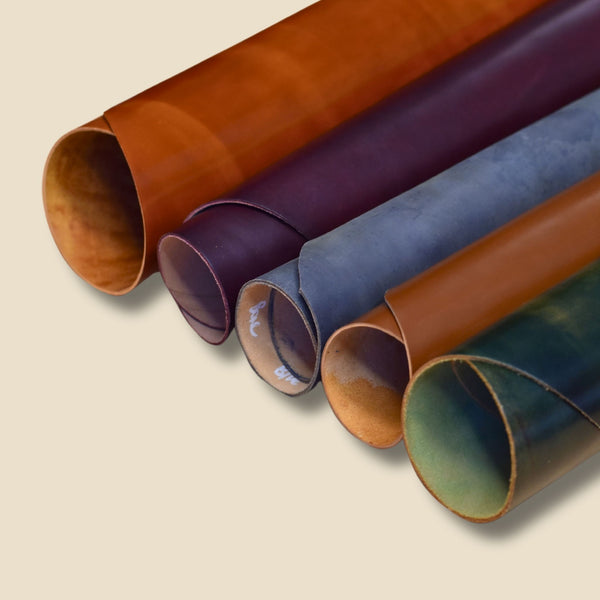
Logistics shouldn't be a gamble. Because we ship directly from our Amsterdam warehouse, your order doesn't spend weeks in a shipping container. We use PostNL and DHL to ensure reliable delivery. For letterbox packages, the cost is just €4.50, while regular shipping is €7.25. Most orders reach major Dutch cities like Utrecht, Rotterdam, or Eindhoven within 1 to 2 business days. We never fold our hides. Folding creates permanent creases that ruin the grain. Instead, we roll every hide carefully in protective packaging so it arrives in pristine condition. If the leather doesn't meet your expectations, our transparent return policy allows you to send it back within 14 days, provided it hasn't been cut or marked. Ready to start your next masterpiece? You can browse our full leather collection and see the quality for yourself.
Hab-To Leather House: Your Amsterdam-Based Partner in Craftsmanship
Hi, I'm Mike! At Hab-To Leather House, we don't just ship boxes; we carry a legacy that spans over 160 years of family experience in the leather trade. When you choose to buy leather hides online Netherlands through us, you're tapping into a deep well of knowledge that started generations ago. We understand that every cut matters. We treat your project with the same respect we give our most premium Shell Cordovan hides because we've been artisans ourselves for over a century.
Our Amsterdam showroom is the heart of what we do. While digital convenience is essential, we know that sometimes you need to see the grain and smell the tannins in person. That's why we invite you to book an appointment. It's a chance to discuss your specific needs before you commit to a purchase. We believe that a wholesaler should be a partner in your creative process, not just a transaction on a screen. If you're looking to buy leather hides online Netherlands but need that extra bit of confidence, we're here to bridge that gap.
More Than a Wholesaler: A Mentor for Your Projects
We live by a simple rule: No synthetics. No compromises. This philosophy extends from our vegetable-tanned hides to our selection of solid brass hardware and professional-grade tools. Our family history informs every single hide we select for our inventory. We look for consistency, durability, and that unique character only found in traditional tannages. Beyond the materials, we support your growth through "The Leather Hour" podcast. It's a space where we share technical insights, interview master crafters, and help you refine your skills. You aren't just buying leather; you're joining a community of makers who value quality above all else.
How to Get Started with Your First Order
Starting a new project can be daunting. You might wonder if a specific Pueblo hide has the right temper for a tote bag or if a certain thickness will work with your stitching chisels. Don't guess. We offer free digital consultations to help you find the perfect match for your design. You can browse our curated collections of veg-tan and exotic leathers at your own pace, knowing that expert advice is just a message away. We've removed the barriers of large industrial orders so you can focus on the craft, regardless of your workshop's size.
Ready to elevate your work with materials that tell a story? Browse all premium leather hides at Hab-To Leather House and discover the difference that 160 years of expertise makes to your finished piece.
Ready to Elevate Your Craft with Master-Selected Materials?
You now have the tools to navigate the Dutch leather market with confidence. We've explored why vegetable-tanned leather remains the gold standard for sustainability and how choosing the right thickness can make or break your design. By sourcing directly from our Amsterdam warehouse, you avoid the new €3 import duty per product type arriving in July 2026. You also benefit from local logistics that prioritize the integrity of your hide, ensuring it arrives rolled and ready for your needles.
When you choose to buy leather hides online Netherlands, you shouldn't have to sacrifice personal service for digital convenience. Our "No minimum order" policy ensures that every artisan has access to 160 years of family expertise. We're here to act as your mentors, providing the same hand-selected quality to a single watch strap project as we do to a full collection. Your craftsmanship is a reflection of your dedication, and we're honored to provide the materials that bring your vision to life.
Start your next project with hand-selected leather from Mike and discover what happens when tradition meets your creativity.
Frequently Asked Questions
Where can I buy high-quality leather hides in the Netherlands without a business license?
You can buy leather hides online Netherlands directly from Hab-To Leather House without needing a KVK number or business license. We've structured our shop to be accessible to everyone, from weekend hobbyists to professional artisans. This approach ensures you get the same premium, hand-selected hides that were previously only available to industrial factories. You simply choose your hide, checkout, and pay the standard 21% Dutch VAT like any other retail purchase.
What is the difference between vegetable-tanned and chrome-tanned leather?
The main difference lies in the tanning agents and the final character of the material. Vegetable-tanned leather uses organic tannins from tree bark and plants, which allows the hide to develop a unique patina over time. Chrome-tanned leather uses mineral salts and chemicals to produce a softer, more uniform finish that doesn't age or change. We focus exclusively on vegetable-tanned leather because it's sustainable and offers superior structural integrity for craftsmanship.
Do you offer international shipping from your Amsterdam warehouse?
Yes, we provide worldwide shipping directly from our Amsterdam warehouse using reliable carriers like PostNL and DHL. Within the Netherlands, shipping starts at €4.50 for small packages and €7.25 for regular orders. For international customers, costs are calculated at checkout based on weight and destination. We ensure all customs documentation is handled correctly, which is particularly important given the new EU import regulations coming into effect on July 1, 2026.
Can I visit the Hab-To showroom to see the leather hides in person?
You are more than welcome to visit our Amsterdam showroom by booking an appointment through our website. Seeing and touching the hides in person helps you understand the grain, temper, and color in a way that photos can't fully capture. During your visit, I can provide a personalized consultation to help you match a specific hide to your project requirements. It's the best way to experience our 160 years of family expertise firsthand.
What does 'no minimum order' mean for a leather wholesaler?
For us, 'no minimum order' means you have the freedom to purchase a single shoulder, side, or tool without meeting bulk requirements. Many wholesalers only sell to industrial clients who buy dozens of hides at once. We've removed that barrier to support the artisan community. Whether you're making one custom belt or a small run of wallets, you get access to top-tier tannages like Buttero or Pueblo without an industrial-sized investment.
How do I know what thickness of leather I need for a handmade wallet?
For a handmade wallet, I recommend using leather with a thickness between 0.8mm and 1.2mm for the interior pockets. If you go thicker, the wallet becomes too bulky to fold comfortably once you add cards and cash. For the exterior shell, you might choose something slightly sturdier, around 1.5mm. Using these specific measurements ensures your needles pass through the layers easily while maintaining a professional, slim profile for the finished piece.
Why is Shell Cordovan considered the best leather for luxury crafts?
Shell Cordovan is prized because it's a dense, fibrous muscle found under the hide of a horse's hindquarters rather than standard skin. This unique structure means it doesn't have a grain that can crease, resulting in a mirror-like finish that lasts for decades. It's incredibly durable and naturally water-resistant. Because each horse only produces two small "shells," it remains one of the rarest and most prestigious materials in the world of luxury leathercraft.
How are leather hides shipped to ensure they don't get damaged?
We roll every hide carefully around a sturdy core and ship it in heavy-duty protective packaging to prevent any damage. We never fold our leather, as folding creates permanent creases that ruin the grain and waste your material. By rolling the hides, we ensure they arrive at your workshop in pristine condition, ready for your patterns. This meticulous packing process is part of our "No compromises" commitment to your success as a crafter.