

Finding a Reliable Leather Supplier in Europe: The Artisan’s 2026 Guide
Last October, an artisan in Amsterdam shared a photo of a project that was 85% finished when the leather from a new source began to crack. It was a heartbreaking waste of hours and expensive hardware. You've likely felt that same frustration when a shipment arrives with inconsistent grain or when hidden customs fees from non-EU sources eat your entire profit margin. You deserve materials that respect your time and your talent. Finding a reliable leather supplier in Europe is the only way to ensure your workshop maintains its standards without the 30-day shipping delays or prohibitive minimum order quantities often found at massive industrial tanneries.
I'm here to change how you source. Drawing on my family's 160+ years of experience, I'll show you exactly how to vet tanneries for genuine sustainability and quality. You'll discover how to secure consistent veg-tan and exotic leathers while getting expert advice on which specific hide fits your 2026 designs. This guide provides the transparent sourcing data you need to keep your craft moving forward; no compromises required.
Key Takeaways
- Learn why a supplier's family heritage and personal "About Us" page are the ultimate indicators of hide selection expertise and material quality.
- Understand the unique strengths of the European leather landscape, focusing on why Italian tanneries remain the gold standard for vegetable-tanning innovation.
- Discover how to find a reliable leather supplier in Europe that offers premium materials without the restrictive minimum order quantities (MOQs) of traditional tanneries.
- Follow a professional vetting checklist to evaluate a supplier’s hardware and tool range, ensuring they have the expertise to support your entire creative process.
- Identify the essential standards for consistency in temper and color fastness that separate true artisan-grade leather from mass-produced alternatives.
What Defines a Reliable Leather Supplier in Europe Today?
Reliability isn't a vague feeling or a marketing buzzword. It's a measurable standard that dictates whether your workshop thrives or struggles. Finding a reliable leather supplier in Europe means finding a partner who understands that a single inconsistent hide can ruin your reputation. True reliability means the temper you expect is the temper you receive. It means the color fastness doesn't fail after three months of use. We believe in total transparency from the tannery gates straight to your workshop bench.
Europe remains the global gold standard for leather for a reason. The tradition of vegetable tanning here isn't just a business; it's a legacy. When a supplier has over 160 years of family experience, they don't just see a hide. They see the result of specific leather production processes that have been perfected over generations. This heritage allows for a deeper understanding of hide selection, ensuring only the best raw materials enter the tanning pits. No synthetics. No compromises.
To better understand how to spot quality and avoid common pitfalls, watch this helpful video:
The Three Pillars of Supplier Trust
Quality assurance starts with hand-selection. A reliable leather supplier in Europe doesn't just move bulk inventory. They inspect hides to ensure you aren't paying for unusable waste or deep-seated flaws. Communication is the second pillar. Whether you're a seasoned pro or a new crafter, you need an expert like Mike to offer technical advice on which tannage fits your specific project. Finally, consistency is vital. You need to know the vegetable tanned leather you buy today will match the grain and feel of your order next year.
Regulatory Standards and REACH Compliance
Safety and ethics are non-negotiable in 2026. EU-based suppliers offer better safety guarantees because they must adhere to strict REACH regulations regarding chemical use. This ensures your leather is free from harmful substances like Chromium VI, protecting both you and your customers. The Leather Working Group (LWG) also plays a massive role in vetting tanneries for sustainable practices. European suppliers navigate these environmental ethics better than most overseas competitors, providing a supply chain you can actually trust.
The European Leather Landscape: Tanneries and Traditions
Europe's leather industry is a tapestry of regional specialties. Tuscany remains the global center for vegetable-tanning innovation, while France produces the world's finest calfskin for luxury houses. The Netherlands acts as the logistical heart, connecting small workshops with premium materials through efficient distribution networks. When you look for a reliable leather supplier in Europe, you're looking for a partner who understands these distinct regional strengths. Dutch wholesalers, especially those in the Amsterdam area, bridge the gap between massive Italian tanneries and the individual artisan, offering smaller quantities without compromising on quality.
European tanneries operate under the strict REACH regulation. This framework ensures that the chemicals used in the tanning process meet high safety and environmental standards. It's a key reason why European leather is preferred over cheaper, unregulated alternatives. You aren't just buying a hide; you're buying a product that respects both the artisan and the environment. Partnering with a reliable leather supplier in Europe means accessing centuries of refined technique and modern safety compliance.
Tuscany: The Home of Vacchetta and Pueblo
The Consorzio Vera Pelle Italiana Conciata al Vegetale is the guardian of Italian tradition. This group of 20 tanneries uses ancient recipes involving chestnut and mimosa tannins. Names like Badalassi Carlo and Conceria Walpier are household names for a reason. They produce iconic articles like Pueblo and Buttero that develop a deep, personal patina. If your project focuses on character, these Italian houses are the gold standard. Their leather tells a story that gets better with every year of use. Selecting the right Italian leather means looking for the Consorzio's quality seal, which guarantees the hide is 100% vegetable-tanned.
The Rise of Specialised European Hides
Beyond standard sides, Europe excels in niche materials. Shell Cordovan from European tanneries is a "lifetime" material because of its incredible fiber density and natural luster. It takes roughly six months to produce a single shell, making it a rare find for high-end footwear and wallets. You'll also find exceptional goat and calf leathers from historic houses in France and Germany. These tanneries have refined their processes since the 19th century to achieve a perfect balance of softness and durability. To identify authentic European-tanned exotics, look for transparent sourcing and consistent grain depth. If you're ready to start your next project, you can browse our hand-selected leather to find the perfect match.
Overcoming the "Small Crafter" Hurdle: MOQs and Accessibility
Traditional tanneries in the heart of Tuscany often operate on an industrial scale. For a master tanner, stopping a production line to sell a single shoulder of vegetable-tanned leather isn't cost-effective. This creates the "Minimum Order Quantity" (MOQ) barrier, where tanneries require you to purchase a full pack, often 10 to 15 hides, just to get your hands on premium articles. For a solo artisan or a small studio, this ties up thousands of euros in a single color and weight. It's a barrier that stops many talented crafters before they even begin.
A reliable leather supplier in Europe acts as your strategic partner by absorbing this risk. By purchasing in bulk and selling by the single hide, these wholesalers democratize access to the world's best materials. You get the same quality used by luxury houses without the industrial-scale commitment. It's about smart inventory management. You focus on the craft; the wholesaler focuses on the warehouse. This setup allows you to scale your business organically without the pressure of sitting on dead stock.
The No Minimum Order Advantage
The ability to buy a single hide allows for genuine creative freedom. You can experiment with world-renowned articles like Buttero or Pueblo without a massive financial hit. Small-batch production relies on this flexibility. If a client wants a bespoke briefcase in a specific shade of olive, you don't need to buy a whole pack of hides to fulfill that one commission. This keeps your overhead low and your workshop lean. By letting a wholesaler manage the stock, you effectively gain a massive leather library without the storage costs.
Quality also impacts your bottom line. Don't be fooled by low price-per-foot numbers from discount sources. Cheap, mass-produced leather often hides defects under heavy finishes. When you calculate the yield, you might find that 35% of a "budget" hide is unusable due to scars or loose grain. Premium hides from a reliable leather supplier in Europe offer a much higher yield, often exceeding 90% of the surface area. You pay more per square foot, but you waste less material and spend less time cutting around flaws.
Shipping and Logistics within the EU
Logistics can make or break your margins. Since 2021, importing leather from outside the European Union has become a "Customs Trap" involving unexpected VAT bills and administrative handling fees. For crafters in Germany, France, or the Netherlands, sourcing from a local European hub eliminates these headaches. Intra-community shipping is faster, more predictable, and significantly cheaper.
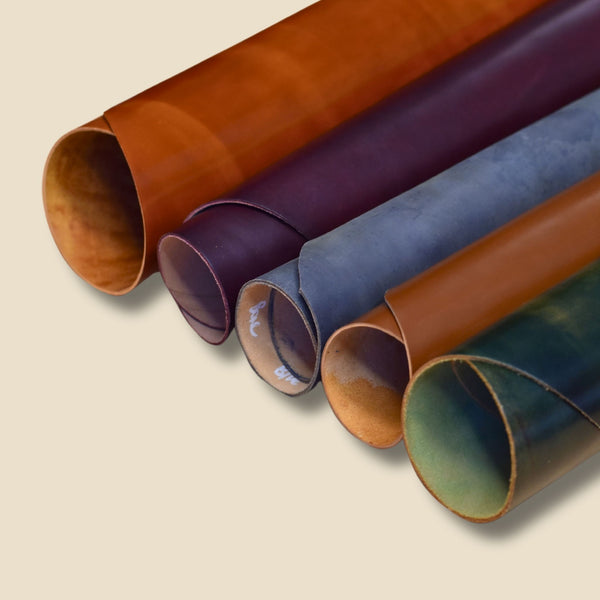
- Protection in Transit: A dedicated supplier understands that leather is a living material. They ship hides rolled in heavy-duty tubes or boxes to prevent permanent creases and grain damage.
- Fast Turnaround: An Amsterdam-based hub can often deliver to neighboring countries within 48 to 72 hours, which is vital for meeting tight deadlines.
- No Hidden Fees: What you see on the invoice is what you pay. There are no surprise import duties or brokerage fees at your doorstep.
Choosing a local partner means your supply chain is resilient. When you have a deadline for a custom commission, waiting three weeks for a shipment to clear customs isn't an option. Reliability is the ultimate tool in your workshop. No synthetics. No compromises. Just the right leather, exactly when you need it.
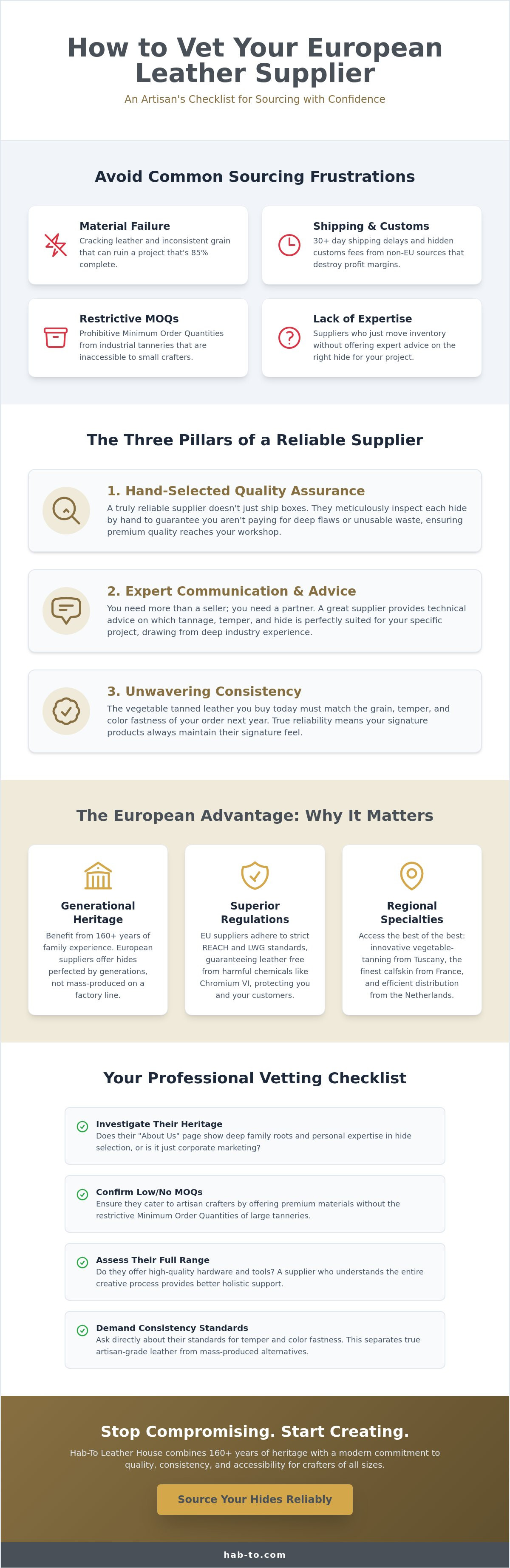
A Professional Checklist for Vetting Your Leather Supplier
Finding a reliable leather supplier in Europe takes more than a quick Google search. You need a partner who values the craft as much as you do. In 2026, the market is flooded with resellers who have never touched a skiving knife. Use this checklist to separate the true experts from the middlemen who are just shifting boxes.
Step 1: Verify the Human Element
Check the "About Us" page for real names and faces. A reputable supplier doesn't hide behind a corporate logo. Look for a legacy. For instance, Hab-To brings 160 years of family experience to the table. If you can't find a history or a real person to talk to, keep looking. Transparency regarding tannery origins and tanning methods is the first sign of a trustworthy partner.
Testing Technical Knowledge
Don't just buy a hide; ask technical questions. A knowledgeable supplier understands the nuances of "temper" and "fat content." They should explain how a specific tannage reacts to burnishing or how the fat liquors used in the drum affect the final pull-up. If they can't tell you the difference between a firm and medium temper, they aren't experts.
- The Mentor Factor: Look for a supplier who acts as a mentor. When you hear "Hi, I'm Mike!", you know there's a person accountable for the quality. This personal connection is vital for custom projects.
- Educational Resources: Experts share what they know. A supplier hosting a podcast like The Leather Hour or a technical blog demonstrates they are deeply embedded in the community.
Hardware and Tool Synergy
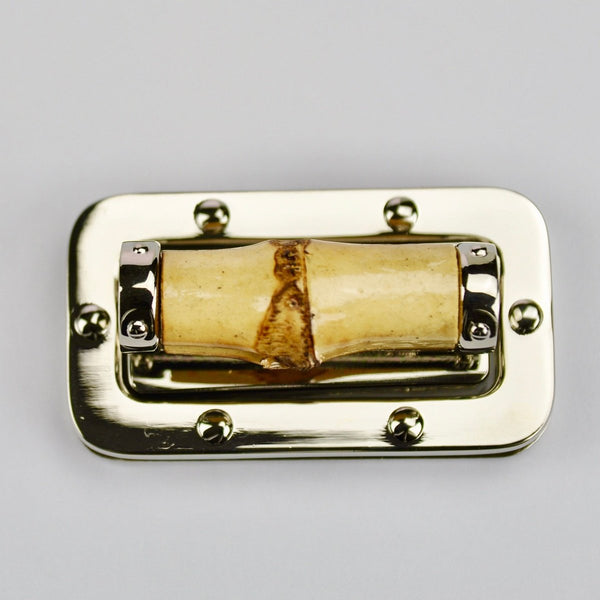
A reliable leather supplier in Europe understands that the hide is only half the project. They should offer a curated selection of leather hardware that matches the quality of their skins. Using premium vegetable-tanned leather with cheap, pot-metal hardware ruins the final piece.
Bundling your tools, needles, and thread with your leather saves on shipping costs and ensures technical compatibility. Ask if they have specific needles recommended for the leather's thickness. The "One-Stop Shop" model is efficient, but only if the supplier understands the full craft, from the first cut to the final rivet.
Step 5: Review the Return Policy
Real leather has natural defects like range marks or insect bites. A professional supplier clearly defines what constitutes a "cutting loss" versus a "defective hide." Most high-end European suppliers offer a 14-day window for inspection. If their policy is vague or non-existent, you risk being stuck with unusable material.
Why Hab-To Leather House is the Reliable Choice in Amsterdam
Hi, I'm Mike! At Hab-To Leather House, we don't just sell material; we share a legacy. My family's involvement in the leather trade spans over 160 years, dating back to 1864. This isn't just history to us. It's the foundation of everything we do in our Amsterdam warehouse today. We've translated generations of hands-on knowledge into a modern support system for artisans. When you're looking for a reliable leather supplier in Europe, you need someone who knows the difference between a hide that looks good and a hide that performs beautifully over decades.
Our philosophy is simple: No synthetics. No compromises. We only stock materials we'd use in our own workshop. This means we focus exclusively on high-quality, full-grain leathers. You won't find plastic-coated "genuine leather" here. We believe real craftsmanship deserves real materials. This commitment ensures that every square foot you buy from us meets the rigorous standards required for heirloom-quality goods. We take the guesswork out of sourcing so you can focus on the build.
The Hab-To Difference: Beyond the Warehouse
Most industrial wholesalers ignore the solo artisan or the small studio. We bridge that gap. Whether you need a single hide of Shell Cordovan or a bulk order for a production run, we treat your project with the same respect. Our selection focuses on sustainable, vegetable-tanned, and chrome-free options from the world's most prestigious tanneries. We also believe in growing together. You can join our community through "The Leather Hour" podcast, where we dive deep into technical details and stories from the craft. We're your partners in production, not just a line on an invoice.
- Expert Guidance: Use our 160+ years of collective experience to solve your technical challenges.
- Sustainability: We prioritize tanneries that use circular water systems and ethical hide sourcing.
- Accessibility: Our Amsterdam showroom is open by appointment for those who want a tactile experience.
Ready to Elevate Your Craft?
Finding a reliable leather supplier in Europe shouldn't be a gamble. We've curated a range that includes world-class articles like Pueblo from Badalassi Carlo and genuine Shell Cordovan. These aren't just names; they're the gold standard for durability and patina. We offer free consultations to help you choose the right temper and weight for your specific project. Because we have no minimum order requirements, you can test new designs without the stress of excess inventory. We deliver quality materials across Europe, ensuring your workshop stays stocked with the best the world has to offer.
Ready to Build Your Legacy in Leather?
Success in 2026 depends on more than just skill. It requires a reliable leather supplier in Europe that understands the balance between ancient tannery traditions and the modern needs of independent crafters. You've seen how to vet for quality, navigate MOQ hurdles, and prioritize vegetable-tanned materials that last a lifetime. Don't let supply chain friction stall your creative process.
At Hab-To Leather House, we bring 160+ years of family expertise directly to your workbench. We're based in Amsterdam and offer fast EU-wide shipping so your projects never stay on hold. Whether you're a seasoned pro or a hobbyist, you can book a personal consultation with Mike to find the perfect hide for your specific vision. We believe in quality materials for real craftsmanship. No synthetics. No compromises. Just the best leather for your next masterpiece.
Explore our premium European leather collection with no minimum orders
The artisan community is growing stronger every day. It's your time to create something truly remarkable.
Frequently Asked Questions
How do I know if a leather supplier is actually reliable?
A reliable leather supplier in Europe typically displays a clear physical address, a verifiable VAT number, and a history of positive reviews from the artisan community. You should check if they provide detailed technical sheets for their hides, including tanning methods and origin. At Hab-To, we rely on 160 years of family experience to hand-select every hide, ensuring you receive only premium materials without compromises.
Why should I choose a European leather supplier over an Asian or South American one?
Choosing a European supplier ensures your materials comply with the REACH regulation established in 2007, which strictly limits harmful chemicals in leather production. European tanneries, particularly those in Italy and France, maintain higher environmental standards and labor protections compared to many global competitors. This geographical proximity also reduces your carbon footprint, as hides don't need to travel across oceans before reaching your workbench.
Do European leather suppliers have high minimum order requirements?
Most traditional tanneries require minimum orders of 50 to 100 square meters, but specialized wholesalers in Europe allow you to buy single hides. We understand that small studios can't always stock bulk quantities, so we offer a no minimum order requirement policy. This flexibility lets you test premium leathers like Buttero or Pueblo for a single project without a heavy financial commitment.
What is the best way to handle shipping costs for leather within Europe?
The most efficient way to handle shipping is to use a supplier that offers flat-rate European shipping or consolidated pallet rates for larger orders. If you're based near Amsterdam, booking an appointment for a showroom pickup can eliminate delivery costs entirely. Always verify if your supplier uses tracked DPD or DHL services, as these providers have the most extensive logistics networks across the continent.
Can I buy high-end tanneries like Horween or Badalassi in small quantities in Europe?
You can definitely buy hides from world-renowned tanneries like Badalassi Carlo or Horween through authorized European distributors in small quantities. While Horween is based in Chicago, several European wholesalers stock their Shell Cordovan and Chromexcel to serve local artisans. We focus on providing access to these top-tier Italian and American leathers so you don't have to deal with complex import duties or long transit times.
Is vegetable-tanned leather always more sustainable than chrome-tanned?
Vegetable-tanned leather is generally more sustainable because it uses organic tannins from tree bark instead of heavy metals like chromium. While 90 percent of global leather is chrome-tanned, the vegetable-tanning process creates a biodegradable product that develops a unique patina over time. We strictly provide vegetable-tanned options because they align with our commitment to quality materials and environmental responsibility.
What happens if the leather I receive has natural marks or defects?
Natural marks such as healed scars, insect bites, or fat wrinkles are proof that you're working with genuine, full-grain leather rather than a synthetic substitute. These characteristics are common in hides from free-roaming cattle and don't affect the structural integrity of your craft. When you find a reliable leather supplier in Europe, they'll help you understand how to incorporate these unique features into your design to highlight the material's authenticity.