The Legacy of a Family-Owned Leather Business in the Netherlands: 160 Years of Craft
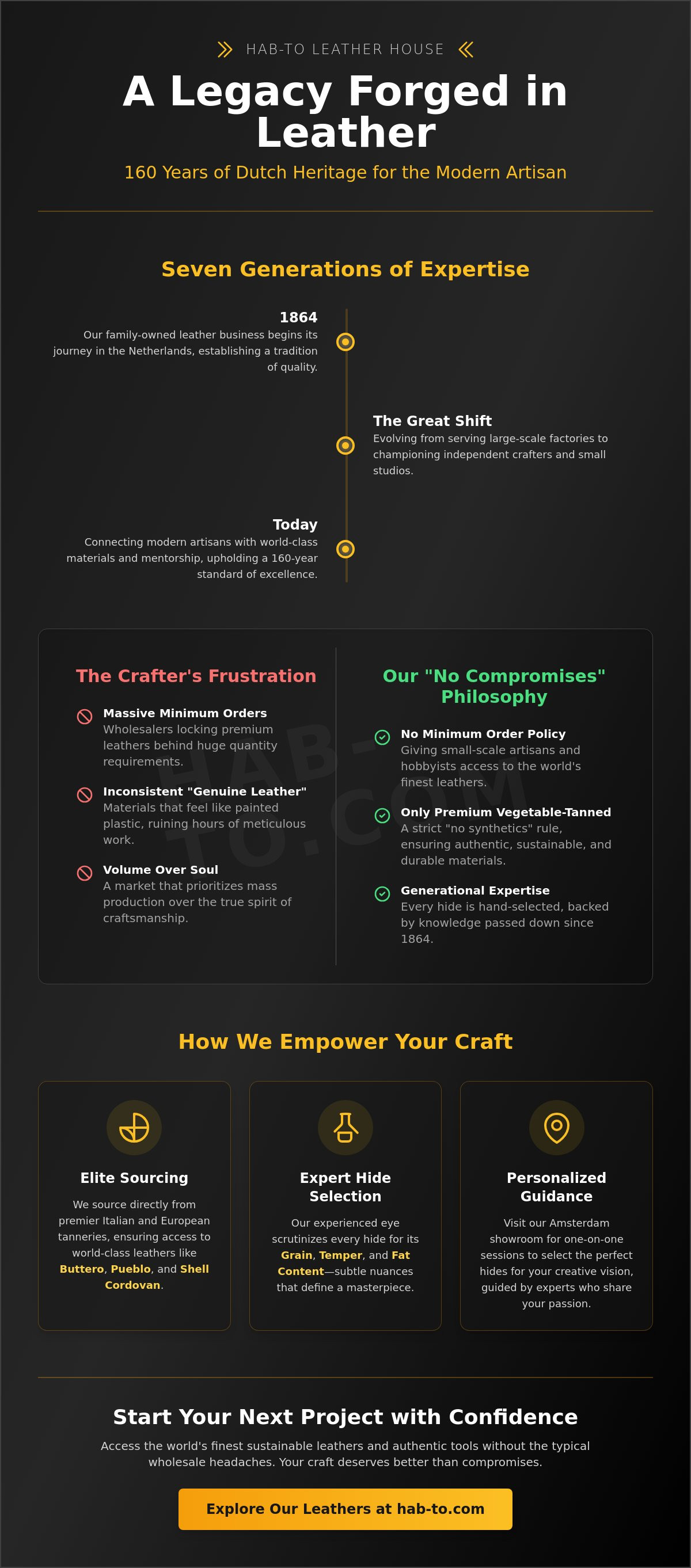
In 1864, while most of the world was still adapting to the industrial revolution, our family-owned leather business Netherlands began a journey that would span seven generations. You likely understand the frustration of sourcing premium materials like Shell Cordovan or Pueblo in Europe, only to be met with massive minimum order requirements or "genuine leather" that feels like painted plastic. It's exhausting to search for quality when most wholesalers prioritize volume over the soul of the craft. We've seen these struggles firsthand over the decades, and we know that a single bad hide can ruin hours of meticulous hand-stitching.
We believe your work deserves better than compromises. This article reveals how 160 years of Dutch heritage connects modern artisans with the world’s finest vegetable-tanned leathers and sustainable tools. You'll discover how our "no synthetics" philosophy provides the foundation for your best work yet. We'll walk through our history of craftsmanship and show you how to access expert mentorship and world-class materials like Buttero to grow your own creative business without the typical wholesale headaches.
Key Takeaways
- Trace the 160-year evolution of a premier family-owned leather business Netherlands and see how six generations of expertise guarantee unmatched material quality.
- Gain insight into why sourcing from elite Italian and European tanneries is critical for creating leather goods that stand the test of time.
- Learn how to scale your craft with a "No Minimum Order" policy designed to give small-scale artisans access to the world's finest sustainable leathers.
- Find out how personalized, one-on-one sessions in a professional Amsterdam showroom can help you select the perfect hides for your specific creative vision.
- Understand the "No compromises" philosophy that prioritizes premium vegetable-tanned materials and authentic tools over synthetic alternatives.
What Defines a Family-Owned Leather Business in the Netherlands?
A family-owned leather business in the Netherlands is a multi-generational enterprise dedicated to the curation, tanning, and distribution of high-quality animal hides. These businesses don't just sell a product; they manage a legacy that often stretches back to the mid-19th century. Since the 1860s, the Netherlands has operated as a vital hub for the European leather trade, leveraging its geographic position to connect world-class tanneries with discerning makers. This long history creates a unique perspective where decisions are made for the next forty years, not just the next fiscal quarter. These houses prioritize long-term sustainability over short-term industrial profit. They focus on real materials. No synthetics. No compromises. This philosophy ensures the craft remains pure for the next generation of makers.
To better understand the passion behind this craft, watch this video about building a leather legacy:
The Shift from Industrial to Artisan Support
The role of the traditional wholesaler has evolved significantly. In previous decades, Dutch leather houses primarily served large-scale factories. Today, they have pivoted to support a growing community of independent crafters and small studios. This shift allows individuals to master complex leather crafting techniques using materials that were once only available to luxury brands. A core part of this movement is the focus on vegetable tanned leather. Unlike mass-produced chrome leather, vegetable tanning uses natural tannins from bark and leaves. It's a slower, more ethical process. Family-run ethics demand this level of environmental responsibility. While large corporate producers might prioritize speed and chemical efficiency, a family business knows that true quality can't be rushed.
The Value of 160 Years of Experience
Knowledge passed down since 1864 provides an edge that no modern algorithm can replicate. It takes more than a century of collective experience to properly hand-select a premium hide. An expert eye identifies the subtle nuances of grain, temper, and fat content that define how a piece will behave under a knife or needle. This expertise is vital for maintaining consistency across different batches of leather. Understanding the biology of the hide is just as important as understanding the tanning chemistry. We look for specific fiber densities and moisture levels that ensure durability. The Hab-To standard serves as a definitive benchmark for European leather quality, ensuring that every hide meets the rigorous demands of professional and hobbyist artisans alike.
- Grain: The top layer of the hide, checked for natural markings and strength.
- Temper: The degree of stiffness or softness, which dictates the leather's use case.
- Fat Content: The natural oils that keep the leather supple and prevent cracking over time.
Working with a family-owned leather business Netherlands means you're tapping into a deep reservoir of practical knowledge. You aren't just buying leather; you're gaining a partner who understands the material's soul. This connection between the supplier and the crafter is what keeps the Dutch leather tradition alive and thriving in a modern, synthetic world.
The Hab-To Story: From 1860s Roots to Modern Amsterdam
The Hab-To legacy didn't start in a corporate boardroom. It began in the 1860s. For six generations, this family has lived and breathed the leather trade, passing down secrets of the craft from father to son. Mike now stands as the modern face of this 160-year-old tradition. He bridges the gap between ancestral knowledge and the technical demands of 2026. While many companies hide behind automated chatbots, Mike sticks to a different path. His "Hi, I’m Mike" philosophy defines every interaction. It's personal. It's direct. In a sea of anonymous e-commerce, he offers a genuine handshake through the screen.
Amsterdam remains the vital heart of this family-owned leather business Netherlands. The city provides a unique backdrop for a boutique wholesaler. It's a place where history meets modern innovation. Data from Statistics Netherlands shows there are nearly 300 thousand family-owned businesses in the Netherlands as of late 2024. Hab-To represents the enduring strength of this sector. By staying in Amsterdam, the business remains accessible to European makers who value both heritage and efficient global logistics. Mike doesn't just manage inventory; he curates a collection that honors his ancestors while serving the modern artisan.
The "No Compromise" Philosophy
Quality is non-negotiable at Hab-To. Mike enforces a strict selection process that excludes anything sub-par. The business refuses to stock synthetic materials or low-grade corrected grain leathers. Instead, the focus stays on premium tanneries like Walpier and Badalassi Carlo. These partners share the same "No compromises" mindset. There's an emotional link between the supplier, the material, and the final maker. When a craftsman touches a piece of vegetable-tanned Buttero or Pueblo leather, they feel the history. We don't just sell hides. We provide the foundation for real craftsmanship. Every hide is hand-selected to ensure it meets the standards of a six-generation legacy.
The Leather Hour: Education as a Legacy
A 160-year legacy thrives on shared knowledge, not guarded secrets. Mike uses "The Leather Hour" podcast and the company blog to mentor the next generation of artisans. This isn't about simple transactions. It's about ensuring the craft survives for another six generations. The goal is to build a community of makers rather than just a database of customers. By explaining the nuances of vegetable tanning and the durability of premium hardware, Hab-To empowers its community. This educational focus helps beginners avoid common pitfalls and respect the material. If you're looking for guidance on your next project, you can book a personal consultation to get expert advice directly from Mike.
Premium Sourcing: Why Material Choice is the Heart of the Craft
For a family-owned leather business Netherlands with a 160-year history, sourcing isn't a simple procurement task. It's an act of preservation. There's a massive difference between buying leather and sourcing a legacy. When we select a hide, we're looking for the culmination of generations of knowledge from the world's finest tanneries. The Netherlands acts as a vital gateway to Europe, allowing us to maintain tight-knit relationships with legendary Italian tanneries that still use centuries-old techniques.
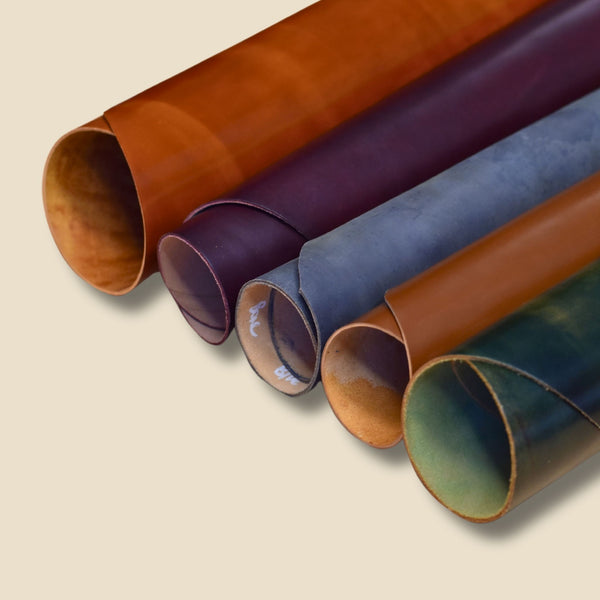
Quality begins with the raw material. We prioritize vegetable-tanned leather because it preserves the natural history of the hide. Unlike mass-produced alternatives, vegetable tanning uses organic tannins from bark, leaves, and fruits. This process can take up to 60 days, ensuring the leather remains a living material that develops a unique patina over time. For high-end artisan projects, nothing compares to the allure of shell cordovan. Often called the "King of Leathers," this rare material comes from a specific fibrous flat muscle beneath the hide of a horse's rump. It's prized for its non-creasing characteristics and exceptional density.
Iconic Leathers for the Modern Artisan
Selecting the right leather defines the final product's character. Pueblo leather from Badalassi Carlo is a favorite for its unique, slightly roughened surface that smooths out beautifully with use. It's ideal for wallets where a rustic aesthetic is desired. Buttero, produced by Conceria Walpier, offers a smooth, firm finish that provides excellent structure for bags and straps. For those needing scratch resistance and a distinct texture, Dollaro provides a classic pebbled grain. We hand-select every hide to ensure it meets the artisan’s expectation. This personal touch ensures that our family-owned leather business Netherlands only provides materials we'd be proud to use in our own workshop.
Sustainability and Ethics in the Leather Industry
Sustainability is a core principle at Hab-To. Vegetable-tanned leather is significantly more environmentally friendly than chrome-tanned alternatives, which often rely on heavy metals and harsh chemicals. We ensure ethical sourcing by partnering only with tanneries that respect strict animal welfare standards and labor laws. This means our leather is a byproduct of the meat industry, ensuring nothing goes to waste. High-quality leather is the ultimate slow fashion material because its durability and ability to be repaired mean a single item can last for decades rather than seasons. No synthetics. No compromises. Just real materials for real craftsmen.
How We Support Crafters: The No Minimum Order Revolution
Traditional leather wholesalers often prioritize volume over variety. They frequently set high entry barriers, like requiring a minimum spend of €1,000 or forcing you to buy 10 hides at a time. This approach ignores the vibrant community of hobbyists and startup brands that drive innovation. At Hab-To, we've spent 160 years refining our role as a family-owned leather business Netherlands artisans can rely on. We believe that professional materials shouldn't be locked behind a corporate gate. By functioning as a dedicated family-owned leather business Netherlands, we bridge the gap between the tannery and your workbench.
Our "No Minimum Order" policy is a direct response to this industry gap. It allows you to buy exactly what your project requires. If you're experimenting with a new wallet design, you can purchase a single panel rather than an entire skin. This flexibility reduces financial risk for independent makers and prevents material waste. We also offer personalized consultations. You can book a 15-minute session with Mike to discuss leather temper, thickness, and finish before you spend a single cent. It's expert advice that ensures your first cut is the right one.
One-Stop Shop for Leatherworking Supplies
A masterpiece requires more than just a beautiful hide. We've expanded our inventory to include every essential tool and finishing product. We provide access to professional-grade leather hardware that won't tarnish or break under stress. Our curated bundles help beginners start with the right materials from day one. This includes specific needles, high-tensile threads, and premium Italian edge paints. We select these items because we use them ourselves. No synthetics. No compromises.
Wholesale Pricing for Independent Makers
Scaling a brand is difficult when supply costs are unpredictable. We maintain competitive wholesale pricing by sourcing directly from world-renowned tanneries in Tuscany. This allows us to offer premium, hand-selected stock at rates that support your growth. In 2026, our logistics network handles shipping from our Amsterdam hub to crafters in over 50 countries. We act as the reliable backbone for small businesses. You focus on the design, and we ensure the materials arrive on time and in perfect condition.
Ready to start your next project with professional materials? Browse our leather collection today.
Experience the Craft: Visiting the Amsterdam Showroom
Digital photos can't capture the rich scent of vegetable-tanned hides or the specific "temper" of a premium piece of leather. For a master crafter, the choice of material is the most critical decision in the creative process. Our family-owned leather business Netherlands based showroom serves as a bridge between a 160-year legacy and your next project. It's more than a warehouse. It's a tactile archive where you can interact with the materials that define your work.
We operate strictly by appointment to ensure you receive undivided attention. When you book a session, you get dedicated one-on-one time with Mike in the heart of Amsterdam. This personalized approach means there's no rush. You can explore the shelves, handle the hides, and discuss technical properties without the distractions of a typical retail environment. It's a sensory journey through generations of leather expertise, designed to help you make informed choices for your brand or hobby.
The Showroom as a Creative Hub
Lighting changes everything. Artificial warehouse lights often mask the subtle undertones of a Walnut Pueblo or the deep luster of Shell Cordovan. In our Amsterdam space, you can view the full range of colors and textures in natural light. This is crucial for matching hides across different batches or ensuring your color palette remains consistent.
- Test hardware compatibility by pairing solid brass buckles with different leather weights.
- Feel the difference between a 1.2mm calfskin and a 3.5mm bridle leather.
- Connect with the local Amsterdam leatherworking community and share insights on edge finishing or stitching techniques.
Planning Your Project with an Expert
Don't arrive empty-handed. We encourage you to bring your paper patterns, rough sketches, or even a prototype. Finding the perfect material match requires understanding how a hide will behave when folded, stitched, or turned. Mike uses his deep knowledge of the 160-year family history to guide you toward the right selection. We don't just sell leather; we help you engineer a product that lasts.
Understanding the aging process is just as important as the initial look. Different hides develop distinct patina characteristics over time. Some darken quickly into a glassy finish, while others maintain a rugged, matte appearance for years. We'll explain these lifecycle details so your finished piece meets your expectations long after it leaves your workbench. No synthetics. No compromises. Just honest materials for real craftsmanship.
Ready to elevate your next project with the finest materials in the industry? Schedule your personal leather consultation with Mike today and experience the quality of a true family-owned leather business Netherlands for yourself.
Bring Your Vision to Life with 160 Years of Expertise
Choosing the right material isn't just about finishing a project; it's about honoring the history of the craft. Since the 1860s, our family has refined the art of sourcing the finest vegetable-tanned hides. We've taken over 160 years of family experience and adapted it for today's makers. By removing minimum order requirements, we've ensured that independent crafters and professionals alike can access the same premium quality once reserved for large-scale factories. Whether you're visiting our Amsterdam-based showroom for a personal consultation or ordering via our global shipping service, you're tapping into a legacy built on uncompromising quality.
As a dedicated family-owned leather business Netherlands, we don't believe in shortcuts. No synthetics. No compromises. Just authentic, hand-selected materials that age beautifully with every use. We're here to be your partner in every stitch, cut, and burnish. It's time to stop settling for mass-produced materials and start working with leather that tells a story. We're ready to help you build your own legacy, one hide at a time. Browse our hand-selected collection of premium leathers and find the perfect piece for your next masterpiece.
Frequently Asked Questions
What makes a leather business "family-owned" in the Netherlands?
A family-owned leather business in the Netherlands is defined by multi-generational ownership and management within a single family bloodline. Hab-To represents 160 years of heritage, spanning six generations of expertise since the mid-19th century. This continuity ensures that specialized knowledge of hides and traditional tanning processes stays within the company. It's about maintaining a reputation that carries a family name through every hide sold.
Can I buy premium leather in small quantities in Europe?
You can definitely purchase high-end hides without meeting massive industrial minimums. We operate as an Amsterdam leather wholesaler with no minimum order requirements, meaning you can buy a single shoulder or side. This accessibility allows independent crafters to access the same premium materials used by luxury fashion houses. You don't have to be a large factory to work with world-class, hand-selected leather.
Why is vegetable-tanned leather better for the environment?
Vegetable-tanned leather uses natural tannins found in bark, leaves, and fruits instead of heavy metals like chromium. This traditional method results in a biodegradable product that doesn't leach toxic chemicals into the water supply. Roughly 90 percent of the world's leather is chrome-tanned, so choosing vegetable-tanned options significantly reduces your environmental footprint. It's the best choice for sustainability without compromising on quality.
What is the difference between a wholesaler and a retail leather shop?
A wholesaler typically supplies large volumes to businesses, while a retail shop focuses on individual consumers. Our family-owned leather business Netherlands bridges this gap by offering wholesale variety and pricing to every customer. You get professional-grade selection, like full sides of Buttero or Pueblo, without the standard retail markup. We provide the expertise of a global supplier with the personal touch of a local shop.
How does Hab-To select the tanneries they work with?
We hand-select tanneries based on their commitment to traditional methods and strict environmental standards. We only partner with facilities that specialize in vegetable tanning and meet European Union regulations. Mike personally visits these locations to inspect the hides and ensure they meet our "no compromises" quality standard. This rigorous vetting process ensures every piece of leather in our warehouse is ethically sourced and premium grade.
Do I need an appointment to visit the Amsterdam showroom?
You need to book an appointment to ensure you get dedicated time for your project. We operate on a scheduled basis so an expert can guide you through our collection of premium hides. This personalized approach allows us to answer technical questions and help you find the perfect temper for your specific craft. You can easily schedule your visit through our website's booking tool to see the materials in person.
What leathers are best for a beginner leatherworking project?
Vegetable-tanned shoulders with a thickness of 1.5mm to 2.0mm are ideal for beginners. These leathers are forgiving to work with and hold stamps or stitches very well. We often recommend Pueblo leather because its unique texture hides minor mistakes while developing a beautiful patina over time. Starting with quality material makes the learning process much smoother and more rewarding for new crafters.
How do 160 years of experience benefit me as a customer?
Our 160-year legacy means you're getting advice backed by six generations of industry knowledge. We've seen how different hides age over decades and understand the technical nuances of every tanning method. This deep expertise helps us prevent you from making costly mistakes when selecting materials for your family-owned leather business Netherlands projects. You aren't just buying leather; you're gaining a partner who understands the craft's history.