The Best Leather for Knife Sheaths: A Maker’s Guide to Protection and Performance
What if the very thing meant to protect your blade is actually destroying it? Many makers focus entirely on the look of a hide, but the tanning chemistry is far more critical than the aesthetic. If you use chrome-tanned scraps, the residual salts can eat away at your steel in weeks. Finding the best leather for knife sheaths isn't just about style; it's about chemical compatibility and long-term performance.
You've likely felt the frustration of staring at a "10-ounce" hide and wondering if it's too bulky for a neck knife. Maybe you've struggled to find high-quality shoulders in small enough quantities for a single project. We understand that passion for the craft means refusing to make concessions on quality. This guide will walk you through why vegetable-tanned leather remains the gold standard for blade protection. You'll learn how to choose weights between 5 and 10 ounces with confidence and how to select a tannery that respects the tradition of the craft. Let's ensure your next sheath performs as well as the knife it holds.
Key Takeaways
- Understand why vegetable-tanned leather is the essential choice to protect your steel from the corrosive chemicals found in chrome-tanned alternatives.
- Decode the leather "ounce" system and learn how to select the right thickness and temper for maximum safety and blade retention.
- Identify the best leather for knife sheaths by matching specific hide types, like Pueblo or traditional saddlery leather, to your blade’s unique style.
- Learn professional wet-molding and casing techniques to create a custom, high-performance friction fit for every handmade project.
- Discover how to access premium, world-class vegetable-tanned hides for individual projects through suppliers that offer no minimum order requirements.
The Chemistry of Protection: Why Tanning Method Matters
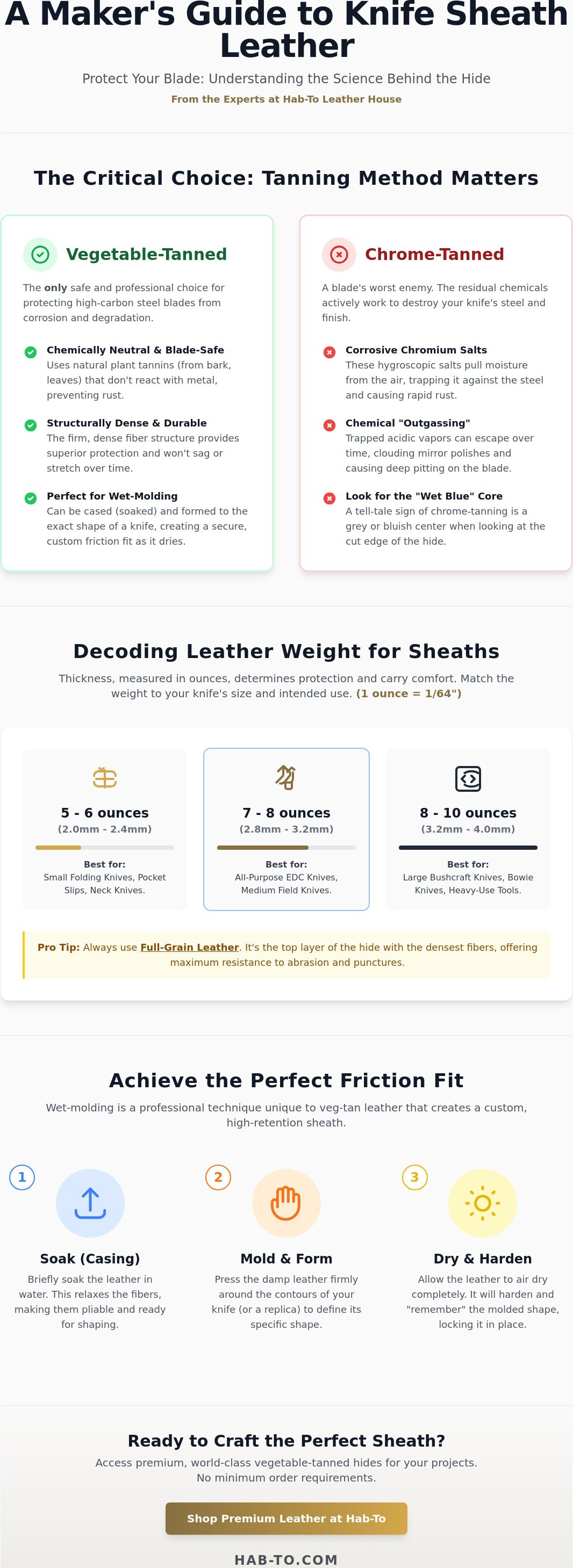
Choosing the best leather for knife sheaths isn't just about picking a color or a texture. It's a critical decision that determines whether your blade remains a functional tool or becomes a rusted relic. Most leather produced globally is chrome-tanned. While that's fine for a pair of sneakers or a car seat, it's a disaster for high-carbon steel. If you store a knife in chrome-tanned leather, you're essentially wrapping it in a chemical bath that invites corrosion. Vegetable-tanned leather is the only safe choice for long-term storage because it creates a chemically neutral environment that respects the steel.
The secret to this protection lies in the tannins. Natural extracts from tree bark and plants replace the proteins in the hide, resulting in a material that doesn't react with metal. Veg-tan leather also provides the necessary structural integrity for field use. It's stiff, durable, and holds its shape even under the pressure of a heavy Bowie or a bushcraft blade. It won't collapse or sag, ensuring the edge never cuts through the welt and into your hip.
To better understand how these materials behave in a workshop, watch this helpful video:
The Problem with Chrome-Tanned Leather
Residual chromium salts are the primary threat to your blade. These salts are hygroscopic, meaning they pull moisture from the air and trap it against the steel. This leads to rapid oxidation and unsightly rust spots. Beyond simple rust, chrome-tan can cause "outgassing." This happens when acidic vapors trapped in the leather fibers escape over time, clouding mirror-polished finishes or causing deep pitting. You can usually identify chrome-tan by its "wet blue" core. If you look at the edge of a hide and see a grey or bluish center, it's a sign of chromium. It also lacks the rich, organic scent of vegetable-tanned hides, smelling more like a factory than a forest.
The Science of Vegetable Tanning
The The Tanning Process for vegetable leather relies on organic materials like mimosa, chestnut, or quebracho extracts. This traditional method can take weeks or even months, but the result is a dense, firm hide with a unique fiber structure. This density is why veg-tan is the best leather for knife sheaths; it won't stretch or sag over time. It also possesses a "moldable" quality that makers love. When you soak the leather, the fibers relax, allowing you to form it around the specific contours of a knife. As it dries, it "remembers" that shape, creating a perfect friction fit. For a deeper look into the history and benefits of this material, check out our vegetable tanned leather guide.
Understanding Leather Weight and Temper for Sheaths
Thick leather isn't always the best leather for knife sheaths. While a heavy hide provides physical protection, the stiffness of the material determines if the knife stays put. We look for a balance between weight and carry comfort. A sheath that's too heavy becomes a burden on the belt during a long hike. Conversely, a sheath that's too thin risks a dangerous puncture. You need a material that can withstand the pressure of a sharpened edge without adding unnecessary bulk to your kit.
Always prioritize full-grain leather for these projects. This top layer contains the densest fibers of the hide. It resists abrasion and prevents the tip of the blade from pushing through the side. Industry groups like the Leather & Hide Council of America advocate for high quality standards across the supply chain. These standards ensure the leather you buy has the structural integrity required for high-stakes tools. Using a "split" or a lower-grade leather for a sheath is a safety risk you shouldn't take.
Decoding the Ounce System
Leather thickness is measured in ounces. One ounce equals exactly 1/64th of an inch. For international makers used to the metric system, this can be confusing. A standard bushcraft sheath usually requires 8 to 9 ounces (3.2mm to 3.6mm). Smaller folding knives work well with 5 to 6 ounces (2.0mm to 2.4mm). Consistency is your best friend here. If the thickness varies across the hide, your stitching lines will look uneven and your edge burnishing will fail. For the best results, stick to shoulder cuts. The shoulder offers a square shape and tight grain, unlike the stretchy, loose fibers found in the belly.
Choosing the Right Temper
Temper refers to the leather's flexibility or "hand." For sheaths, you want a firm temper. A stiff hide acts as a hard shell. It prevents the blade from piercing the leather during a fall or a stumble. Avoid milled or tumbled leathers. These are softened in a large drum and lack the "memory" needed for long-term retention. A well-made sheath should provide a distinct "click" when the knife is inserted. This sound is the result of firm leather snapping around the guard or handle. It's a hallmark of a professional build. If you're ready to start your next project, you can browse our selection of firm-tempered hides to find the perfect match for your blade.
The Best Leathers for Different Knife Styles
Every knife serves a unique purpose, and its sheath should reflect that intent. You wouldn't put a delicate pocket slip-joint in a bulky survival rig, nor would you trust a heavy Bowie to a thin piece of calfskin. Choosing the best leather for knife sheaths requires matching the weight and character of the hide to the tool's environment. We generally categorize these projects into three main types: folders, bushcraft or fixed blades, and large Bowies. Your choice between a "clean" finished leather or one that develops a heavy patina will define the long-term personality of the piece.
Professional tanneries follow strict protocols to ensure hides are processed without leaving harmful residues that could damage your work. For those curious about the industrial standards of these processes, the EPA Guidance on Leather Tanning provides a highly technical overview of the methods used to create stable, high-quality leather. Understanding these standards helps you appreciate why premium vegetable-tanned leather is so reliable for protecting steel.
Fixed Blades and Bushcraft Knives
Bushcraft knives are meant for the wild. They face rain, mud, and hard use, so they require a heavy-duty vegetable-tanned leather. We recommend an 8 to 9 oz (3.2mm to 3.6mm) weight for these sheaths. This thickness provides a rigid, protective shell that won't collapse under pressure. You must always include a "welt" in your design. This is a thin strip of leather placed between the two main layers where the blade edge sits. It prevents the sharp steel from ever touching your stitching. For outdoor use, look for leathers with a high oil content. These hides naturally resist water and remain supple even after getting wet in the woods.
Folding Knives and Pocket Slips
When it comes to custom folders and pocket slips, bulk is your enemy. You want a low-profile design that disappears into a pocket. A 3 to 4 oz (1.2mm to 1.6mm) leather is ideal here. It's thin enough to be comfortable but strong enough to prevent the knife from wearing through. If you're building a sheath for a high-end custom folder, shell cordovan is the ultimate choice for luxury folding knife slips. It's incredibly dense, non-porous, and practically indestructible. For an extra touch of class, consider premium linings like goatskin or exotic accents to make the project stand out.
If you love a leather that tells a story, consider using Pueblo or traditional saddlery leather. Pueblo has a unique, scuffed texture that smooths out and darkens beautifully with every use. It's the perfect choice for a maker who values a rich, evolving patina over a factory-perfect finish.
Actionable Guidance: Prepping and Wet-Molding Your Leather
I've seen many talented makers rush the assembly only to end up with a sheath that feels loose or unfinished. The secret to a professional result lies in "casing" your leather correctly. This isn't just about getting the hide wet. Casing involves saturating the fibers and then letting the moisture distribute evenly until the surface returns to its natural color but feels cool to the touch. When you use the best leather for knife sheaths, this preparation allows the material to become incredibly pliable. It becomes a blank canvas ready to take the exact shape of your blade.
Safety is paramount when molding directly around a finished knife. Never put a bare steel blade into wet leather without protection. The moisture will cause immediate rust, even on stainless steels. I recommend wrapping the blade tightly in two layers of plastic wrap or applying a heavy coat of neutral wax before you begin. Once the leather is cased, you can slide the protected knife into the sheath and begin the molding process. This ensures a custom friction fit that provides that satisfying "click" we discussed earlier.
Step-by-Step Wet Molding
Dunk your leather in room-temperature water for about 10 to 20 seconds. Avoid hot water, as it can "cook" the collagen fibers and make the leather brittle. Once cased, use a bone folder or a smooth, rounded tool to press the leather into the recesses of the knife handle and guard. Define the silhouette with firm, steady pressure. If you need to hold the leather in place, use plastic clamps. Avoid metal clips, as they will leave permanent black stains on vegetable-tanned hides. Let the sheath dry naturally for at least 24 to 48 hours. Using a hair dryer or heater can cause the leather to shrink unevenly or crack.
Finishing and Edge Work
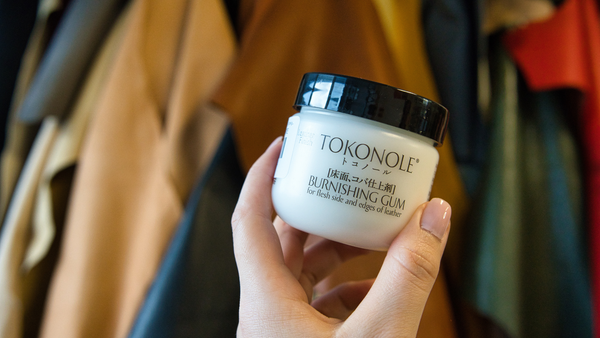
Vegetable-tanned leather is superior for finishing because its dense fibers allow for a glassy, mirror-like burnished edge. Use a wood slicker and a small amount of water or burnishing gum to friction-fit the fibers together. For the final seal, choose your finish based on how the knife will be used. A beeswax-based finish is excellent for traditional bushcraft knives, providing natural water resistance and a soft feel. For harder tactical use, an acrylic sealer offers a more robust barrier against the elements. A welt is the most critical safety feature of any sheath, as it prevents the edge from ever contacting your structural stitching. To ensure you have the right supplies for your next build, shop our professional leatherworking tools and hardware.
Why Hab-To Leather House is the Choice for Professional Sheath Makers
Choosing the best leather for knife sheaths shouldn't feel like a gamble. At Hab-To Leather House, we've spent over 160 years refining our selection process. This isn't just a business for us; it's a family tradition rooted in a deep respect for the material. We understand that a maker's reputation rests on the longevity of their work. That's why we act as more than just a supplier. We're your mentors in the workshop, providing the same premium hides used by world-class artisans. Whether you're a hobbyist or a professional, we ensure you have access to materials that honor your craftsmanship.
We don't believe in barriers. Many wholesalers demand large industrial orders that push out the individual maker. Hab-To Leather House took a different path. Our "No Minimum Order" policy means you can purchase a single shoulder or side without a surcharge. You get professional-grade quality for a single project. We ship from our home in Amsterdam to makers across the globe, ensuring the best leather for knife sheaths is always within your reach. We provide the leather, the tools, and the hardware. You provide the vision.
Sustainable Quality Without Compromise
We source our hides exclusively from European tanneries that uphold the highest environmental standards. These are chrome-free, vegetable-tanned leathers that protect both your blade and the planet. Mass-produced alternatives often lack the fiber density needed for a secure friction fit. Hab-To Leather House provides leathers with structural integrity that actually improves with age. A professional sheath requires more than just a hide. You'll also need reliable leather hardware like solid brass rivets and heavy-duty snaps to complete the build. We've curated these essentials to match the quality of our vegetable-tanned hides.
The Hab-To Leather House Experience
Personalized service is at the heart of what we do. If you're unsure which weight or temper suits your specific blade style, we're here to help. Our expertise is built on decades of hands-on experience with these materials. We've seen how these leathers age in the field and how they respond to the wet-molding techniques we discussed earlier. This knowledge allows us to guide you toward the perfect selection for your specific needs. We treat every order with the same care, whether it's a luxury shell cordovan piece or a rugged bushcraft shoulder. Browse our selection of premium vegetable-tanned leather for your next sheath project.
Equip Your Workbench for Excellence
A great knife deserves a home that protects its edge and honors its design. We've explored how vegetable-tanned hides provide the only safe, chemical-free environment for your steel. You now understand how to balance weight and temper to achieve that professional friction fit. Whether you're building a rugged bushcraft rig or a luxury pocket slip, the right material makes the difference between a project and a masterpiece.
Finding the best leather for knife sheaths shouldn't be a hurdle for the independent maker. At Hab-To, we bring over 160 years of family expertise directly to your workbench. We offer sustainably sourced European hides with no minimum order requirements. This means you can access world-class quality for a single project. We're here to support your craft from the first cut to the final burnish. Find the perfect piece of veg-tan leather for your sheath at Hab-To Leather House.
We can't wait to see what you create. Your next legacy project starts with the right hide. Happy crafting!
Frequently Asked Questions
Can I use chrome-tanned leather if I line it with something else?
You should avoid using chrome-tanned leather even with a liner. Residual salts can still migrate or outgas, potentially damaging your blade's finish over time. Vegetable-tanned hides remain the industry standard because they offer a chemically neutral environment. Why take the risk with a high-carbon steel blade when you can use the best leather for knife sheaths from the start? It's about long-term protection, not just temporary convenience.
What is the best leather thickness for a standard 4-inch fixed blade?
We recommend an 8 to 9 oz (3.2mm to 3.6mm) thickness for a standard 4-inch fixed blade. This weight offers a perfect balance between rigidity and carry comfort. It's thick enough to prevent the tip from piercing the side but won't feel like a brick on your belt. Choosing the best leather for knife sheaths in this weight ensures your project has the structural integrity needed for rugged outdoor use.
Do I need to oil my leather before I start making the sheath?
You don't want to oil your leather before you begin the build. Oiling the hide will seal the pores and prevent it from absorbing water during the casing process. This makes wet-molding nearly impossible. Complete your cutting, stitching, and molding first. Once the sheath is bone dry, you can apply a light coat of neatsfoot oil or a specialized wax to protect the fibers and add water resistance.
Why does my knife rust even though I used vegetable-tanned leather?
Rust typically happens if the knife was stored before the leather was completely dry after wet-molding. Even the best leather for knife sheaths is porous and can trap humidity against the steel. If you live in a damp climate, you must seal the interior of the sheath with a light acrylic or wax finish. Always ensure your blade is clean and lightly oiled before sliding it into its home for long periods.
How do I prevent the knife from cutting through the stitches?
A welt is your only defense against a sharp edge cutting your thread. This is a thin strip of leather glued and stitched between the front and back panels. It creates a physical channel for the blade to rest in. Without a welt, the knife edge will eventually saw through the stitches every time you draw or sheathe the tool. It's a non-negotiable safety feature for any professional build.
Is belly leather good for making knife sheaths?
Belly leather is a poor choice for sheaths because it's the stretchiest part of the hide. It lacks the dense fiber structure found in the shoulders or back. Over time, a belly-leather sheath will sag and lose its retention, which is a major safety concern. For a tool that needs to stay secure on your hip, always invest in a firm-tempered shoulder or side to ensure the material doesn't stretch out of shape.
What is the difference between "dry" veg-tan and "oil-tanned" leather for sheaths?
Dry veg-tan is natural, unfinished leather that is ideal for tooling and wet-molding. Oil-tanned leather is usually chrome-tanned and stuffed with waxes; it's very soft and won't hold a shape. Makers often get confused because some veg-tan comes with a factory oil finish, like harness leather. While harness leather is excellent for sheaths, avoid generic "oil-tan" scraps as they are almost always chrome-processed and chemically harmful to steel.
Can I use Shell Cordovan for a full-sized hunting knife sheath?
While Shell Cordovan is legendary for its durability, it's usually too thin and expensive for a full-sized hunting sheath. Most shells are 3 to 4 oz, which won't provide the stiffness a large fixed blade requires. It's better to use Shell Cordovan as a luxury inlay or for small pocket slips. For a heavy hunter, stick with a 9 oz vegetable-tanned shoulder to ensure the blade is properly protected and the sheath remains rigid.
