What is Russet Leather? The Artisan’s Guide to This Crafting Essential
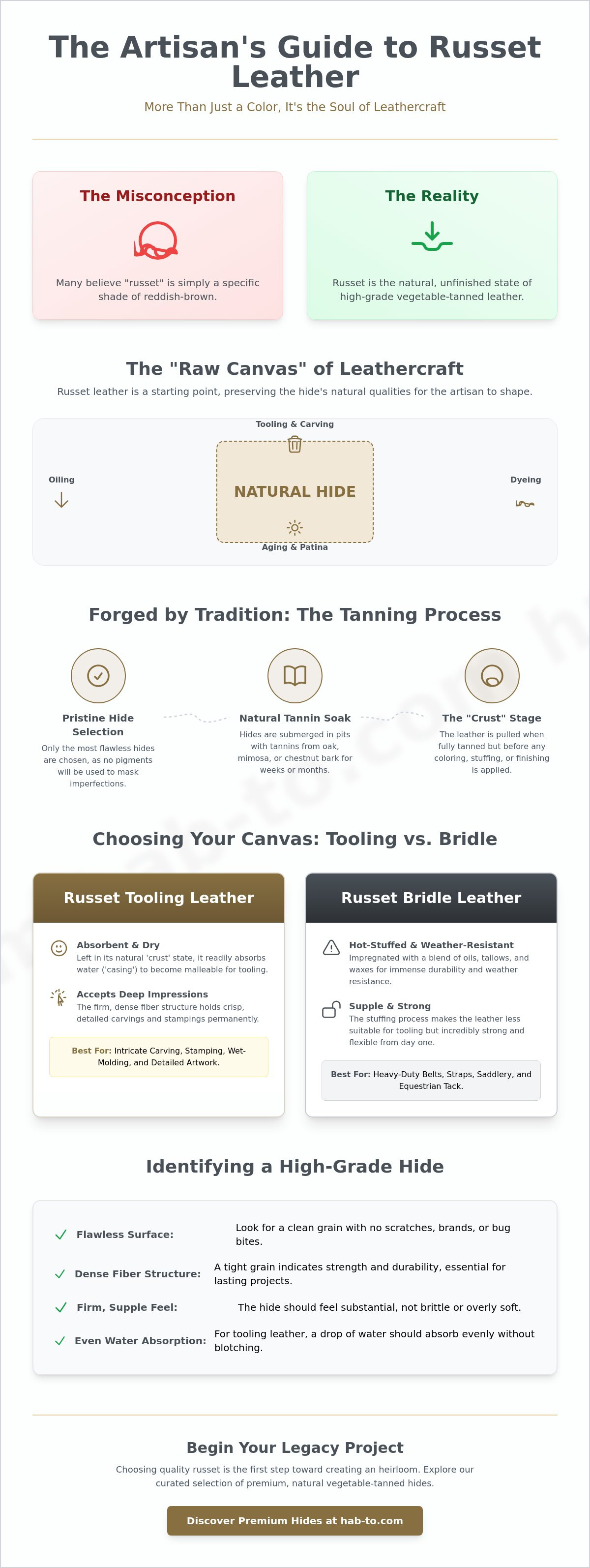
What if the biggest mistake in your workshop isn't a slipped knife, but a misunderstanding of your materials? Many artisans think they're buying a specific shade of brown, but they soon realize that "russet" isn't just a color. If you've ever struggled with a hide that's too soft for stamping or too stiff for a bag gusset, you've felt this confusion firsthand. Understanding what is russet leather is the first step toward consistent, high-quality results. It's actually a specific state of vegetable-tanned leather; it's a raw canvas waiting for your unique touch.
I know how frustrating it is to invest in a premium hide only to have it fight your tools. In this guide, we'll clear up the mystery by exploring the history and technical properties of this crafting essential. You'll learn the vital differences between russet tooling and russet bridle leather. We'll also cover the best techniques for achieving deep, lasting impressions and how to properly age your projects for that perfect, natural finish. Let's look at how to identify the highest quality hides so your next project becomes a legacy piece.
Key Takeaways
- Understand what is russet leather by learning to distinguish between a simple shade of brown and the authentic, natural state of vegetable-tanned hides.
- Discover why russet is considered the "raw canvas" of leathercraft, pulled from tanning pits at the crust stage to preserve its absorbent and toolable qualities.
- Learn the critical differences between russet tooling and russet bridle leather so you can select the right material for either intricate carving or heavy-duty tack.
- Master professional casing techniques and tool selection to achieve deep, crisp impressions that showcase the true character of the hide.
- Identify high-grade hides by applying selection criteria used by master tanners, ensuring your materials meet the standards of a 160-year family heritage.
Defining Russet Leather: More Than Just a Colour
Russet leather is the pure, unadulterated soul of the leathercraft workshop. Many beginners ask what is russet leather expecting a simple hex code or a paint swatch. In reality, russet is a high-grade Vegetable-tanned leather in its most natural state. It's a tannage, not just a shade of brown. Think of it as the "raw canvas" of the leather world. It's the starting point for every masterwork. It's honest. It's durable. It's the choice of those who refuse to make concessions on quality.
To better understand how this material evolves over time, watch this demonstration of the patina process:
The Etymology and History of Russet
The name "russet" traces back to the distinct reddish-brown hues produced by traditional oak-bark tanning. Historically, this leather was the backbone of military gear and heavy-duty saddlery. Soldiers and cowboys relied on it for its immense durability and ease of repair. The term "russeting" eventually became synonymous with natural, long-lasting hides. These hides weren't dyed to hide imperfections. They were chosen for their fiber density and strength. It's a legacy of quality that spans centuries. In the 1800s, russet was the standard for cavalry boots and belts precisely because it didn't rely on surface finishes that could crack or peel in the field.
Natural Russet vs. Modern Dyed Alternatives
Modern surface-pigmented leathers often look flat and uniform. They lack character. Natural russet offers a depth that synthetic dyes simply can't replicate. It's the preferred choice for authentic vegetable tanned leather projects because it allows the artisan to control the final outcome. Whether you want to apply a sun-faded finish or a deep oil-rubbed glow, russet accepts the challenge. It doesn't fight your dyes; it absorbs them with grace.
Using un-dyed, vegetable-tanned russet also has significant environmental benefits. You're working with a material that skips the heavy chemical dyeing stage. This reduces water waste and chemical runoff at the tannery. It's cleaner for the artisan's hands and better for the planet. For those who want to maintain an eco-friendly workshop environment, IDONE provides biodegradable industrial cleaning solutions that support a sustainable crafting process. The beauty of russet lies in its potential. It's a material that records its own history. Every scratch, every drop of oil, and every hour in the sun adds to its unique story. You aren't just buying a piece of hide; you're starting a journey toward a future heirloom.
The Tanning Process: How Russet Gets Its Soul
The soul of russet leather isn't found in a bottle of dye. It's forged in the slow, rhythmic soak of traditional tanning pits. When you ask what is russet leather, you're really asking about patience. This material relies on the oldest tanning method known to man. Tanneries use natural tannins extracted from oak, mimosa, and chestnut bark. These organic compounds bind to the collagen fibers over weeks or even months. It's a chemical transformation that can't be rushed by modern machinery.
Russet is often pulled from the pits at the "crust" stage. At this point, the hide is tanned and dried but remains completely uncoloured and unfinished. This is the essence of what is russet leather; it's a material that has nothing to hide. Because there's no pigment to mask imperfections, tanneries only select the most pristine, flawless hides for this process. A single scratch or brand mark would stand out. Moisture content is also critical during this stage. If the hide is too dry, it becomes brittle; if it's too damp, the fibers won't accept your tools. We look for that perfect balance that feels supple yet firm to the touch.
If you're looking for a hide that balances this density with a beautiful natural finish, our Maryam Vacchetta selection offers that authentic pit-tanned quality.
The Role of Oils and Waxes in Russet Bridle
Not all russet is "dry." Some hides undergo a process called hot-stuffing. This involves impregnating the leather with a rich blend of tallows, oils, and waxes while the hide is warm. This creates "russet bridle" leather. It's the secret behind the incredible weather resistance you see in high-end equestrian gear. While "dry" russet is perfect for dyes, this waxy version is designed to repel moisture and survive the elements. It feels heavier and more substantial in the hand.
Why Grain Density Matters for Tooling
The time a hide spends in the tanning pits directly dictates its grain density. A quick tan results in a loose, spongy grain that loses its shape. A long, traditional tan creates a tight fiber structure. This is what allows for leather carving with extreme, microscopic detail. When you strike a stamp into a high-quality russet hide, the impression stays crisp for decades. Grain density is the primary factor in stamp retention. Without it, your hard work simply fades away as the leather relaxes.
Russet Tooling vs. Russet Bridle: Choosing Your Material
Choosing between these two variants is the most critical decision you'll make at the cutting table. While both fall under the umbrella of what is russet leather, they behave like entirely different species in the workshop. Russet tooling is the open-pore, absorbent choice. It's thirsty. Russet bridle is pre-finished and infused with oils. It's resilient. One is a beginning; the other is a finished result.
The "hand" or feel of each hide tells the story of its purpose. Tooling leather feels firm, almost like a piece of heavy cardstock when dry. It's stiff because its fibers haven't been lubricated by oils yet. Bridle leather feels supple and dense. It has a weightiness that suggests it's ready for work immediately. You don't buy bridle to change its character; you buy it because you trust its strength. Matching the material to the mechanical needs of your project saves you from expensive mistakes. Don't try to force a tooling hide into a high-moisture environment without heavy sealing. It simply isn't built for it.
Tooling Russet: The Sculptor’s Choice
If your project involves intricate carving or custom coloring, tooling russet is your only option. Its open structure allows for a high absorption rate during the casing process. This makes it the gold standard for leather stamping tools. When cased correctly, the fibers soften just enough to accept a deep, permanent impression. Pay close attention to thickness when ordering. For heavy holsters or saddles, look for 8-10 oz (3.2-4.0mm). For smaller wallets or linings, a 2-3 oz (0.8-1.2mm) hide provides the necessary finesse without the unwanted bulk.
Bridle Russet: The Workhorse for Durability
Bridle russet is the athlete of the leather world. You'll often notice a distinct "bloom" on the surface. This white, waxy sheen shows the hide is saturated with protective tallows. This is widely considered the best leather for outdoor gear like reins and belts. It handles rain, sweat, and sun without flinching. Because it's already "stuffed" with waxes, it's nearly impossible to tool or stamp effectively. Your stamps will simply bounce off or fade as the waxes settle back into place. Maintenance is simple; a light buffing with a horsehair brush usually brings back the natural glow. It's built to last for decades, developing a dark, honeyed patina that only comes with time and honest labor.
Mastering the Craft: Tips for Working with Russet Leather
Working with this material is a conversation between the artisan and the hide. Once you truly understand what is russet leather, you realize it demands a specific sequence of care to reveal its potential. It isn't a "plug and play" material; it's a partner. If you treat it with respect, it will hold a level of detail that other leathers simply cannot match. Here is the professional workflow for getting the most out of your natural hides.
- Step 1: Casing the leather. Casing is the heart of tooling. You must saturate the fibers with water and then wait. The "sweet spot" occurs when the leather feels cool to the cheek but looks almost as light as its original state. This indicates the moisture is deep in the core, not sitting on the surface.
- Step 2: Precision carving. Using a swivel knife at that exact moment allows for effortless, buttery cuts that won't close up as the leather dries.
- Step 3: Burnishing the edges. Finishing edges on russet is a joy. Because of the high tannin content, you can achieve a glass-like burnish with just a bit of water and a wooden slicker. Chrome-tanned leathers often require chemical paints, but russet responds to friction and pressure alone.
- Step 4: Patina management. To jumpstart the aging process, place your finished piece in direct sunlight for a few hours. A light coat of pure neatsfoot oil will then deepen that golden hue and protect the fibers.
Casing and Tooling for Deep Impressions
The "wait until it returns to natural colour" rule is the most important habit you can develop. If you tool while the leather is still dark and soggy, your stamps will leave mushy, shallow marks. Use distilled water to avoid "water spots." The minerals in tap water can leave permanent, dark rings on sensitive natural russet that no amount of dyeing can fix. Russet holds a burnish better than chrome-tanned alternatives because the vegetable tannins react to heat and friction by compressing into a dense, shiny surface. It's a mechanical change that lasts forever.
Applying Finishes and Patina Management
The debate between sealing with Resolene or using natural oils is a classic workshop discussion. Resolene provides a plastic-like seal that blocks moisture but also stops the patina process. Natural oils allow the leather to breathe and evolve. If you want to apply antique finish, the un-dyed surface of russet makes every stamped detail pop with incredible contrast. Russet will naturally darken with UV exposure and skin oils. This transformation is why many crafters prefer to leave the finish as natural as possible.
If you're ready to test these techniques on a premium surface, explore our Badalassi Pueblo Leather to experience how a world-class tannage responds to your tools.
The Hab-To Heritage: Why Quality Russet is a Choice
At Hab-To, we don't just sell hides. We share a legacy. When you ask what is russet leather in our warehouse, you get an answer backed by 160 years of family experience. We've spent decades walking the floors of the world's finest tanneries. This history allows us to spot a "Grade A" hide from across the room. We look for tight grain. We check for consistent thickness. We refuse to compromise. Your reputation as an artisan depends on the foundation we provide.
Sustainability is a principle, not a trend. In 2026, the global leather tanning market is valued at USD $29.02 billion. Consumers are moving away from cheap, synthetic alternatives. They want materials that last. Vegetable-tanned russet is the ethical choice. It avoids the heavy chemicals used in chrome tanning. It's clean. It's honest. We partner with tanneries like Badalassi and Maryam because they share our unwavering focus on natural methods.
Sourcing the World’s Best Russet Hides
Our relationships with Italian tanneries are built on a shared love for the material. We source premium Vacchetta leather from the heart of Tuscany. When we select a hide, we look for minimal scarring and consistent fiber density. Natural russet has no pigment to hide behind. Every mark is a story. We also believe quality should be accessible. We offer no minimum orders for small-scale artisans. You get professional-grade hides without the industrial overhead.
Joining the Hab-To Crafting Community
We invite you to visit our Amsterdam warehouse for a tactile selection. There is no substitute for feeling the weight of a hide in your own hands. We love providing personalized service, helping you choose between the unique, rustic texture of Badalassi Pueblo and the classic, smooth appeal of natural vacchetta. Our heritage supports your growth as an artisan. Whether you're a master or just discovering what is russet leather, we're your partners in craft. Browse our premium vegetable-tanned leather collection and start your next project today.
Elevate Your Craft with the Right Foundation
Russet leather is more than just a material; it's a commitment to the heritage of the craft. You've seen how the slow vegetable tanning process creates a "raw canvas" that rewards patience and skill. Whether you choose the absorbent nature of tooling russet or the weather-resistant strength of a waxy bridle, you're building on a foundation of quality. Now that you understand what is russet leather and how to master its unique properties, your workshop is ready for its next evolution. Every mark you make on these hides becomes part of a story that will last for decades.
My family brings 160 years of expertise to every hide we select. We source directly from world-renowned Italian tanneries to ensure you receive only the best. Because we believe in supporting every artisan, we offer no minimum order requirements for crafters. Explore our curated collection of premium vegetable-tanned leather and find the perfect hide for your next masterpiece. Your tools deserve a material that works as hard as you do. We can't wait to see what you create.
Frequently Asked Questions
Does russet leather darken over time?
Yes, russet leather will darken significantly as it ages. This process creates a sought after patina that shifts from a pale cream to a deep honey or rich caramel. Exposure to ultraviolet light and the natural oils from your hands accelerate this change. It's a beautiful, organic reaction of the vegetable tannins. Many crafters choose this material specifically to watch their work evolve and gain character through daily use.
Is russet leather the same as vegetable tanned leather?
Russet is a specific category within the world of vegetable tanned leather. While all russet is vegetable tanned, not every veg-tanned hide is russet. The term refers specifically to hides that are left in their natural, uncoloured state after leaving the tanning pits. If a hide is dyed at the tannery, it's no longer considered russet. It remains the purest expression of the traditional bark-tanning process.
How do I clean russet leather without staining it?
You should use a very light touch and specialized saddle soap for cleaning. Avoid saturating the surface with water, as the open pores of natural russet absorb liquids almost instantly. Always test your cleaner on a small, hidden area first to check for unwanted darkening. Use a soft, lint-free cloth and work in gentle, circular motions. Applying a light coat of conditioner afterward helps maintain the moisture balance without causing streaks.
What is the best weight of russet leather for a wallet?
I recommend using a 2 to 3 oz (0.8 to 1.2mm) weight for the interior pockets and a 4 to 5 oz (1.6 to 2.0mm) weight for the exterior shell. This combination provides enough strength to hold stitches while keeping the wallet slim enough for a pocket. Using anything heavier can make the finished piece feel bulky and difficult to fold. Proper weight selection ensures your project remains functional and elegant.
Can you dye russet leather yourself?
Yes, russet is the absolute best surface for custom dyeing. Because it's an un-dyed "crust" leather, the fibers are ready to drink in spirit or oil-based dyes. This versatility is a core part of what is russet leather; it acts as a raw canvas for your creativity. You can achieve vibrant, even colours or complex sunburst effects that simply aren't possible on pre-finished leathers. It's the ultimate choice for personalization.
Is russet leather waterproof?
Natural russet is not waterproof and is actually quite sensitive to moisture. Unless it's a "hot-stuffed" bridle version, the leather will easily absorb water and may develop permanent spots. You must apply a protective finish or a heavy coat of wax if you plan to use the item outdoors. While it's durable and tough, it requires a sealant to resist the elements. Think of it as a material that needs your protection.
Why is russet leather more expensive than other types?
The price reflects the slow tanning process and the need for flawless hides. When asking what is russet leather, you must remember that tanners can't use dyes to hide scars or insect bites. Only the top "Grade A" hides are selected for this process. The traditional pit-tanning also takes months longer than modern chrome tanning. You're paying for a premium selection and a commitment to traditional, chemical-free craftsmanship.
What is the difference between russet and saddle tan?
Russet is a natural state of leather, while saddle tan is a specific dye colour. People often confuse them because aged russet eventually looks like a saddle tan shade. However, russet starts as a pale, creamy beige and darkens naturally over time. Saddle tan is a pigment applied to the hide to mimic that classic look immediately. One is a living process of evolution; the other is a static colour choice.