

The Best Leather for a Luxury Look: An Artisan’s Guide to Premium Hides
Luxury isn't a logo embossed on a bag. It is the cellular structure of the hide itself. You've likely felt the sting of buying leather labeled "premium" only to find it looks thin or plastic once your project is finished. It's a common frustration for artisans who want their work to stand alongside the world's most prestigious fashion houses. Finding the best leather for a luxury look requires looking past marketing jargon and understanding the heritage of the tannery.
I know how it feels to hunt for that perfect, buttery temper and come up short. You want materials that age with grace and hold a crisp edge. In this guide, I will share the specific leather types, world-class tanneries, and refined finishes used by high-end brands to achieve a truly sophisticated aesthetic. We'll break down why full-grain vegetable tanned leather remains the gold standard for quality. You will also learn how to pair these elite hides with the right hardware to ensure your finished pieces radiate authentic, high-end value.
Key Takeaways
- Learn why fiber density and specific hide cuts like the butt or shoulder are essential for the structural integrity required in high-end leatherwork.
- Identify the "Big Three" hides-including the legendary Shell Cordovan-that provide the best leather for a luxury look in bespoke wallets and footwear.
- Master the difference between natural shrunken grains and iconic stamped textures like Saffiano to replicate the aesthetic of major fashion houses.
- Understand the rigorous industry standards for Grade A leather to ensure your material sourcing consistently meets luxury quality benchmarks.
- Discover how to elevate your projects by pairing premium vegetable tanned hides with solid brass hardware for a professional, enduring finish.
Defining the Luxury Look: It’s More Than Just a Price Tag
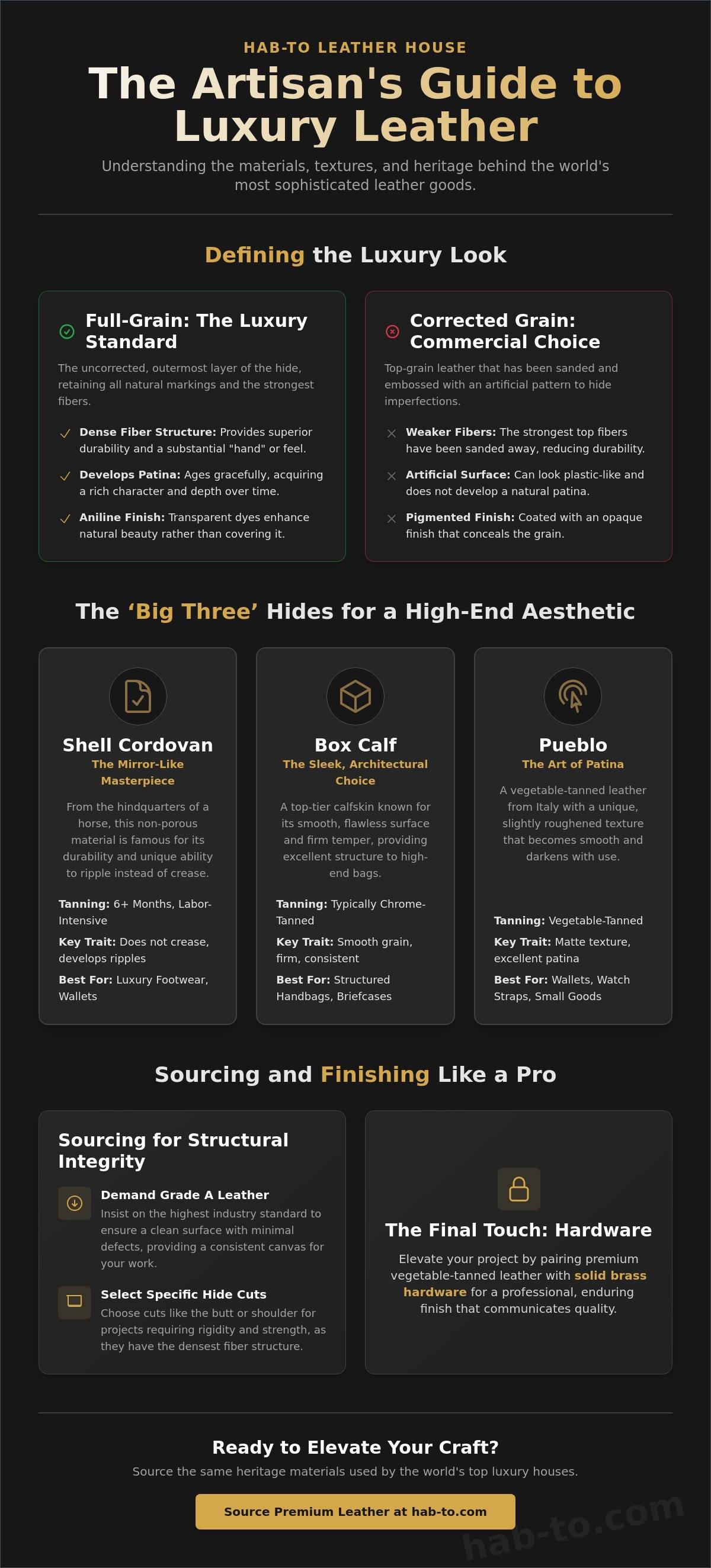
Luxury isn't a label you stitch onto a bag. It's the inherent quality of the hide before a single tool touches it. If you want to achieve the best leather for a luxury look, you have to look deeper than the price tag. You need to examine the fiber density and the consistency of the grain. High-end fashion houses don't just buy "leather"; they source specific cuts that offer a three-dimensional depth of surface. This depth comes from how the hide was raised and the meticulous way it was tanned.
Understanding leather grades is your first step toward mastery. While many commercial products use top-grain leather, true luxury usually demands full-grain hides. Full grain remains uncorrected. It retains the strength of the outermost fibers. This results in a "hand" or tactile feel that is both supple and substantial. If the leather feels like plastic or looks overly uniform, it lacks the soul required for a premium finish.
To better understand this concept, watch this helpful video:
The Visual Markers of High-End Leather
Visual luxury is often found in the subtle imperfections of a natural surface. Corrected grains are sanded down to remove scars, then stamped with a synthetic pattern. This often looks flat and artificial. In contrast, the best leather for a luxury look uses aniline or semi-aniline finishes. These transparent dyes allow the natural character to shine through. You get a living surface that changes with the light. The luster isn't a shiny coating; it's a soft glow that comes from within the fibers. This interaction with light is what makes a product look expensive in photographs and in person.
The Role of European Tanneries
There is a reason why Italy and France remain the epicenter of the luxury leather world. Their tanneries have refined their recipes over centuries. They use specific water minerals and traditional vegetable tanning methods that newer industrial facilities simply cannot replicate. At Hab-To, we believe in this heritage. We've spent years building relationships with these historic tanneries to bring those same professional materials to your workbench. By sourcing the same vegetable tanned leather used by luxury houses, you bridge the gap between a hobbyist project and a professional masterpiece. We don't make concessions on quality because we know your craft deserves the best foundation possible.
The 'Big Three' Leathers for a High-End Aesthetic
Choosing a hide is like choosing the foundation for a house. It dictates everything that follows. When you search for the best leather for a luxury look, you will inevitably find three names that dominate the conversation: Shell Cordovan, Box Calf, and Pueblo. Each offers a distinct visual language. One isn't necessarily better than the others, but they serve very different creative goals. It's essential to know how to identify high-quality leather within these categories to ensure your finished piece carries the weight of a true luxury item.
The choice often comes down to the "rugged vs. sleek" debate. Are you building a crisp, architectural briefcase or a wallet that tells a story through its patina? High-quality vegetable tanned leather is the common thread here. It provides the structural integrity and surface depth that chrome-tanned alternatives often lack. Let's look at why these three specific materials are the gold standard for artisans worldwide.
Shell Cordovan: The Mirror-Like Masterpiece
Often called the "King of Leathers," Shell Cordovan is actually a fibrous flat muscle taken from the hindquarters of a horse. It's not technically skin, which is why it doesn't have pores. This unique structure means it never creases. Instead, it ripples. This property allows shoes and wallets to maintain a luxury look for decades without the unsightly spiderweb cracks found in lesser materials. The tanning process takes at least six months of labor-intensive work in European and Japanese tanneries. This heritage and patience justify its prestige and its unmistakable, glass-like luster.
Box Calf and Smooth Leathers
If you want to replicate the "Hermes" aesthetic, Box Calf is your primary tool. It's known for its fine grain and firm temper. This leather allows for sharp, crisp edges and an architectural silhouette. Because the surface is so smooth, tanneries can only use Grade A hides with zero imperfections. There's no texture to hide behind. While it can be sensitive to scratches, the way a smooth calfskin reflects light gives a product an immediate air of sophistication. It feels formal, precise, and intentional.
Pueblo and Textured Veg-Tans
Not all luxury is shiny. The "rustic luxury" trend has brought textured leathers like Pueblo to the forefront of the craft. Produced by the famous Badalassi Carlo tannery in Italy, Pueblo has a unique, scuffed surface. This deliberate abrasion creates a matte finish with incredible visual depth. Over time, the scuffed fibers lay down, and the leather develops a deep, rich glow. It's a "living" material. It transforms from a rugged, paper-like texture into a smooth, dark masterpiece. If you're looking for a material that feels personal and artisanal, our selection at Hab-To features these world-class Italian hides to help you achieve that evolving aesthetic.
Surface Textures: Smooth vs. Embossed Luxury
Texture is a visual strategy. It dictates how a product reflects light and how it survives the rigors of daily use. While many consider smooth calfskin to be the best leather for a luxury look, it is also the most unforgiving. A single fingernail scratch can mar a flawless surface. This is why many high-end fashion houses turn to embossed or naturally textured hides. These materials offer a sophisticated aesthetic that stays pristine for years. Choosing the right texture allows you to balance pure elegance with practical durability.
A smooth finish is the ultimate statement of precision. It requires the highest grade of hides because there is no grain pattern to hide scars or bites. When you work with smooth leather, you are showcasing the raw quality of the material. However, if your project involves high-traffic items like a daily tote or a travel portfolio, a textured surface might be the smarter choice. Texture doesn't just look professional; it acts as a camouflage for the inevitable wear and tear of life.
The Saffiano and Epsom Aesthetic
Think of the sharp, architectural bags from Prada or Louis Vuitton. They often feature Saffiano leather, which is defined by a cross-hatch pattern pressed into the wax coating of the hide. This is "business luxury" at its peak. It is incredibly scratch-resistant and water-repellent. Epsom leather offers a similar appeal with a slightly more rounded grain. These embossed leathers are ideal for structured projects that need to hold their shape. When sourcing these, look for a crisp definition in the pattern. High-quality embossing feels firm and detailed, whereas cheap alternatives often have a soft, plastic-like coating that lacks depth.
Natural Shrunken Grain
If you prefer an organic, soft aesthetic, natural shrunken grain is the gold standard. Unlike "milled" leather, which is tumbled in a drum to soften the fibers, shrunken grain is achieved through a specific tanning process that causes the hide to contract. This tightens the fiber structure and creates a deep, pebbled texture. This is the "Bottega Veneta" vibe. It feels heavy, substantial, and incredibly soft to the touch. Because the grain is natural, the pattern is slightly irregular. This irregularity is a hallmark of expensive hides. It signals to the observer that the material is genuine and high-grade.
Maintaining these surfaces requires a different approach than smooth leathers. Because dust and oils can settle into the valleys of the grain, regular cleaning is essential. For detailed instructions on preserving these premium finishes, you can refer to this leather care guide for expert maintenance tips. Whether you choose the sharp lines of Saffiano or the organic warmth of shrunken grain, the goal is to match the texture to the intended life of the piece.
How to Source Leather Like a Luxury House
Luxury houses don't just order leather by the pallet. They meticulously select specific parts of the hide to ensure every square inch of a finished bag or wallet is flawless. If you want to replicate this result, you must stop buying "whole hides" and start sourcing specific cuts. The best leather for a luxury look is almost always found in the shoulder or the butt of the animal. These areas have the tightest fiber density. This density prevents the leather from stretching out of shape or becoming mushy over time.
When you source materials, you are looking for Grade A quality. In the leather industry, this means the hide has a large, usable surface area free from deep scars, brands, or insect bites. While some natural growth marks are acceptable-and even prized as proof of authenticity-damaging scars ruin the architectural lines of a high-end piece. We believe that small-scale artisans should have access to these same elite materials. That's why we don't enforce large industrial minimums. You can source the same Grade A vegetable tanned leather used by heritage brands, even for a single bespoke project.
Selecting the Right Cut
The shoulder is often the artisan's favorite. It offers a generous size and a beautiful, consistent grain. It’s perfect for everything from belts to structured handbags. On the other hand, you should avoid belly leather for luxury projects. The belly is where the fibers are the loosest. It's prone to fat wrinkles and excessive stretching. If you use belly leather for a structural part of a bag, it will eventually sag and lose its premium silhouette. Always inspect your hides for growth marks. These are subtle, wavy lines that indicate a natural, uncorrected surface. They add character without compromising the strength of the hide.
Professional Sourcing Framework
To source like a professional, follow this three-step framework. First, identify your project's structural needs. Do you need a stiff, tempered leather for a boxy clutch, or something supple for a turned-edge wallet? Second, match the tannage to your desired aging. If you want a deep, evolving patina, choose a traditional vegetable tanned leather. If you want a static, consistent color, look for semi-aniline options. Finally, consult with a partner who understands the history of the material. At Hab-To, we draw on 160 years of leather expertise to help you make the right choice. You can browse our collection of premium hides to find the perfect foundation for your next masterpiece.
Sustainability is no longer an option; it's a requirement for luxury. High-end consumers in 2026 demand traceability. When you source from historic European tanneries, you are investing in ethical processes that respect both the environment and the craft. This commitment to quality and ethics is what truly separates a luxury house from a mass-market producer.
The Final Touch: Pairing Premium Leather with Hardware
You can source the rarest hide in the world, but if you pair it with a hollow, lightweight buckle, the illusion of luxury vanishes instantly. Hardware is the punctuation mark of your craft. It provides the visual and tactile weight that confirms a product's value. Achieving the best leather for a luxury look requires a holistic approach. Every component must speak the same language of quality. When a customer picks up a bespoke bag, they shouldn't just see the grain. They should feel the cold, substantial weight of the metal and hear the solid click of a well-made clasp.
At Hab-To, we don't view hardware as an afterthought. We curate our selection to complement the specific tempers and tones of our vegetable tanned hides. Quality hardware isn't just an accessory. It is a statement of intent. It tells the world that you refused to make concessions at the finish line.
The Importance of Solid Brass
Plated "mystery metal" or zinc alloys are the enemies of high-end leatherwork. These materials often feel light and "tinny." Over time, the thin plating wears away to reveal a dull, grey core. This ruins the aesthetic of even the finest project. In contrast, solid brass hardware offers a depth of color that only improves with age. It develops a subtle patina that mirrors the evolution of the leather itself.
- The Weight of Quality: Brass is dense. It adds a perceived value that customers associate with heritage brands.
- The Sound: A solid brass D-ring has a distinct, muffled ring compared to the sharp clatter of cheap alloys.
- Finish Options: Choose polished brass for a sharp, modern look or antiqued brass to enhance the "rugged luxury" of textured hides like Pueblo.
Edge Finishing and Detailing
The edges of your piece are where your technical skill is most visible. For a traditional luxury look, glass-smooth burnishing is the standard. This process seals the fibers and showcases the natural beauty of the tannage. However, if you are aiming for a contemporary "boutique" result, high-quality edge painting provides a crisp, architectural finish that hides the fiber layers entirely. Both methods require patience and the right tools.
Subtle branding is another hallmark of expensive goods. Using leather stamping tools to deboss a clean, minimalist mark into the hide adds a level of professionalism that sets your work apart. It's about the details that aren't immediately obvious but are felt upon closer inspection. This is how you achieve the best leather for a luxury look that stands the test of time.
Ready to elevate your craft? Shop our curated luxury leather collection at Hab-To and find the perfect harmony between premium hides and world-class hardware.
Elevate Your Craft with the Materials of Heritage
You now have the blueprint to stop guessing and start sourcing like a master. We've explored how the right fiber density in a shoulder cut and the heritage of a world-class tannery define the final result. Finding the best leather for a luxury look isn't about chasing the highest price tag. It's about the deliberate harmony between material, texture, and solid brass hardware. When you choose materials with a story, your finished pieces tell one too.
At Hab-To, we bring over 160 years of family expertise directly to your workbench. We believe every artisan deserves access to the same materials used by the major fashion houses. That's why we offer professional-grade hides with no minimum order requirements. From our Amsterdam warehouse, you get direct access to the world's most prestigious tanneries without the industrial barriers. It's our passion to support your journey from hobbyist to professional creator.
Your craft deserves a foundation that lives, breathes, and ages with grace. Discover the world's finest leather for your next luxury project at Hab-To Leather House. We can't wait to see what you create next.
Frequently Asked Questions
What is the most expensive-looking leather for a wallet?
Shell Cordovan is widely considered the pinnacle material for luxury wallets. Its unique, non-creasing property and mirror-like luster provide a level of sophistication that standard bovine leathers simply cannot match. Because it's a dense muscle fiber rather than a typical hide, it offers a glass-like surface that signals high value immediately. It's the perfect choice for artisans aiming for a prestigious, heirloom-quality finish.
Is vegetable-tanned leather considered luxury?
Yes, premium vegetable-tanned leather is the foundation of the world's most respected heritage brands. Unlike mass-produced chrome-tanned options, vegetable tanning uses natural tannins to create a hide with superior structural integrity and depth of color. It's prized for its ability to develop a rich, personal patina over time. This evolution is a hallmark of authentic luxury that synthetic or heavily coated materials cannot replicate.
How can I tell if a leather hide is high quality before buying?
You should inspect the hide for "Grade A" markers, such as a tight fiber density and a clean, consistent grain. High-quality leather feels substantial and supple rather than stiff or plastic-like. Check the back side for a tight nap. If the fibers look loose or "shaggy," the leather may stretch unevenly. Always prioritize hides sourced from reputable European tanneries with a documented history of craftsmanship.
What leather do designer brands like Hermes and Louis Vuitton use?
These houses use specific proprietary tannages, but they rely heavily on Box Calf for formal, architectural items. For structured bags that require scratch resistance, they often choose Epsom or Saffiano textures. They exclusively source Grade A, full-grain hides from elite tanneries in France and Italy. These materials are selected for their incredible consistency and their ability to hold a crisp, professional edge during the construction process.
Does 'Full Grain' always mean luxury quality?
Not necessarily. While full grain is a prerequisite for the best leather for a luxury look, the final quality depends on the animal's environment and the tanning process. A full-grain hide from a low-tier tannery may still have poor fiber density or unsightly fat wrinkles. True luxury requires a combination of a full-grain surface and an expert tanning recipe that enhances the natural character of the hide.
Why does some leather look 'plastic' and how do I avoid it?
That "plastic" appearance usually comes from corrected-grain leather that has been sanded down and heavily coated with thick pigments or resins. To avoid this, you should look for aniline or semi-aniline finishes. These transparent dyes allow the natural beauty and pores of the hide to remain visible. Choosing vegetable tanned leather with a light wax finish ensures the material looks like a living, organic surface rather than a synthetic imitation.
What is the difference between Box Calf and Saffiano leather?
Box Calf is a smooth, fine-grained leather known for its firm temper and formal, mirror-like appearance. It is the gold standard for architectural bags and dress shoes. Saffiano is an embossed leather featuring a distinct cross-hatch pattern pressed into a wax coating. While Box Calf offers pure, classic elegance, Saffiano provides incredible scratch resistance and a structured, modern aesthetic that is ideal for high-traffic business accessories.
How do I maintain the luxury look of my leather goods over time?
Regular maintenance is key to preserving the best leather for a luxury look. Use a soft, dry cloth to remove dust and occasionally apply a high-quality conditioner to keep the fibers supple. Avoid over-conditioning, as this can ruin the leather's natural temper. Store your goods in a cool, dry place away from direct sunlight. This prevents the color from fading and ensures the patina develops evenly over the years.
